The history of Ireland: a reading path from Celts to independence
This curriculum takes the reader from a broad, accessible overview of Irish history all the way through specialist accounts of revolution, partition, and modern Ireland. Each stage builds on the last — first establishing the full sweep of Irish history, then diving into defining eras (Celtic and medieval, colonial and famine), then tackling the revolutionary period and its aftermath, and finally engaging with scholarly and literary perspectives that reveal the deeper texture of Irish identity and politics.
The Full Sweep — Foundations
BeginnerGain a confident, chronological understanding of Irish history from prehistoric times to the present, establishing the key names, events, and turning points needed for deeper reading.
▸ Study plan for this stage
Pace: 8–10 weeks, ~40–50 pages/day (approximately 2–3 weeks per book, accounting for note-taking and review)
- Prehistoric and early Christian Ireland: the Neolithic through the monastic period and the role of Christianity in shaping Irish culture
- Viking invasions and the Norman conquest: how external forces reshaped Irish society, governance, and identity
- English colonization and the Plantation: the establishment of English rule, the Tudor and Stuart periods, and the displacement of native Irish
- The Great Famine (1845–1852): its causes, catastrophic human impact, and role as a watershed moment in Irish history and emigration
- Irish independence movements: the evolution from constitutional nationalism to revolutionary republicanism, culminating in the 1916 Easter Rising and the War of Independence
- Partition and the Irish Free State: the division of the island, the creation of two separate states, and the civil war that followed
- Modern Ireland: the development of the Republic, economic transformation, and Ireland's place in the 20th and 21st centuries
- What role did early Christian monasteries play in preserving learning and shaping Irish culture, and how did this differ from the rest of Europe?
- How did the Norman conquest and subsequent English colonization fundamentally alter Irish political structures, land ownership, and cultural identity?
- What were the primary causes of the Great Famine, and why did it have such a disproportionate impact on Ireland compared to other parts of the British Isles?
- What were the key differences between constitutional nationalism and revolutionary republicanism in the Irish independence movement?
- How did the partition of Ireland in 1921 come about, and what were the immediate consequences for both the Irish Free State and Northern Ireland?
- What major economic and social transformations occurred in Ireland (both North and South) during the latter half of the 20th century?
- Create a detailed timeline from prehistoric Ireland to the present, marking major invasions, political shifts, and cultural turning points; use both books to cross-reference dates and events
- Write a one-page summary of each major historical period (pre-Christian, Christian, Viking, Norman, Tudor-Stuart, Famine, independence, partition, modern) capturing the essential character of each era
- Map the territorial changes in Ireland over time, showing how English/British control expanded from the Pale outward, and how partition divided the island
- Identify and research 8–10 key historical figures mentioned in both books (e.g., Brian Boru, Henry VIII, Daniel O'Connell, Michael Collins, Éamon de Valera) and write brief biographical sketches explaining their significance
- Compare how Hegarty and Ranelagh treat the same major events (e.g., the Famine, independence); note differences in emphasis, interpretation, and detail
- Create a cause-and-effect diagram showing how the Famine triggered mass emigration and shaped Irish-American identity and Irish political consciousness
Next up: This stage provides the chronological backbone and key turning points needed to engage with specialized, thematic studies of Irish culture, politics, literature, and regional history in the next stage.
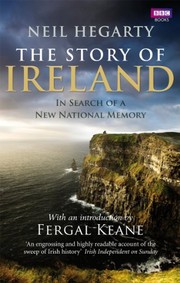
A highly readable, BBC-companion narrative covering all of Irish history in one accessible volume — the ideal starting point for building a mental timeline before tackling specialist works.

A compact but authoritative overview that reinforces the chronology just established and introduces key political and cultural themes — Celtic origins, colonisation, famine, and independence — that later stages explore in depth.
Celtic Roots and the Medieval World
BeginnerUnderstand the Celtic, early Christian, and Viking-age foundations of Irish civilisation, and how the first waves of English intervention reshaped the island.
▸ Study plan for this stage
Pace: 4–5 weeks, ~40–50 pages/day. Week 1–2: "How the Irish Saved Civilization" (~280 pages); Week 3: transition and reflection; Week 4–5: "Strongbow" (~400 pages)
- Celtic pagan Ireland and its druidic, warrior-based society before Christian conversion
- The role of Christian monasticism in preserving classical learning during Europe's Dark Ages
- How Irish monks became missionaries and scholars, spreading literacy and faith across Europe
- The Viking raids and settlements that disrupted and transformed Irish society
- The Norman invasion of 1170 and Richard de Clare (Strongbow) as the catalyst for English intervention
- The feudal system and Anglo-Norman military superiority that began reshaping Irish political structures
- The tension between Irish Gaelic culture and incoming Anglo-Norman civilization
- How early English intervention set the stage for centuries of colonial conflict
- What were the defining characteristics of pre-Christian Celtic Ireland, and how did druidic culture shape Irish society?
- How did Irish monasticism preserve classical learning, and why was this significant for European civilization?
- What role did Irish monks play in the Christianization and cultural development of Europe?
- How did Viking raids affect Ireland's political, religious, and cultural landscape?
- What circumstances led Richard de Clare (Strongbow) to invade Ireland in 1170, and what were his strategic goals?
- How did the arrival of the Normans introduce feudalism and change Irish governance and land ownership?
- What were the immediate consequences of the Norman invasion for Irish Gaelic culture and independence?
- Create a timeline from 400 CE to 1170 CE marking key events: monastic foundations, Viking raids, and the Norman invasion; annotate with cultural/political significance
- Write a character sketch of a Celtic druid, an Irish monk, a Viking raider, and Strongbow—comparing their worldviews and motivations using evidence from the texts
- Map the spread of Irish monastic influence across Europe using Cahill's examples; identify which monasteries and missionaries had the greatest impact
- Debate: 'Did Irish monasticism's preservation of learning outweigh the disruption caused by Viking raids?' Support your position with specific examples from both books
- Create a comparison chart of pre-Norman Irish society vs. post-1170 Anglo-Norman Ireland, covering: land ownership, military organization, religious authority, and cultural practices
- Write a 500-word analysis of how Strongbow's invasion was both a military conquest and a cultural collision, drawing on specific scenes and context from Kostick's narrative
Next up: This stage establishes the foundational cultures and the pivotal moment of English intervention that will drive all subsequent Irish history; the next stage will explore how the Norman settlement deepened, how Irish resistance evolved, and how the island's political fragmentation under English pressure shaped the early modern period.
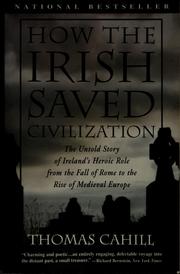
An enormously popular and engaging account of Ireland's monastic golden age — it makes the early Christian and Celtic period vivid and meaningful before moving to darker chapters.

Focuses on the pivotal 12th-century Norman invasion that began centuries of English entanglement in Ireland, providing essential context for understanding colonial rule.
English Rule, Plantation, and the Great Famine
IntermediateDevelop a thorough understanding of the plantation system, Penal Laws, and the catastrophic Great Famine — the events that most profoundly shaped modern Irish identity and the Irish diaspora.
▸ Study plan for this stage
Pace: 8–10 weeks, ~40–50 pages/day. Start with *The Islandman* (2 weeks), move to *The Great Hunger* (4–5 weeks due to length and density), then *Ireland Before and After the Famine* (2 weeks for synthesis and economic analysis).
- The lived experience of pre-Famine Irish rural life as documented in *The Islandman* — subsistence farming, language, community, and cultural continuity on the Blasket Islands
- The structural causes of the Great Famine: potato dependency, landlord-tenant relations, and colonial economic extraction as analyzed in Woodham-Smith's *The Great Hunger*
- The Famine as catastrophe and turning point: mortality, emigration, and the breakdown of traditional Irish society (1845–1852)
- The Penal Laws' long-term impact on Irish Catholic dispossession, poverty, and vulnerability to crisis
- Demographic and economic consequences: population collapse, the Irish diaspora, and lasting social trauma documented across all three texts
- Cormac Ó Gráda's comparative economic analysis: why Ireland suffered disproportionately compared to other European regions facing crop failure
- The role of ideology, neglect, and policy failure in transforming a natural disaster into a man-made catastrophe
- What does *The Islandman* reveal about pre-Famine Irish rural society, and how does this context make the Famine's impact more comprehensible?
- According to Woodham-Smith, what were the primary structural and political failures that transformed the potato blight into mass starvation?
- How did the Penal Laws and the plantation system create the conditions of poverty and dependency that made Ireland uniquely vulnerable to famine?
- What evidence does Ó Gráda provide to explain why Ireland's Famine was more severe than comparable crop failures in other European countries?
- How did the Great Famine reshape Irish society, population, and identity—and what role did emigration play in creating the Irish diaspora?
- What is the relationship between English colonial policy (explicit or implicit) and the death toll and suffering during the Famine years?
- Create a timeline of key events from 1600–1852 integrating details from all three texts: plantation, Penal Laws, pre-Famine rural life, blight years, and emigration waves.
- Write a character study of one family or individual from *The Islandman*, then trace how their world would have been destroyed by the Famine using evidence from Woodham-Smith.
- Construct a comparison chart: pre-Famine Irish rural economy (from *The Islandman*) vs. the structural vulnerabilities Woodham-Smith identifies—what made collapse inevitable?
- Analyze 2–3 specific policy decisions or failures Woodham-Smith documents (e.g., Poor Law implementation, grain exports, landlord evictions) and assess their human cost.
- Using Ó Gráda's economic data, write a short essay explaining why Ireland's Famine mortality was proportionally higher than in Scotland, Belgium, or other regions facing similar crop failure.
- Create a map or visual showing emigration patterns and diaspora destinations mentioned across the texts, annotated with numbers and causes from each source.
Next up: This stage establishes the historical trauma, demographic upheaval, and colonial grievances that motivated Irish nationalism, independence movements, and the cultural revival—preparing you to understand the political and cultural responses of the late 19th and 20th centuries.
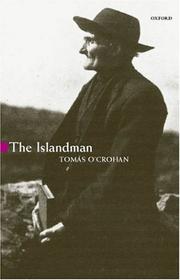
A first-hand memoir of life on the Blasket Islands that grounds the reader in the Gaelic-speaking world that colonial rule and famine nearly destroyed — essential human context before the historical analysis.

The definitive and most celebrated account of the Great Famine of 1845–52, rigorously researched and compellingly written — a canonical text that every serious student of Irish history must read.
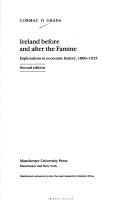
An economic and social history that places the Famine in its broader structural context, deepening and sometimes challenging the narrative established by Woodham-Smith with scholarly rigour.
Revolution, Partition, and Independence
IntermediateUnderstand the road to the 1916 Rising, the War of Independence, the Civil War, and the partition of Ireland — the foundational traumas of the modern Irish and Northern Irish states.
▸ Study plan for this stage
Pace: 6–7 weeks, ~40–50 pages/day. Start with Townshend's *Easter 1916* (weeks 1–4, ~320 pages), then move to Tom Barry's *Guerrilla Days in Ireland* (weeks 5–7, ~280 pages). Build 1–2 buffer days per week for review and reflection.
- The political and social conditions that made the 1916 Rising inevitable: Irish nationalism, Home Rule delays, and the impact of WWI on Irish politics
- The planning, execution, and immediate aftermath of the Easter Rising as a turning point in Irish revolutionary consciousness
- The shift from insurrection to guerrilla warfare: how the Rising's failure paradoxically strengthened the independence movement
- Tom Barry's firsthand account of IRA flying columns and asymmetrical warfare tactics during the War of Independence (1919–1921)
- The human cost of revolution: civilian casualties, reprisals, and the moral complexities of armed struggle
- The partition of Ireland and the Civil War as direct consequences of independence, not separate events
- The role of British military response and counterinsurgency in radicalizing Irish public opinion
- What were the primary political grievances and historical circumstances that led Irish republicans to attempt armed rebellion in 1916?
- How did the British response to the Easter Rising—particularly the executions of the leaders—transform public opinion and strengthen the independence movement?
- What were the key differences between the 1916 Rising as a conventional insurrection and the guerrilla warfare tactics employed during the War of Independence?
- According to Tom Barry's account, how did IRA flying columns operate, and what advantages did their tactics offer against a numerically superior British force?
- How did the achievement of independence lead directly to partition and civil war, and what were the ideological divisions that caused Irishmen to fight each other?
- What role did civilian experiences of British military reprisals play in sustaining the independence movement between 1916 and 1921?
- Create a detailed timeline of events from 1914–1923, marking key moments in *Easter 1916* (Home Rule suspended, the Rising itself, executions, elections) and *Guerrilla Days* (major ambushes, British counteroffensives, truce negotiations). Annotate with casualty figures and political turning points.
- Write a 2–3 page comparative analysis: How did the nature of Irish resistance change between April 1916 (the Rising) and 1921 (the truce)? Use specific examples from both Townshend and Barry.
- Map the geography of the War of Independence using Barry's accounts: identify the Cork flying column's operational area, major ambush sites, and British garrison locations. Explain why terrain and local knowledge gave the IRA tactical advantages.
- Select three key figures from *Easter 1916* (e.g., Patrick Pearse, Michael Collins, James Connolly) and trace their roles or legacies through *Guerrilla Days in Ireland*. How did their decisions shape the later conflict?
- Debate exercise: Argue both sides of the partition question using evidence from both books. One side defends the treaty and partition as pragmatic; the other argues for a unified republic. What does each book suggest about the inevitability or avoidability of partition?
- Create a 'soldier's perspective' journal entry from either a British officer (using Townshend's analysis of their tactics) or an IRA volunteer (using Barry's firsthand account). Reflect on the moral ambiguities, fear, and motivations on both sides.
Next up: This stage establishes the foundational trauma and ideological divisions that shaped the Irish and Northern Irish states; the next stage will likely examine how these unresolved tensions—partition, civil war bitterness, and competing national identities—played out in the 20th century and continue to influence Irish politics today.

The most balanced and scholarly account of the Easter Rising, situating it within the broader context of World War I and Irish nationalist politics — the essential starting point for the revolutionary period.

A gripping first-hand memoir by an IRA flying column commander during the War of Independence, giving the reader an insider's view of the guerrilla campaign that forced British negotiations.
Modern Ireland and Deeper Perspectives
ExpertEngage with the complexities of 20th- and 21st-century Ireland — the Troubles in Northern Ireland, the Celtic Tiger, and the ongoing negotiation of Irish identity — through both history and literature.
▸ Study plan for this stage
Pace: 8–10 weeks, ~40–50 pages/day. Start with "Say Nothing" (4–5 weeks, ~35 pages/day for narrative immersion), then "Modern Ireland 1600-1972" (4–5 weeks, ~50 pages/day for analytical depth).
- The IRA's evolution from revolutionary organization to fractured militant groups, and how personal motivations intersect with political ideology (central to Keefe's narrative)
- The Troubles as a conflict rooted in centuries of colonial history, sectarian division, and competing national identities rather than a spontaneous eruption
- How Foster's long historical arc (1600–1972) reveals structural patterns: land dispossession, religious conflict, failed union, and the inevitability of partition
- The role of silence, trauma, and collective memory in shaping Irish identity—both as Keefe explores it through individual lives and as Foster contextualizes it historically
- The tension between nationalist mythology and historical complexity: how both texts challenge romantic narratives of Irish independence
- Partition and its aftermath: the creation of two Irelands and the unresolved question of national identity that persists into the modern era
- The relationship between violence, political legitimacy, and moral ambiguity in Irish history
- How does Keefe's account of the IRA's internal divisions and the personal stories of figures like Dolours Price complicate the traditional nationalist narrative of Irish independence?
- What does Foster identify as the long-term structural causes of Irish partition, and how do these causes appear in Keefe's account of the Troubles?
- How do both texts treat the question of violence as a political tool? What moral and historical judgments do they invite the reader to make?
- What role does silence and the suppression of memory play in both Keefe's narrative and Foster's historical analysis? How does this shape Irish identity?
- How does understanding the period 1600–1972 (Foster's scope) change your interpretation of the Troubles as Keefe presents them?
- What unresolved tensions between Irish and British identity, nationalism and unionism, does this stage of reading reveal?
- Create a timeline mapping key events from Foster's 1600–1972 period onto Keefe's narrative of the Troubles—identify which historical grievances and patterns Keefe's characters are responding to.
- Write a character study of one figure from 'Say Nothing' (e.g., Dolours Price, Gerry Adams, or a peripheral character), analyzing how their personal history reflects the larger historical forces Foster describes.
- Annotate 2–3 key passages from each book that reveal the authors' different approaches to the same historical moment (e.g., partition, the Easter Rising, the IRA's founding). Compare their interpretations.
- Create a visual map of the IRA's organizational fractures as Keefe describes them, then cross-reference with Foster's account of how Irish nationalism fragmented in the early 20th century.
- Write a 1,000-word essay answering one of the study questions above, using specific evidence from both texts.
- Conduct a close reading of Keefe's treatment of one unsolved murder or act of violence in 'Say Nothing,' then research how Foster's historical context illuminates the political motivations behind it.
Next up: This stage equips you with a deep, textured understanding of how historical trauma, political ideology, and personal agency intersect in modern Ireland—preparing you to engage with contemporary Irish literature, cultural criticism, or further study of post-1972 Irish and Northern Irish history with nuanced awareness of the unresolved tensions that continue to shape the island.
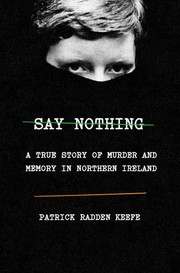
A masterful narrative non-fiction account of the Troubles in Northern Ireland, centred on the IRA and the murder of Jean McConville — it makes the conflict's moral complexity viscerally real.
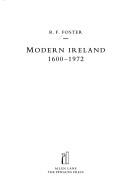
The landmark scholarly synthesis of Irish history by one of its greatest historians — now that the reader has the full context, Foster's nuanced, revisionist arguments can be fully appreciated and critically engaged with.
Discussion
Keep reading
Paths that share books, cover the same subject, or open a related topic.