The Best Chinese Literature to Read
This curriculum traces Chinese literature from its ancient poetic and philosophical roots through dynastic prose and fiction, into the revolutionary transformations of the modern era, and finally to the bold voices of contemporary Chinese writing. Starting at an intermediate level, each stage deepens your literary and cultural fluency, so that by the end you can read and appreciate the full arc of one of the world's oldest and richest literary traditions.
Ancient Voices: Poetry & Classical Foundations
IntermediateDevelop a feel for the imagery, form, and philosophical spirit of classical Chinese poetry and its foundational texts, which echo through all later literature.
▸ Study plan for this stage
Pace: 6–8 weeks, ~20–25 pages/day (with pauses for reflection and rereading of poems)
- The shamanic and mystical imagery of *Songs of the South*: dragons, spirits, and the poet's spiritual journey as metaphor for political exile and personal longing
- Du Fu's regulated verse forms (lüshi) and their technical mastery: tonal patterns, parallelism, and how form constrains and deepens meaning
- The Confucian ideal of the poet-official: duty to remonstrate with power, moral witness, and the tension between personal suffering and public responsibility
- Nature as mirror and refuge: how both Qu Yuan and Du Fu use landscape and seasonal imagery to express inner states and philosophical resignation
- Allusion and historical consciousness: how classical poets embed references to earlier texts and mythological figures to situate themselves in a continuum of tradition
- The lyric 'I': how the speaking voice in these poems oscillates between personal emotion, universal human experience, and timeless philosophical truth
- What is the significance of the dragon and water imagery in *Songs of the South*, and how does it reflect Qu Yuan's political and spiritual condition?
- How do Du Fu's regulated verse forms (particularly the use of tonal parallelism and couplet structure) enhance or complicate the emotional content of his poems?
- What does it mean for a classical Chinese poet to serve as a 'moral witness,' and how do both Qu Yuan and Du Fu embody or struggle with this role?
- How do Qu Yuan and Du Fu use nature and seasonal imagery differently, and what does each poet's approach reveal about his philosophical worldview?
- Identify three allusions or references to earlier texts or mythological figures in the poems you've read. What does each allusion add to the poem's meaning?
- How does the concept of exile—literal or spiritual—function as a unifying theme across both *Songs of the South* and Du Fu's selected poems?
- Read *Songs of the South* aloud (or listen to a recording if available) and note which images recur most frequently (dragons, orchids, water, spirits). Create a visual map or collage representing these recurring symbols and their emotional associations.
- Select three poems from Du Fu and analyze the tonal pattern (ping/ze) and parallel structure of at least one couplet in each. Write a brief note on how the formal constraints seem to shape the poem's emotional register.
- Write your own short poem (8–12 lines) in response to one poem from either text, using at least one image or allusion from the original. Reflect on how constraint (rhyme, meter, or thematic echo) affected your creative choices.
- Create a timeline or chart tracking Du Fu's life events (exile, displacement, witnessing of historical upheaval) alongside the poems in the selection. Note how biographical context illuminates specific poems and how poems transcend biography.
- Choose one poem from *Songs of the South* and one from Du Fu that both use nature imagery. Write a comparative essay (500–800 words) analyzing how each poet's use of landscape reflects his philosophical stance and historical moment.
- Memorize 2–3 short poems or substantial excerpts (20–30 lines total) from the two texts. Recitation deepens internalization of rhythm, imagery, and emotional arc; reflect on how memorization changes your understanding of the poems' music and meaning.
Next up: This stage anchors you in the lyric intensity, formal sophistication, and moral seriousness of classical poetry, providing the aesthetic and philosophical vocabulary needed to understand how later dynasties (Tang, Song, Ming) both inherited and transformed these foundational modes of expression.
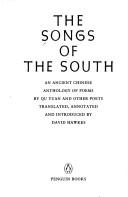
Qu Yuan's ecstatic, mythological verse introduces a more personal and romantic register absent from the Book of Songs, and his 'Li Sao' is one of the most celebrated poems in Chinese history — essential before moving to Tang poetry.
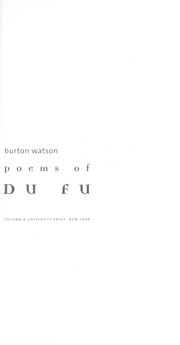
Du Fu is widely considered China's greatest poet; his regulated verse on war, exile, and human suffering represents the peak of Tang dynasty poetry and is the benchmark against which all later poets are measured.
Classical Prose & the Great Novels
IntermediateEncounter the towering works of classical Chinese prose fiction and understand how Confucian, Taoist, and Buddhist ideas are woven into narrative form.
▸ Study plan for this stage
Pace: 12–14 weeks, ~40–50 pages/day. *Journey to the West* (weeks 1–6, ~100 chapters across 1,000+ pages); *Dream of the Red Chamber* (weeks 7–14, ~120 chapters across 1,000+ pages). Build in 1–2 weeks for review and integration.
- The picaresque structure and moral education: how *Journey to the West* uses episodic adventures to teach Buddhist enlightenment and Confucian virtue through Monkey King's transformation
- Supernatural realism: the seamless blending of the magical (demons, immortals, celestial bureaucracy) with the mundane in both novels as a vehicle for philosophical ideas
- Cyclical time and karma: how both works embed Buddhist concepts of cause-and-effect, reincarnation, and the illusory nature of material reality into plot and character arcs
- The decline of the household: *Dream of the Red Chamber*'s portrayal of family decay as a microcosm of Confucian social collapse and the impermanence of worldly attachments
- Narrative framing and metafiction: the use of dreams, prophecies, and nested stories to question the nature of reality and create philosophical distance from events
- Yin-yang balance and Taoist harmony: the interplay of opposites (male/female, action/stillness, desire/renunciation) as both structural and thematic principle
- Character as archetype: how protagonists embody philosophical positions (Xuanzang's faith, Monkey's rebellion, Jia Baoyu's emotional sensitivity) rather than psychological realism
- How does Monkey King's journey from rebellion to enlightenment in *Journey to the West* illustrate Buddhist concepts of ego-dissolution and the path to Buddhahood?
- What role does the supernatural bureaucracy (heavenly courts, demon realms, underworld) play in both novels, and what does it suggest about the relationship between cosmic order and human fate?
- How does *Dream of the Red Chamber* use the Jia family's decline to explore Confucian ideas about virtue, duty, and the consequences of moral failure?
- Identify three instances where Taoist or Buddhist philosophy directly shapes a major plot point or character decision in either novel. What is the philosophical lesson being taught?
- How do the narrative frames (the stone in *Dream of the Red Chamber*, the Buddhist framing of *Journey to the West*) create philosophical irony about the nature of the story being told?
- Compare the treatment of desire and attachment in both novels: how do the works suggest that enlightenment requires renouncing worldly pleasures?
- Create a character transformation chart for Monkey King across *Journey to the West*, tracking his spiritual progress through key episodes (rebellion, capture, journey, enlightenment). Annotate with specific Buddhist concepts (karma, ego, compassion) at each stage.
- Map the supernatural hierarchy in *Journey to the West* (Buddha, Bodhisattvas, Immortals, demons, humans). Write a 2–3 page analysis of how this cosmic order mirrors and comments on earthly Confucian hierarchy.
- Read and annotate the opening chapters of *Dream of the Red Chamber* (the stone's origin story, the Jia family genealogy). Write a 500-word reflection on how the metafictional frame shapes your understanding of the family's fate.
- Select one major episode from *Journey to the West* (e.g., the Demon of the Black Wind, the Kingdom of Women) and write a philosophical interpretation: what Taoist, Buddhist, or Confucian lesson is embedded in this adventure?
- Create a visual or written comparison of how desire is portrayed in *Journey to the West* (Monkey's appetite, the demon temptations) versus *Dream of the Red Chamber* (Baoyu's romantic and sensual attachments). What does each novel suggest about the spiritual danger of desire?
- Write a dialogue between two characters from different novels (e.g., Xuanzang and Jia Baoyu, or Monkey and Lin Daiyu) discussing the nature of enlightenment, attachment, and the meaning of life. Ground it in their respective philosophical worldviews as presented in the texts.
Next up: This stage establishes mastery of how classical Chinese philosophy (Buddhism, Taoism, Confucianism) animates narrative structure and character, preparing you to analyze how later works either inherit, critique, or modernize these traditions in response to historical change.
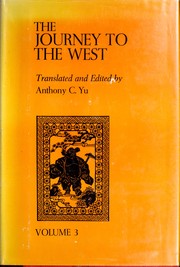
This 16th-century epic blends Buddhist allegory, comic adventure, and mythological imagination; its characters and episodes are reference points throughout all of later Chinese culture and literature.

Widely regarded as the greatest Chinese novel ever written, it is read after Journey to the West because it demands the cultural and philosophical fluency built by earlier stages — its psychological depth and poetic density reward a prepared reader.
The Modern Break: May Fourth & Republican Era
IntermediateUnderstand how 20th-century writers broke from classical tradition to forge a vernacular, socially urgent modern Chinese literature under the pressure of revolution and national crisis.
▸ Study plan for this stage
Pace: 6–7 weeks, ~40–50 pages/day. Week 1–2: "Call to Arms" (~200 pages); Week 3–4: "Camel Xiangzi" (~250 pages); Week 5–7: Re-read key stories, synthesize themes, complete exercises.
- Vernacular Chinese (baihua) as a revolutionary literary tool: how Lu Xun and Lao She abandoned classical Chinese to reach ordinary readers and encode social critique
- The intellectual's crisis of agency: Lu Xun's protagonists (especially in 'A Madman's Diary' and 'The True Story of Ah Q') grapple with paralysis, complicity, and the impossibility of saving others
- National humiliation and spiritual colonization: how both writers depict Chinese society as internally corrupted and externally dominated, requiring radical transformation
- The urban underclass as literary subject: Lao She's Xiangzi embodies the destruction of the individual by capitalism, exploitation, and social indifference—a new realist focus
- Irony, satire, and dark humor as political weapons: Lu Xun's caustic tone and Lao She's tragicomic narrative expose hypocrisy and social decay without didactic moralizing
- The tension between individual desire and collective fate: both works show personal ambitions (Ah Q's fantasies, Xiangzi's dream of owning a cart) crushed by historical forces
- Narrative innovation: fragmented stories, unreliable narration, and modernist techniques that mirror psychological and social fragmentation
- How does Lu Xun's use of vernacular Chinese in 'Call to Arms' function as both a literary and political act? What does he gain and what does he risk by abandoning classical forms?
- Compare the fates of Ah Q and Xiangzi. What do their parallel trajectories reveal about Lu Xun's and Lao She's diagnosis of Chinese society under Republican rule?
- Analyze the narrator's relationship to the protagonist in 'A Madman's Diary' and 'The True Story of Ah Q.' How does narrative distance create irony and social critique?
- What is Xiangzi's dream, and how does the novel systematically destroy it? What does this destruction suggest about the possibility of individual agency in modern China?
- How do both 'Call to Arms' and 'Camel Xiangzi' use irony and dark humor rather than explicit political messaging? What is the effect of this restraint?
- Identify moments in both works where characters are trapped between tradition and modernity, or between individual will and social pressure. What do these moments suggest about the 'modern break'?
- Close-read 'A Madman's Diary' and 'The True Story of Ah Q' side by side. Annotate moments where vernacular language creates immediacy or irony. Write a 500-word analysis of how Lu Xun's prose style differs from classical Chinese and why this matters politically.
- Create a character map for 'Camel Xiangzi' tracking Xiangzi's relationships (with Huniu, the old man, the police, etc.). For each relationship, note how it either enables or destroys his dream. Write a brief reflection on whether any character could have saved him.
- Rewrite a scene from 'Call to Arms' (e.g., Ah Q's execution, or the madman's final plea) in classical Chinese style, then compare it to Lu Xun's original. What is lost and gained in each version? What does this reveal about the power of vernacular literature?
- Analyze the role of money and economic desperation in 'Camel Xiangzi.' Track every financial transaction and how it shapes Xiangzi's choices. Write a 400-word essay on whether Lao She presents Xiangzi as a victim or as complicit in his own destruction.
- Compare the treatment of the intellectual/educated character in two stories from 'Call to Arms' (e.g., the narrator in 'A Madman's Diary' vs. Kong Yiji). What anxieties about education and social status do these figures embody?
- Create a timeline of historical events (1911 Revolution, warlord period, Japanese encroachment) and map them onto the narrative settings of both works. How do the stories reflect or evade explicit historical reference? Why might this ambiguity be intentional?
Next up: This stage establishes the foundational techniques and thematic obsessions of modern Chinese literature—vernacular voice, social realism, and the crisis of individual agency—which the next stage will deepen through later 20th-century writers grappling with war, ideology, and the search for new forms of meaning.
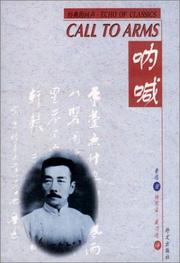
Lu Xun's short story collection — including 'A Madman's Diary' and 'The True Story of Ah Q' — is the founding document of modern Chinese literature; its savage critique of tradition sets the agenda for everything that follows.
Lao She's realist novel about a Beijing rickshaw puller is one of the finest works of Republican-era fiction, offering a ground-level view of urban poverty and moral collapse that complements Lu Xun's satirical mode.
Contemporary Masterpieces: Post-1949 to the Present
ExpertEngage with the most celebrated contemporary Chinese novelists, whose work grapples with the Cultural Revolution, rural China, memory, and global modernity in formally ambitious ways.
▸ Study plan for this stage
Pace: 6–7 weeks, ~40–50 pages/day, with 2–3 days per week for reflection and written analysis
- Narrative fragmentation and non-linear storytelling as responses to historical trauma (Mo Yan's layered family saga structure)
- The Cultural Revolution as a rupturing force in personal and familial identity, and how memory reconstructs meaning after catastrophe
- Rural China as both mythic space and site of modernization, economic upheaval, and moral ambiguity
- The tension between individual agency and historical determinism—how characters navigate forces beyond their control
- Formal innovation in contemporary Chinese fiction: magical realism, dialect, sensory intensity, and metanarrative techniques
- Intergenerational transmission of trauma, shame, and resilience within families across decades
- The ethics of survival and complicity: moral compromises made under extreme historical pressure
- How do Mo Yan and Yu Hua use narrative structure and temporal disruption to represent the experience of historical trauma? What formal choices signal the impossibility of straightforward historical representation?
- What role does the rural setting play in both novels? How do the authors depict the collision between traditional rural life and modern/revolutionary forces?
- How do family relationships—particularly across generations—serve as the primary lens through which each author explores larger historical and social questions?
- What is the significance of sensory detail, dialect, and linguistic register in these novels? How do these formal elements create emotional and historical authenticity?
- How do the protagonists in each novel navigate moral ambiguity and survival under extreme circumstances? What does their behavior suggest about agency and complicity?
- How does memory function in these texts? What does the act of remembering—or forgetting—reveal about the characters' relationship to history?
- Close-read 3–4 key passages from Red Sorghum (e.g., the opening, a scene of violence, a moment of sensory intensity) and annotate how Mo Yan uses fragmentation, dialect, and magical realism to create meaning
- Create a detailed family tree for the Sorghum family across generations, then write a 500-word analysis of how genealogy and inheritance structure the novel's exploration of history
- Read a critical essay on Mo Yan's narrative technique (e.g., on his use of magical realism or non-linearity) and write a 600-word response applying those insights to specific scenes
- Track the motif of 'survival' across both novels: create a comparative chart of how each protagonist survives, what they sacrifice, and what moral costs they incur
- Write a dialogue between Mo Yan's protagonist and Yu Hua's Xu Fugui discussing their experiences of the Cultural Revolution and rural life—use textual evidence to ground their 'voices'
- Analyze the role of sensory experience (taste, smell, color, sound) in one chapter from each novel; write 400 words on how sensory detail functions as historical testimony
Next up: This stage establishes how contemporary Chinese literature uses formal innovation and intimate family narratives to process historical rupture; the next stage will expand outward to examine how these same authors and their peers engage with globalization, diaspora, and the international literary marketplace.
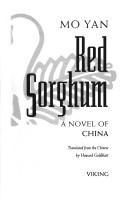
Mo Yan's Nobel Prize-winning novel of war, passion, and ancestral memory in rural Shandong is the ideal entry into contemporary Chinese fiction — its mythic, earthy style is a direct counterpoint to the urban realism of the Republican era.
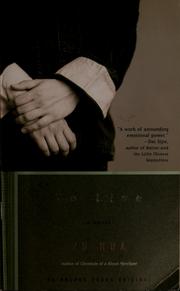
Yu Hua's spare, devastating novel traces one family's survival across decades of Chinese history; its controlled simplicity is a perfect contrast to Mo Yan's exuberance and deepens your sense of how contemporary writers use restraint.
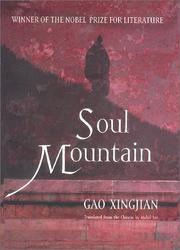
Gao Xingjian's Nobel Prize-winning experimental novel — a meditation on identity, landscape, and freedom — is placed last because it demands the full historical and literary context built by all prior stages to be fully appreciated.
Discussion
Keep reading
Paths that share books, cover the same subject, or open a related topic.