The Sociology of Religion: The Best Books on Belief as a Social Fact, in Order
The sociology of religion brackets the question of whether any religion is true and asks instead what religion does socially — how it binds groups, how it survives or shrinks under modernity, and how it behaves when belief becomes something people choose rather than inherit. The path runs from the two founding texts through the secularization debate and the American challenge to it, then into the survey evidence, and closes with the anthropological wing that treats ritual rather than belief as the primary object. Expect the middle of the path to be an unresolved argument: secularization theory was declared settled twice and overturned twice.
The founding texts
BeginnerLearn the discipline's basic move — treating religion as a social fact with observable consequences — and meet the two nineteenth-century arguments every later book is positioned against: Durkheim's religion as society worshipping itself, and Weber's religion as an unintended cause of economic change.
▸ Study plan for this stage
Pace: Six weeks for 1,136 pages, and the three read at very different speeds. Davie's survey (328pp) is a textbook written to be a first book — two weeks at 30 pages a session, and it is the only one here that tells you where the evidence is weak. Durkheim's The Elementary Forms Of Religious Life (416pp)
- The social fact: religion studied by its observable consequences, with the truth of its claims bracketed rather than denied
- Durkheim's sacred/profane distinction and the claim that ritual produces the group before it expresses a belief
- Collective effervescence, and why it makes ritual prior to doctrine in Durkheim's scheme
- Weber's elective affinity — ascetic Protestantism as an unintended cause of a capitalist disposition, not a designed one
- The methodological opposition the field is built on: religion as reflection of society against religion as an independent cause
- Davie's European-versus-American split, which sets up the whole argument of stages two and three
- Verstehen as Weber's method and what it licenses him to claim about motives
- What does Durkheim mean by saying the sacred is the social, and what in the totemic material is he treating as evidence for it?
- State Weber's causal claim precisely. What is he not claiming?
- Where does Davie say the field's evidence is weakest, and does she say why?
- Durkheim and Weber could both be right about different things. Formulate the division of labour that would make that true.
- What does Weber say in his replies to critics that the 1905 essay left ambiguous?
- Read Durkheim's concluding book first, then go back and find in the ethnographic chapters the three cases he actually leans on. Write down whether the theory needs them.
- Take Weber's chain from doctrine to disposition to economic conduct and write each link as a separate proposition. Mark which links he evidences and which he asserts.
- Use Davie's chapter framing to place Durkheim and Weber on her map, then keep that map and add each later book on this path to it.
- Find one modern practice — a graduation, a sporting ritual, a funeral — and describe it in Durkheim's vocabulary, then in Weber's. Note which description is easier and why.
Next up: With the two founding claims in hand you can follow the twentieth century's attempt to turn Weber's disenchantment into a testable prediction about religion's decline.
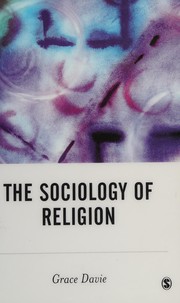
The best modern survey and the right first book: Davie lays out the field's questions, its European-versus-American split, and where the evidence is weak. The catalogue files it under the bare title The Sociology of Religion, which is also the title of a Weber volume — this is Davie's 2007 textbook.
Durkheim's 1912 study of Australian totemism, and the origin of the claim that the sacred is the social — that ritual makes the group before it expresses any belief. Long and dated in its ethnography, but the theoretical chapters are the foundation of everything in stage five.

The counter-move: religious ideas as a cause rather than a reflection, with ascetic Protestantism producing a disposition capitalism could use. The record here is the Penguin edition that prints the essay together with other writings, so you get the 1905 text plus Weber's replies to his early critics.
Secularization and its critics
IntermediateFollow the field's central twentieth-century thesis — that modernity erodes religion — from its most rigorous statement to the point where its own leading advocate withdrew it. You should end able to distinguish three separate claims that get bundled together: declining belief, declining practice, and declining institutional authority.
▸ Study plan for this stage
Pace: Seven to eight weeks for 1,231 pages, and the distribution is lopsided. Berger's The sacred canopy (229pp) and Luckmann's The invisible religion (128pp) are both short — read them back to back inside two weeks, because the pairing is the argument: two collaborators reasoning from similar premises to
- Plausibility structure and world-building — Berger's account of how a religious order stays credible
- Pluralism as the corrosive mechanism, which is the specific version of secularization Berger defended
- Luckmann's privatisation thesis: religion relocating into individual meaning-making rather than disappearing
- The three claims that get bundled as secularization — falling belief, falling practice, falling institutional authority — and the fact that they can move independently
- Taylor's immanent frame and the shift from belief as default to belief as one option among others
- Subtraction stories and why Taylor thinks they misdescribe what happened
- What it means, methodologically, that a thesis's leading advocate withdrew it
- What is a plausibility structure, and by what mechanism does pluralism weaken one?
- Berger and Luckmann start from a shared constructionist premise. Where does the reasoning diverge?
- Separate the three secularization claims and say, for each, what evidence would settle it.
- What is a subtraction story, and what does Taylor put in its place?
- Does Luckmann's privatised religion count as evidence against secularization, or does it redefine the term so the thesis cannot fail?
- Which parts of Taylor's argument could a sociologist test, and which are not that kind of claim?
- Write Berger's thesis and Luckmann's thesis as two predictions about the same society fifty years on, then check which one the survey data in stage four supports.
- For A Secular Age, keep a one-line note per chapter of what changed historically. At the end, mark which changes Taylor documents and which he narrates.
- Take the three bundled secularization claims and find, in each of these three books, a passage that argues for one of them specifically.
- Find Berger's later statement of why he abandoned the thesis and set it against the argument of The sacred canopy. Write a page on which part of the original he gave up.
Next up: Secularization is now stated at its strongest and shown to have been abandoned by its own advocate, which is the vacuum the rational-choice programme moved into.
The classic statement of religion as a socially constructed order that makes the world plausible, and of pluralism as the thing that undermines it. Essential background for the fact that Berger later publicly abandoned the secularization thesis, which is the single most instructive reversal in the field.

Berger's collaborator arguing the opposite conclusion from similar premises: religion does not disappear under modernity, it privatises into individual meaning-making outside the churches. Read straight after The Sacred Canopy — the pairing is the cleanest way to see what the theory does and does not predict.

A philosopher's thousand-page reconstruction of how unbelief became a live option in the West, and the most serious challenge to any purely subtraction-based story of secularization. Not sociology and it does not pretend to be, but no current debate in the field ignores it.
The religious-economies challenge
IntermediateMeet the rational-choice counter-programme that argues religion behaves like a market: where the state deregulates, supply increases and participation rises. Assess it honestly — it explains American exceptionalism well and Western Europe badly, and its historical statistics have been contested.
▸ Study plan for this stage
Pace: Four weeks for 690 pages, and the two books are theory then test, in that order. Stark and Finke's Acts of Faith (343pp) states the model as a set of numbered propositions and definitions, so it reads more like a formal framework than an argument — two weeks at 25 pages a session, working through th
- The religious-economies model: religion as a market with suppliers, consumers, and regulation
- Supply-side explanation — participation rises where the state deregulates and firms compete, rather than falling with modernity
- Strictness as a mechanism: why demanding churches grow and accommodating ones shrink, in Stark and Finke's account
- Rational choice applied to belief, and the standing objection that it makes commitment look like consumption
- American exceptionalism as the model's best case and Western Europe as its worst
- How historical adherence rates are reconstructed, and why the reconstruction is where the argument really is
- State the model's core propositions. Which are definitions and which are empirical claims?
- What is the strictness mechanism, and what would falsify it?
- Why does the model handle the United States better than Western Europe, and is that a fatal problem or a scope condition?
- How were the 1776 adherence figures arrived at, and what has been objected to about them?
- Does the religious-economies model actually refute secularization, or address a different question than Berger and Taylor were asking?
- List Acts of Faith's propositions and mark each as definitional, testable, or untestable as stated. Count the three groups.
- Take one denominational trend from The churching of America and trace where its numbers come from, then write what would have to be wrong for the trend to reverse.
- Apply the strictness mechanism to two congregations you can find information about and see whether the prediction holds.
- Write the strongest objection a Berger reader would make to Acts of Faith, and then Stark and Finke's best reply from their own text.
Next up: Both the secularization and the market accounts make predictions about American religion specifically, which is the thing the next stage actually measures.

Stark and Finke's systematic statement of the religious-economies model, written as a deliberate replacement for secularization theory rather than an amendment to it. Combative in tone, which is worth noting: the propositions are stated as axioms and the field has argued with several of them.

The empirical test of that model on American denominational data across two centuries, with the striking finding that strict churches grow while accommodating ones shrink. Read after Acts of Faith, whose theory it exists to demonstrate — and note that its adherence estimates for the early period have been challenged.
Measuring what Americans actually believe
IntermediateMove from theory to evidence and see what large-scale survey and interview work has established about belief, belonging and the recent rise of the religiously unaffiliated. Learn to read a claim about religiosity for what was measured — self-reported attendance is famously inflated.
▸ Study plan for this stage
Pace: Seven weeks for 1,387 pages, and the reading order runs oldest evidence to newest method. Habits of the heart (355pp), by Robert N. Bellah with Richard Madsen, William M. Sullivan, Ann Swidler and Steven M. Tipton, is an interview study rather than a survey — two weeks, and its findings look obvious
- Expressive individualism and Sheilaism as Bellah's team named them, and the therapeutic idiom of American faith
- Panel data versus cross-sectional survey: why following the same people answers a different question
- The rise of the unaffiliated, and Putnam and Campbell's account of what produced it
- Simultaneous polarisation and tolerance — the finding that makes American grace worth its length
- Social-desirability bias in reported attendance, and the standard corrections for it
- Moralistic therapeutic deism as Smith's description of what inherited faith becomes
- Belonging, behaving and believing as three separable measures that surveys often collapse
- What did Bellah's team find about the language Americans use for religious commitment, and what was their evidence?
- How do Putnam and Campbell explain the growth of the nones, and what alternative explanation do they rule out?
- What does Souls in transition show happening to teenage faith that a snapshot survey would miss?
- How much is self-reported attendance inflated, and what do these three books do about it?
- Which of the theories from stages two and three does the American evidence support best, and on which specific finding?
- Take five statistics from American grace and, for each, write down the question wording and sample that produced it.
- Compare Bellah's interview material with Smith's on the same theme of self-authored faith and note what the later panel design adds.
- Track one of Smith's cohorts across the waves and write what happened to their stated belief, their practice, and their affiliation separately.
- Score the secularization thesis, the privatisation thesis and the religious-economies model against three findings each from this stage. Say which survives best.
Next up: Survey work measures stated belief, which is exactly the object the anthropological wing argues was never the primary thing — the last stage goes back to ritual.
Bellah and colleagues' interview study of American individualism and its religious languages, which named the therapeutic, self-authored faith that later survey work would quantify. Older than the rest of this stage and the reason its findings look inevitable in hindsight.
Putnam and Campbell's two-wave panel survey plus congregational case studies — the most data-rich account of how Americans became both more polarised and more tolerant about religion at once. The best evidence base on the path and the standard citation for the rise of the nones.

Longitudinal tracking of the same young Americans from teenage years into their twenties, showing what actually happens to inherited faith rather than what cross-sectional snapshots imply. Closes the stage because panel data answers a question no single survey can.
Ritual, purity and the anthropological wing
IntermediateReturn to Durkheim's question with the tools of anthropology, where the primary object is ritual and classification rather than stated belief. These are the hardest books here and they repay the earlier stages: you should be able to see exactly which Durkheimian claim each one is extending or breaking.
▸ Study plan for this stage
Pace: Eight to nine weeks, and the page counts are uneven: 193pp for Douglas and 784pp for Bellah, with Rappaport's length not recorded in our catalogue, so budget by difficulty rather than by pages. Purity and danger (193pp) is short and repays two weeks — it is the most quotable book on the path and the
- Dirt as matter out of place — pollution rules as a classification system rather than hygiene
- Grid and group as Douglas's comparative scheme for social structure
- Rappaport's claim that the performance of ritual, independent of belief in it, is what establishes convention and the sacred
- Ultimate sacred postulates and their unfalsifiability as a feature rather than a defect, in Rappaport's argument
- Ritual and play as evolutionary antecedents of religion, which is Bellah's opening move
- The Axial Age and what Bellah claims changed in it
- Which Durkheimian claim each of these three extends and which each breaks
- Reconstruct Douglas's reading of the Leviticus dietary rules. What makes it a classification argument rather than a functional one?
- What does Rappaport mean by saying ritual performance itself establishes convention, and why does he think belief is secondary?
- How does Bellah get from animal play to religion, and where in that chain is the evidence thinnest?
- Take Durkheim's central claim from stage one and say precisely how each of these three books modifies it.
- Which of these arguments could survey research of the kind in stage four test, and which could it not touch?
- Does treating ritual as primary make the secularization debate a different debate? Argue it.
- Apply Douglas's grid-and-group scheme to two groups you know well, and write what each scheme predicts about their taboos.
- Take one ritual described by Rappaport and list its formal properties as he defines them, then test the list against a ritual he does not discuss.
- For Religion in Human Evolution, mark every claim that rests on comparative ethnography and every one that rests on evolutionary inference. Compare the two counts.
- Return to Durkheim's concluding book from stage one and annotate it with Douglas, Rappaport and Bellah in the margins — one note per claim.
- Write 800 words placing all five stages on one question: is religion best studied through what people say they believe or through what they do?
Next up: You can now read any new book in the field and say which founding claim it is extending, what it counts as evidence, and where the field's unresolved argument sits underneath it.
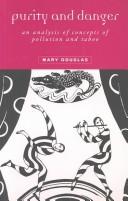
Douglas's argument that pollution rules are a classification system — dirt is matter out of place — applied from Leviticus to modern hygiene. The most influential single book in the anthropology of religion and directly Durkheimian in its logic.

Rappaport's posthumous synthesis, arguing that ritual performance itself — not doctrine — is what creates the sacred and stabilises social order. Dense and formal, and the most ambitious general theory the field has produced since Durkheim.

Bellah's last book, tracing religion from ritual and play in animals through the Axial Age, and the right place to finish: it reads every earlier stage of this path back into deep time. Very long, and its evolutionary framing is more speculative than the survey work in stage four.
Discussion
Keep reading
Paths that share books, cover the same subject, or open a related topic.