The finding this whole field is organised around is uncomfortable and well replicated: schooling, which is meant to break the link between the family you are born into and the life you end up with, turns out to be one of the mechanisms that maintains it. That is a structural claim about funding, admissions, tracking, credential markets and the unequal resources families bring to the same classroom. It is not a claim that schools do nothing, and it is not a claim about teachers.
Read the theory first, because everything published since the 1970s either extends the reproduction thesis or attacks it. Then read the ethnographies, which is where the theory earns its keep. One limit to carry throughout: the evidence here is heavily American and British, and the property-tax funding arrangements that drive the American story are unusual internationally.
The reproduction thesis, in three versions
Schooling in Capitalist America is Bowles and Gintis's correspondence principle — schools reproduce the class structure by mirroring workplace relations, obedience and external reward and fragmented tasks, rather than by what they teach. It is the starkest version, it has been heavily criticised for determinism, and it belongs first because the criticisms are all replies to it.
Bourdieu and Passeron's cultural version is catalogued here under the shortened display title Reproduction: schools reward a familiarity with high culture that some children arrive already possessing, and then read that inheritance as ability. It is denser and more consequential than the previous book, and it is where cultural capital and symbolic violence come from.
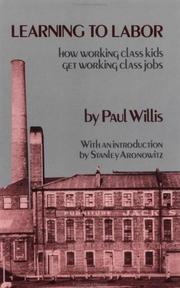
Learning to Labour complicates both. Paul Willis follows working-class boys in an English school who see through the promise of schooling, reject it as a con, and by doing so deliver themselves into working-class jobs. Reproduction achieved through resistance rather than compliance, and the most readable of the three by a distance.
Watching the mechanism operate
Ain't no makin' it is the American counterpart to Willis: Jay MacLeod follows two groups of boys in the same housing project, one that has given up on mobility and one that believes in it, and then returns to them repeatedly across decades. The longitudinal follow-up is what makes it devastating rather than illustrative.
Unequal childhoods is the most influential ethnography in the field. Annette Lareau names two patterns — concerted cultivation and the accomplishment of natural growth — and shows schools rewarding the first. It is the clearest evidence that the advantage is transmitted at home and cashed at school. Jeannie Oakes's Keeping track then shows the school-side sorting the family-side differences feed into: different tracks in the same building deliver genuinely different curricula, not the same material at different speeds.
Despite the Best Intentions is the hardest case for a resources-only explanation. Lewis and Diamond spend their fieldwork in a well-funded, integrated, self-consciously progressive suburban high school where the racial achievement gap persists anyway, through course placement, discipline and differential access to teachers' attention.
Money and segregation, the American case
Jonathan Kozol's Savage Inequalities made school funding a public argument with side-by-side accounts of neighbouring districts spending vastly different sums per child. Kozol is a writer and advocate rather than a quantitative researcher, and the book is polemical by design and unmatched at making disparity concrete. The shame of the nation is his return a decade later, documenting resegregation after the retreat from court-ordered desegregation.
Read Richard Rothstein's Class and schools last in this stage, because it reframes both. His argument is that school reform cannot close a gap whose causes lie substantially in housing, health care, income and early childhood, and that expecting it to guarantees schools get blamed. It cuts against Kozol, and it is the more analytically careful book.
Reform, credentials, and how to read the fights
The manufactured crisis is Berliner and Biddle's case that the story of catastrophic American school decline was assembled from misread aggregate data, notably the composition effects hiding inside falling average test scores. Start the stage here: it sets the evidential standard for everything after it.
The death and life of the great American school system is Diane Ravitch renouncing the testing-and-choice agenda she helped build. Read it as an argument by a partisan who changed sides, which is both its interest and the reason to check its claims against the research it cites. Paying for the party follows one dormitory floor of women through a public university and finds distinct mobility pathways, one of which the institution resources well and which reliably damages the less affluent women who take it. Lower Ed closes on for-profit colleges as the terminal case of credential inflation, written by a sociologist who worked in enrolment before she studied it.
If you want the stage goals, the schedules and the full ordering, the path is at /paths/pt_ai_the-sociology-of-education, and the neighbouring reading on families is at /subjects/the-sociology-of-the-family.