The Sociology of the Family: The Best Books on How Families Changed, in Order
Almost every argument about the family assumes a baseline — the way families used to be, before whatever went wrong. The single most useful thing this field has established is that the baseline is imaginary: the breadwinner-and-homemaker nuclear household with its own house and car, treated as timeless, describes a narrow slice of one country for roughly one generation, and it was underwritten by government spending and wage arrangements that no longer exist. This path takes that finding as its starting point and then builds outward: the long history of the family as an institution, the kin networks and household strategies that people actually use when the nuclear model is not available to them, the collision between paid work and domestic work once both adults are employed, and the arrangements that never fitted the model in the first place. It is a sociology and history path, not a guide to family life, and it is weighted toward the American and British literature. Where a claim is a live dispute — most obviously the effects of family structure on children, where selection effects and causal effects are genuinely hard to separate — the stage goal says so.
The Traditional Family Is a Historical Artefact
IntermediateDismantle the baseline. By the end you should be able to say when the male-breadwinner nuclear family was actually dominant and for whom, what public spending and wage structures made it possible, and how recent the idea of marrying for love is — Coontz's central historical claim is that the love-based marriage is a couple of centuries old and immediately made marriage more fragile, because a relationship justified by feeling can be ended when the feeling goes. These three are accessible and hea
▸ Study plan for this stage
Pace: Eight to ten weeks for 1,069 pages, all three by Stephanie Coontz and all three accessible and heavily sourced. The Way We Never Were is 391 pages and comes first: the systematic demolition of the nostalgic account of the American family, showing the mid-century household as a historically unusual a
- When the male-breadwinner nuclear household was actually dominant, for how long, and crucially for whom - it was never the universal arrangement it is remembered as
- The public underwriting behind it: mortgage subsidy, veterans' benefits, and a wage structure that supported a household on one income
- The nostalgia trap as a research problem: almost every argument about the family smuggles in a baseline that never existed
- The recency of love-based marriage, and Coontz's central claim that justifying a marriage by feeling immediately made it more fragile
- Marriage as property transfer and alliance for most of recorded history, which reframes the modern changes as consequence rather than decline
- Distinguishing correlation from cause in family-structure research, where selection effects are severe
- Reading a heavily sourced popular history: what the notes are for and when to follow them
- When was the breadwinner-and-homemaker household actually dominant, and which groups did it never describe?
- Name three public policies that made that arrangement affordable. What happened to each of them?
- Why does Coontz argue that marrying for love destabilised marriage? State the mechanism rather than the correlation.
- If marriage was historically about property and alliance, what changed in what marriage is expected to deliver?
- Take one anxiety about modern family life - divorce, working mothers, single parenthood - and say what The Way We Really Are establishes about the evidence for it.
- What is the difference between saying a family form is associated with worse outcomes and saying it causes them? Why is that distinction unusually hard to make here?
- Write down the picture of the traditional family you were carrying before starting - who was in it, who worked, what it owned. Then annotate it from The Way We Never Were with what was actually true, of whom, and when. This is the exercise the whole path is built on and it takes an hour.
- Follow three of Coontz's claims into her notes and read what the source actually says. She is unusually well sourced for a popular book and the habit of checking is the one this subject most needs.
- For one anxiety in The Way We Really Are, separate what is a measured association from what is a proposed cause, and write down what study design would distinguish them. You will use this repeatedly in the later stages.
- Take Marriage, a History and write a timeline of what marriage was for in three different periods. Then ask what the current expectation is and how many functions it now carries at once. Most readers find the modern version is asked to do more than any historical version was.
Next up: Coontz's history rests on a scholarly tradition that first made the family a historical object, and the next stage reads three of its founding texts - including what has and has not survived of them.
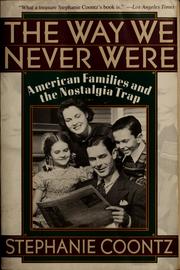
The foundational book of this path: a systematic demolition of the nostalgic account of the American family, showing the 1950s household as a historically unusual arrangement propped up by federal mortgage subsidies, the GI Bill and a wage structure that has since vanished. Start here.

The follow-up, aimed at what replaced the myth — divorce, working mothers, single parents — and at the evidence behind the anxieties attached to each. Coontz is careful about distinguishing correlation from cause in the family-structure literature, which is exactly the discipline this subject requires.
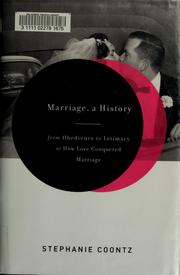
The long view: marriage as an institution for transferring property and forging alliances for most of recorded history, and the recent, destabilising invention of marrying for love. The book that explains why the changes documented above were not a decline but a consequence of what marriage was asked to become.
The Long History
IntermediateRead three older classics that established the family as a historical rather than natural object, and read them knowing their limits. Ariès's claim that childhood as a distinct life stage is a modern invention, and Shorter's account of a sentimental revolution replacing instrumental household relations, have both been substantially criticised by later historians for over-reading limited evidence. They are here because they set the terms of the entire debate; the point of the stage is to know wha
▸ Study plan for this stage
Pace: Ten to twelve weeks for 1,044 pages, and two of the three are dated classics read for what they claimed rather than for what stands. Aries's Centuries of Childhood is 448 pages and is the longest and hardest here - the book that started the historical study of the family, arguing from painting and h
- Aries's claim that childhood as a distinct life stage is a modern invention, and the specific evidence - painting, household records - it rests on
- The criticisms of that claim, particularly evidence of parental grief and of age-graded treatment that the original argument passed over
- Shorter's sentimental revolution: the household moving from an economic unit toward an emotional one
- Over-reading limited evidence as a recurring hazard in family history, and how to tell a supported claim from an extrapolated one
- Young and Willmott's finding that dense mother-daughter kin networks were what made working-class life workable
- The extended family as infrastructure rather than sentiment - a practical support system with an economic function
- What well-intentioned planning destroyed by rehousing, and why the loss was invisible to the planners
- Why these three set the terms of the debate even where their conclusions have not held
- What is Aries's evidence, and what is the strongest specific objection to his reading of it?
- If childhood was not invented in the modern period, what did change about it? Salvage the defensible version of the claim.
- State Shorter's sentimental revolution thesis and say what would count as evidence for it. Does he have that evidence?
- What did the Bethnal Green kin networks actually do, day to day? List the functions rather than describing the closeness.
- Why did rehousing damage those networks, and could a planner have foreseen it? What would they have needed to measure?
- These are dated books. For each, state one claim that has survived and one that has not.
- Take Aries's central argument and write out the inference chain from his sources to his conclusion. Then mark the step the critics attack. Doing this makes the difference between an evidenced claim and an interpreted one concrete, which is the stage's real lesson.
- List the practical functions the Bethnal Green networks performed - childcare, job information, loans, housing, care in illness - and then ask, for each, what institution performs it now and at what cost. That comparison is the argument for calling the extended family infrastructure.
- Read Young and Willmott's rehousing chapters against Coontz's account of the mid-century household from the previous stage. The two are describing the same period from opposite ends of the class structure, and reading them together is the fastest correction to any single national story.
- Take one of Shorter's claims and see whether Coontz's history supports it, contradicts it, or is silent. A later, better-sourced historian is the most convenient test available of a grand thesis.
Next up: The next stage moves to families for whom the standard model was never available at all, and to the arrangements they build instead - which outside observers routinely misread as breakdown.
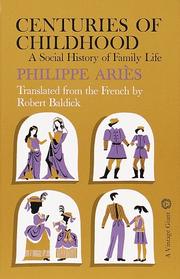
The book that started the historical study of the family, arguing from painting and household records that medieval Europe had no concept of childhood as a separate stage. The specific thesis is now widely disputed — critics point to evidence of parental grief and age-graded treatment that Ariès passed over — and it remains the necessary starting point.

The argument that a sentimental revolution in the eighteenth and nineteenth centuries turned the household from an economic unit into an emotional one. Read alongside Ariès as the second grand claim of this tradition, and with the same caution about how much weight the sources bear.
Young and Willmott's 1957 study of Bethnal Green and of what happened when families were rehoused to a new estate: dense mother-daughter kin networks that made working-class life workable, dissolved by well-intentioned planning. The best demonstration on this path that the extended family was infrastructure, not sentiment.
Kinship, Class and Race in Practice
IntermediateRead the ethnographic and interview work on families for whom the standard model was never available, and see what they build instead. The recurring finding across all three is that the arrangements outside observers read as family breakdown are usually strategies responding to conditions — unstable employment, low male earnings, welfare rules that penalise marriage. Stack's swapping networks, Edin and Kefalas's finding that poor young mothers value marriage highly and precisely therefore will n
▸ Study plan for this stage
Pace: Eight to ten weeks for 732 pages, the shortest stage on the path and one of the strongest. Stack's All Our Kin is only 175 pages - the classic ethnography of survival networks in a poor Black community, with kin defined by exchange rather than blood and obligations of swapping goods, money and child
- Kin constituted by exchange rather than by blood or law, and the swapping obligations that define membership
- Why the same network that makes poverty survivable makes accumulation impossible - anything saved is claimed by the obligation that protected you
- The household roster as a poor guide to a family, which is Stack's methodological point as much as her substantive one
- Edin and Kefalas's reversal: high regard for marriage as the reason for not entering one, rather than evidence of indifference to it
- Sequencing children before marriage as a rational response to which of the two feels achievable
- Cherlin's macroeconomic frame: working-class family stability as a function of industrial wages, unravelling with them
- Welfare rules that penalise marriage, and low male earnings, as conditions rather than as culture
- Reading a strategy rather than a deficit, which is the interpretive move all three books require
- How is kinship defined in Stack's community? What makes someone kin, and what obligations follow?
- Explain why the swapping network prevents accumulation. Is that a criticism of the network or of the conditions that make it necessary?
- Edin and Kefalas's mothers value marriage highly and do not marry. Reconstruct their reasoning in their own terms.
- What does Cherlin identify as the driver of working-class family change, and what evidence supports it against a cultural explanation?
- Take a family arrangement commonly described as breakdown and re-describe it as a strategy. What conditions is it responding to?
- All three books resist moralising. What does that cost them analytically, and what does it buy?
- Draw the exchange network from one of Stack's cases as an actual diagram of who gives what to whom. It takes twenty minutes and it makes the difference between a household roster and a family visible in a way no summary does.
- Take the conventional explanation of non-marriage among poor mothers and set it beside Edin and Kefalas's finding, then write down what evidence would distinguish the two. The interviews are the evidence, which is the argument for interview methods in this area.
- Test Cherlin's thesis against a local case: find when industrial employment fell in a place you know and what happened to marriage rates there afterwards. The correlation is easy to find and the causal claim is the harder part, which is the exercise.
- Read Stack's account of childcare obligations against Young and Willmott's Bethnal Green networks from the previous stage. Two very different communities produce structurally similar arrangements, and saying why is the most interesting comparison on the path.
- For each of the three books, write one sentence naming the condition the families are responding to. Then ask which of those conditions is currently a policy variable. Two of the three are.
Next up: The next stage takes up the change that reorganised family life across classes in the late twentieth century - both adults in paid work, and domestic work not redistributed to match.
The classic ethnography of survival networks in a poor Black community: kin defined by exchange rather than blood, with obligations of swapping goods, money and childcare that make poverty survivable and accumulation impossible. Catalogued with its full subtitle. Still the single best corrective to reading a household roster as a family.
Edin and Kefalas's interviews with poor single mothers, and the finding that reversed the conventional reading: these women hold marriage in unusually high regard and put childbearing first because children feel achievable and a good marriage does not. Read directly after Stack.

Cherlin's history of the American working-class family across two centuries, arguing that its mid-century stability depended on industrial wages and unravelled with them. The macroeconomic frame the two ethnographies above operate inside, and the least moralised account of family change on this path.
Work, Time and the Two-Earner Household
IntermediateTake up the collision that reorganised family life in the late twentieth century: both adults in paid work, and domestic work not redistributed to match. By the end you should be able to explain the second shift and the gap between what couples say they believe about fairness and what they do, and Hochschild's more disturbing later finding — that some parents preferred being at work, because home had become the more demanding and less rewarding place. Note that the size of the domestic-labour ga
▸ Study plan for this stage
Pace: Ten to twelve weeks for 913 pages. Hochschild's The Second Shift, written with Machung, is 322 pages and names the phenomenon: dual-earner couples in which the woman does a further unpaid working month a year, and the family myths both partners maintain in order not to say so. Three weeks, and read
- The second shift itself: paid work followed by an unequally distributed unpaid shift at home
- Family myths - the stories couples tell about who does what - and the gap between stated beliefs about fairness and observed behaviour
- The distinction between the amount of domestic work and the responsibility for noticing it needs doing, which surveys of hours miss
- Hochschild's later finding that home had become the more demanding and less rewarding place, so some parents preferred being at work
- Why generous family policies go unused, which is a finding about workplace culture rather than about policy design
- The two-income trap: a second income capitalised into housing prices, leaving the household with less slack rather than more
- The loss of the reserve earner as an insurance mechanism, and what that does to the risk of a single job loss
- Reading a dated measurement carefully: the mechanism can hold while the specific hours figure has moved
- What is the second shift, and what exactly did Hochschild and Machung measure?
- What is a family myth, and what function does it serve for the couple maintaining it? Give an example from the book.
- Distinguish doing domestic work from being responsible for it. Which one do time-use surveys capture, and what does that do to the reported gap?
- Why did employees at Hochschild's company not use the family policies available to them? What would have had to change?
- State Warren and Tyagi's mechanism from the second income to increased financial fragility. Which step do you find most and least convincing?
- The measured domestic-labour gap has narrowed. Does that undermine The Second Shift's argument, or only its numbers?
- Log a week of domestic work in your own household - task, who did it, and crucially who noticed it needed doing. The third column is the one Hochschild's argument turns on and the one no survey collects.
- Take a family myth from the book and write down what it lets each partner avoid saying. Then ask whether any version of it operates in a household you know. This is uncomfortable and it is what the book is for.
- Reconstruct Warren and Tyagi's argument as an arithmetic example with real local housing costs and two real incomes. Then remove one income and see what happens. The reserve-earner point only becomes vivid when the numbers are yours.
- Find a recent time-use estimate of the domestic-labour gap and compare it with Hochschild's. Then ask what changed - behaviour, measurement, or the composition of who is being measured. All three are plausible and the stage's caution exists because they are hard to separate.
- Read The Time Bind's account of an unused policy against a policy your own workplace offers. Ask who uses it and what using it signals. The finding travels further than the one company it was observed in.
Next up: Everything so far has been organised around a nuclear model, however criticised; the final stage turns to arrangements that fell outside it entirely and to the comparative finding that reframes the whole subject.
The book that named the second shift: dual-earner couples where the woman does a further unpaid working month a year, and the family myths both partners maintain to avoid saying so. The most influential study of housework ever written and still the model for how to observe a household.
The sequel, and the more unsettling one: at a company with generous family policies, employees did not use them, because work had become the sociable, competent, appreciated part of life and home the shift with no end. Note the record credits a German edition's editor alongside Hochschild.
Warren and Tyagi's argument that two incomes did not make families more secure but bid up the price of housing in good school districts and removed the reserve earner a one-income family had held back. Written by a bankruptcy scholar before her political career, and the clearest link on this path between family structure and financial risk.
Families the Model Never Covered
IntermediateFinish with the arrangements that fall outside the nuclear frame entirely, and with the most distinctive feature of the American family in comparative perspective. Weston's chosen families among lesbian and gay people in the 1980s established that kinship can be constituted by commitment rather than biology or law — an argument made before same-sex marriage existed anywhere, which is part of its interest. Cherlin's comparative finding is stranger: Americans marry more, divorce more and repartner
▸ Study plan for this stage
Pace: Five to six weeks for 541 pages, the shortest stage and the one that reframes the rest. Weston's Families We Choose is 261 pages, the ethnography that put chosen family into the sociological vocabulary, based on fieldwork with lesbian and gay people in San Francisco in the 1980s. Three weeks, and re
- Chosen family: kinship constituted by commitment and practice rather than by biology or law
- Why Weston's argument generalises beyond its population - it is a claim about what kinship consists of, tested on a case where biology and law were both unavailable
- The comparative American pattern: more marriage, more divorce, faster repartnering than in comparable countries
- The collision Cherlin identifies between a strong marriage ideal and a strong individual-fulfilment ideal, and why holding both produces churn
- Household transitions as the variable of interest, rather than family form at a single point in time
- Why the transitions claim is contested: separating the effect of instability from the selection of who experiences it is genuinely hard
- What follows for policy if the churn rather than the form is the problem - a quite different set of interventions from either side of the usual argument
- Reading the whole path backwards: how much of what was described as decline is a transition count rather than a form
- What makes someone family on Weston's account? State the criterion, and then test it on a case with no biological or legal tie.
- Describe the American comparative pattern precisely - which rates are unusual, and relative to which countries?
- What are the two ideals Cherlin says Americans hold simultaneously, and by what mechanism does holding both produce instability?
- Why is the claim that transitions harm children hard to establish? Name the selection problem and say what design would address it.
- If Cherlin is right, which interventions follow, and how do they differ from those proposed by people arguing about family form?
- Look back over the whole path. Which claims would you now defend as established, and which are live disputes?
- Take Weston's criterion for kinship and apply it to your own network: who counts, and on what basis? Most people find the answer does not match the household roster or the legal one, which is exactly Stack's point from an entirely different community.
- Count household transitions rather than family forms for two children's biographies you know something about. The count is usually a surprise, and it is the quantity Cherlin argues actually matters.
- Write out the selection problem in Cherlin's claim as precisely as you can - what else differs between children who experience many transitions and children who experience few - and then say what would be needed to separate the two. This is the single most important methodological exercise on the path.
- Read Weston and Stack together and write a paragraph on what the two communities have in common as arguments about kinship. Both build family out of practice under conditions where the standard model was unavailable, and the parallel is the strongest thing this path establishes.
- Return to the picture of the traditional family you wrote in stage one. Rewrite it now, and then write a second paragraph on what you would say to someone who told you the family was in decline. If the second paragraph is a list of facts rather than a counter-nostalgia, the path has done its job.
Next up: This closes the path. The literature here is heavily American and British, so the natural next step is the comparative research on countries with different welfare and parental-leave arrangements, where the same mechanisms meet a different structure.
The ethnography that put chosen family into the sociological vocabulary, based on fieldwork with lesbian and gay people in San Francisco in the 1980s. Read it as an argument about what kinship is, not only as a study of one population — it generalises further than its subject matter suggests.

The right book to close on: Americans hold both a strong marriage ideal and a strong ideal of individual self-fulfilment, and the collision produces unusually high rates of marriage, divorce and remarriage. Cherlin's conclusion — that the instability, rather than any particular arrangement, is what harms children — is the most policy-relevant finding on this path and remains contested.
Discussion
Keep reading
Paths that share books, cover the same subject, or open a related topic.