Yoruba religion and Ifa: books to read, in order
Yoruba religion is written about by three kinds of people who rarely agree: academic ethnographers who observed it, Nigerian scholars and babalawo who were raised inside it, and diaspora practitioners in Cuba, Brazil and the United States for whom it is a living initiatory religion rather than a subject. This path keeps those standpoints separate and labelled rather than blending them, because the disagreements between them are the most interesting thing about the literature. It moves from an outline of Olodumare and the orisha, to Ifa and the odu corpus, to the historical question of how much of what we call 'Yoruba religion' was shaped by the encounter with missionaries, and finally to Santeria, Candomble and the traditions the Atlantic crossing produced.
Olodumare, the orisha, and what the tradition claims
BeginnerBe able to name the major orisha and state what the tradition holds about Olodumare, ori and destiny, sacrifice and the ancestors — and notice that the three books here are written from three different positions on the tradition.
▸ Study plan for this stage
Pace: About three weeks for 593 pages, and the order matters more than the pace. Karade's handbook is 168 pages and organised as concept entries rather than argument, so two or three sittings will do it. Give Awolalu's Yoruba Beliefs and Sacrificial Rites a week — 203 pages, but it is an academic monograp
- The working vocabulary Karade lays out and every later book assumes: Olodumare, orisha, ori, ashe, ebo, egun, iwa. Learn these as Yoruba words, not as translations, because the translations are where the disagreements start.
- Ori and destiny — that a person chooses or receives a destiny before birth and that much of ritual life is about aligning with, discovering or repairing it. This is the idea that most distinguishes the tradition from the monotheisms it gets compared to.
- The major orisha as distinct personalities with their own domains, colours, foods and prohibitions: Obatala, Ogun, Shango, Oshun, Yemoja, Esu, Orunmila. Karade names them; Awolalu shows what is actually done for them.
- Ebo as Awolalu describes it: sacrifice is not a single act but a system with types, occasions, recipients and prescribed materials, and it is the practical centre of the religion rather than an archaic survival.
- The ancestors (egun) as an active constituency rather than a memory — and the Egungun masquerade as the institution through which they appear.
- Idowu's thesis of diffused monotheism: that Yoruba belief is fundamentally monotheistic, with the orisha functioning as manifestations or ministers of a supreme Olodumare rather than as independent gods.
- The three standpoints in front of you: Karade writes as an initiate for people entering the religion, Awolalu as a Nigerian religious-studies scholar, Idowu as a Nigerian Christian theologian. Their disagreements are structural, not incidental.
- What does ori mean in Karade's handbook, and does Awolalu use the word the same way? Where do the two accounts come apart?
- Awolalu organises sacrifice into types. Name them, say what occasions each, and say who the recipient is in each case.
- State Idowu's argument for diffused monotheism in the form he would accept, then state the strongest objection you can construct from Awolalu's material on how the orisha are actually approached.
- Which of these three books would tell you what to do if you needed to make an offering, and which would tell you what an offering means? Why is that a difference in the authors' purposes rather than in their competence?
- What does Karade's handbook not tell you about where any of this comes from historically — and does it claim to?
- Build a one-page glossary of twenty terms from Karade, then go through Awolalu with it and annotate each entry where his usage is narrower, wider or simply different. Keep the sheet; every later book on this path uses these words.
- Take one orisha — Ogun and Shango are the best-documented — and write out what Karade says about them, then what Awolalu says. Note which details are ritual instruction and which are narrative.
- Read Idowu with a pencil and mark every place he reaches for a term from Christian theology (attribute, providence, ministers, worship). Do not judge it yet; you are building the evidence you will test against Peel in stage three.
- Reconstruct one complete rite from Awolalu's description as a numbered sequence: who does what, with what materials, in what order. If you cannot complete the sequence, note where the account stops — that gap is what Bascom's ethnography is for.
Next up: You now have the concepts and the ritual grammar, which is exactly what the Ifa literature assumes and never explains, so the next stage can go straight to how divination actually works.
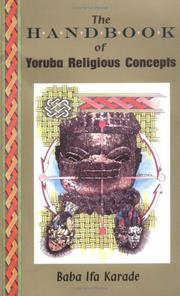
A PRACTITIONER source and the most widely used first book on the subject: short, organised by concept, written by an initiate for people approaching the religion as something to enter rather than to study. Start here because it gives you the vocabulary — ori, ashe, egun, the orisha by name — that every later book assumes, but read it knowing it presents the tradition as a coherent system rather than as a historical object.

SCHOLARLY, and by a Nigerian religious-studies scholar working from Yoruba-language sources and fieldwork. The standard academic account of ebo — what sacrifice is for, who receives it, how the rites are actually performed — and the natural corrective to a handbook's tidiness. Second because it puts flesh on the concepts Karade names.

The most influential and the most argued-over book in the field. Idowu, a Nigerian theologian, reads Yoruba belief as fundamentally monotheistic with the orisha subordinate to Olodumare — a reading many later scholars regard as shaped by his Christian training. Read it here for the theology, and hold the criticism in reserve until Peel in stage three.
Ifa: divination, the babalawo and the odu corpus
IntermediateUnderstand how Ifa divination actually works as a procedure, what the 256 odu contain, and how an oral corpus is memorised and transmitted — plus the difference between the babalawo's Ifa and the more widely practised sixteen-cowrie system.
▸ Study plan for this stage
Pace: This is the heaviest stage on the path — 1,550 pages across three books — and it should take six to eight weeks. Bascom's Ifa Divination is 590 pages and is a reference ethnography as much as a monograph: read the mechanics chapters closely and consult the rest rather than reading it cover to cover.
- The mechanics of Ifa divination: the sixteen palm nuts or the divining chain (opele), how a single cast produces a figure of eight marks, and how repeated casting narrows to one of the 256 odu.
- The odu as an index rather than an answer — the figure retrieves a body of memorised verse (ese Ifa), and the babalawo's skill lies in reciting the relevant verses and in the client identifying which story is theirs.
- Orunmila as the orisha of divination and Esu as the one who carries the sacrifice, and why almost every consultation ends in a prescribed ebo rather than a prediction.
- What memorisation of an oral corpus actually involves: years of apprenticeship, the structure that makes verses learnable, and why Abimbola's printed selection is a slice of something much larger.
- The difference between the sixteen-palm-nut Ifa of the babalawo and erindinlogun, the sixteen-cowrie system Bascom documents, which is practised largely by orisha priests and priestesses — different practitioners, different training, overlapping verse.
- The observer's problem, visible in Bascom's own method: an ethnographer records what informants will say, and what a babalawo will say to an outsider is not identical to what he would say to a client.
- Abimbola's dual position — professor of Yoruba literature and initiated awise — and what a book gains and loses by being written from both sides at once.
- Walk through a full consultation from the client's arrival to the prescribed sacrifice, naming every physical object used and every decision the babalawo makes.
- Why are there 256 odu rather than some other number, and what does the mathematics of the casting procedure have to do with it?
- Take one ese from Abimbola. What kind of text is it — myth, precedent, case law, poem? What work is it doing when it is recited to a client?
- How does erindinlogun differ from Ifa in who practises it, how it is cast, and what corpus it draws on? Bascom wrote both books; where does he say the two systems meet?
- Bascom describes the system from outside and Abimbola presents its literature from inside. Name one thing each can show you that the other structurally cannot.
- Draw the sixteen basic odu figures from Bascom's account and practise generating them until you can produce a figure from a described cast without consulting the diagram. You are not divining; you are making sure you have understood the procedure rather than the summary of it.
- Choose three ese from Abimbola and, for each, write out in your own words the precedent it establishes and the situation in which a babalawo might recite it. Then find a comparable verse in Sixteen Cowries and note what changes when the system changes.
- Using Sixteen Cowries as a corpus, count how many of the verses in a single odu end in a prescribed sacrifice, and what kind. Bascom prints enough material for this to be a real count rather than an impression.
- Write half a page on how you would test any claim about what Ifa 'says' about a subject, given that the corpus is oral, vast and locally variable — and given that both of your sources here are selections made by particular men at particular moments.
Next up: Having seen the tradition as a working system of practice and verse, you are ready for the historians who ask when and how that system came to be described as a single religion belonging to a single people.
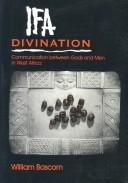
The classic ETHNOGRAPHY of the system, by an American anthropologist who worked in Nigeria from the 1930s. It explains the mechanics — the palm nuts, the divining chain, how a figure is cast and read — with a precision no later book has matched. Read it first in this stage: everything else here assumes you know what an odu is and how one is arrived at.

Abimbola is both a professor of Yoruba literature and an initiated awise, so this sits in a category of its own — a PRACTITIONER-SCHOLAR presenting the ese Ifa, the verses attached to each odu, in Yoruba with translation. The pairing with Bascom is the point: Bascom shows you the procedure from outside, Abimbola shows you the literature it retrieves. His fuller study, Ifa: An Exposition of Ifa Literary Corpus, is catalogued only under the bare title Ifa, which is why it is named here rather than

Bascom's companion volume on erindinlogun, the cowrie-shell divination practised largely by orisha priests and priestesses rather than by babalawo. It matters for what comes later: the cowrie system, not the sixteen-palm-nut Ifa of the babalawo, is the form most visible in Cuban and Brazilian practice.
Art, altar, and the historical argument about 'Yoruba religion'
IntermediateBe able to state the case that 'the Yoruba' and 'Yoruba religion' are partly nineteenth-century constructions produced in the encounter with missionaries and the slave trade — and say what that argument does and does not undermine in the books you have already read.
▸ Study plan for this stage
Pace: Five to six weeks for 1,202 pages, and this stage is where the path turns argumentative. Thompson's Flash of the Spirit is 317 pages, heavily illustrated and organised around objects, so it reads quickly and is best read with the plates rather than around them. Peel's Religious Encounter and the Mak
- Thompson's claim that there is a coherent Yoruba visual and gestural aesthetic — the composure of iwa pele, the logic of the altar, the meaning of the mounted figure — and that it is legible across the Atlantic in objects made by people who never saw Nigeria.
- The altar as an assemblage: what is on it, why it is arranged that way, and why an art-historical reading gets at something a theological reading misses.
- Peel's central argument: that 'Yoruba' as an ethnic category and 'Yoruba religion' as a bounded system were substantially produced in the nineteenth century, in the encounter with Church Missionary Society evangelists — many of them themselves Yoruba-speaking returnees — and in the wars that followe
- What Peel's argument does and does not undermine. It is not the claim that nothing is old; it is the claim that the boundary drawn around 'the religion' is a historical product, and that the sources describing it were written by interested parties.
- Peel's method: reading missionary journals against themselves, treating the evangelist's account of a failed conversation as evidence about the person he failed to convert.
- The Atlantic mechanism, from the Falola and Childs collection: which wars produced captives, which ports they left from, when the Yoruba-speaking share of arrivals in Cuba and Bahia peaked, and why that timing determines what could survive on the other side.
- The direct collision with stage one: Idowu's timeless theology and Peel's constructed nineteenth-century identity cannot both be straightforwardly true, and the disagreement is about what kind of object the tradition is.
- State Peel's thesis in a form Idowu could recognise as a description of his own position being challenged. Then state what Idowu could still claim without contradicting Peel's evidence.
- Thompson finds continuity across the Atlantic in form and gesture; Peel finds construction and change in nineteenth-century Yorubaland. Are these actually in conflict? Say precisely where they are and are not.
- What is a Church Missionary Society journal evidence of, and what is it not evidence of? Give one example from Peel of a passage that is more reliable about the Yoruba interlocutor than about the missionary's own claim.
- Using the Falola collection: which Yoruba-speaking populations were enslaved to Cuba and Brazil, in what period, and why does the lateness of that traffic matter for what arrived intact?
- Having read Peel, do you now read Bascom's and Awolalu's fieldwork differently? Name one specific thing you would want to know about their informants that you did not think to ask before.
- Take three of Thompson's plates and write out what he claims the object shows, then what you can actually see in it. Where his reading goes beyond the visible, say what additional evidence would be needed.
- Go back to the pencil marks you made in Idowu and set each one against a specific passage in Peel. Produce a two-column page: Idowu's claim, and the historical account Peel would give of why that claim was available to be made when it was.
- Trace one nineteenth-century Yoruba war from the Falola collection through to a named port and a named destination. The exercise is to convert 'the diaspora' from an abstraction into a route with dates.
- Write a paragraph defending the usefulness of the term 'Yoruba religion' after Peel — not by refuting him, but by saying what work the term still does and for whom.
- Compare Thompson's account of a Cuban or Bahian altar with the Nigerian material in Awolalu. List what is the same, what is substituted, and what is absent.
Next up: You now have the historical mechanism by which people and practices crossed the Atlantic, which is precisely the context the diaspora ethnographies in the final stage assume and rarely supply.
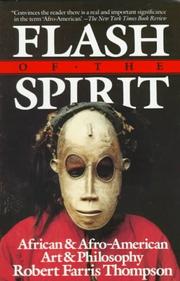
The book that put Yoruba aesthetics — the altar, the cool of iwa pele, the visual grammar of the orisha — into art history and traced it across the Atlantic. Read it here because it shows the tradition as something made and looked at, not only believed. Thompson's Face of the Gods and Black Gods and Kings extend the same argument if you want more.
The critical historical turn, and the most important book on this list. Peel uses the Church Missionary Society archive to argue that Yoruba ethnic and religious identity was substantially forged in the nineteenth-century encounter with Christianity and the slave wars. It is the direct challenge to Idowu's theology and to any reading of the tradition as timeless — which is why it goes after them and not before.
An edited collection of historians on how Yoruba people and practices actually moved — who was enslaved, from where, when, and how that shaped what survived in Cuba and Brazil. The hinge into the final stage: it supplies the history that the diaspora ethnographies mostly take as given.
Across the water: Santeria, Candomble and Ifa in America
IntermediateDistinguish the diaspora traditions from each other and from Yoruba practice in Nigeria, and be able to tell a scholarly ethnography of them from a practitioner's account — the two are frequently shelved together and are doing very different things.
▸ Study plan for this stage
Pace: Six to seven weeks for five books and 1,452 pages, and the sequence carries most of the value. Murphy's Working the Spirit is 263 pages and comparative — read it first, in about a week, to get the map. Then read González-Wippler's Santeria: The Religion (368 pages) and Brown's Santeria Enthroned (43
- The comparative frame Murphy sets up: Vodou, Santeria, Candomble, Revival Zion and Black American church practice as related ceremonial traditions organised around spirit possession and communal work, rather than as one religion with local variants.
- Lucumi, Santeria, Regla de Ocha, Candomble, Ifa in America — that these are distinct traditions with different histories, different ritual authorities and different relationships to Nigerian practice, and that popular writing routinely collapses them.
- Brown's account of construction: the Cuban cabildos, the throne (trono), the specific nineteenth- and twentieth-century figures who assembled Lucumi practice into the form it now has. The religion has a documented history of manufacture, and that is not a debunking.
- The difference in evidence between González-Wippler and Brown. A practitioner account tells you what is done and what it means to those doing it; an archival history tells you when it started being done and by whom. Neither substitutes for the other, and only one of them is checkable.
- Voeks's botanical argument: which African plant species actually crossed, which Brazilian species were substituted for them on the basis of what criteria, and why liturgical botany is the most testable available measure of continuity and adaptation.
- The erindinlogun connection from stage two — cowrie divination, rather than the babalawo's palm-nut Ifa, is the form most visible in Cuban and Brazilian practice, which is why Bascom's second volume earned its place.
- Love's subject: African American practitioners reading the odu as scripture in a United States context, several removes from Bascom's informants, and the newest layer of a tradition that stage two showed you as oral verse.
- Name three concrete differences between Cuban Santeria and Brazilian Candomble as Murphy, Brown and Voeks describe them — in ritual authority, in pantheon, and in relationship to the Catholic Church.
- Take a single claim about origins that appears in González-Wippler and check it against Brown. What kind of evidence does Brown bring, and what does the discrepancy tell you about how to read popular religious writing?
- What does Voeks's plant-substitution data actually establish about continuity? State the strongest version of the continuity claim it supports and the version it refutes.
- How do the practitioners in Love's book use the odu differently from the babalawo in Abimbola? Is the difference one of interpretation, of authority, or of what kind of text they take the corpus to be?
- Peel argued that 'Yoruba religion' was consolidated in nineteenth-century Nigeria. Brown argues that Lucumi was assembled in nineteenth-century Cuba. Are these the same kind of argument? What would follow if they were?
- After five books, can you say what makes a diaspora tradition Yoruba — practice, personnel, pantheon, provenance, or self-description? Defend your answer against one book on this stage that would resist it.
- Make a five-column table across Murphy's traditions: who leads, how the spirits arrive, what is offered, what the initiation involves, and how the tradition relates to the local Christian church. Fill it from Murphy, then correct the Santeria and Candomble columns from Brown and Voeks.
- Read González-Wippler and Brown on the same topic — initiation, or the orisha's Catholic saint correspondences — within a day of each other and write a page on what each author is able to say and what each is silent about.
- Using Voeks, list ten plants with their African and Brazilian counterparts and the ritual use each serves. Then say, for three of them, what the substitution was based on: appearance, ecology, effect, or name.
- Take one orisha and follow it across the whole path: Karade's entry, Awolalu's rites, an ese in Abimbola, a Thompson plate, and its Cuban or Brazilian form in Brown or Voeks. Write two pages on what stayed and what changed, and be specific about which evidence you are relying on at each step.
- Write a short review of Divining the Self as if for readers who have only read Karade. What would surprise them, and what in Karade's handbook prepared them badly for it?
Next up: The path ends here, with an oral corpus being read as scripture an ocean and several centuries from where stage one began — which is the clearest possible statement of the question the whole path has been circling.
The best comparative entry point: Haitian Vodou, Cuban Santeria, Brazilian Candomble, Jamaican Revival Zion and Black American church practice read together as related ceremonial traditions. Start the stage here so you have the map before the case studies. Murphy's Osun across the Waters follows one orisha across the same water if you want a narrower cut.
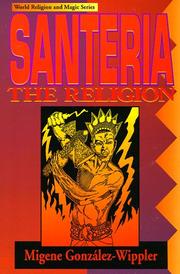
A PRACTITIONER source, and for decades the book through which English-speaking readers met Santeria. Include it for what it is — an insider's presentation of the religion, popular rather than academic, and correspondingly uneven on history. Read it immediately before Brown so the contrast is unavoidable.
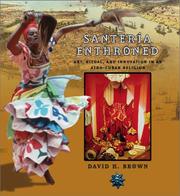
The SCHOLARLY counterweight: an art historian's archival and ethnographic history of how Cuban Lucumi religion was actually built — the cabildos, the throne, the objects, the specific nineteenth- and twentieth-century people who assembled it. It shows the religion being made, which is exactly what a practitioner account cannot show you.
Candomble read through its plants: which African species crossed, which Brazilian ones were substituted, and how the liturgical botany was reassembled in a new ecology. A concrete, testable account of what continuity and adaptation actually mean, and the best single book here on the Brazilian side.

African American practitioners reading the odu as scripture in a US context — the newest layer of the tradition and the one least covered elsewhere. It closes the path where the path started, on how a body of oral verse gets interpreted, now several removes and an ocean away from Bascom's informants.
Discussion
Keep reading
Paths that share books, cover the same subject, or open a related topic.