Best Books on Atheism and Secularism, in Reading Order
There are two distinct subjects tangled together here: the philosophical question of whether God exists, and the historical question of how Western societies came to be organised as if the question were optional. This path takes the New Atheist argument first because it is what most readers arrive with, then tests it against philosophers and against critics — including atheist ones — before turning to the much older history of unbelief and finishing with the major accounts of secularity itself.
The New Atheist case, in its own words
BeginnerKnow the arguments of the books that made public atheism a mass-market phenomenon in the 2000s, and be able to state them accurately before you evaluate them.
▸ Study plan for this stage
Pace: 4–5 weeks, ~30 pages/day. All three are trade books written for a general reader, so the pages turn fast; deliberately slow down for chapters 3 and 4 of The God Delusion, which carry the whole philosophical argument, and for Harris's chapter on religious moderation.
- Dawkins's 'God hypothesis' — the framing move that treats God's existence as a claim about the universe, and therefore as a scientific question rather than a separately privileged one
- The 'ultimate Boeing 747' argument (The God Delusion, ch. 4): a designer complex enough to design the universe is itself the thing most in need of explanation, so design explanations regress
- Dawkins's short treatment of the classical arguments in ch. 3 (Aquinas's five ways, the ontological argument) — and why philosophers of religion on both sides regard it as the book's weakest chapter
- Hitchens's different target: 'religion poisons everything' is a claim about religion's record in the world, not about whether any god exists
- Harris's epistemological line — belief held without evidence is dangerous because beliefs cause actions — and his argument that religious moderation shelters extremism rather than restraining it
- The parts of The End of Faith that are Harris's own commitments rather than consequences of atheism: the discussion of coercive interrogation, and his sympathy for contemplative practice
- Three distinct burdens of proof in one movement: God almost certainly does not exist (Dawkins), religion is harmful (Hitchens), faith is epistemically illegitimate (Harris)
- State the ultimate-747 argument in your own words, then state precisely what a theist would have to establish for it to fail.
- Which of these three books argues that religion is false and which argue that it is harmful — and where does each author slide between the two claims?
- How does Hitchens handle religiously motivated moral reformers, and is his treatment of Martin Luther King an argument or a redefinition?
- Why does Harris single out religious moderates for criticism instead of treating them as allies against extremism?
- Which claims in The End of Faith would still stand if you granted every one of Dawkins's metaphysical conclusions, and which are independent of them?
- Write a 200-word statement of the argument in The God Delusion ch. 4 that a well-read theist would concede is a fair summary. If you cannot manage it, reread the chapter until you can.
- Take Dawkins's ch. 3 dismissal of Aquinas's five ways and write the strongest single-paragraph reply you can on the theist's behalf. Keep it — you will meet the same objection from John Gray and Tom Holland in stage three.
- Build a three-column table for the three books: central claim, the kind of evidence used, and what would count as refuting it. If the columns come out identical, you have collapsed three different arguments into one.
- Mark the passage in God Is Not Great where Hitchens deals with a religiously motivated reformer, and decide in writing whether he has answered the counterexample or defined it away.
- Start a running list of factual claims about religious and intellectual history that these three books assert in passing — stages four and five are where you find out whether they hold.
Next up: Having stated the popular case accurately and at full strength, you are ready to see what the same position looks like when a philosopher states it carefully and when a cognitive scientist tries to explain religion rather than refute it.

The bestseller that defined the movement, arguing that theism is a scientific hypothesis and a bad one. Read it first because everything in the next two stages is either building on it or replying to it; note that philosophers of religion on both sides have criticised its handling of the classical theistic arguments.
The polemical and literary version of the same case, focused on religion's record in the world rather than on metaphysics. Hitchens is arguing morally rather than philosophically, which is a genuinely different kind of claim and worth separating out.
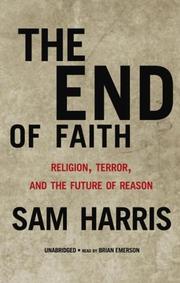
The book that opened the sequence, written in the aftermath of September 2001 and centred on the dangers of belief held without evidence. Its chapters on Islam and on torture drew sustained criticism, including from other atheists, and it is more useful to read those objections alongside it than to skip them.
Philosophy and the science of religion
IntermediateMove from polemic to argument — what atheism actually commits you to, and what a naturalistic explanation of religious belief would look like.
▸ Study plan for this stage
Pace: 3 weeks. Baggini's 119 pages take a weekend and should be read first and in one or two sittings; give Dennett's 448 pages the remaining two and a half weeks at ~30 pages/day, since the argument is cumulative and the middle chapters do the real work.
- Baggini's definition of atheism as a positive naturalism rather than a mere absence — atheism as a claim about what there is, not only a denial of what there is not
- Why, on Baggini's account, atheism does not entail nihilism about meaning or morality, and what secular grounding of ethics he actually offers
- The distinction Baggini presses between atheism, agnosticism and anti-theism — three positions the previous stage tended to run together
- Dennett's central proposal: religion should be studied as a natural phenomenon, with evolutionary and cultural transmission mechanisms, rather than declared true or false
- The 'belief in belief' idea — that many people are committed to the value of faith rather than to the propositions of a faith, which explains behaviour the first stage cannot
- Memetic and by-product accounts of religious cognition (hyperactive agency detection, folk psychology misapplied) as candidate explanations rather than settled findings
- The difference in kind between a refutation and a research programme, and why Dennett's book asks for data he admits does not yet exist
- How does Baggini distinguish atheism from agnosticism and from anti-theism, and which of the three did the stage-one authors actually defend?
- What is Baggini's answer to the charge that atheism leaves morality groundless, and does it depend on any claim about God at all?
- What would it take, on Dennett's own terms, to confirm or refute a by-product explanation of religious belief? Name a piece of evidence that would count.
- Explain 'belief in belief' and give an example from your own observation that it explains better than the stage-one framing does.
- Dennett claims to be asking a question, not delivering a verdict. Where in Breaking the Spell does he step over that line?
- Summarise Atheism: A Very Short Introduction in one page, then mark every sentence in your summary that Dawkins, Hitchens or Harris would have written differently. The differences are the point of this stage.
- Write out Dennett's proposed research programme as a list of empirical questions with the evidence each would require. Aim for six; if you can only produce vague ones, reread the middle chapters.
- Take one specific religious practice you know well and draft a one-page naturalistic account of its transmission using Dennett's categories — then list what your account cannot explain.
- Compare Baggini's and Dawkins's treatments of the same classical argument for God's existence side by side, and write 150 words on why the philosopher's version is harder to dismiss.
- Revisit the refutation-versus-explanation distinction: write two sentences stating what would follow about God's existence if Dennett's programme succeeded completely. The honest answer is uncomfortable for both sides.
Next up: With the position stated philosophically and a naturalistic explanation of religion on the table, you can now face the argument that the whole package — including its moral confidence — has a religious genealogy its defenders do not acknowledge.

A philosopher's calm, brief account of what atheism is, what follows from it about meaning and morality, and what does not. It is the cleanest statement of the position stripped of the culture war, and a good corrective to the previous stage's temperature.
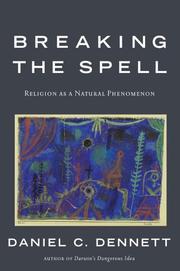
Dennett's proposal to study religion as a natural phenomenon — evolved, transmitted and maintained by ordinary cognitive and cultural processes. This is a research programme rather than a refutation, and it is a different intellectual move from anything in the first stage.
The critics, including atheist ones
IntermediateTake seriously the objection that New Atheism misdescribes both religion and its own intellectual ancestry, and that secular moral commitments have a genealogy the movement does not acknowledge.
▸ Study plan for this stage
Pace: 5–6 weeks. Gray's 176 pages are short but dense and repay two passes; Holland's Dominion runs 624 pages of narrative history at ~35 pages/day. Read Gray first — he sets up the thesis Holland then argues at book length.
- Gray's central charge in Seven Types of Atheism: that most modern atheism is a Christian heresy which keeps the eschatology — progress, humanity's redemption — while dropping God
- Gray's taxonomy itself: seven distinguishable atheisms, of which he endorses only the ones that abandon the hope of universal improvement
- The separation Gray forces between disbelief in God and the humanist worldview usually sold alongside it — a distinction the first stage assumed away
- Holland's thesis in Dominion: that the moral intuitions modern secular Westerners treat as self-evident (universal human dignity, concern for the weak, suspicion of power) are historically Christian in origin
- Holland's method — a long narrative from antiquity to the present, arguing by accumulation rather than by proof — and what that method can and cannot establish
- The standing historical objections to Holland: continuity with Stoic and Jewish antiquity, parallel developments in other traditions, and the risk of reading modern values backwards into old texts
- The difference between a genealogical claim (where an idea came from) and a justificatory one (whether the idea is true) — the pivot on which both books turn
- Restate Gray's claim that atheism is a Christian heresy in terms a defender of Dawkins would recognise as fair — then give the strongest reply.
- Which of Gray's seven types of atheism does he actually endorse, and what does that commit him to about progress and morality?
- What exactly does Holland claim Christianity caused, and what would count as a genuine counterexample — a pre-Christian or non-Christian society holding the same moral intuitions?
- If Holland is right about the origin of your moral intuitions, does anything follow about whether they are true? Answer in a sentence and defend it.
- Where do Gray and Holland disagree with one another, given that they reach a similar-sounding conclusion from opposite starting points?
- Write 300 words defending Dawkins and Hitchens against Gray's charge, using only what they themselves wrote in stage one. Note where you have to concede.
- Pick three moral claims you hold as obvious. For each, use Holland's narrative to trace where it plausibly came from, and mark honestly whether you find the derivation convincing or overreaching.
- Find the point in Dominion where Holland deals with a pre-Christian source that anticipates a supposedly Christian value, and judge whether he absorbs the counterexample or explains it away.
- Sketch a one-page timeline of Holland's argument — the six or seven turning points he actually leans on — and mark which are events, which are texts and which are interpretations.
- Return to the theist's reply you drafted in stage one. Rewrite it now that Gray has given you a version of the objection that does not require believing in God.
Next up: Gray and Holland both argue that unbelief has a religious past; the next stage tests that against the actual historical record of doubt, which turns out to be much older than either the Enlightenment or Christianity.

Gray is an atheist who regards contemporary atheism as a Christian heresy — a faith in progress and humanity carried over from the religion it rejects. The most bracing internal critique available, and it forces you to distinguish disbelief in God from the whole worldview usually packaged with it.

Holland, writing as a non-believer, argues that the moral intuitions modern secular Westerners take as self-evident are specifically Christian in origin. His thesis is contested by historians who see more continuity with antiquity and other traditions, and engaging with it is the best way to test what you concluded in the first stage.
Unbelief has a long history
IntermediateRecognise that atheism did not begin with the Enlightenment or the 2000s, and see how doubt has been expressed and suppressed across two and a half millennia.
▸ Study plan for this stage
Pace: 6 weeks, ~30 pages/day across roughly 1,100 pages. Read Whitmarsh first for the ancient world, then use Hecht's 551-page survey as a reference to range over rather than a cover-to-cover slog, and finish with Ryrie's tight 256 pages on the early modern period.
- Whitmarsh's argument in Battling the Gods that atheism was an available and intelligible position in ancient Greece — not a modern by-product of science
- How polytheism's lack of orthodoxy changed what disbelief meant, and why prosecutions for impiety happened anyway (the Athenian cases Whitmarsh reconstructs)
- Hecht's global range in Doubt: A History — Greek and Indian sceptics, Jewish and Islamic freethinkers, Chinese traditions — and the corrective it supplies to a Europe-only story
- Hecht's distinction between doubt as a religious act (the believer's crisis) and doubt as rejection, and how often the two share a vocabulary
- Ryrie's thesis in Unbelievers that early modern unbelief grew from anger and anxiety before it grew from argument — emotion preceding philosophy
- The methodological problem all three authors face: unbelief was dangerous to record, so the surviving evidence is mostly hostile testimony written by opponents
- What this stage does to the New Atheist self-image of a movement born from science — the chronology simply does not support it
- What evidence does Whitmarsh use to establish ancient Greek atheism, and how much of it comes from writers hostile to the position?
- Why does a polytheistic culture without a creed produce a different kind of unbelief than a monotheistic one with a doctrine to deny?
- Where do Hecht's non-Western examples strengthen the case, and where is she stretching a category built out of Western materials?
- Ryrie says early modern unbelief was emotional before it was intellectual. What would count as evidence against that, and does he engage it?
- How does this stage's chronology bear on Gray's and Holland's claims from stage three — does older-than-Christianity unbelief weaken Holland's argument or leave it untouched?
- Draw a single timeline from the fifth century BCE to 1700 marking the specific doubters Whitmarsh, Hecht and Ryrie each name. Gaps in your timeline are the places the sources fail, not the places doubt stopped.
- Take one figure Whitmarsh discusses and write 200 words on how confident we can be that they were an atheist rather than an unorthodox believer, citing the actual evidence he presents.
- Use Doubt: A History as a reference rather than a narrative: pick three non-European traditions from its contents and read only those chapters, then write a paragraph on what a Europe-only history would have missed.
- Find the passage in Unbelievers where Ryrie makes his strongest case for anger preceding argument, and test it against one of the ancient cases from Whitmarsh — does the pattern hold or is it specific to Christendom?
- Go back to the list of historical claims you started in stage one and mark each one confirmed, corrected or unsupported by this stage's reading.
Next up: Knowing that unbelief is ancient, the remaining question is the modern one — not why individuals doubt, but why whole societies came to treat belief as optional, which is the subject of the final stage.
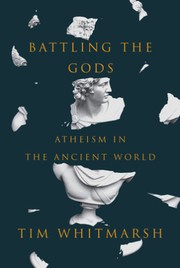
A classicist recovers atheism in the ancient Greek world, where disbelief was an available and sometimes prosecuted position long before monotheism. It demolishes the assumption that religious doubt requires modern science.
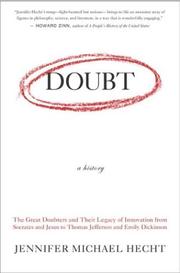
A sweeping survey of doubters across cultures and centuries, from Greek and Indian sceptics through Jewish and Islamic freethinkers to the moderns. Broad rather than deep, and it maps a territory the other books only sample.

Ryrie, a historian of Reformation religion, argues that early modern unbelief grew out of anger and anxiety rather than out of reasoned argument — that emotion preceded philosophy. A pointed challenge to atheism's own account of where it came from.
Secularity as a condition
IntermediateDistinguish political secularism from personal unbelief, and be able to explain what changed to make belief in God one option among many rather than the default.
▸ Study plan for this stage
Pace: 10–12 weeks, and be honest that this is the hard stage. Copson's 153 pages take a weekend. A Secular Age is 874 pages of dense philosophical history — plan ~15 pages/day, expect to reread, and treat Taylor's part-openings as the map when the detail overwhelms you. Read Copson first without exception
- Copson's core distinction: secularism as a political arrangement about religion and state, entirely separate from personal unbelief — a religious believer can be a secularist
- The national variants Copson lays out — French laïcité, Indian pluralist secularism, Turkish state control, American disestablishment — which are not the same principle applied differently but different principles
- Taylor's actual question in A Secular Age: not why belief declined, but how belief moved from unchallengeable default to one contestable option among many
- Taylor's three senses of 'secular' (public space emptied of God, falling belief and practice, and belief becoming optional) — and his insistence that only the third is his subject
- The 'immanent frame' and the 'buffered self' versus the 'porous self' — Taylor's account of how the boundary of the person changed and what that did to religious experience
- 'Subtraction stories' — Taylor's name for the standard account in which secularity is what remains once illusion is removed — and his argument that secularity is a positive construction, not a residue
- That Taylor writes as a Catholic philosopher, which shapes what he treats as a loss, and why the analysis remains indispensable whatever you conclude
- Using Copson, explain how someone can be a devout believer and a committed secularist, and why conflating the two wrecks most public argument about religion.
- Compare French and Indian secularism as Copson describes them. Which one is the outlier against the other three, and on what dimension?
- State Taylor's question in one sentence and say why it is not the same question Dawkins was answering in stage one.
- What is a subtraction story, and which of the books you read in stage one is the clearest example of one?
- Explain the buffered self, and describe one experience — yours or someone else's — that Taylor would say a porous self would have understood differently.
- After 874 pages, does Taylor's Catholicism weaken his history or only his conclusion? Defend your answer with a specific passage.
- Before opening Taylor, write half a page from Copson stating which secularism you think a plural society should adopt and why. Revisit it at the end of the stage.
- Read only Taylor's introduction and the opening of each part first, and build a one-page outline of the whole argument. Use it as a map for the rest — attempting A Secular Age without one is the usual reason people abandon it.
- Write a 250-word summary of the subtraction-story critique, then apply it explicitly to The God Delusion and say whether Dawkins is guilty of it.
- Take one century Taylor treats — the Reform-era chapters are the richest — and set his account beside Ryrie's from the previous stage on the same period. Where they conflict, write out which evidence each is relying on.
- Produce a final two-page statement of your own position that distinguishes: whether God exists, whether religion is harmful, where secular moral intuitions came from, and how state and religion should relate. The whole point of the path is that these are four separate questions.
- Keep a glossary of Taylor's coinages as you read — immanent frame, buffered self, nova effect, fullness — with your own one-line definition of each. His argument is largely carried by these terms.
Next up: This is the end of the path: you can now argue about God, about religion's record, about the genealogy of secular morality and about church and state as four distinct questions rather than one.

A short account of secularism as a political arrangement — the separation of religion and state — and of how differently it is understood in France, India, Turkey and the United States. Read it before Taylor to keep the political and philosophical questions apart.

The most important book on the subject: eight hundred pages on how the West moved from a world where belief was unavoidable to one where it is contestable. Taylor is a Catholic philosopher, which shapes the argument, and it is the indispensable account regardless of what you conclude. Attempt it last.
Discussion
Keep reading
Paths that share books, cover the same subject, or open a related topic.