Ethnography: The Best Books on Doing Fieldwork, in Order
Ethnography is a method before it is a discipline: go somewhere, stay long enough that people stop performing for you, write down what happens, and then work out what it means. That sounds simple and is not, which is why the literature splits cleanly into two kinds of book that beginners tend to muddle. There are how-to texts, which teach note-taking, interviewing, coding and access, and there are classic monographs, which teach nothing directly and are read as exemplars — you study how Malinowski or Willis or Bourgois solved a problem you are about to have. This path keeps the two separate and alternates between them: manuals first so you have something to do, then the founding fieldwork, then what the notes are for, then modern exemplars including one that became a methodological scandal, and finally the reflexive turn that asked whether any of this can honestly be written at all.
The Methods Manuals
BeginnerLearn the actual craft: how to negotiate access, what a fieldnote is and when to write it, how an ethnographic interview differs from a journalistic one, and how to get from a shoebox of jottings to an analysable corpus.
▸ Study plan for this stage
Pace: Five to six weeks. Emerson, Fretz and Shaw's Writing Ethnographic Fieldnotes is around 250 pages and should be read slowly and with a notebook open — it is a manual to be practised, not absorbed. Spradley's Participant Observation is around 200 pages structured as twelve numbered steps and can be re
- The distinction the whole path rests on, established here: a methods manual teaches a procedure, a classic monograph is read as an exemplar. Emerson, Spradley and Hammersley and Atkinson are the first kind; nothing after this stage is.
- Emerson's three-stage note process: jottings made in the field or immediately after, full fieldnotes written the same day while memory is fresh, and coded analytic memos written later. The habit cannot be retrofitted, which is why this book comes before you go anywhere.
- Writing description without inference — Emerson's insistence on recording what was said and done rather than what it meant, so that the interpretation remains separable from the data and can be revised.
- Spradley's Developmental Research Sequence: select a social situation, do participant observation, make a descriptive record, run descriptive observations, make a domain analysis, run focused observations, taxonomic analysis, componential analysis, discover cultural themes, write the ethnography. It
- Domain, taxonomic and componential analysis as Spradley defines them — the specific procedures for turning a corpus of notes into a structure of local categories and their relations. This is the most concrete analytic method in the field.
- Access and gatekeepers, treated procedurally by Spradley and argumentatively by Hammersley and Atkinson: who lets you in, what they want in return, and how the terms of entry shape everything you can subsequently see.
- Reflexivity as Hammersley and Atkinson use it — the researcher is part of the social world being studied and their presence is data, not contamination to be minimised. This is stated cautiously here and radicalised in stage five.
- The status of ethnographic evidence, which Hammersley and Atkinson address and Spradley brackets: what kind of claim can a single fieldworker's account support, and what would count as checking it. Hold onto this question — the Mead controversy and the Goffman controversy are both instances of it.
- Describe Emerson's three-stage note process. What is lost by writing full notes a week late instead of the same night?
- How do you write description without inference? Take a scene from your own day and produce both versions.
- Set out Spradley's twelve steps in order. Which are data collection and which are analysis?
- What is a domain analysis, concretely? Work through the structure with an example.
- What does access cost, according to Hammersley and Atkinson, and how does the identity of your gatekeeper constrain your findings?
- What kind of evidence is an ethnography? State the strongest and the weakest account of its epistemic status.
- Spend an hour in a public setting — a cafe, a waiting room, a market — taking jottings, then write full fieldnotes the same evening following Emerson's guidance. Do this three times in three different settings. Nothing else in this path substitutes for having actually done it.
- Take one set of your own fieldnotes and mark every sentence that contains an inference rather than a description. Rewrite the inferential sentences as descriptions plus a separate memo. This is the single most important habit in the manual.
- Run Spradley's domain analysis on your notes: identify cover terms, included terms and the semantic relationship between them. Produce one taxonomy. It will be thin, and that is the correct outcome from three hours of observation — the exercise is the procedure, not the finding.
- Write out the access negotiation you would need for a site you would actually want to study: who is the gatekeeper, what would you tell them, what would they want, and what would you be unable to see as a result. Hammersley and Atkinson's chapter is the reference and the exercise is where the abstract argument becomes a real constraint.
- Conduct one ethnographic interview following Spradley's format — descriptive questions first, using the informant's own terms — and transcribe it. Then mark every point where you imposed your own category.
Next up: You now have something to do; the next stage is the three studies that established what long-term immersive fieldwork looks like, read as exemplars and as cautionary tales at once.
The correct first book, and the most practical thing in the literature: Emerson, Fretz and Shaw take you from scratch jottings in the field to full notes written the same night to coded themes, with real note excerpts at every stage. Read it before you go anywhere, because the habits it teaches cannot be retrofitted to data you did not collect.
Spradley's twelve-step Developmental Research Sequence — the classic scaffold for a first project, from selecting a social situation through domain and taxonomic analysis to writing. Read second: it gives Emerson's notes a structure to feed into. Its companion volume, The Ethnographic Interview, covers the same sequence for talk rather than observation.

Hammersley and Paul Atkinson's book, the standard methodological textbook in the British tradition, catalogued here under the bare word Ethnography. Read it third, once the mechanics are familiar: it handles the arguments — access, ethics, reflexivity, the status of ethnographic evidence — that Spradley's procedural approach brackets off.
The Founding Fieldwork
IntermediateRead the three studies that established what long-term immersive fieldwork looks like, as exemplars rather than as instruction — and see immediately why every one of them has since been challenged on its methods.
▸ Study plan for this stage
Pace: Six to eight weeks. Argonauts of the Western Pacific is a long and formal monograph of around 520 pages and is not read cover to cover by most people — read the Introduction in full, which is the methodological statement, then the Kula chapters and the concluding chapter. Coming of Age in Samoa is s
- Malinowski's Introduction as the founding statement of method: live in the village, learn the language, record the imponderabilia of actual life, and distinguish what people say they do from what they do from what they say they ought to do. That three-way distinction is still the discipline's sharpe
- The Kula ring itself — a circulating exchange of shell valuables between islands, with necklaces travelling one way and armshells the other, conducted alongside but distinct from ordinary trade. What Malinowski uses it for is the demonstration that an apparently irrational institution has a coherent
- The gap between the Introduction and the practice, which his posthumously published field diary later exposed — the diary's private contempt for the Trobrianders sits very badly beside the published methodological ideal, and the discipline has argued about the discrepancy ever since. Note it and mov
- Mead's argument in Coming of Age in Samoa: that adolescence in Samoa was not marked by the emotional turbulence assumed to be universal, and therefore that the turbulence is cultural rather than biological. It was written to intervene in an American debate about nature and nurture.
- The Freeman controversy: Derek Freeman argued decades later that Mead had been deceived by young informants, that her time in the field and command of the language were insufficient, and that her conclusions were shaped by her theoretical commitments. Anthropologists remain divided on how much of th
- Why the dispute is the lesson rather than a distraction: it makes visible exactly what an ethnographic claim rests on — time in the field, language competence, who your informants were, how many, and whether anyone could check.
- Whyte's Street Corner Society and the methodological appendix, which is the first honest published account of how an outsider gets in: three and a half years in an Italian-American district of Boston, and a candid account of his dependence on one key informant, Doc, and of what that relationship cos
- The key informant problem in general: the person who lets you in shapes what you see, is placed at risk by the association, and rarely benefits. Whyte states this more clearly than anyone before him and it recurs in every stage that follows.
- State Malinowski's methodological prescription in his own terms. Which parts of it are about technique and which about disposition?
- Explain the Kula and say what Malinowski uses it to prove about how institutions should be studied.
- What is Mead's argument, and what does it depend on empirically? Name the specific evidence.
- Set out Freeman's charges against her one by one. Which are about method, which about evidence, and which about theoretical bias?
- Read Whyte's appendix and describe what Doc provided, what he was exposed to, and what he received.
- Malinowski, Mead and Whyte have all been challenged. Is that a fact about them or about the method?
- Read Malinowski's Introduction and extract every methodological instruction as a numbered list. Compare the list with Emerson and Spradley from stage one and mark what has changed in a hundred years and what has not.
- Apply Malinowski's three-way distinction — what people say they do, what they actually do, what they say they ought to do — to a setting you have observed. Producing all three columns for one practice is the fastest way to understand why he thought it mattered.
- Reconstruct Mead's evidence base from the book itself: how many informants, of what ages, over how long, in what language. Then read Freeman's charge against that reconstruction. Doing your own count first makes the dispute assessable rather than a matter of whose side you take.
- Read Whyte's methodological appendix twice, then write out his entry sequence as a numbered procedure. It is the only how-to in this stage and it was published as an afterthought, which is itself worth noticing.
- For each of the three studies, write one sentence naming what could not be checked by anyone else. Three sentences is the whole problem of ethnographic verification.
Next up: Three exemplars have shown you what long fieldwork produces; the next stage is about the interpretive move that turns those notes into analysis, and the attack that says the move is a literary act.
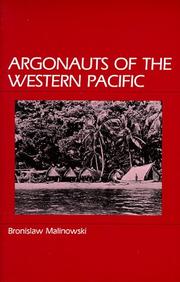
The book that invented the modern discipline: Malinowski on the Kula ring in the Trobriand Islands, and the source of the still-quoted demand that the ethnographer grasp the native's point of view. Read the introduction closely — it is the first explicit statement of fieldwork method anyone wrote.
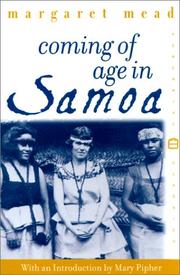
The most argued-over fieldwork ever done, and read here for exactly that reason: Mead's account of Samoan adolescence, and Derek Freeman's later charge that she was deceived by her informants. The dispute is the lesson — it is a case study in how much an ethnographic claim rests on access, language and time in the field.
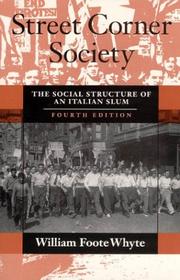
Whyte's three and a half years in an Italian-American Boston slum, and the founding text of urban ethnography. Read it for the methodological appendix rather than the study: it is the first honest published account of how an outsider actually gets in, and what a key informant costs both parties.
What the Notes Are For
IntermediateUnderstand the interpretive move that turns description into analysis, and the critique that says the move is a literary act rather than a scientific one.
▸ Study plan for this stage
Pace: Four to five weeks. The Interpretation of Cultures is a collection of essays of around 470 pages; read the opening essay, Thick Description, and the Balinese cockfight essay properly, and take the rest selectively — those two are the argument. Writing Culture is an edited collection of around 300 pa
- Thick description, stated exactly: the difference between a twitch and a wink is not in the physical movement but in the layered social meaning, and recording the movement without the meaning records nothing. Geertz takes the example from Gilbert Ryle and makes it the discipline's central concept.
- Culture as a semiotic system in Geertz's formulation — webs of significance that people themselves have spun — and the consequence that the analysis of culture is an interpretive activity in search of meaning rather than an experimental science in search of law.
- What that costs: if ethnography is interpretation, then its findings cannot be validated the way an experimental result can. Geertz accepts this and argues that interpretations are assessed by their power to clarify, which is a real answer and an unsatisfying one.
- The Balinese cockfight essay as the demonstration: a cockfight read as a text about status, masculinity and social hierarchy, with the reading justified by the density of the description rather than by any external check.
- The essay's own opening — Geertz and his wife fleeing a police raid and thereby gaining acceptance — as a rhetorical move that establishes authority. Notice it, because Writing Culture is about exactly this kind of move.
- Clifford and Marcus's argument in Writing Culture: ethnographies are written texts employing narrative conventions, rhetorical strategies and claims to authority, and the transparency of the ethnographic account is a literary effect rather than a fact about the method.
- The specific devices the volume identifies — the arrival scene, the ethnographic present tense, the erasure of the fieldworker's mediation, the composite informant, free indirect style — each of which produces the impression of unmediated access.
- The volume is aimed squarely at Geertz, which is why the order matters. It also produced a standard objection worth holding: that treating ethnography as writing risks abandoning the claim that it tells you anything about the world, and several contributors would reject that conclusion.
- Explain thick description using an example from your own fieldnotes rather than Geertz's.
- If culture is a text to be interpreted, how is one interpretation shown to be better than another? Give Geertz's answer and say whether it satisfies you.
- What is the cockfight essay actually claiming about Balinese society, and what in the description supports it?
- Name three rhetorical devices Writing Culture identifies, and find each in Malinowski or Mead.
- Does the Writing Culture critique undermine ethnographic knowledge or only its presentation? Argue both sides.
- Where does Geertz establish his own authority in the cockfight essay? Quote the passage.
- Take one page of your own descriptive fieldnotes and write the thick description of it — the same events with the layers of meaning made explicit. Then mark which layers you observed and which you assumed. The proportion is the honest measure of what your notes can support.
- Read the opening two pages of the cockfight essay and annotate every sentence that is doing rhetorical work rather than reporting. Then read Clifford's introduction to Writing Culture and check whether he names the devices you found.
- Take Malinowski's Introduction and identify the arrival scene, the ethnographic present, and the erasure of mediation. All three are there and finding them in the founding text is the sharpest possible demonstration of the critique.
- Rewrite one paragraph of a classic ethnography with the fieldworker put back in — the interpreter, the questions asked, the uncertainty. Compare the two versions for what each claims and what each admits.
- Write a one-page response to Writing Culture arguing that ethnography can still make truth claims. Producing the counter-argument yourself is the only way to find out whether you actually accept the critique or have just been persuaded by its confidence.
Next up: The critique has been made; the next stage is four modern projects where you can watch fieldworkers make real decisions about access, duration, disclosure and risk under the pressure of it.

The source of thick description, the single most-used idea in the method: the difference between recording a twitch and recording a wink is the layered meaning, and that is what fieldwork is for. Read the opening essay and the Balinese cockfight; together they are the argument. Catalogued here without the leading article.

Clifford and George Marcus's 1986 collection, and the sharpest attack on everything in the two previous stages: ethnographies are written texts with rhetoric and authorial power, not transparent records. Read it directly after Geertz, because it is aimed squarely at him. It reset what the discipline thinks it is doing.
Modern Exemplars
IntermediateStudy four contemporary fieldwork projects at close range and compare the trade-offs each author made on access, duration, disclosure and risk — the choices you will have to make in your own site.
▸ Study plan for this stage
Pace: Eight to ten weeks. Learning to Labour is around 220 pages and is theoretically dense; Number Our Days is around 320 pages and reads as narrative; In Search of Respect is around 400 pages including its methodological material; On the Run is around 280 pages plus a long methodological appendix. Read
- Willis's design in Learning to Labour: twelve working-class boys in an English secondary school, followed into work, with the finding that their own counter-school culture leads them to choose manual labour — reproduction of class position accomplished through resistance rather than despite it.
- The theoretical weight question Willis raises acutely: twelve informants carrying a structural argument about class reproduction. How much can a small ethnography bear, and what makes the inference legitimate rather than overreaching?
- Myerhoff's Number Our Days and fieldwork at home: elderly Jewish immigrants at a Venice Beach community centre, studied by a researcher who described them as her own people. The exotic distance that concealed the fieldworker's position in the classic monographs is simply unavailable, which gives her
- Bourgois's five years living in East Harlem in In Search of Respect: the standard reference for high-risk urban fieldwork, and unusually candid about the researcher's legal and ethical exposure when he witnesses crimes.
- The reporting problem in its concrete form: what a fieldworker who observes serious harm does about it, what they include in the published text, and how they protect people who have told them things that could imprison them. Bourgois's appendix addresses this directly.
- Goffman's On the Run — six years with young men living under warrant in Philadelphia — and the controversy that followed: challenges to the verifiability of specific scenes, questions about informant protection given the level of detail, and one passage in the appendix that raised criminal-liability
- The four trade-offs to compare across all four books: duration, degree of disclosure to those studied, physical and legal risk, and the level of detail published. Each author resolved these differently and each resolution has a cost.
- Methodological appendices as a genre. Whyte started it, and Bourgois and Goffman both wrote substantial ones. Where the appendix is candid, it is usually the most instructive part of the book.
- What is Willis's central finding, and what is the chain of inference from twelve boys to a claim about class reproduction?
- What does Myerhoff gain and lose by studying her own community? Name concrete instances of each from the book.
- How did Bourgois manage his own legal exposure, and what did he choose not to publish?
- In On the Run, which specific claims were challenged, and on what grounds? State the challenge fairly.
- Compare all four on duration, disclosure, risk and published detail. Which author took the most defensible position on each?
- What would it take to verify any of these four studies? Answer separately for each.
- Reconstruct Willis's argument as a chain of inference — observation, mechanism, structural claim — and mark the weakest link. Then write the sentence a critic would use to attack it and Willis's likely reply.
- Read the methodological appendices of Street Corner Society, In Search of Respect and On the Run consecutively, and build a comparison table: access, duration, key informant, disclosure, what was withheld, what risk the researcher accepted. Three appendices in one sitting teaches more about method than any manual chapter.
- Take one scene from On the Run that was publicly disputed, read the critique, and write down what evidence would settle it. The exercise usually ends with the discovery that nothing could, which is the finding.
- Apply Emerson's description-versus-inference test from stage one to two pages of Bourgois. He is unusually careful, and seeing a professional's notes-derived prose under that test recalibrates what your own notes should look like.
- Write the informant protection plan you would have used for any one of these four projects: what you would record, what you would not, where it would be stored, and what you would do if subpoenaed. Goffman's case makes the last question concrete rather than hypothetical.
Next up: Four modern projects have shown the choices fieldworkers actually face; the last stage turns the method on the fieldworker and asks how much of any ethnography is a report on a place at all.
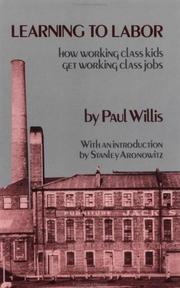
Willis's study of twelve working-class English lads and why they choose the factory floor — the model for combining close ethnography with a structural argument. Read it first here: it shows a small sample carrying a large claim, and exactly how much theoretical weight fieldwork can bear.

Myerhoff among elderly Jewish immigrants at a Venice Beach community centre, studying, as she put it, her own people. The best available treatment of fieldwork at home, where the anthropologist has no exotic distance to hide behind and every advantage of understanding.
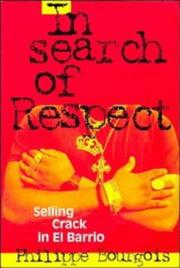
Five years living in East Harlem among crack dealers, and the standard reference for high-risk urban fieldwork — including the ethical and legal exposure of witnessing crime. Read it for the methodological appendix, which is unusually candid about what the researcher did and did not report.

Six years with young men under warrant in Philadelphia, and the most instructive controversy in recent ethnography: the book was acclaimed, then challenged on verifiability, informant protection and one passage that raised criminal-liability questions. Read it last in this stage and read the critiques alongside it — it is the clearest live case of why ethnographic evidence is hard to audit.
The Reflexive Turn
IntermediateFinish with the two books that turn the method on the fieldworker, and decide for yourself how much of an ethnography is a report on a place and how much is a report on the person who went there.
▸ Study plan for this stage
Pace: Four to five weeks. Reflections on Fieldwork in Morocco is short, around 160 pages, and can be read in a few evenings, though it repays a second pass. Tristes Tropiques is around 400 pages and is the most demanding prose in the path — part memoir, part travel narrative, part philosophical argument —
- Rabinow's premise: he had already published a conventional monograph, and this book is what actually happened during the fieldwork behind it — the misunderstandings, the dependence on a handful of informants, the boredom, the moments of comprehension that came from friction rather than from method.
- Ali and the other informants as characters rather than sources, and Rabinow's argument that ethnographic understanding is produced in a specific relationship between two people rather than extracted from a culture.
- The doubling of the fieldworker's position — the anthropologist is changed by the fieldwork, and the changed person is the instrument that produced the data. This is the strongest form of the reflexivity Hammersley and Atkinson introduced cautiously in stage one.
- The supplement problem: Rabinow published the honest version separately from the official version. Ask why the two could not be one book, and what discipline-level pressures kept them apart.
- Tristes Tropiques opens by declaring that he hates travelling and explorers, which sets the tone for a book deeply ambivalent about its own genre and about anthropology's position in the world. The argument underneath is that the discipline arrives in the wake of colonial expansion, studies what tha
- The structuralist thread running under the memoir — the search for underlying patterns rather than surface meanings — which is a direct alternative to Geertz's interpretive approach from stage three and is worth reading as such.
- The Bororo, Nambikwara and Caduveo sections as actual ethnography embedded in a personal narrative, and the question of whether the embedding strengthens or weakens the ethnographic claims.
- The verdict this stage asks you to reach: how much of an ethnography is a report on a place and how much on the person who went there. Neither extreme is tenable and the position you settle on determines how you read everything in stages two and four.
- What does Rabinow's account contain that his conventional monograph could not? Name three specific things.
- How is ethnographic understanding produced, on Rabinow's account? Contrast it with Malinowski's prescription from stage two.
- Why did Rabinow publish this separately rather than incorporating it? What does the separation say about the discipline of the time?
- What is Levi-Strauss's claim about anthropology's relationship to colonial expansion? Is he absolving himself, indicting himself, or neither?
- How does the structuralist search for underlying pattern differ from Geertz's search for meaning? Which does better with the material in stage four?
- After all five stages: how much of an ethnography is a report on a place, and how much on the fieldworker? Give a defensible position and name the books that pushed you toward it.
- Read Rabinow's account of one informant relationship and then write the equivalent passage for one of your own encounters from stage one's observation exercises. Doing it yourself is the only way to find out whether the reflexive move produces knowledge or self-regard.
- Take Rabinow's book and Whyte's appendix from stage two and lay them side by side. Both are honest accounts of dependence on informants, written thirty years apart, and the difference in what each author thinks that dependence means is the whole reflexive turn in two documents.
- Mark every passage in Tristes Tropiques that is doing ethnography and every passage that is doing something else — memoir, philosophy, travel writing, lament. Then ask whether the ethnographic passages would be stronger extracted.
- Write a two-page methodological appendix for a study you have not conducted, in the tradition running from Whyte through Bourgois to Goffman, being as honest as those three about what you would not be able to see and who would be at risk. This is the deliverable of the whole path.
- Return to the fieldnotes you wrote in stage one and reread them with everything since in mind. Write half a page on what they record about the setting and what they record about you. The proportion will have changed since you wrote them, which is the point.
Next up: This is the final stage; you have the practical craft, the founding exemplars and their disputes, the interpretive turn and its critique, four modern projects with real trade-offs, and the reflexive question that determines how you read any of them.
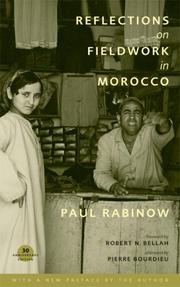
Rabinow's account of what actually happened during the fieldwork behind a conventional monograph — the misunderstandings, the dependence on a handful of informants, the boredom. Published as a deliberate supplement to the official version, and the standard text on fieldwork as lived experience.

The strangest and best-written book in this path: part Brazilian fieldwork memoir, part travel narrative, part argument about what anthropology costs the societies it studies, opening with the line that he hates travelling and explorers. Read it last. The catalogue record credits a translator alongside the author.
Discussion
Keep reading
Paths that share books, cover the same subject, or open a related topic.