Special education: teaching where humans matter most
This four-stage curriculum takes a career-changer from a felt sense of "I want to help kids who learn differently" all the way to the legal, strategic, and deeply human expertise needed to thrive as a special education professional. Each stage builds the vocabulary and empathy needed for the next: you first understand how diverse minds work, then learn the legal and procedural framework, then master classroom craft, and finally reckon with the moral and emotional weight of the work.
Foundations: How Different Minds Learn
BeginnerBuild an intuitive, empathetic understanding of the major learning differences (dyslexia, ADHD, autism, intellectual disability) before encountering any jargon or law.
▸ Study plan for this stage
Pace: 8–10 weeks total (~20–25 pages/day, 5 days/week). Week 1–3: "The Dyslexic Advantage" (read all four MIND strengths sections; pause after each to reflect). Week 4–6: "Driven to Distraction" (read case studies alongside the explanatory chapters; treat each patient story as a mini case study). Week 7–9
- Strength-based framing of learning differences: all three books deliberately reposition dyslexia, ADHD, and autism as profiles with genuine advantages, not purely deficits — internalize this lens before encountering clinical language.
- The four MIND strengths (Material, Interconnected, Narrative, Dynamic reasoning) from 'The Dyslexic Advantage' as a model for how atypical wiring can produce exceptional abilities alongside challenges.
- The neurological and experiential reality of ADHD: 'Driven to Distraction' shows that attention dysregulation is not laziness or willfulness but a consistent, brain-based pattern affecting relationships, work, and self-esteem across the lifespan.
- The insider perspective on autism: 'The Reason I Jump' demonstrates that non-speaking or minimally-speaking autistic individuals have rich inner lives, desires, and reasoning — challenging assumptions about competence and communication.
- Sensory and emotional experience as central, not peripheral: across all three books, sensory sensitivities, emotional intensity, and the exhaustion of masking/compensating are recurring themes that future special educators must recognize.
- The gap between internal experience and external behavior: each book reveals how a student's outward presentation (distraction, meltdown, slow reading) can be deeply misleading about what is actually happening inside.
- Family and social context as a shaping force: 'Driven to Distraction' especially shows how undiagnosed or unsupported learning differences ripple through families, friendships, and self-concept over decades.
- Empathy as a professional prerequisite: before learning any law, intervention, or assessment tool, the reader should be able to genuinely imagine the school day from each of these learners' points of view.
- After reading 'The Dyslexic Advantage,' can you describe at least two cognitive strengths that frequently accompany dyslexia, and explain why a classroom focused only on decoding deficits might inadvertently suppress those strengths?
- From 'Driven to Distraction,' what distinguishes ADHD from ordinary distractibility, and how do Hallowell's patient narratives illustrate the emotional and relational toll of living with unrecognized ADHD through childhood and into adulthood?
- Having read 'The Reason I Jump,' what assumptions about autism — particularly about intelligence, desire for connection, or inner experience — did you hold before reading, and which of those does Higashida's account directly challenge?
- Across all three books, how is the concept of 'masking' or compensation described, and what costs (emotional, cognitive, social) do the authors and subjects associate with it?
- How does each book's choice of narrative form (research + profiles in Eide, clinical case studies in Hallowell, first-person Q&A in Higashida) shape what you as a reader are able to understand about each learning difference?
- If you were a general-education teacher with no special education training, which single insight from each of these three books would most immediately change how you behave in a classroom tomorrow?
- Strength inventory journal: After finishing 'The Dyslexic Advantage,' interview or observe one person you know (or yourself) and map their learning profile onto the MIND framework — note where strengths and struggles co-exist rather than treating them as separate.
- ADHD day simulation: Pick one day and deliberately work in a distracting environment (café, noisy room) without any organizational aids (no lists, no timers, no phone reminders). Journal at the end about frustration, self-talk, and task completion — then re-read one Hallowell case study with that experience fresh.
- Perspective-writing exercise: After each Q&A chapter in 'The Reason I Jump,' write a 1-paragraph response as if you are a classroom teacher who just read that entry — what would you do differently on Monday morning?
- Assumption audit: Before starting each book, write down 5 beliefs you hold about that learning difference. After finishing, revisit each belief and annotate it: confirmed, complicated, or overturned — with a specific page reference.
- Cross-book comparison chart: Create a simple three-column table (Dyslexia | ADHD | Autism). As you read, log recurring themes — sensory experience, social misunderstanding, school failure, family impact, hidden strengths — to build a visual map of overlap and distinction.
- Empathy letter: At the end of the stage, write a one-page letter from the perspective of a student with one of these three profiles to their future special education teacher, drawing on specific details from the books — what do you need your teacher to understand about you?
Next up: This stage has built an empathetic, experience-near understanding of how different minds work, which means the legal frameworks, diagnostic criteria, and intervention strategies introduced in the next stage will feel like tools designed for real people — not abstract bureaucratic categories.
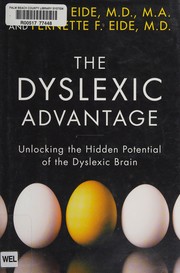
Opens the curriculum by reframing learning differences as genuine cognitive profiles rather than deficits — a mindset shift every special educator needs from day one.
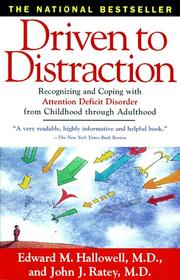
The most widely-read, accessible introduction to ADHD; gives the reader lived-experience language and clinical grounding for the disability they will encounter most in any classroom.
A first-person account of autism from the inside; reading it before any textbook ensures the learner never loses sight of the student's perspective behind every strategy and IEP.
The Legal and Procedural Framework
BeginnerUnderstand IDEA, Section 504, FAPE, LRE, and the IEP process well enough to read, write, and advocate around real documents.
▸ Study plan for this stage
Pace: 6–8 weeks, ~20–25 pages/day (5 days/week); Wrightslaw is dense with legal language, so budget extra time to re-read key statutes and annotate margins — treat it less like a narrative and more like a legal reference you are building fluency with.
- IDEA (Individuals with Disabilities Education Act): its purpose, scope, and the six core principles it establishes (FAPE, LRE, appropriate evaluation, IEP, parent participation, procedural safeguards)
- FAPE (Free Appropriate Public Education): what 'appropriate' legally means, how courts have interpreted it (Rowley standard, Endrew F. standard), and why it is the cornerstone of every special education dispute
- LRE (Least Restrictive Environment): the continuum of placement options, the presumption toward inclusion, and how IEP teams justify more restrictive settings
- Section 504 of the Rehabilitation Act: how it differs from IDEA in eligibility, funding, and enforcement, and when a student qualifies under 504 but not IDEA
- The IEP document and process: required components (present levels, measurable annual goals, services, accommodations, placement, transition), timelines, and the roles of each team member
- Procedural Safeguards: prior written notice, parental consent, independent educational evaluations (IEE), mediation, due process hearings, and complaint procedures
- Evaluation and eligibility: the 13 IDEA disability categories, the 60-day evaluation timeline, what a comprehensive evaluation must include, and how eligibility is determined by the team
- Advocacy literacy: how to read and cross-reference the actual statutory and regulatory language (20 U.S.C. § 1400 et seq.; 34 C.F.R. Part 300) as presented and annotated in Wrightslaw
- What are the six foundational principles of IDEA, and how does each one protect a student with a disability in a public school setting?
- How does the Endrew F. v. Douglas County School District (2017) decision raise the bar beyond the Rowley 'some educational benefit' standard, and what does this mean for writing IEP goals?
- A student has ADHD that substantially limits her ability to concentrate but does not qualify under any IDEA category — what legal framework applies, what document is created, and what protections does she have?
- Walk through every required component of a legally compliant IEP: what must be present, who contributes each piece, and what procedural timelines govern the process?
- A parent disagrees with the school's evaluation results — what are their rights under IDEA's procedural safeguards, and what is the step-by-step dispute resolution pathway from informal resolution through due process?
- What is the difference between a procedural violation and a substantive violation of IDEA, and why does the distinction matter when determining whether a student was denied FAPE?
- Statute mapping: Using Wrightslaw's annotated text, locate and highlight the exact statutory language for FAPE (20 U.S.C. § 1401(9)), LRE (§ 1412(a)(5)), and IEP requirements (§ 1414(d)). Write each definition in your own words in a personal glossary, then compare your paraphrase to the original.
- IEP audit: Obtain a blank or sample IEP form from your state's Department of Education website. Using the required components listed in Wrightslaw, create a checklist and audit the sample form — mark which fields satisfy IDEA requirements and flag any that appear missing or vague.
- Case brief practice: Choose one court case discussed in Wrightslaw (e.g., Board of Education v. Rowley or Endrew F. v. Douglas County). Write a one-page brief using the IRAC format (Issue, Rule, Application, Conclusion) to practice translating legal reasoning into plain language.
- 504 vs. IDEA comparison chart: Draw a two-column table contrasting IDEA and Section 504 across at least eight dimensions: eligibility criteria, funding mechanism, required document, evaluation process, dispute resolution, who enforces it, what 'appropriate' means, and private school obligations.
- Procedural safeguards timeline: Draw a visual flowchart of the dispute resolution process as described in Wrightslaw — from a parent's first written complaint through mediation, resolution session, due process hearing, and appeal — annotating each step with its legal deadline.
- Role-play advocacy memo: Imagine you are a special education paraprofessional whose student's IEP goals have not been updated in 14 months. Using the procedural safeguards and parent rights sections of Wrightslaw, draft a one-page memo to the family explaining their rights, the school's obligations, and the next steps they can take — citing specific IDEA provisions.
Next up: Mastering the legal skeleton in Wrightslaw gives you the authoritative framework — the next stage builds on this by moving from what the law requires to how skilled practitioners actually design instruction, write measurable goals, and deliver services inside that legal structure.
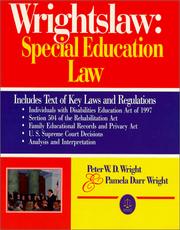
The companion legal reference that reproduces and annotates IDEA and Section 504 in full; reading it second means you now have the vocabulary to parse the actual statutory text.
Classroom Craft and Instructional Strategy
IntermediateTranslate knowledge of learning differences and legal rights into concrete, evidence-based teaching strategies for diverse learners in real classrooms.
▸ Study plan for this stage
Pace: 10–13 weeks total. Week 1–4: "How People Learn II" (~25–30 pages/day, focusing on annotating chapters on learning science and memory). Week 5–9: "Teaching Students with Special Needs in Inclusive Settings" (~20–25 pages/day, pausing to draft strategy notes after each disability-category chapter). We
- Evidence-based principles of how people learn: prior knowledge activation, metacognition, transfer of learning, and the role of motivation and context (How People Learn II)
- The brain as a social and cultural organ — how environment, emotion, and relationships shape learning outcomes (How People Learn II)
- Disability-specific instructional adaptations: differentiated strategies for students with learning disabilities, ADHD, autism spectrum disorder, intellectual disabilities, and sensory/physical impairments (Teaching Students with Special Needs)
- Universal Design for Learning (UDL) as a proactive framework — multiple means of representation, action/expression, and engagement applied across inclusive classrooms (Teaching Students with Special Needs)
- Collaborative teaming: co-teaching models, paraprofessional roles, and family partnerships as instructional infrastructure (Teaching Students with Special Needs)
- The Collaborative Problem Solving (CPS) model: understanding lagging skills and unsolved problems as the root of explosive/challenging behavior rather than willful defiance (The Explosive Child)
- Plan B conversations: the three-step empathy–define-the-problem–invitation process for solving problems collaboratively with students (The Explosive Child)
- Shifting from compliance-based to relationship-based classroom management — how adult flexibility reduces, rather than increases, behavioral incidents (The Explosive Child)
- According to How People Learn II, what are three conditions that must be present for deep, transferable learning to occur, and how do they apply to students with disabilities?
- How does Teaching Students with Special Needs distinguish between accommodations and modifications, and why does that distinction matter legally and instructionally for IEP implementation?
- What does Teaching Students with Special Needs recommend as the core components of an effective co-teaching partnership, and which co-teaching model is best suited to direct skills instruction for a small group?
- Using the CPS framework from The Explosive Child, how would you identify a student's lagging skills and unsolved problems, and how does this differ from a traditional behavioral intervention approach?
- How can the learning-science principles in How People Learn II (e.g., spaced practice, prior knowledge activation) be embedded into the disability-specific strategies described in Teaching Students with Special Needs?
- How does Ross Greene's concept of 'Plan B' align with or challenge the behavior management strategies outlined in Teaching Students with Special Needs?
- Strategy Matrix: After finishing Teaching Students with Special Needs, build a two-page reference matrix mapping each disability category (LD, ADHD, ASD, ID, sensory) to at least three evidence-based instructional strategies from the book, then annotate each strategy with the relevant learning-science principle from How People Learn II that supports it.
- Lesson Plan Redesign: Take a standard general-education lesson plan (any subject/grade) and redesign it using UDL principles from Teaching Students with Special Needs and at least two learning principles from How People Learn II. Explicitly label every adaptation and its rationale.
- CPS Role-Play: With a peer or mentor, role-play a full Plan B conversation from The Explosive Child for a fictional student scenario (e.g., a student with ADHD who refuses transitions). Debrief by identifying which step was hardest and why, then write a one-page reflection.
- Lagging Skills Inventory: Select a real or case-study student exhibiting challenging behavior. Use Greene's Pathways Inventory framework from The Explosive Child to hypothesize the student's top three lagging skills and two unsolved problems, then draft a Plan B conversation outline.
- Observation & Annotation: Observe a live or video-recorded inclusive classroom for 30 minutes. Use a two-column note format — left column: what you see; right column: which concept from any of the three books it illustrates or violates. Write a 300-word synthesis.
- Book Dialogue Journal: At the end of each book, write a one-page 'conversation' between the authors — what would Greene say to Smith about behavior management? What would the National Academies panel say to both about the neuroscience of stress and learning? Use direct evidence from the texts.
Next up: ">Mastering evidence-based instructional strategies and collaborative problem-solving in this stage equips the reader to move into assessment, progress monitoring, and data-driven decision-making — the natural next step of measuring whether those strategies are actually working for each individual learner.

The research-grounded foundation for all instructional design; understanding how all learners learn makes differentiation for exceptional learners far more principled.

A widely adopted teacher-preparation text that translates disability categories, law, and learning science into practical classroom methods — the bridge between theory and daily practice.
Introduces Collaborative Problem Solving, the most evidence-supported approach to students with behavioral and emotional challenges; essential for the reality of special ed caseloads.
The Human Work: Ethics, Burnout, and Vocation
ExpertReckon honestly with the emotional labor, systemic shortages, moral injury, and profound meaning of a career in special education — and build the resilience to sustain it.
▸ Study plan for this stage
Pace: 10–13 weeks total, reading all three books sequentially: "Savage Inequalities" (~4 weeks, ~20–25 pages/day), "The Elephant in the Classroom" (~3 weeks, ~20 pages/day), and "Becoming a Critically Reflective Teacher" (~3–4 weeks, ~15–20 pages/day, with journaling time built in between sessions).
- Structural inequity and moral injury: Kozol's unflinching documentation of resource disparities forces the reader to name the systemic forces that exhaust and demoralize special educators — distinguishing personal failure from institutional failure.
- The hidden curriculum of low expectations: Boaler's analysis of ability grouping and fixed-mindset tracking reveals how well-meaning educators can inadvertently harm students with disabilities by internalizing deficit narratives about who can learn.
- Emotional labor as professional identity: Across all three books, the sustained effort of caring deeply in under-resourced environments is framed not as weakness but as a defining — and costly — feature of the vocation.
- Moral injury vs. burnout: Drawing on Kozol's systemic critique, readers learn to distinguish burnout (depletion from overwork) from moral injury (the wound of being forced to act against one's values), a critical distinction for sustaining a career.
- Critical reflection as a survival tool: Brookfield's four lenses (autobiography, students' eyes, colleagues' eyes, theory/literature) provide a structured practice for processing difficult experiences without rumination or self-blame.
- Assumption hunting and hegemonic practice: Brookfield's concept of hegemonic assumptions — beliefs we hold that actually work against our own interests — helps special educators identify internalized narratives about sacrifice, martyrdom, and professional worth.
- Vocation vs. job: The tension between Kozol's outrage and Brookfield's measured reflective practice together illuminate what it means to choose this work as a calling while refusing to be consumed by it.
- Sustaining communities of practice: Brookfield's collegial lens and Boaler's evidence on collaborative learning environments both point toward peer community — not individual heroism — as the primary engine of long-term resilience.
- After reading Kozol, can you articulate the difference between a problem caused by a broken system and a problem caused by an individual teacher's shortcomings — and why that distinction is psychologically vital for a special educator's longevity?
- How does Boaler's critique of fixed-ability grouping connect to the IEP process and the risk of labeling students with disabilities in ways that cap their potential rather than scaffold their growth?
- Using Brookfield's four lenses, how would you analyze a moment from your own practice (or observed practice) in which you felt you had failed a student — and what does each lens reveal that a single perspective would miss?
- What is a hegemonic assumption you currently hold about what a 'good' special education teacher must sacrifice, and how might Brookfield's framework help you interrogate and revise it?
- How do Kozol's documented inequities translate into the daily micro-decisions special educators face, and how can Brookfield's reflective practice help a teacher respond to those inequities without descending into helplessness or cynicism?
- What concrete structures — drawn from any of the three books — could a special educator put in place to build a sustaining community of practice rather than relying on individual resilience alone?
- Savage Inequalities Field Audit: After reading Kozol, conduct a resource audit of a real or hypothetical special education setting. List 10 specific resource gaps (staffing ratios, materials, physical space, related services). For each gap, write one sentence naming the systemic cause and one sentence describing the emotional toll it places on educators. This separates structural critique from sel
- Fixed-Mindset Language Log (Boaler): For one week, keep a log of every time you hear (or catch yourself using) language that implies a student with a disability has a fixed ceiling — in IEPs, team meetings, hallway conversations, or your own internal monologue. At the end of the week, rewrite each phrase using a growth-oriented, asset-based frame.
- Four-Lens Reflective Journal (Brookfield): Choose one genuinely difficult professional moment — a failed lesson, a conflict with a parent, a student who seemed unreachable. Write four separate journal entries, one from each of Brookfield's lenses. Compare what each lens surfaces. Identify which lens you habitually skip and commit to using it first next time.
- Assumption Autopsy (Brookfield): List five beliefs you hold about what special educators 'must' do or 'should' endure. Run each through Brookfield's hegemonic assumption test: Who benefits from me holding this belief? Does it serve my students or primarily serve the institution? Write a revised belief statement for any assumption that fails the test.
- Moral Injury vs. Burnout Mapping: Draw a two-column chart. In column one, list stressors from your reading and/or experience that fit the profile of burnout (volume, pace, depletion). In column two, list stressors that fit moral injury (value violations, ethical compromise). Identify one concrete action you could take in response to each column — they require different remedies.
- Vocation Letter: After finishing all three books, write a one-to-two page unsent letter to a future colleague entering special education. Draw explicitly on Kozol's systemic honesty, Boaler's evidence on what students can do when expectations are high, and Brookfield's reflective tools. The letter must be truthful about the difficulty and specific about the meaning — no toxic positivity, no despai
Next up: By honestly reckoning with systemic inequity, harmful assumptions, and the tools for critical self-renewal, the reader is now equipped to move from surviving the work to leading and transforming it — making this stage the essential ethical foundation for any subsequent study of special education leadership, advocacy, or policy.

Places special education within the broader landscape of educational inequity; understanding systemic context prevents naive idealism and prepares educators for structural advocacy.

Examines how fixed mindsets about ability are institutionalized in schools — directly relevant to how special ed labels can liberate or limit students, and how teachers can push back.
Closes the curriculum by giving the new special educator a rigorous, sustainable practice of self-examination — the professional habit that separates those who burn out from those who grow.
Discussion
Keep reading
Paths that share books, cover the same subject, or open a related topic.