The history of universities: books to read, in order
The university is one of the very few medieval institutions still recognisably doing its original job, and almost every argument now made about it — cost, purpose, who it is for, whether research and teaching belong in the same building — has a datable origin. This path traces that: the medieval guilds of masters and students, the transplant to England and then America, the Humboldtian research model that arrived in the nineteenth century and quietly displaced the college, the vast land-grant and GI Bill expansions, and the admissions and finance systems that produced the current mess. It is weighted toward the American case because that is where the literature and the current argument are, and it says so rather than pretending to be global.
The medieval institution
BeginnerUnderstand that the university began as a sworn guild — of students at Bologna, of masters at Paris — and be able to name the features that survived intact: the degree, the faculty, the curriculum, the corporate self-government, and the running fight with the town and the church.
▸ Study plan for this stage
Pace: Four to five weeks for 1,057 pages, though only two of the three are read straight through. Haskins's The Rise of Universities is 134 pages — three short lectures, wry and still accurate on the essentials — and can be finished in two evenings; start there and you will read everything after it knowin
- The university as a sworn guild — universitas means the corporation, not the buildings — organised by students at Bologna and by masters at Paris, which is a real institutional difference with consequences that persist.
- The features that survived intact and that nobody has since redesigned: the degree as a licence to teach, the faculty as a corporate body, the graded curriculum, the examination, and the academic gown.
- Corporate self-government and the privileges that made it possible — jurisdictional independence from the town, protection by pope or emperor, and the threat of dispersal, which was the medieval university's most effective weapon.
- The running fight with the town and the church: riots, taxation, jurisdiction over students, and the founding of new universities by secession from old ones.
- The medieval curriculum in fact rather than caricature: the arts course as preparation, the higher faculties of theology, law and medicine, and the disputation as the characteristic exercise.
- The finance question the reference volume answers and the popular accounts do not: who paid for it — students directly, benefices, endowments, or civic subvention — and what each arrangement did to what could be taught.
- Axtell's transplant argument: Oxford and Cambridge collegiate structure, not the Parisian or Bolognese model, is what crossed the Atlantic, which is why American higher education has colleges inside universities at all.
- Explain the difference between a student-organised and a master-organised university, and give one consequence of each that lasted.
- What powers did a medieval university actually have against the town it sat in, and where did those powers come from?
- Name five features of a present-day university that Haskins would recognise, and one that would baffle him.
- Using the reference volume, describe how one specific medieval university was financed, and say what that funding source made it possible or impossible to teach.
- What crossed the Atlantic, on Axtell's account, and what did not? Why does the answer explain the shape of the American institution?
- Write out a medieval arts student's week — lectures, disputations, residence, fees — from Haskins and the reference volume. Then set it beside an undergraduate week now and mark what is the same.
- Take the reference volume's chapter on curricula and produce a one-page comparison of the arts course at two universities. The variation is the point; a single medieval model is a textbook fiction.
- Trace one institutional feature — the degree, the college, the faculty, the rector — from Bologna or Paris to the present using Axtell. Note where it changed function while keeping its name.
- Write half a page on what dispersal was and why the threat of it worked. Then ask what the modern equivalent of that leverage would be, if any.
Next up: You now know what the institution was built to do, which is the necessary baseline for two writers arguing, centuries apart, about what it is for.

Three lectures from 1923, wry and still accurate on the essentials — how the medieval university actually formed, what a degree originally certified, and how little of the shape has changed. Short enough to read in an afternoon.

The scholarly depth behind Haskins: the medieval volume of the Cambridge History of the University in Europe, covering foundations, finance, curricula and student life across the whole continent. It is a reference work rather than a narrative — read the chapters you want. The later volumes of the same series are catalogued together under Walter Ruegg's name as A History of the University in Europe.

The bridge between the medieval and the modern: Axtell follows the institution from Paris and Bologna to Oxford and Cambridge, then across the Atlantic to the colonial colleges and on to the American research university. Read it third — it is the through-line that lets an American-weighted path start in twelfth-century Europe without a jump.
What is a university for? The two classic answers
IntermediateBe able to state Newman's case for liberal education as an end in itself and Kerr's description of the modern 'multiversity' as a set of loosely federated interests — and see that most present-day complaints about universities are versions of one or the other.
▸ Study plan for this stage
Pace: Three to four weeks for 667 pages, in two very unequal books. Newman's The Idea of a University is 527 pages of Victorian lecture prose, and it is slower than any page count suggests — the sentences are long, the argument is cumulative, and the discourses were written for delivery. Read the first ha
- Newman's core claim: knowledge is an end in itself, liberal education forms the intellect rather than trains it for a use, and the resulting habit of mind is the university's product.
- That Newman deliberately excludes research from the university's business, assigning discovery to academies and societies. This is the single most consequential feature of his idea and the one most often forgotten by people invoking him.
- Newman's argument for the university as a place of universal knowledge — that the disciplines correct one another, and that omitting one distorts the rest — which is the strongest available case for breadth requirements.
- That Newman is a period argument with real force rather than a description of anything that has existed, and that reading him as a lost golden age is a misuse of the text.
- Kerr's multiversity: not one community but a federation of schools, institutes, centres and federal research contracts, held together loosely and pulling in different directions.
- Kerr's account of the federal grant university and what external research funding does to internal governance — where power sits when a department's money comes from outside the institution.
- The undergraduate as the party Kerr identifies as losing out in the arrangement, which is the complaint the final stage of this path returns to with three centuries of evidence.
- That almost every present-day complaint about universities is a version of one of these two positions, and being able to name which is a genuine analytical gain.
- State Newman's case for liberal education in five sentences, without using the word useless and without conceding the utilitarian premise.
- Why does Newman exclude research? Give his reason, not the modern assumption about it.
- What does Kerr mean by multiversity, and what specifically holds one together?
- Kerr describes federal research funding changing the institution. Name three of the changes and say who gained authority in each.
- Take a current argument about universities — cost, purpose, free speech, vocational training — and identify whether it is a Newman argument or a Kerr argument. What does the identification tell you?
- Could Newman's idea be implemented now? Say what would have to be given up, and by whom.
- Reduce Newman's argument to a numbered list of premises and a conclusion. Then attack the weakest premise in a paragraph. Doing this properly is more work than it sounds and is the point of reading him.
- Take Kerr's description of the multiversity and map it onto a real institution you know: list its schools, institutes, centres and funding sources, and mark who reports to whom. Then say whether Kerr's picture fits.
- Write the two-page exchange Newman and Kerr would have if they could hear each other. Each must be given his strongest ground rather than a caricature.
- Return to the medieval material and ask which of Newman's and Kerr's claims the twelfth-century institution would support. Neither of them is describing the original, and saying how they differ from it is a useful third position.
Next up: With both ideals stated, the next stage is the construction history that shows how an institution ended up trying to satisfy both at once.
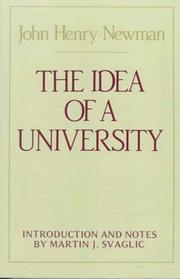
Newman's 1852 Dublin lectures, and the founding text of every subsequent defence of liberal education: knowledge as its own end, the university as a place of teaching universal knowledge, research deliberately excluded. Read it as a period argument with real force, not as a description of any university that has ever existed.
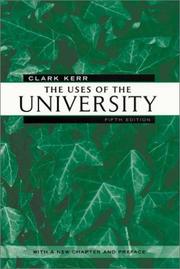
Berkeley's president in 1963 describing what had actually replaced Newman's idea — the multiversity, a federation of schools, institutes and federal research contracts held together by a common grievance about parking. Cold-eyed, funny and prophetic; the Free Speech Movement erupted around him the following year.
How the American university was built
IntermediateTrace the actual construction: the denominational colleges, the Morrill land grants, the German-inspired research turn after 1865, and the GI Bill — and understand why the resulting institution has both a college and a graduate research faculty inside it.
▸ Study plan for this stage
Pace: Six to seven weeks for 1,436 pages. Thelin's A History of American Higher Education is 560 pages and is the spine — the standard survey from the colonial colleges to the present, readable at forty pages a session over a fortnight, and it should come first so the two monographs have somewhere to atta
- The denominational college as the American starting point: small, classical, religious, teaching-only, and nothing like a university in the European sense.
- The Morrill land grants and what they actually funded — agriculture, mechanic arts and military tactics — and the very different institutional culture that produced in the states that used them well.
- The German import: the seminar, the doctorate, the research professor, and the idea that a university's business is producing knowledge. This is precisely the function Newman had excluded.
- Veysey's central finding: the modern American university was assembled from motives that were never reconciled — utility, research, liberal culture — and the incoherence was papered over administratively rather than resolved.
- The administrative apparatus as the actual solution: departments, electives, credit hours and a president managing constituencies who disagree about the purpose of the enterprise.
- Reuben's other half: the displacement of the Protestant moral mission by the ideal of value-free science, and the loss of any intellectual home for character formation.
- Why universities are now so uncertain about their claim to shape students — Reuben's answer is that the claim was not abandoned but orphaned, left to student life and administration once the curriculum could no longer carry it.
- The GI Bill and the scale change: mass enrolment turning an elite institution into a general one, with consequences for finance, admissions and public expectation that the next two stages are entirely about.
- What did the Morrill Act fund, and how did land-grant institutions differ in culture from the older colleges?
- Name Veysey's competing motives and give an institution or a reform that embodied each. Where do they conflict directly?
- Veysey argues the conflict was never resolved. What is his evidence, and what would resolution have looked like?
- State Reuben's thesis about moral education and value-free science. What happened to character formation once the curriculum could not carry it?
- Using Thelin, describe the effect of the GI Bill on enrolment, finance and the public claim on higher education.
- The American university contains both a college and a research faculty. From these three books, explain historically why, and say what tensions the arrangement guarantees.
- Build a timeline from Thelin with four tracks: institutions founded, federal actions, enrolment, and curricular change. Every book in the last two stages hangs off this.
- Take Veysey's three motives and audit a real university's current strategic plan against them. Mark which motive each stated goal serves, and note the ones serving two at once.
- Read Reuben's account of a specific curricular reform and write out what it was supposed to accomplish morally, then what it accomplished. The gap is her argument.
- Return to Newman and Kerr and place each on Thelin's timeline. Newman is arguing against something that had not yet arrived in America; Kerr is describing its full maturity. Write half a page on what happened in between.
Next up: With the institution built and expanded to mass scale, the questions that follow are who is admitted to it and who pays for it.

The standard modern survey, and the best single narrative of the whole arc from the colonial colleges to the present. Read it first here as the spine; the next two books drill into the period where the shape of the modern institution was set.

The classic study of 1865-1910, when American higher education acquired the research faculty, the elective curriculum, the departments and the administration. Veysey's argument that these came from irreconcilable and never-resolved motives explains a great deal about why universities are still internally incoherent.

The other half of Veysey's story: how the university's Protestant moral mission was displaced by the ideal of value-free science, and what happened to character formation when it lost its intellectual home. The best account of why universities are now so uncertain about their claim to shape students.
Who gets in, and who pays
IntermediateUnderstand admissions and tuition as historical constructions rather than natural facts — including that the modern American application system was designed to solve a problem that was not academic — and know what the evidence says about who is actually priced out.
▸ Study plan for this stage
Pace: Six weeks for 1,327 pages. Karabel's The Chosen is 716 pages — the longest book on this path by a wide margin — and is an archival history of admissions at three universities; it is not hard reading but it is long and cumulative, and the documentary detail is the argument. Allow three weeks at forty
- That the holistic application — essays, interviews, recommendations, character, athletics, leadership — was designed at Harvard, Yale and Princeton to reduce Jewish enrolment without an explicit quota, and that this is established from the institutions' own archives rather than inferred.
- The structural point Karabel draws from it: any admissions criterion that cannot be objectively scored transfers discretion to the institution, and discretion gets used for whatever the institution currently wants.
- How selective admissions criteria have changed with what the institutions wanted — legacy preference, geographic distribution, athletics, and the later adoption of merit language for the same discretionary machinery.
- Sticker price against net price, and why arguments conducted in published tuition figures are mostly arguments about the wrong number.
- Goldrick-Rab's actual finding: aid packages assume family contributions and living costs that do not match how her subjects live, and the shortfall shows up as food insecurity, unstable housing and dropped courses rather than as debt alone.
- Why longitudinal evidence matters here — a snapshot of enrolled students cannot see the ones the finance system removed, and the removal is the outcome that matters.
- Cottom's argument that for-profit colleges are a rational response rather than an aberration: a labour market demanding credentials, a public system that stopped expanding, and an enrolment machine built for exactly that gap.
- That Cottom worked as an enrolment officer, so her account of how the sale is made is participant testimony as well as sociology.
- Describe the machinery of holistic admissions as Karabel found it in the archives. Which specific criteria were introduced, and what was each intended to accomplish?
- Karabel's evidence is institutional records. What can that source establish that outcome statistics cannot?
- Explain sticker price and net price and say why the gap makes public argument about college cost so unproductive.
- What does Goldrick-Rab's data show about students who leave? Name the mechanism, not the correlation.
- State Cottom's argument about for-profit colleges in a form that does not blame the students. What is she saying the sector is responding to?
- Reading these three together, who is the American higher education system currently sorting, and on what basis? Be precise about which institutions you mean.
- Take one criterion from Karabel — the interview, the athletic preference, the geographic distribution requirement — and trace its stated rationale, its actual effect and its current form. One page, three columns.
- Reconstruct the budget of one of Goldrick-Rab's students: aid, expected family contribution, actual costs, and the shortfall. Then say what a policy fix would have to change.
- Using Cottom, write out the enrolment conversation as she describes it, and mark each point at which the institution's interest and the student's diverge.
- Set the three books' populations side by side — the applicants at three elite universities, students at public institutions, and for-profit enrollees — and write half a page on what a debate about higher education looks like when only the first group is in view.
- Return to Thelin's timeline and mark where each of these three systems came into being. None of them is old, and dating them is the antidote to treating them as natural.
Next up: Having seen how the institution admits and finances people, the last stage puts the strongest defence and the strongest critiques of it directly against one another.
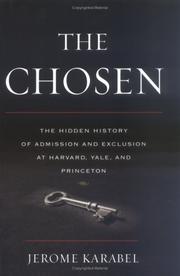
The archival history of admissions at Harvard, Yale and Princeton, and the book that established that the holistic application — essays, interviews, character, athletics — was devised in the 1920s to reduce the number of Jewish students without saying so. Essential and uncomfortable; nothing else on selective admissions is as well documented.

A longitudinal study following real Wisconsin students through college finances, and the empirical answer to arguments conducted in sticker prices. Goldrick-Rab documents food and housing insecurity among enrolled undergraduates — the concrete cost of the funding shift the previous stage describes.

The for-profit sector, which most histories of higher education ignore entirely, told by a sociologist who worked as an enrolment officer. Cottom's argument is that for-profits are not an aberration but a rational response to a labour market that requires credentials and a public system that stopped supplying them. Read it as the counterweight to a path otherwise written about elite institutions.
The institution now, argued about from three directions
IntermediateBe able to make the strongest case for the modern research university, the strongest case that it has been captured by market logic, and the strongest case that it has forgotten the undergraduate — and to notice how much each depends on which institution the author has in mind.
▸ Study plan for this stage
Pace: Five weeks for 1,140 pages, and the order is designed so the defence goes first and has to be knocked down rather than ignored. Cole's The Great American University is 628 pages — more than half the stage on its own — and is an inventory of what American research universities have produced together
- Cole's defence and its mechanism: that academic freedom, peer review and federal research funding together produced an unmatched output of discovery, and that the arrangement is more fragile than its beneficiaries assume.
- The inventory as an argument — the laser, the Pap smear, the algorithms and drugs and instruments — and the methodological question of how much credit an institution can claim for work done inside it.
- Bok's distinction, which is the useful part of his book: some commercial activity corrodes the institution and some does not, and he is specific about which is which rather than opposing commercialisation in general.
- The specific pressure points Bok identifies: athletics, patents and technology transfer, executive education, and industry-funded research with publication conditions attached.
- Why a temperate critic from inside is harder to dismiss than a hostile one from outside, and how that shapes what Bok can say and what he cannot.
- Delbanco's claim that the undergraduate college is a distinct institution with a formative and democratic purpose, now housed inside a research university whose incentives point elsewhere.
- The sorting-versus-forming distinction: whether the college's function is to identify talent or to develop it, and how much of the current argument about admissions dissolves once you name which one you mean.
- That each of these three books has a different institution in mind — a major research university, an elite private one, a residential liberal arts college — and that a good deal of the apparent disagreement is about reference rather than about facts.
- Make Cole's case in its strongest form. What is the causal claim, and what evidence would undermine it?
- Which commercial activities does Bok think corrode the university, and what is his criterion for the distinction?
- Bok was a president of the institution he criticises. What does that position let him see, and what does it stop him saying?
- State Delbanco's argument for the college as distinct from the university around it. What would the institution have to do differently to act on it?
- Each author has a different kind of institution in view. Identify which, and rewrite one disagreement between them as a disagreement about reference rather than about fact.
- Return to Newman and Kerr. Which of these three modern authors is closest to each, and what has three centuries of evidence added to the original argument?
- Take ten items from Cole's inventory and ask, for each, what the university actually contributed — funding, facilities, freedom, personnel, or nothing but an address. The exercise tests the strongest defence at its strongest point.
- Apply Bok's criterion to three commercial activities at an institution you know. Score each corroding or not, and defend the score.
- Write the strongest one-page critique of Delbanco from Cottom's position in the previous stage. His college is not the institution most students attend, and saying so precisely is more useful than agreeing with him.
- Build a single grid of the whole path: for each book, the institution it has in view, the purpose it assigns to universities, and the evidence it relies on. Fourteen rows. The grid is the best summary of the subject you will be able to write.
- Answer, in one page, the question the path opened with — what is a university for — with every claim sourced to a specific book on it, and note which parts of your answer are historical and which are yours.
Next up: The path ends where the second stage began, on Newman's question, with the difference that you can now say when each of the competing answers was invented and what it was for.

The DEFENCE, by a former Columbia provost: an inventory of what American research universities have actually produced — from the laser to the Pap smear — and an argument that academic freedom and federal research funding are the mechanism. Read it first so the critiques have something substantial to hit.
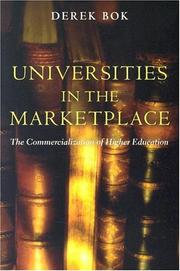
The CRITIQUE FROM INSIDE, by a former president of Harvard: athletics, patents, executive education, industry-funded research. Bok is temperate and therefore hard to dismiss, and he is specific about which commercial activities corrode the institution and which do not. Benjamin Ginsberg's The Fall of the Faculty makes the angrier version of the administrative-bloat argument.

The DEFENCE OF THE UNDERGRADUATE COLLEGE as something distinct from the research university it now sits inside — a democratic and formative institution rather than a sorting mechanism. Published as College: What It Was, Is, and Should Be, though it is catalogued under the short title. The right last book: it returns the path to Newman's question with three centuries of evidence in hand.
Discussion
Keep reading
Paths that share books, cover the same subject, or open a related topic.