The Best Books on the Israeli-Palestinian Conflict
This curriculum builds a rigorous, balanced understanding of the Israeli-Palestinian conflict across four progressive stages. Starting from historical foundations, it moves through the major wars and turning points, then into competing national narratives, and finally into deep analytical and on-the-ground perspectives — giving the reader both the facts and the human complexity behind them.
Historical Foundations
IntermediateUnderstand the origins of Zionism, Palestinian nationalism, the British Mandate era, and the 1948 war — the bedrock events that define everything that follows.
▸ Study plan for this stage
Pace: 8–10 weeks, ~40–50 pages/day (alternating between the two books to maintain perspective balance)
- Zionism as a political movement: origins in 19th-century Europe, ideological variants (Labor, Revisionist, Religious), and the vision of a Jewish homeland in Palestine
- Palestinian nationalism and Arab identity: emergence of Palestinian national consciousness, resistance to Jewish immigration and settlement, and the Palestinian narrative of displacement
- The British Mandate (1920–1948): the League of Nations framework, the Balfour Declaration's contradictions, British administrative policies, and their role in escalating Jewish-Arab tensions
- Competing claims to the same land: how both Zionists and Palestinians viewed Palestine as their historical and national home, and the impossibility of satisfying both claims within existing borders
- The 1948 War (War of Independence/Nakba): military campaigns, the declaration of Israel, Palestinian refugee crisis, and the territorial outcomes that shaped the region's future
- The role of external powers: British colonial interests, Arab state involvement, international recognition, and how geopolitics shaped the conflict's trajectory
- Historiographical perspectives: understanding how Israeli and Palestinian historians interpret the same events differently, and the importance of reading both Khalidi and Gordis critically
- What were the main ideological currents within Zionism in the late 19th and early 20th centuries, and how did they differ in their vision for a Jewish state?
- How did Palestinian nationalism develop as a response to Jewish immigration and settlement during the Mandate period, and what were the key Palestinian political movements?
- What were the key contradictions in the Balfour Declaration and the British Mandate, and how did they contribute to escalating conflict?
- What were the major military campaigns and outcomes of the 1948 war, and what happened to Palestinian refugees during and after the conflict?
- How do Khalidi and Gordis interpret the same historical events (e.g., the 1948 war, Palestinian displacement) differently, and what accounts for these interpretive differences?
- What role did Arab states play in the 1948 war, and why did they ultimately fail to prevent Israeli statehood?
- Create a detailed timeline (1880–1948) marking key events in Zionist development, Palestinian nationalism, and British policy; note where the two narratives diverge most sharply
- Write a 2–3 page comparative analysis of how Khalidi and Gordis each explain the causes of the 1948 war; identify specific passages where they contradict each other and analyze why
- Map the territorial changes from 1920 to 1949, showing the Mandate boundaries, Jewish settlement patterns, UN Partition Plan (1947), and post-1948 borders; annotate with key events
- Conduct a close reading of the Balfour Declaration (primary source); write a 1-page analysis of its ambiguities and how each side used it to justify their claims
- Interview or find recorded perspectives from both Israeli and Palestinian historians on a single event (e.g., the 1948 war); write a 2–3 page reflection on how their frameworks differ
- Create character/movement profiles for 5–6 key figures or groups (e.g., Theodor Herzl, Amin al-Husseini, David Ben-Gurion, Palestinian fellaheen), noting their goals, constraints, and how Khalidi vs. Gordis portrays them
Next up: This stage establishes the territorial, political, and narrative foundations—the competing historical claims and grievances—that will enable you to understand how the conflict evolved after 1948 into the refugee problem, the occupation, and the ongoing disputes over land, security, and identity.

A rigorous Palestinian-perspective history from 1917 to the present, written by a leading scholar. Reading this first establishes the Palestinian national narrative and the concept of settler-colonial intervention as a framing lens.

A readable, sympathetic account of the Zionist project and Israeli state-building. Pairing it immediately after Khalidi ensures the reader holds both national narratives simultaneously from the outset.
Wars, Occupation, and the Peace Process
IntermediateTrace the major conflicts from 1967 through Oslo, understanding how the occupation of the West Bank and Gaza shaped the modern conflict and why peace efforts collapsed.
▸ Study plan for this stage
Pace: 8–10 weeks, ~40–50 pages/day. Start with "Six Days of War" (4–5 weeks, ~30 pages/day for the 476-page narrative), then move to "The Missing Peace" (4–5 weeks, ~50 pages/day for the 500+ page diplomatic history).
- The 1967 Six-Day War as a watershed moment: Israeli military victory, Arab humiliation, and the occupation of the West Bank, Gaza, and Golan Heights as the foundation of decades of conflict
- How territorial occupation and settlement expansion created structural barriers to Palestinian statehood and fueled resistance movements (PLO, Intifadas)
- The role of superpower politics (US-Soviet Cold War dynamics) in shaping Israeli security doctrine and Arab state responses throughout the 1970s–1980s
- The evolution from state-to-state Arab-Israeli wars (1967, 1973) to asymmetric conflict: Palestinian nationalism, terrorism, and civil resistance as responses to occupation
- The Oslo Accords (1993) as a breakthrough in direct Israeli-Palestinian negotiation, but also the structural compromises and ambiguities that left core issues (settlements, refugees, Jerusalem) unresolved
- Why the peace process stalled: the role of Israeli settlement expansion, Palestinian state-building failures, leadership changes, and the second Intifada in derailing the two-state framework
- The distinction between military/strategic thinking (Oren's focus) and diplomatic negotiation (Ross's focus) in understanding why military victory did not translate to political resolution
- How personal relationships, miscommunication, and competing narratives between Israeli and Palestinian leaders undermined trust at critical moments in the peace process
- What were the immediate military and political consequences of the 1967 Six-Day War, and how did the occupation of the West Bank and Gaza reshape the Israeli-Palestinian conflict from a regional Arab-Israeli war into a conflict centered on Palestinian self-determination?
- How did Israeli settlement policy in occupied territories, as discussed in both books, become a structural obstacle to peace negotiations, and what role did it play in Palestinian radicalization?
- What were the key differences in how the US, Soviet Union, and Arab states responded to the 1967 war and occupation, and how did Cold War geopolitics constrain peace-making efforts through the 1970s and 1980s?
- According to Ross, what were the main obstacles that prevented the Oslo Accords from resolving the Israeli-Palestinian conflict, and why did subsequent negotiations (Camp David 2000, Taba) fail to bridge the gaps?
- How did the transition from interstate wars (1967, 1973) to Palestinian resistance movements (PLO, Intifadas) reflect changing power dynamics and Palestinian responses to occupation, as portrayed in Oren and Ross?
- What role did personal diplomacy, leadership personalities, and mutual distrust play in the collapse of the peace process, according to Ross's account of negotiations from Oslo through the second Intifada?
- Create a detailed timeline of major events from 1967–2000 (wars, settlements, peace talks, Intifadas) using both books; annotate each event with its impact on Israeli-Palestinian relations and peace prospects.
- Map the territorial changes resulting from the 1967 war using Oren's military narrative: identify the strategic importance of the West Bank, Gaza, and Golan Heights, then cross-reference with Ross's discussion of how these territories became negotiating points.
- Write a comparative analysis (3–5 pages) of how Oren and Ross explain the same events differently—e.g., the 1973 war, the Camp David Accords, or the Oslo process—to understand how military and diplomatic perspectives diverge.
- Conduct a role-play negotiation exercise: assign yourself and a partner the roles of Israeli and Palestinian negotiators at a key moment (e.g., Oslo 1993 or Camp David 2000), using Ross's account of actual positions and red lines to simulate the constraints both sides faced.
- Create a 'decision tree' for one failed peace initiative (e.g., Oslo follow-ups, Camp David 2000) based on Ross's narrative: identify the critical choice points where different decisions might have changed the outcome.
- Analyze a primary source document (e.g., UN Resolution 242, the Oslo Declaration of Principles, or a speech by Rabin, Arafat, or Netanyahu) through the lens of both books: how did the military realities Oren describes constrain the diplomatic language Ross analyzes?
Next up: This stage establishes the territorial, military, and diplomatic foundations of the modern conflict—the occupation, the failed peace process, and the deep structural barriers to resolution—which the next stage will build upon by examining how these unresolved issues led to the second Intifada, the Gaza disengagement, and contemporary Palestinian and Israeli political movements.
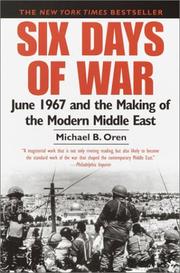
The definitive account of the 1967 war — the single most transformative event in the modern conflict. Oren's meticulous research explains how the occupation began and why it has proven so intractable.
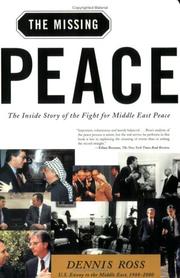
An insider account of the Oslo process and Camp David 2000 negotiations by the chief U.S. mediator. Essential for understanding why the peace process failed, told from the diplomatic trenches.
Competing Narratives and Identities
IntermediateGrapple with how Israelis and Palestinians each construct memory, identity, and legitimacy — moving beyond events into the deeper 'why each side believes what it believes.'
▸ Study plan for this stage
Pace: 8–10 weeks, approximately 40–50 pages/day. Shavit (400 pp, ~2 weeks), Nusseibeh (500 pp, ~2.5 weeks), Tolan (400 pp, ~2 weeks), with 1.5–2 weeks for reflection, cross-referencing, and synthesis exercises.
- Competing historical narratives: How Shavit's Zionist triumphalism and Nusseibeh's Palestinian dispossession frame the same events (e.g., 1948) in irreconcilable ways
- Memory as identity construction: How personal and collective memory—Shavit's family saga, Nusseibeh's intellectual genealogy—shape present-day claims to legitimacy
- The psychology of victimhood and entitlement: Why each side sees itself as historically wronged and morally justified, and the other as the aggressor
- Place and belonging: How the same land (the lemon tree, Jerusalem, the West Bank) carries radically different emotional and historical weight for Israelis vs. Palestinians
- The role of intellectuals and elites: How Shavit and Nusseibeh, as educated insiders, rationalize or critique their own side's narrative
- Trauma, loss, and intergenerational inheritance: How historical wounds (Holocaust, Nakba) are passed down and weaponized in contemporary politics
- The limits of empathy across the divide: What Tolan reveals about the possibility and impossibility of shared understanding between individuals on opposite sides
- How does Ari Shavit construct Israeli identity and historical legitimacy in *My Promised Land*, and what does he leave out or minimize in his narrative?
- What is Sari Nusseibeh's counter-narrative to the Israeli story, and how does his intellectual framework (family history, Palestinian nationalism, Islamic thought) shape his understanding of Palestinian rights and identity?
- How do *My Promised Land* and *Once upon a Country* describe the same historical moments (1948, 1967, settlement expansion) differently, and what does this reveal about how each side constructs memory?
- In *The Lemon Tree*, what prevents Bashir al-Khouri and Daphna Golan from achieving full mutual understanding despite their personal connection, and what does this suggest about the structural barriers to empathy?
- How do trauma narratives (the Holocaust in Shavit, the Nakba in Nusseibeh and Tolan) function as justifications for present-day claims and grievances?
- What role do place, property, and home play in anchoring identity for both Israelis and Palestinians across all three books?
- Create a timeline of key events (1948, 1967, 1982, 2000s) and write two parallel 1-paragraph summaries for each—one from Shavit's perspective, one from Nusseibeh's—noting what each emphasizes and what each omits.
- Close-read a passage from *My Promised Land* (e.g., Shavit on the 1948 war or settlements) and a corresponding passage from *Once upon a Country* on the same topic. Annotate the rhetorical strategies, emotional language, and underlying assumptions in each.
- Interview or write a reflection: Identify one moment in *The Lemon Tree* where Bashir and Daphna's perspectives align, and one where they diverge irreconcilably. What does this teach you about the limits of individual reconciliation?
- Create a 'memory map': For one location (Jerusalem, a settlement, a refugee camp), draw or write how it is remembered/imagined by an Israeli character in Shavit, a Palestinian in Nusseibeh, and the two protagonists in Tolan. What is at stake in each memory?
- Write a comparative character study of Shavit and Nusseibeh as narrators: How does each author position himself as a truth-teller? What is his relationship to his own side's narrative? Where do they show doubt or criticism of their own community?
- Debate exercise (solo or with a partner): Using evidence from all three books, argue the Israeli case for legitimacy, then argue the Palestinian case. What is the strongest argument on each side, and why is each side unconvinced by the other?
Next up: By internalizing how each side's identity, memory, and sense of legitimacy are constructed, you are now equipped to examine the structural, political, and institutional mechanisms that perpetuate the conflict—moving from the psychological and narrative foundations to the systems and policies that lock both sides into their positions.
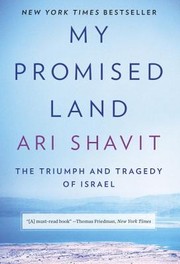
A beautifully written, self-critical Israeli liberal's reckoning with his country's founding and contradictions. It humanizes the Israeli experience while honestly confronting its moral costs — a rare combination.
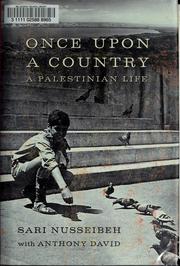
A Palestinian philosopher and peace activist's memoir spanning decades of occupation. It provides the Palestinian lived experience with intellectual depth, directly complementing Shavit's Israeli voice.
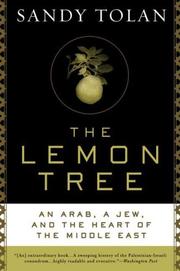
Tells the conflict through the true story of an Israeli family and a Palestinian family sharing one house across generations. It is the most humanizing book on the list and synthesizes the narrative clash at a personal level.
Deep Analysis and the Road Ahead
ExpertEngage with the structural, political, and strategic dimensions of the conflict at an expert level — understanding the internal politics of both sides, the role of the U.S., and the range of proposed solutions.
▸ Study plan for this stage
Pace: 8–10 weeks, ~40–50 pages/day (with 1–2 days per week for review and reflection)
- Revisionist Zionism and the Iron Wall doctrine: Jabotinsky's strategic philosophy and its influence on Israeli political movements and settlement policy
- The role of military power and strategic deterrence in shaping Israeli negotiating positions and territorial claims
- Palestinian nationalism, internal factional politics (Fatah vs. Hamas), and competing visions for statehood and resistance
- The structural asymmetries in the conflict: demographic, military, economic, and political imbalances between Israelis and Palestinians
- U.S. strategic interests and the limits of American mediation in the conflict, including the role of domestic lobbying and geopolitical alignment
- One-state vs. two-state solutions: the demographic, legal, and political arguments for and against each framework
- The settlements question: how territorial expansion has become embedded in Israeli politics and international law debates
- Historical contingency and missed opportunities: critical junctures where different political outcomes were possible
- What is Jabotinsky's Iron Wall doctrine, and how has it shaped Israeli strategic thinking and policy toward the Palestinians?
- How do Shlaim's arguments about Israeli revisionism challenge conventional narratives about Israeli security concerns and intentions?
- What are the key demographic, military, and political asymmetries between Israelis and Palestinians, and how do they constrain possible solutions?
- What are the strongest arguments Morris presents for a two-state solution, and what are his critiques of the one-state alternative?
- How have Palestinian internal divisions (Fatah, Hamas, other factions) affected the viability of peace negotiations and Palestinian political strategy?
- What role has the United States played in the conflict, and what are the limits of American mediation given U.S. strategic interests?
- Why have settlements become such a central and intractable issue in Israeli-Palestinian negotiations, and what legal/political frameworks govern them?
- At what historical moments might the conflict have taken a different trajectory, and what does this tell us about the role of political choice vs. structural constraint?
- Create a detailed timeline of Israeli governments and their settlement policies (1967–present), noting shifts in ideology and strategy; cross-reference with Shlaim's analysis of how revisionism shaped each period
- Write a 2,000-word comparative memo: outline the one-state and two-state arguments as Morris presents them, then identify which demographic, legal, and political assumptions are most contested
- Map the internal Palestinian political landscape (Fatah factions, Hamas, Islamic Jihad, PFLP, etc.) and analyze how their competing strategies and constituencies have shaped Palestinian negotiating positions
- Conduct a close reading of Shlaim's treatment of 2–3 critical historical moments (e.g., 1948, 1967, 1982 Lebanon invasion, Oslo negotiations); for each, identify the contingencies he highlights and evaluate whether different choices were genuinely possible
- Research and summarize U.S. policy positions during 2–3 major negotiation rounds (e.g., Camp David 2000, Annapolis 2007, Trump administration); assess how Shlaim and Morris explain American constraints and interests
- Create a visual diagram showing the structural asymmetries (military, demographic, economic, institutional) between Israelis and Palestinians; annotate with specific evidence from both books about how these asymmetries have shaped strategic behavior
Next up: This stage equips you with the analytical frameworks and historical depth to evaluate competing expert interpretations and policy proposals; the next stage will likely focus on contemporary developments, grassroots movements, and how these structural and strategic insights apply to current events and future scenarios.
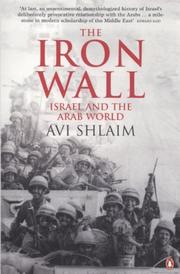
A sweeping, critical history of Israeli strategy toward the Arab world from 1948 to the present, organized around Jabotinsky's 'Iron Wall' doctrine. It provides the most comprehensive strategic framework for understanding Israeli decision-making.

Morris rigorously examines the viability of both the one-state and two-state solutions with historical and demographic evidence. Reading it last forces the reader to apply everything learned to the hardest question: what, if anything, can resolve this conflict?
Discussion
Keep reading
Paths that share books, cover the same subject, or open a related topic.