The History of Egypt: Best Books to Read in Order
This curriculum traces Egypt's history from the Ottoman period through the modern state, building from accessible narrative histories to focused political and ideological deep-dives. Each stage assumes the vocabulary and context of the previous one, so readers arrive at the advanced texts already fluent in the key names, events, and tensions that shaped modern Egypt.
Foundations: Egypt's Long Story
BeginnerGain a confident chronological overview of Egypt from antiquity through the 20th century, with enough context to understand why the Ottoman, colonial, and revolutionary periods matter.
▸ Study plan for this stage
Pace: 8–10 weeks, ~25–30 pages/day (alternating between both books to build chronological and thematic depth)
- Egypt's three-phase periodization: Pharaonic antiquity (3000 BCE–30 BCE), Islamic/Ottoman era (641–1882 CE), and modern nation-state (1882–20th century)
- The Nile as Egypt's defining geographic and cultural constant—how its annual flood cycle shaped settlement, agriculture, administration, and identity across all periods
- The transition from ancient Egyptian civilization to Arab-Islamic Egypt: cultural continuity and rupture, including language shift and religious transformation
- Colonial Egypt (1882–1952): British occupation, nationalist awakening, and the Suez Crisis as a turning point toward independence
- The role of key figures and dynasties (Ptolemies, Mamluks, Muhammad Ali, Nasser) in shaping Egypt's trajectory
- How geography, the Nile's resource constraints, and Egypt's position between Africa, the Mediterranean, and the Middle East shaped its strategic importance
- The relationship between ancient Egyptian memory and modern Egyptian identity—how Egyptians reclaimed their pharaonic heritage in the nationalist era
- Economic and social structures: from pharaonic bureaucracy to Ottoman tax farming to colonial extraction to 20th-century nation-building
- How did the annual Nile flood cycle shape Egyptian civilization across pharaonic, Islamic, and modern periods, and why did this geographic reality persist as a constant?
- What were the major turning points in Egypt's transition from pharaonic to Islamic to modern nation-state, and what was lost and gained in each transition?
- Why did British colonization of Egypt (1882) matter for understanding modern Egyptian nationalism and the 20th-century revolutions?
- How did key leaders like Muhammad Ali and Nasser attempt to modernize Egypt, and what obstacles did they face?
- What role did the Suez Canal play in Egypt's strategic importance and in triggering the 1956 Suez Crisis?
- How did modern Egyptians reconnect with their pharaonic past, and why was this important for nationalist identity?
- Create a three-column timeline (Pharaonic | Islamic/Ottoman | Modern) with 15–20 major events, rulers, and transitions in each period; note which events Jankowski and Wilkinson emphasize differently
- Draw or sketch the Nile's geography (delta, valley, cataracts, surrounding deserts) and annotate how this shaped settlement patterns, power centers, and vulnerability across three periods
- Write a 2–3 page comparative essay: 'How did the role of the Nile River change from pharaonic times to the 20th century?' Use specific examples from both books
- Create a 'key figures' chart (Muhammad Ali, Nasser, British colonial administrators, etc.) with their goals, achievements, and failures; note how Jankowski and Wilkinson assess their legacies
- Read excerpts from a primary source (e.g., a nationalist speech or colonial-era document) and analyze it against the historical context from both books—how does it reflect the tensions of its era?
- Map the Suez Canal's location and significance; write a one-page explanation of why control of this waterway mattered for Egypt's independence and 20th-century politics
Next up: This stage establishes the chronological backbone and geographic-cultural constants that allow the next stage to zoom in on specific themes (e.g., religious identity, economic systems, cultural production, or contemporary politics) with confident historical grounding.

A compact, readable single-volume survey that covers Egypt from the Pharaohs to the early 21st century. Reading this first gives the learner a mental map — key dynasties, turning points, and recurring themes — onto which all later books can be hung.
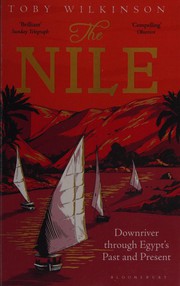
Uses the river as a narrative spine to connect ancient and modern Egypt in vivid, accessible prose. It builds geographic and cultural intuition that makes the political history of later stages feel grounded in a real place.
Ottoman Rule and the Colonial Encounter
BeginnerUnderstand how Egypt was governed under the Ottomans, how Napoleon's invasion and Muhammad Ali's rise reshaped the country, and how British colonialism defined the terms of Egyptian modernity.
▸ Study plan for this stage
Pace: 4–5 weeks, ~40–50 pages/day (approximately 280–350 pages total)
- Lord Cromer's role as the de facto ruler of Egypt (1883–1907) and his ideology of 'benevolent' imperialism
- The administrative and financial restructuring of Egypt under British occupation and Cromer's influence
- The tension between modernization rhetoric and the preservation of colonial economic extraction
- Egyptian nationalist resistance and the emergence of anti-colonial consciousness during Cromer's tenure
- The relationship between Ottoman decline, British strategic interests (Suez Canal), and the reshaping of Egyptian governance
- Cromer's paternalistic views on Egyptian society, Islam, and the capacity of Egyptians for self-rule
- The legacy of Cromer's policies in establishing the structural foundations of British colonial rule in Egypt
- What were the key mechanisms through which Lord Cromer exercised control over Egypt, and how did his role evolve from 1883 to 1907?
- How did Cromer's policies reshape Egypt's financial, administrative, and agricultural systems, and what were the intended versus actual outcomes?
- What ideological justifications did Cromer and other Victorian imperialists use to legitimize British rule in Egypt?
- How did Egyptian nationalism and resistance movements respond to Cromer's governance, and what were the sources of anti-colonial sentiment?
- How did the British occupation and Cromer's administration build upon or depart from Ottoman governance structures in Egypt?
- What contradictions existed between Cromer's modernization agenda and the preservation of colonial economic interests?
- Create a timeline of Cromer's tenure (1883–1907) marking key administrative reforms, financial crises, and nationalist uprisings; annotate how each shaped British policy
- Analyze 2–3 primary source excerpts from Cromer's writings or speeches (provided in Owen's book or supplementary materials) to identify the language and assumptions of Victorian imperialism
- Construct a comparison chart showing Ottoman governance structures versus British colonial administration under Cromer across categories like taxation, land ownership, education, and military control
- Write a 2–3 page analytical essay: 'How did Cromer's policies on irrigation and agriculture serve both modernization and colonial extraction?'
- Map the geographic and social distribution of nationalist resistance movements during Cromer's rule; identify which groups opposed British rule and why
- Debate exercise: Prepare arguments for and against the claim that 'Cromer's reforms modernized Egypt' using evidence from Owen's biography
Next up: This stage establishes how British colonial rule was institutionalized and justified through Cromer's persona and policies, setting the stage for understanding how Egyptians mobilized against this system and how anti-colonial nationalism crystallized in the early 20th century.

A biography of the British Agent who effectively ruled Egypt from 1883–1907. Reading it after the Ottoman background reveals exactly how colonialism restructured Egyptian politics, economy, and identity — the wounds Nasser would later claim to heal.
Revolution, Nationalism, and the Nasser Era
IntermediateDeeply understand the 1952 Free Officers' Revolution, Nasser's pan-Arab nationalism, the Suez Crisis, and how Nasserism reshaped Egyptian society and the Arab world.
▸ Study plan for this stage
Pace: 8–10 weeks, ~40–50 pages/day. Week 1–2: Rogan (chapters on 20th-century Arab history and Egypt); Week 3–5: Aburish (full biography, ~400 pages); Week 6–7: Fullick (Suez Crisis narrative); Week 8: Review and synthesis.
- The 1952 Free Officers' Revolution: causes (corruption, military humiliation, colonial occupation), key figures (Nasser, Sadat, Amer), and how it overthrew King Farouk
- Nasser's pan-Arab nationalism and Arab socialism: ideology, appeal across the Arab world, and domestic reforms (land redistribution, nationalization, Aswan Dam)
- The Suez Crisis (1956): British-French-Israeli invasion, Nasser's nationalization of the Suez Canal, Cold War dimensions, and Egypt's strategic importance
- Nasserism as a regional force: Egypt's leadership role in Arab politics, rivalry with Saudi Arabia and Iraq, and influence on other Arab revolutions
- Transformation of Egyptian society: military state-building, social mobility, education expansion, and the role of the military in governance
- Nasser's personality and decision-making: his charisma, ambition, miscalculations (1967 Six-Day War), and legacy in Arab consciousness
- Cold War context: Soviet-Egyptian alliance, American response, and how superpower competition shaped Middle Eastern conflicts
- Limitations and contradictions of Nasserism: authoritarianism, failed union with Syria, economic challenges, and ultimate decline
- What were the primary grievances of the Free Officers in 1952, and how did they successfully execute the revolution against King Farouk?
- How did Nasser's pan-Arab nationalism differ from earlier Arab movements, and what made it so appealing across the Arab world?
- What were the causes, key events, and international dimensions of the 1956 Suez Crisis, and why was it considered a victory for Nasser despite military odds?
- How did Nasser reshape Egyptian society through land reform, nationalization, and military-state building, and what were the social consequences?
- What was Nasserism as an ideology and political movement, and how did it influence other Arab states and nationalist movements?
- How did the Cold War context—particularly Soviet-Egyptian relations—influence Nasser's foreign policy and regional ambitions?
- Timeline exercise: Create a detailed chronology of events from 1952–1967, marking the revolution, major domestic reforms, the Suez Crisis, the Egyptian-Syrian union, and the Six-Day War. Annotate with key figures and turning points.
- Character analysis: Write a 2–3 page character sketch of Nasser based on Aburish's biography, focusing on his ambitions, insecurities, decision-making style, and how his personality shaped his policies.
- Suez Crisis reconstruction: Using Fullick's account, create a detailed narrative or annotated map showing the military movements, diplomatic maneuvers, and key decisions of all parties (Egypt, Britain, France, Israel, USSR, USA) during the 1956 crisis.
- Comparative ideology: Create a chart comparing Nasser's pan-Arab nationalism and Arab socialism with other ideologies of the era (Ba'athism, Saudi conservatism, Western liberalism). What made Nasserism distinct?
- Primary source analysis: Find and analyze 2–3 speeches or statements by Nasser (e.g., on the Suez Canal nationalization, Arab unity). What rhetorical strategies did he use, and how did they reflect his ideology?
- Regional impact essay: Write a 3–4 page essay on how Nasserism influenced at least two other Arab states or movements (e.g., Syria, Iraq, Palestine, Yemen). Use evidence from all three books.
Next up: This stage establishes Nasser as the pivotal figure who redefined Arab identity and regional politics in the mid-20th century, setting the stage for understanding the subsequent decline of Nasserism, the rise of alternative Arab ideologies (Ba'athism, Islamism), and the shifting geopolitics of the post-1967 Arab world.

Provides the essential regional context — Arab nationalism, the Ottoman collapse, and the post-colonial order — that explains why Nasser resonated so powerfully. Reading this before the Nasser-specific books prevents tunnel vision.

A critical, deeply researched biography that traces Nasser from his childhood to his death, covering the revolution, Suez, the UAR, and the 1967 defeat. It is the single best English-language entry point into Nasser's life and legacy.

A focused account of the 1956 Suez Crisis — the pivotal event of Nasser's rule and a turning point in post-colonial history. Reading it after the Nasser biography gives the crisis its full political and emotional weight.
Sadat, Mubarak, and the Modern Egyptian State
IntermediateTrace Egypt's transformation under Sadat — the peace with Israel, the Islamist turn, and his assassination — through Mubarak's long authoritarian rule and up to the 2011 revolution.
▸ Study plan for this stage
Pace: 6–7 weeks, ~40–50 pages/day. Start with Sadat's memoir (approximately 400 pages, 2–2.5 weeks), then move to Osman's analysis (approximately 350 pages, 2–2.5 weeks), with 1–2 weeks for review, synthesis, and exercises.
- Sadat's ideological journey: from Nasserism to Islamic nationalism and pragmatic realism, as revealed in his personal narrative
- The Camp David Accords and the Egyptian-Israeli peace treaty as a watershed moment—its domestic political costs and regional consequences
- The Islamist resurgence under Sadat: the strategic alliance with Islamic groups and its unintended radicalization
- Sadat's assassination in 1981 as the culmination of tensions between modernization, peace, and religious opposition
- Mubarak's consolidation of authoritarian rule: emergency law, security apparatus, and the suppression of dissent
- Economic stagnation, corruption, and the widening gap between state rhetoric and lived reality under Mubarak
- The build-up to 2011: structural grievances, generational change, and the delegitimization of the regime
- The role of the military as the institutional backbone of the modern Egyptian state across both presidencies
- How does Sadat's personal account in 'In Search of Identity' explain his shift from Nasserist socialism to Islamic nationalism and peace with Israel? What were his stated motivations?
- What were the major domestic and international consequences of the Camp David Accords, and why did this peace treaty become so controversial within Egypt?
- How did Sadat's relationship with Islamic groups evolve, and what role did this play in his assassination? What does Osman argue about the unintended consequences of this alliance?
- What were the key mechanisms of Mubarak's authoritarian control, and how did the emergency law and security apparatus function to maintain regime stability?
- According to Osman, what structural economic and social problems accumulated under Mubarak that made the regime vulnerable by 2011?
- How did the military institution adapt and maintain its power across the Sadat and Mubarak eras, and what role did it play in both leaders' rule?
- Create a timeline of Sadat's key decisions (1970–1981) based on 'In Search of Identity': mark the shift toward Islamic nationalism, the Camp David negotiations, and the policies that provoked opposition. Annotate each with Sadat's stated reasoning.
- Write a 500-word analysis comparing Sadat's self-presentation in his memoir with Osman's historical assessment of the same events. Where do they align or diverge?
- Map the major constituencies that opposed Sadat (Islamic groups, Nasserists, leftists, Arab nationalists) and trace how Osman explains their grievances and ultimate role in his assassination.
- Construct a chart of Mubarak's authoritarian tools (emergency law, secret police, media control, patronage networks) and provide specific examples from Osman of how each was deployed.
- Research and write a 400-word reflection on one major economic crisis or scandal under Mubarak mentioned in Osman, analyzing how it exposed the gap between regime rhetoric and reality.
- Create a comparative profile of Sadat and Mubarak as leaders: their ideologies, their relationships with the military, their approaches to Islamism, and their economic policies. Use direct evidence from both texts.
Next up: This stage establishes the institutional, ideological, and social fractures of the modern Egyptian state that exploded in 2011, setting up the next stage to examine the revolution itself, its immediate aftermath, and the competing visions for Egypt's future.
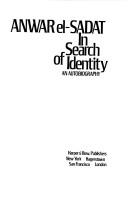
Sadat's own autobiography is an indispensable primary source. Reading it here, after the Nasser chapters, lets the learner hear directly how Sadat understood his break with Nasserism, the Camp David Accords, and his own vision for Egypt.

A lucid, insider analysis of Egyptian society under Mubarak — covering the military, the Islamists, the business elite, and the frustrated youth — that explains exactly why 2011 happened. The ideal bridge between the Sadat era and the present.
Deep Dive: Society, Islam, and the State
ExpertAchieve a sophisticated, structural understanding of the forces — Islamism, the military, capitalism, and identity — that have driven Egyptian politics from Nasser to Sisi, and situate Egypt within broader debates about authoritarianism and reform.
▸ Study plan for this stage
Pace: 6–8 weeks, ~40–50 pages/day, with 2–3 days per week reserved for synthesis and reflection
- The structural role of the Egyptian military as a state institution, economic actor, and political arbiter from Nasser through Sisi
- Islamism as a political movement and its competing visions for Egyptian governance, society, and identity
- The tension between authoritarian stability and democratic reform: how successive regimes justified centralized control
- Capitalism, economic policy, and the rise of a crony-capitalist elite under Mubarak and after
- The 2011 revolution as a watershed moment: its causes, trajectory, and why institutional structures ultimately reasserted themselves
- Identity politics in Egypt: nationalism, Arabism, Islamism, and sectarianism as competing frameworks for belonging
- The Sisi regime as a continuation and intensification of military authoritarianism, not a break from it
- How internal Egyptian dynamics intersect with regional geopolitics (Israel, Saudi Arabia, the Gulf) and great-power interests
- How did Nasser's vision of the state—and the military's role within it—establish patterns that persisted through Mubarak and into the Sisi era?
- What are the core ideological and organizational differences between the Muslim Brotherhood and other Islamist movements in Egypt, and how did these shape their political strategies?
- Why did the 2011 revolution fail to produce lasting democratic change, and what does Cook argue about the structural obstacles to reform?
- How did crony capitalism under Mubarak create both economic growth and deep social resentment, and what role did this play in the revolution?
- What is Sisi's political project, and how does Cook characterize the relationship between military rule, Islamism, and national identity under his regime?
- How have regional conflicts (particularly with Israel and Islamist movements) been used to justify authoritarian governance in Egypt?
- Create a timeline mapping key political transitions (Nasser → Sadat → Mubarak → 2011 revolution → Sisi) with annotations on the military's role, economic policy shifts, and Islamist movements at each stage
- Construct a comparative matrix of Nasser, Mubarak, and Sisi regimes across dimensions: military autonomy, economic model, Islamist policy, repression tactics, and legitimating narratives
- Write a 1,500-word analytical essay on why the 2011 revolution failed to dismantle military authoritarianism, using Cook's evidence and structural arguments
- Map the organizational structure and ideological positions of major Egyptian Islamist actors (Muslim Brotherhood, Salafists, etc.) and trace how their strategies shifted in response to state repression
- Debate exercise: Argue both sides of whether Sisi represents a genuine departure from Mubarak or a deepening of the same authoritarian model; use Cook's evidence to support each position
- Create a visual diagram showing how military interests, capitalist elites, Islamist movements, and popular demands intersect and conflict in Egyptian politics, identifying which actors have structural power
Next up: This stage equips you with a granular understanding of Egypt's internal political economy and ideological conflicts; the next stage should broaden your lens to Egypt's regional role, its relationship to global capitalism and geopolitics, and comparative frameworks for understanding authoritarianism beyond Egypt.

A comprehensive political history from Nasser to the Arab Spring by a leading scholar of Egyptian civil-military relations. It synthesizes everything covered in earlier stages and adds rigorous analytical depth on institutions and power.
Discussion
Keep reading
Paths that share books, cover the same subject, or open a related topic.