Best Books on the History of Israel, in Order
This curriculum traces Israeli history from the ideological roots of Zionism through the wars, occupation, and peace efforts, to the complexities of Israeli society today. Starting at an intermediate level, each stage builds on the last — first establishing the political and historical framework, then deepening into the wars and their consequences, then examining the unresolved conflict and diplomacy, and finally turning the lens inward on Israeli identity and society.
Zionism, the Mandate, and the Birth of a State
IntermediateUnderstand the ideological origins of Zionism, the British Mandate period, and the political and military struggle that led to Israel's founding in 1948.
▸ Study plan for this stage
Pace: 8–10 weeks, ~40–50 pages/day. Start with Gilbert's foundational narrative (3–4 weeks), move to Sand's critical historiography (2–3 weeks), then conclude with Collins' dramatic account of 1948 Jerusalem (2–3 weeks). Allocate 1 week for review and synthesis.
- Zionism as a modern political ideology: its origins in 19th-century European antisemitism and Jewish nationalism, and how it evolved from cultural to political movements
- The British Mandate (1920–1948): the League of Nations framework, the Balfour Declaration's contradictions, and how Britain managed competing Jewish and Arab claims
- Jewish immigration waves (aliyahs) and settlement patterns: demographic shifts, kibbutz development, and the creation of parallel Jewish institutions under Mandate rule
- Sand's historiographical critique: the distinction between biblical/ancient Jewish presence and modern Jewish identity construction, and how nationalist narratives shape historical claims
- Arab resistance and Palestinian nationalism: the emergence of Palestinian political consciousness and the escalating communal violence during the Mandate period
- Military organization and armed struggle: the role of the Haganah, Irgun, and Lehi in preparing for and executing the 1948 war of independence
- The 1947 UN Partition Plan: international diplomacy, the competing visions for a Jewish state, and why it became a flashpoint for conflict
- The siege and battle for Jerusalem (1947–1948): the microcosm of the larger conflict, the role of key figures, and the human dimensions of state-building under fire
- What were the primary ideological strands within Zionism in the late 19th and early 20th centuries, and how did they differ in their vision for a Jewish homeland?
- How did the Balfour Declaration and the British Mandate create structural contradictions in Palestine, and what were the consequences for Jewish-Arab relations?
- According to Shlomo Sand, what is the difference between historical Jewish presence in the Levant and the modern construction of Jewish national identity, and what are his main critiques of nationalist historiography?
- What role did underground military organizations (Haganah, Irgun, Lehi) play in the transition from Mandate governance to Israeli statehood?
- How did the 1947 UN Partition Plan attempt to resolve the competing claims in Palestine, and why did it fail to prevent war?
- What were the key military, political, and human factors that determined the outcome of the 1948 battle for Jerusalem as described in Collins' account?
- Create a timeline of Zionist ideology and political movements (1880s–1948) using Gilbert's narrative, marking key figures, congresses, and ideological shifts (cultural, labor, revisionist, etc.)
- Map Jewish settlement patterns and Palestinian population centers during the Mandate period using data from Gilbert; analyze how geography shaped the conflict
- Write a comparative analysis (3–5 pages) of how Gilbert presents Zionist history versus how Sand deconstructs the nationalist narrative—identify points of agreement and fundamental disagreement
- Construct a debate outline: use Sand's historiographical arguments to critique a specific Zionist historical claim from Gilbert, then defend the Zionist position using Gilbert's evidence
- Create a character study of 3–4 key figures from Collins' account (e.g., David Ben-Gurion, Golda Meir, Abdullah of Transjordan, or military commanders) and their roles in the Jerusalem conflict
- Design a visual infographic or annotated map showing the military positions, supply lines, and key battles in Jerusalem during 1947–1948 based on Collins' detailed narrative
Next up: This stage establishes the foundational narrative and historiographical tensions of Israel's creation; the next stage will likely examine Israel's early years, regional conflicts, and how the state consolidated power and navigated its relationship with Arab neighbors and the Palestinian population it displaced.
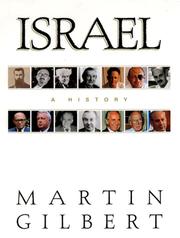
A comprehensive, chronological narrative of Israel from the Zionist movement to the modern state — the ideal spine for the entire curriculum, read first to establish a shared timeline and vocabulary.

A provocative, widely-debated scholarly work that interrogates the historical foundations of Jewish nationhood, sharpening the reader's critical lens before diving into contested histories.

A gripping, deeply researched narrative of the 1948 battle for Jerusalem that brings the abstract politics of the Mandate era to vivid human life, bridging ideology and war.
1948 and the Wars That Shaped Israel
IntermediateGain a multi-perspective understanding of the 1948 War of Independence/Nakba and the subsequent wars (1956, 1967, 1973) that defined Israel's borders, identity, and regional standing.
▸ Study plan for this stage
Pace: 8–10 weeks, ~40–50 pages/day. "Six Days of War" (~560 pages) over 5–6 weeks, then "The Yom Kippur War" (~600 pages) over 3–4 weeks, with 1 week for review and synthesis.
- The 1967 Six-Day War as a watershed moment: military strategy, political miscalculation, and the occupation of the West Bank, Gaza, and Golan Heights
- Oren's multi-perspective narrative technique: how Israeli, Arab, Soviet, and American viewpoints reveal the complexity of the conflict
- The role of intelligence, deception, and preemptive strategy in Israel's 1967 victory and its long-term consequences
- The Yom Kippur War as a challenge to Israeli military invincibility: Egyptian and Syrian strategy, initial Israeli setbacks, and the war's political aftermath
- How successive wars (1948, 1956, 1967, 1973) reshaped Israeli identity, regional power dynamics, and the Palestinian question
- The intersection of military history, diplomacy, and civilian experience during wartime
- How technological advantage, geographic position, and strategic doctrine evolved across these conflicts
- What were the immediate political and military triggers for the 1967 Six-Day War, and how did miscalculation by Arab leaders contribute to Israel's preemptive strike?
- How did Oren use multiple national perspectives (Israeli, Egyptian, Syrian, Soviet, American) to construct his narrative, and what does this reveal about the war's complexity?
- What were the strategic and long-term consequences of Israel's occupation of the West Bank, Gaza, and Golan Heights following the 1967 war?
- Why did the Yom Kippur War represent a significant departure from the 1967 narrative of Israeli military dominance, and what were Egypt and Syria's strategic objectives?
- How did the initial Israeli setbacks in the Yom Kippur War affect Israeli society, military doctrine, and political leadership?
- What patterns emerge across the 1948, 1956, 1967, and 1973 wars regarding Israel's strategic approach, regional relationships, and the unresolved Palestinian question?
- Create a detailed timeline of events leading to the 1967 war (May–June 1967), marking key decisions by Israeli, Egyptian, Syrian, Soviet, and American leaders; identify the critical turning points where different outcomes were possible.
- Map the territorial changes resulting from the 1967 war using historical maps; annotate the strategic significance of each occupied territory (West Bank, Gaza, Golan Heights, Sinai) and note how these territories became central to subsequent conflicts.
- Write a comparative analysis of Israeli military strategy in 1967 versus 1973: How did the Yom Kippur War force Israel to reconsider assumptions about technology, doctrine, and Arab military capability?
- Select one major battle from 'Six Days of War' (e.g., the Sinai campaign, the battle for Jerusalem) and rewrite it from the perspective of an Egyptian, Syrian, or Jordanian commander using Oren's multi-perspective approach.
- Analyze the role of intelligence and deception in both wars: How did the Mossad and Israeli intelligence shape the 1967 preemptive strike, and how did Egyptian deception succeed in the 1973 crossing of the Suez Canal?
- Create a visual chart comparing the political outcomes and casualties of each war (1948, 1956, 1967, 1973); discuss how each war altered Israeli society's sense of security, national identity, and regional standing.
Next up: This stage establishes the territorial, military, and psychological foundations of modern Israel through its critical wars, preparing you to examine how the unresolved Palestinian question, the occupation, and regional tensions evolved into the conflicts and peace processes of the late 20th and 21st centuries.
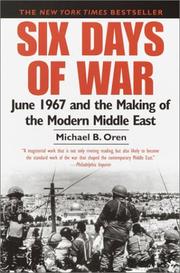
A meticulously researched, highly readable account of the 1967 war, which is the single most consequential event for understanding the occupation and all subsequent peace efforts.
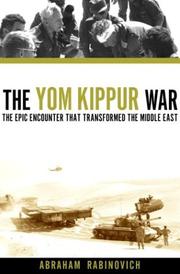
The authoritative military and political history of the 1973 war, which shattered Israeli invincibility and set the stage for the peace process with Egypt — a crucial bridge to the next stage.
Occupation, the Palestinians, and the Peace Process
IntermediateUnderstand the dynamics of the Israeli occupation of the West Bank and Gaza, the Palestinian national movement, and the successive — and failed — attempts at a negotiated peace.
▸ Study plan for this stage
Pace: 12–14 weeks, ~40–50 pages/day (approximately 3 weeks per book, with 1–2 weeks for synthesis and reflection)
- The Iron Wall doctrine: Shlaim's argument that Israeli security strategy has historically rejected Palestinian self-determination and relied on military dominance rather than negotiated peace
- Palestinian national consciousness and resistance movements: how Palestinian identity, the PLO, and successive uprisings shaped demands for statehood and self-determination
- The occupation's structural mechanisms: settlement expansion, military administration, resource control, and their role in entrenching Palestinian dispossession in the West Bank and Gaza
- Failed peace processes and their root causes: why Oslo, Camp David, and other negotiation attempts collapsed, and the role of Israeli and Palestinian maximalist positions
- The personal and national dimensions of conflict: how individual Israeli and Palestinian narratives reveal the psychological, moral, and political stakes of occupation and resistance
- The asymmetry of power and negotiating positions: how military superiority, demographic anxieties, and competing historical claims shaped the terms of negotiation
- The role of external actors: how the United States, Arab states, and international pressure influenced (or failed to influence) the trajectory of occupation and peace efforts
- The two-state solution as a contested framework: its appeal, its preconditions, and why it became increasingly difficult to achieve after the 1990s
- What is Shlaim's 'Iron Wall' thesis, and how does he argue it shaped Israeli policy toward the Palestinians from 1948 onward?
- How does Shavit's personal narrative in *My Promised Land* illustrate the moral and psychological tensions within Israeli society regarding occupation and Palestinian rights?
- What were the key moments and turning points in the Israeli-Palestinian peace process between 1991 and 2000, and why did each major negotiation fail according to Ross?
- How did settlement expansion in the West Bank function as both a security strategy and a political obstacle to Palestinian statehood?
- What were the Palestinian national movement's primary objectives during the occupation, and how did they evolve from the 1960s through the 1990s?
- How do the three books differ in their explanations for why a two-state solution proved elusive, and what does each author identify as the critical failure point?
- Create a timeline of major Israeli-Palestinian negotiations (Oslo, Camp David, Taba, etc.) using *The Missing Peace*, and for each, note the key sticking points and which side Ross holds more responsible for failure
- Read a selection of Shlaim's analysis of the Iron Wall doctrine (chapters 1–2 of *The Iron Wall*) and write a 500-word response: Do you find his argument that Israeli leaders rejected peace compelling, or does it oversimplify Israeli security concerns?
- Track Shavit's personal journey through *My Promised Land* (his family history, his military service, his visits to settlements and Palestinian areas) and write a reflective essay on how his individual experience shapes his political conclusions
- Create a map or visual diagram showing the geography of settlements, Palestinian enclaves, and military zones in the West Bank as described across all three books; annotate it with key events and their locations
- Conduct a comparative analysis: choose one major negotiation (e.g., Camp David 2000) and compare how each author explains its failure—what does each emphasize (ideology, leadership, structural constraints, external pressure)?
- Write a dialogue or debate between Shlaim (arguing structural barriers to peace) and Ross (arguing that missed opportunities and negotiating errors were decisive), using specific evidence from both books
Next up: This stage equips you with a deep understanding of how occupation, settlement, and failed diplomacy created the conditions for the current impasse; the next stage will likely examine post-2000 developments—the Second Intifada, Gaza's isolation, and contemporary challenges to the two-state framework—building on the historical foundation you've now established.
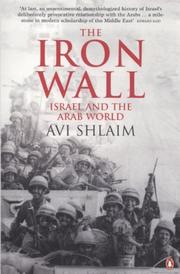
A sweeping realist history of Israeli foreign and security policy from 1948 to the present, providing the essential strategic framework for understanding why peace efforts have repeatedly collapsed.
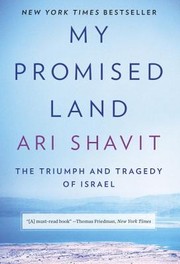
A lyrical, honest, and deeply personal reckoning with Zionism's triumphs and moral costs, weaving together history and reportage to connect the occupation's roots to Israeli society's present anxieties.
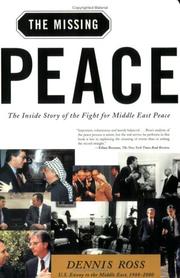
An insider account of the Oslo, Camp David, and Clinton Parameters negotiations by the chief U.S. mediator — indispensable for understanding the mechanics and failures of the peace process from the inside.
Israeli Society, Identity, and the State Today
ExpertDevelop a nuanced understanding of Israel's internal fractures — secular vs. religious, Ashkenazi vs. Mizrahi, Jewish vs. Arab citizens — and the political culture shaping the country's future.
▸ Study plan for this stage
Pace: 8–10 weeks, ~40–50 pages/day. Herf (3 weeks), Pappé (3 weeks), Senor (2–3 weeks), with 1 week for synthesis and comparative analysis.
- Herf's argument about Israel's strategic positioning and the intellectual foundations of Israeli state identity in relation to regional and global power dynamics
- Pappé's historiographical challenge to dominant Israeli narratives: the Palestinian displacement narrative and competing claims to historical truth
- The tension between Israel as a Jewish ethno-state and a multicultural democracy with significant Arab-Israeli and diaspora populations
- Mizrahi and Ashkenazi divisions within Jewish Israeli society: class, cultural, and political hierarchies that shape domestic policy
- Secular-religious polarization in Israeli politics and its implications for citizenship, law, and national identity
- The role of technological innovation and entrepreneurship (Start-Up Nation) as a unifying national narrative and its relationship to social fragmentation
- How competing historical narratives (Herf vs. Pappé) reflect deeper ideological fractures within Israeli society itself
- What is Herf's central thesis about Israel's moment, and how does he argue Israel's identity and strategic position have been shaped by intellectual and geopolitical forces?
- How does Pappé's account of Palestinian displacement challenge or complicate the dominant Israeli historical narrative presented in Herf?
- What does Senor identify as the sources of Israeli innovation and entrepreneurship, and how do these relate to (or obscure) the social divisions discussed in Herf and Pappé?
- How do secular-religious tensions in Israeli society affect the state's ability to maintain both Jewish identity and democratic governance?
- What role do Mizrahi-Ashkenazi divisions play in Israeli political culture, and how are these tensions reflected in the three books' different perspectives?
- How do the three authors implicitly or explicitly address the status and rights of Arab-Israeli citizens, and what do their silences or emphases reveal about Israeli identity?
- Create a timeline comparing Herf's and Pappé's accounts of key events (1948, 1967, settlement expansion) side-by-side; identify where their narratives diverge and why.
- Write a 2–3 page comparative analysis: How does Senor's narrative of Israeli innovation implicitly address (or avoid) the social fractures that Herf and Pappé highlight?
- Map the three books onto Israel's major internal divides (secular/religious, Ashkenazi/Mizrahi, Jewish/Arab); for each divide, note which book(s) engage with it and which ignore it.
- Conduct a close reading of Pappé's methodology and source criticism; write a 2-page reflection on how his historiographical approach differs from Herf's, and what this reveals about competing truth claims in Israeli history.
- Interview or find recorded discussions with scholars who critique or defend each author; synthesize 2–3 perspectives and write a 3-page essay on how Israeli intellectuals themselves are fractured along the lines these books explore.
- Create a debate outline: Construct arguments that Senor's Start-Up Nation narrative is either (a) a unifying national myth that transcends internal divisions, or (b) a distraction from unresolved structural inequalities discussed in Herf and Pappé.
Next up: This stage equips you to recognize Israel's internal contradictions—between competing historical narratives, social hierarchies, and national myths—preparing you to examine how these fractures shape Israel's foreign policy, regional relationships, and long-term viability in the next stage.

Reframes Israel's founding in the context of global Cold War politics, adding a layer of international complexity that enriches understanding of how Israel's identity was shaped by outside forces.
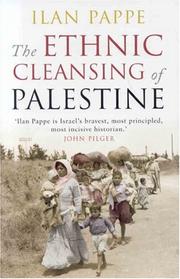
A forceful, controversial account from a leading post-Zionist historian that ensures the reader confronts the full spectrum of scholarly debate about 1948 and its ongoing legacy in Israeli-Palestinian relations.
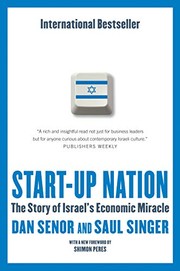
Examines the economic and cultural forces behind Israel's tech boom, offering a counterpoint to the conflict-focused narrative and illuminating the society-building dimension of the modern Israeli state.
Discussion
Keep reading
Paths that share books, cover the same subject, or open a related topic.