Zionism: the best books to read, in order
Zionism is not a settled historical subject and this path does not treat it as one. The same movement is described in serious scholarship as a national liberation movement of a persecuted people and as a settler-colonial project, and the books making each case are written by careful historians rather than by cranks. So every book below is labelled by the position it argues from, and the stages are built so you meet the movement's own founding texts before anyone interprets them, then the sympathetic intellectual history, then the internal criticism from within Israel, and finally the Palestinian and anti-Zionist accounts. The path does not tell you which reading is right. It tries to make you able to state each one in the form its own best defenders would recognise.
What the founders actually wrote
BeginnerRead the movement's foundational texts before reading anyone's interpretation of them — and notice how much of the later argument turns on what Herzl and his contemporaries did and did not say about the people already living in Palestine.
▸ Study plan for this stage
Pace: Three weeks for 991 pages, though the first two books account for only 353 of them. Herzl's A Jewish State is 58 pages and can be read in an evening; do read it in one sitting, because its odd mixture of visionary claim and administrative detail is the effect. Old New Land is 295 pages of nineteenth
- Herzl's actual proposal in Der Judenstaat: a chartered company, an organised transfer of population, a negotiated sovereignty. It is a project plan, and its premise is that antisemitism in Europe is permanent and cannot be reasoned away.
- What Old New Land imagines about the Arab population of Palestine — the character of Reschid Bey and the claim that the Jewish settlers' arrival is welcomed as mutual benefit. Read this passage carefully, because most of the later argument on this path passes through it.
- Political Zionism as one strand among several, and the alternatives Hertzberg prints: Ahad Ha'am's cultural Zionism, which held that a spiritual centre mattered more than a state; Pinsker's Auto-Emancipation; A. D. Gordon's labour Zionism and the religion of work; Jabotinsky's revisionism; Rav Kook'
- The nineteenth-century context these texts assume: emancipation offered and withdrawn, the Dreyfus affair, the Russian pogroms of 1881 and after. The founders are responding to specific events, not to an abstract condition.
- That Hertzberg's editorial introduction is itself an argument about what Zionism essentially is, and that an anthology's selection and framing are interpretive acts even when the texts inside it are primary.
- The catalogue note that matters for buying: the widely held English edition of Der Judenstaat is the old De Haas translation filed as A Jewish State — the same text under an earlier title.
- What does Herzl say in A Jewish State about the existing inhabitants of the territory he proposes to settle? Quote it, including what he does not say.
- Compare Herzl's answer to that question in the pamphlet with the answer dramatised in Old New Land. Are they consistent?
- State Ahad Ha'am's objection to political Zionism in his own terms. What did he think a state would cost that a cultural centre would not?
- From the Hertzberg selections: name three positions that were all called Zionism in the same decade and that were incompatible with one another on what the movement was for.
- Which of these writers assumed the project required the consent of the Arab population, which assumed it did not, and which does not address the question at all?
- Read A Jewish State with two columns beside you: claims about Jews in Europe, and claims about the proposed territory. Notice how much longer the first column is, and write a paragraph on what that asymmetry tells you about what the pamphlet was for.
- Extract the Reschid Bey passages from Old New Land verbatim into a single page. Keep it — you will come back to it after Said and Khalidi in the final stage, and the point is to have Herzl's own words rather than a summary of them.
- Build a one-page chart of the Hertzberg contributors: name, strand, what they wanted, and what they thought the main obstacle was. Do it from the primary selections, not from Hertzberg's headnotes, then compare yours to his framing.
- Pick the selection in Hertzberg you found least persuasive and write half a page stating it in the strongest form you can manage. This is the skill the whole path is training, and it is easier to practise on someone you have no stake in.
Next up: You have the founders in their own words and can now judge for yourself whether the sympathetic intellectual history in the next stage is describing what you read.
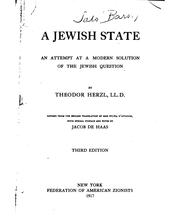
Herzl's 1896 Der Judenstaat, the pamphlet that turned a scattered set of ideas into a political movement with an address. It is short, oddly practical, and much stranger than its reputation. Note the catalogue record: the widely held English edition is the old De Haas translation, filed as A Jewish State, which is the same text under an earlier title.
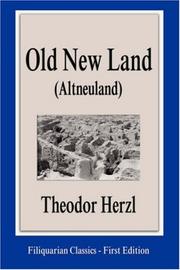
Herzl's 1902 utopian novel, and the necessary companion to the pamphlet: the future Jewish society he imagined, including his answer to the question of the Arab inhabitants — an answer that reads very differently depending on which of the later historians you have already read. Read it second, and before anyone tells you what to make of it.

Hertzberg's anthology is how you meet the strands Herzl did not represent: Ahad Ha'am's cultural Zionism, Pinsker, A. D. Gordon's labour Zionism, Jabotinsky's revisionism, Rav Kook's religious Zionism. SYMPATHETIC in framing — Hertzberg's introduction is itself an argument — but the primary texts are the point, and it prevents you from mistaking Herzl for the whole movement.
The sympathetic intellectual history
IntermediateBe able to give the standard account in its strongest form: Zionism as one of the nineteenth century's national movements, produced by emancipation's failure and by the pogroms, and to say what that framing explains well.
▸ Study plan for this stage
Pace: Four to five weeks for two books and 889 pages, and they read at very different rates. Avineri's The Making of Modern Zionism is 250 pages arranged as short chapters on individual thinkers — read it first and fairly quickly, a chapter or two a sitting, because its job is to give you a frame. Laqueur
- Avineri's core claim: that Zionism was a revolution in Jewish self-understanding produced by European modernity — by emancipation, secularisation and nationalism — rather than a continuation of the religious longing for Zion that preceded it by centuries.
- The question Avineri's frame is designed to answer: why 1880 and not 1580, given that the religious attachment to the land is ancient and the political movement is not.
- Zionism as one of Europe's nineteenth-century national movements, comparable to Italian, Polish or Czech nationalism, and what that comparison explains — and what it leaves out, since the other movements were not proposing to constitute a nation somewhere its members did not live.
- The institutional history Laqueur supplies: the Zionist Congresses, the World Zionist Organization, the Uganda proposal and the split it caused, the Balfour Declaration, the Mandate, the Yishuv's self-governing institutions.
- Laqueur wrote before the Israeli state archives opened, which is exactly why he is worth reading first: his is the account the New Historians in stage four were revising, and you cannot follow a revision you have not read the original of.
- How a sympathetic history handles the Arab question — where it appears in the narrative, how much space it gets, and what kind of event it is treated as. Note this now; it is the comparison the last two stages depend on.
- Reconstruct Avineri's argument for why Zionism is a modern rather than a traditional phenomenon. What evidence does he use, and what would count against it?
- Using Laqueur, narrate the Uganda controversy: who proposed what, who objected, and what the split revealed about what the movement thought it was.
- Where in Laqueur's 639 pages do the Arabs of Palestine first appear as political actors rather than as background? What does the placement tell you about the book's organising assumptions?
- Avineri and Hertzberg both survey the same thinkers. Name a case where their emphases differ, and say what each is trying to establish.
- What can a book written before the archives opened still be authoritative about, and what can it not? Be specific rather than general.
- Take three thinkers you met in Hertzberg and read Avineri's chapters on them. Mark where Avineri's reading is doing interpretive work the primary text does not require, and where it is simply summarising.
- Build a timeline from Laqueur running 1881 to 1948 with three tracks: Zionist institutional events, events in Europe, and events in Palestine. Keep it beside you for the rest of the path — every later book is arguing about the causal links between the tracks.
- Find one passage in Laqueur that describes a 1948-era episode and set it aside. In stage four you will read Morris and Shlaim on the same episode; the comparison is the cleanest demonstration on the path of what the archives changed.
- Write a page defending the framing of Zionism as an ordinary European national movement, then a page attacking it. Do not decide between them yet.
Next up: With the standard account in hand you can now read the Israeli scholars who worked the same material and concluded that the movement's story about itself does not survive contact with the sources.
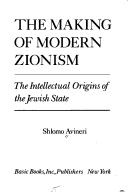
SYMPATHETIC, and the best short intellectual history: Avineri, an Israeli political theorist, reads Zionism as a revolution in Jewish self-understanding produced by European modernity rather than as a continuation of religious longing for Zion. Read it first here — it supplies the interpretive frame the next book fills in and complicates.
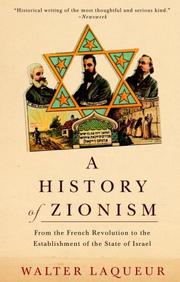
SYMPATHETIC but far more granular: the standard narrative history from the precursors to 1948, strong on the congresses, the factional fights and the diplomacy. Dated in places and written before the Israeli archives opened, which is exactly why it is useful to read before the revisionists — it is the account they were revising.
The strands, and the critique from within
IntermediateDistinguish labour, revisionist and religious Zionism as genuinely different projects, and be able to state the argument — made by Israeli scholars — that the movement's self-image as defensive and socialist does not survive contact with the archive.
▸ Study plan for this stage
Pace: Five to six weeks for 1,145 pages, and the middle pairing is the point of the stage. Shapira's Land and Power is 446 pages and Sternhell's The Founding Myths of Israel is 442 — read them consecutively and close together, ideally with no other book between, because they work the same labour-Zionist m
- Shapira's arc: the labour movement's ethos of restraint (havlagah) as a genuine commitment rather than a pose, and the documented shift from defensive to offensive doctrine across the Arab revolt and the years before 1948.
- Why Shapira matters more, not less, for being sympathetic — she is not building an indictment, so the change she traces cannot be dismissed as a hostile reading.
- Sternhell's thesis: that labour Zionism's socialism was instrumental, a nationalism in socialist clothing, and that the egalitarian kibbutz founding story Israelis tell is substantially a myth constructed after the fact.
- That Sternhell writes from the Israeli left and that his critique is an internal one — the charge is betrayal of socialism, not the illegitimacy of the national project, which is a different accusation from the one the final stage makes.
- Revisionist Zionism as a distinct strand: Jabotinsky's rejection of gradualism, his insistence on a stated maximalist aim, and the Iron Wall doctrine — the explicit argument that Arab consent could not be obtained and that the project would have to proceed behind superior force until it was.
- The line from Jabotinsky to the Israeli political right, which has governed for most of the last fifty years, and why a path on Zionism that stops at labour Zionism describes a movement that lost.
- Halkin is sympathetic to Jabotinsky and states the Iron Wall argument frankly rather than apologetically — which makes his book more useful than a hostile one, because you get the doctrine as its defenders hold it.
- Define havlagah as Shapira uses it. What was being restrained, by whom, and on what grounds — moral, tactical, or political?
- Sternhell and Shapira read the same kibbutz and Histadrut sources. Identify one specific institution or episode they both treat and state precisely where their readings diverge and why.
- What would have to be true for Sternhell's thesis to be wrong? Name the evidence, not the sentiment.
- State the Iron Wall argument as Jabotinsky made it, in three sentences, without editorialising. Then say what Herzl's Old New Land assumed that Jabotinsky denied.
- Labour, revisionist and religious Zionism: what did each think the state was for? Which of the three most nearly got the state it wanted?
- Shapira and Sternhell are both Israeli scholars criticising the founding narrative. Why is that internal position analytically important as well as biographically interesting?
- Read the Shapira and Sternhell treatments of the same decade side by side — literally, two books open — and produce a two-column page of claim against claim. Where the claims are compatible and only the emphasis differs, say so; that distinction is most of the work.
- Extract Shapira's chronology of the shift from restraint to force into a dated list of episodes. Then check each entry against the Laqueur timeline you built in the previous stage and mark what Laqueur left out.
- Write out the Iron Wall doctrine from Halkin, then go back to your page of Reschid Bey passages from Old New Land and set the two texts against each other. Both are Zionist; they disagree about the most basic fact in the situation.
- Take one founding story Sternhell calls a myth and try to establish it from Laqueur alone. Note whether Laqueur asserts it, assumes it, or is silent — and what that tells you about how founding narratives get into standard histories.
Next up: Shapira and Sternhell showed you Israeli scholars revising the movement's account of itself; the next stage is the generation that did the same thing to 1948 with the state's own archives open.
SYMPATHETIC but unsparing: Shapira, a leading Israeli historian, traces how the Zionist labour movement moved from a genuine ethos of restraint to the embrace of force between 1881 and 1948. The single best book on how the movement's relationship to violence actually developed, written by someone who is not trying to indict it.

CRITICAL, from the Israeli left. Sternhell argues that labour Zionism's socialism was largely instrumental — nationalism wearing socialist clothes — and that the kibbutz-and-equality story Israelis tell about their founding is substantially a myth. Read it directly after Shapira: they are working the same material to different conclusions.

The revisionist strand needs its own book, because it is the ancestor of the political right that has governed Israel for most of the last fifty years. Halkin is SYMPATHETIC and honest about it, including about the Iron Wall doctrine — the frank argument that Arab consent was unobtainable and that Zionism would have to proceed behind superior force.
1948 and the historians who revised the story
IntermediateKnow what the opened Israeli archives established about 1947-49, where the New Historians genuinely disagree with each other, and why 'what happened' and 'what it means' came apart so completely in this literature.
▸ Study plan for this stage
Pace: Two books, 1,535 pages, six to eight weeks — and they must be read against each other rather than in sequence with a gap. Morris's Righteous Victims is 751 pages and Shlaim's The Iron Wall is 784; both are one-volume histories with overlapping coverage, both are by historians of the same revisionist
- What the opened Israeli archives actually established about 1947-49 — the existence of expulsion orders in specific places, the military context of the flight, the absence of the general Arab broadcast instruction that earlier accounts had relied on.
- That Morris is revisionist on the evidence and hawkish in his later politics, and that these are separable. His documentary findings are not in serious dispute among historians who reject his political conclusions.
- Shlaim's Iron Wall thesis extended: that Jabotinsky's doctrine became the operating logic of Israeli policy toward the Arab world for seventy years, including at junctures where Shlaim argues a settlement was available.
- Where Morris and Shlaim genuinely disagree — not primarily about what happened, but about whether the alternatives were real, and about what obligations follow from the record. This is why the pair is more instructive than either alone.
- The difference between a claim about events, a claim about intentions and a claim about counterfactuals, and how quickly the argument in this literature slides between the three.
- Why 'what happened' and 'what it means' came apart so completely here: the archival findings were absorbed by both sides of the political argument, each of which drew opposite conclusions from the same documents.
- Righteous Victims covers the whole conflict from 1881 and therefore doubles as a narrative spine for everything else on this path, which is why it is worth its length.
- Name three findings about 1948 that the archival generation established and that pre-archival accounts such as Laqueur's did not contain.
- On a single specific episode of 1948 — Deir Yassin, Lydda and Ramle, or the Ten Days — set Morris's account against Shlaim's. Where does the factual account differ, and where only the assessment?
- Morris has argued that the expulsions occurred and that they were, in the circumstances, defensible. Reconstruct that argument in full, then reconstruct Shlaim's response.
- What does Shlaim mean by saying Israel negotiated from behind the Iron Wall, and what is his strongest single piece of evidence that an alternative existed?
- You read Laqueur before this stage. Return to the passage you set aside there and say exactly what these two books changed about it.
- If two historians agree on the documents and disagree on the conclusions, what is the disagreement about? Answer with reference to these two books rather than in the abstract.
- Read the 1947-49 chapters of both books in the same week and produce a single merged chronology of the war, annotating each entry with M, S or both. The entries only one of them carries are the interesting ones.
- Take one paragraph from each author about the same event and rewrite it in neutral language, stripping every evaluative word. Compare the two stripped versions. What remains is roughly the agreed record.
- Track Shlaim's use of the Iron Wall as an explanatory device across three different decades in his book. Ask each time whether it is doing analytical work or supplying a frame the evidence would fit either way.
- Write a one-page account of 1948 that both Morris and Shlaim would accept as accurate, and a second page listing everything you had to leave out to achieve that.
Next up: Both books in this stage are by Israeli historians arguing among themselves; the final stage brings in the writers who reject the terms of that argument altogether.
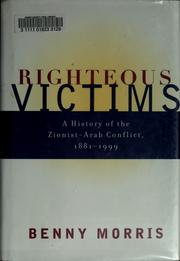
REVISIONIST on the evidence, hawkish in his later politics — a combination that makes Morris hard to place and worth reading closely. This is his one-volume history of the whole conflict from 1881, and it doubles as the baseline narrative of the state's founding. His archival monograph The Birth of the Palestinian Refugee Problem Revisited is the more important book for 1948 specifically and is where the expulsions are documented; start with this one and go there if the subject holds you.
CRITICAL, from the same revisionist generation as Morris and reaching opposite political conclusions from overlapping evidence. Shlaim argues that Israel's policy toward the Arab world has followed Jabotinsky's Iron Wall logic for seventy years, including at moments when settlements were available. Read it against Morris deliberately — the pairing is the best available demonstration that the disagreement is not simply about facts.
Read from the other side of the argument
IntermediateBe able to state the Palestinian and anti-Zionist case in its serious scholarly form rather than its slogan form, and to say which of its claims the books in earlier stages concede and which they contest.
▸ Study plan for this stage
Pace: Six weeks for four books and 1,352 pages, and the standpoints are deliberately varied rather than uniform. Said's The Question of Palestine is 265 pages and is a polemic by a literary critic rather than a work of history — read it as an argument, in a week, and hold it to the standard appropriate to
- Said's central move: that Zionism must be assessed from the standpoint of its victims as well as its beneficiaries, and that Jewish national self-determination and Palestinian dispossession were not two events but one.
- Where Said is arguing and where he is asserting. He is answered by most of the historians in the earlier stages, and reading him after them rather than before is what makes that visible.
- Khalidi's harder question, and the one that makes The Iron Cage more than a counter-narrative: why Palestinian national leadership failed under the Mandate. He is as unsparing about that leadership as about the British and the Yishuv.
- The structural asymmetry Khalidi identifies under the Mandate — that the Yishuv was permitted to build state institutions the Palestinian population was not — and why he thinks that matters more than the leadership's mistakes.
- Cohen's subject: Palestinian collaboration with the Zionist movement between 1917 and 1948, documented from Israeli archives. It complicates the two-monolithic-camps picture that both the nationalist and the anti-colonial narratives depend on.
- Gorenberg's finding: that the settlement project in the decade after 1967 was not decided on so much as permitted — begun by particular people, tolerated by governments that never resolved to authorise it, and never stopped.
- That the path ends without a verdict on purpose, and that being able to state each of these positions in the form its best defenders would recognise is a harder achievement than choosing between them.
- State Said's argument in the form he would accept. Then name the specific historian on this path who has already answered it and say how.
- Khalidi is a Palestinian historian who blames Palestinian leadership. What does that criticism cost his overall argument, and what does it buy?
- Which claims of the Palestinian case do the earlier books on this path concede outright? Which do they contest? Answer with specific books and specific claims.
- What does Cohen's evidence do to the concept of a national community with a single interest — on either side? Does it undermine the anti-colonial reading, the nationalist reading, or both?
- Gorenberg shows a policy emerging without a decision. What does that do to arguments on both sides that rest on intention?
- You have now read Herzl, Avineri, Sternhell, Morris, Shlaim, Said and Khalidi. Write the shortest statement of the disagreement you can manage that all of them would recognise as their disagreement.
- Return to the Reschid Bey pages you extracted in stage one and read them immediately after Said. Write half a page on what Said would say about that passage, and half a page on what Herzl would say to Said.
- For each of Khalidi's chapters on the Mandate, find the corresponding coverage in Laqueur and note what is present in one and absent from the other. Do this as a list rather than an essay; the pattern is the finding.
- Take one episode Cohen documents and ask how it would be narrated by each of the other authors on this path who cover the period. Where would it not be narrated at all?
- Using Gorenberg, reconstruct the first settlement after 1967 as a sequence of specific decisions and non-decisions with names attached. Compare it to how you would have described the settlement project before reading him.
- Write two 500-word summaries of the whole subject: one that Shapira or Avineri would sign, one that Khalidi would sign. Neither may contain a factual claim you cannot source to a book on this path. Then list the sentences that appear, unchanged, in both.
Next up: The path ends here deliberately, with the movement's consequences rather than its origins, and with the reader able to state every position on it rather than holding one.
ANTI-ZIONIST, and the text that put the Palestinian case into Anglophone intellectual life. Said's argument is that Zionism must be assessed from the standpoint of its victims as well as its beneficiaries, and that European Jewish national liberation and Palestinian dispossession were the same event. Polemical, and answered by most of the historians above — read it knowing that.
CRITICAL and scholarly, where Said is polemical: Khalidi, a historian from a prominent Jerusalem family, examines why Palestinian national leadership failed under the Mandate — and is as hard on that leadership as on the British and the Yishuv, which is what makes him worth reading rather than agreeing with. His later The Hundred Years' War on Palestine is the fuller statement of the settler-colonial reading; this is the more useful book here because its period is the one the earlier stages cove
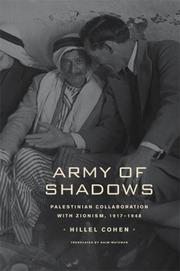
An Israeli historian on Palestinian collaboration with the Zionist movement from 1917 to 1948 — a book that discomfits everyone. It complicates the two-monolithic-camps picture that both the nationalist and the anti-colonial narratives depend on, which is why it belongs here rather than earlier.
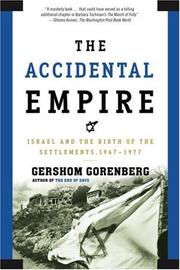
CRITICAL, and the last stop because it is where the argument becomes contemporary. Gorenberg's archival history of the first decade of settlement after 1967 shows a project that no one quite decided on and no one stopped. Whatever you conclude about 1896 or 1948, this is the record of what the movement became after the state existed — and the honest place for a path like this to end, without a verdict.
Discussion
Keep reading
Paths that share books, cover the same subject, or open a related topic.