Best Books on the Mexican Revolution, in Reading Order
The Mexican Revolution is unusually hard to summarise because it was not one revolution: Madero's liberal rising, Zapata's agrarian war in Morelos, Villa's northern army and Carranza's constitutionalists all wanted different things and mostly fought each other. This path therefore starts with a short survey to hold the factions apart, then reads the two great biographies that anchor the peasant south and the militarised north, then the eyewitness and fictional accounts written while it was happening. The last stages take on Alan Knight's full scholarly account and the long argument about whether the revolution was genuinely popular or a state-building project that captured a popular rising.
Sort Out the Factions
BeginnerLearn the sequence — Díaz, Madero, Huerta, the Convention, Carranza, the 1917 constitution — and be able to say what each faction actually wanted.
▸ Study plan for this stage
Pace: 3 weeks for about 490 pages. Easterling's The Mexican Revolution is 180 pages and can be done in a week — read it with a pen and build the timeline as you go, because that timeline is the deliverable of this stage. Brenner's The Wind That Swept Mexico takes a second week for its narrative and a thir
- The Porfiriato and what actually made it unsustainable: three decades of Díaz, foreign-owned railways and mines, the concentration of village land into haciendas, and a political class with no route to office
- Madero as the wrong revolutionary for the moment — a liberal democrat who wanted clean elections and had no land programme, which is why he lost Zapata within months of taking power
- The Decena Trágica and Huerta's coup, with the American ambassador Henry Lane Wilson's involvement, which turns the revolution violent and unifies the opposition
- The four-way split after Huerta falls: Carranza's Constitutionalists, Obregón's professional army, Villa's División del Norte and Zapata's Liberating Army of the South
- The Convention of Aguascalientes as the moment the revolution tried and failed to agree with itself, after which the factions fought each other rather than the old regime
- The 1917 Constitution's key articles — 27 on land and subsoil rights, 123 on labour, 130 on the Church — and the fact that it was far more radical than the man who convened it
- Zapata's murder in 1919, Carranza's death in 1920, Villa's assassination in 1923, and Obregón's in 1928: the revolution consuming its own leadership in under a decade
- Brenner's contribution as atmosphere and image rather than argument — the photographs establish that this was a mass event experienced by people who left no writing
- Name the four main factions after 1914 and state what each wanted in one sentence. If you cannot do this from memory, reread Easterling before going on — everything later depends on it.
- Why did Zapata break with Madero, and what does the Plan de Ayala demand that Madero would not give?
- What was the American role in Huerta's coup and in his fall? The answer is not the same in both cases.
- How did a constitutional convention dominated by Carranza's people produce a document Carranza did not want?
- Brenner is writing in 1943 for an American audience. What is her book trying to persuade them of, and how does that shape the selection of images?
- Build a one-page timeline from 1876 to 1928 with a column for each faction, marking when each formed, allied, split and ended. Keep this sheet — every later book gets annotated onto it.
- Draw a rough map of Mexico marking Morelos, Chihuahua, Coahuila, Sonora and Mexico City, and place each leader's base on it. Geography explains a surprising amount of the factional behaviour.
- Write 200 words on the difference between Madero's Plan de San Luis Potosí and Zapata's Plan de Ayala, quoting the land clause of each.
- Choose five photographs from Brenner's essay and write one sentence each on who is in them and what they were doing. Most captions in the popular literature are wrong; check what she actually claims.
- List every name you keep confusing — Carranza and Obregón, Huerta and Orozco — and write a distinguishing line for each.
Next up: With the sequence and the factions fixed, you can read the two great biographies as deep dives into movements you can already place rather than as introductions.

A short history that is explicit about the political stakes and does not assume you know who anyone is. Read it first: it is the cheapest possible way to stop confusing Carranza with Obregón.
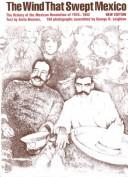
A brief 1943 narrative paired with a famous photographic essay, written close enough to the events to carry their atmosphere. It gives you faces and landscapes to attach to the names before the analytical books arrive.
The Two Great Biographies
IntermediateUnderstand the revolution's two most durable movements through the men who led them, and see how differently the agrarian south and the militarised north behaved.
▸ Study plan for this stage
Pace: 16-18 weeks, and there is no way to make this stage short. Womack's Zapata and the Mexican Revolution is 435 pages of exceptionally fine narrative history; five to six weeks at a chapter a sitting, and its famous opening line about villagers who did not want to change and therefore made a revolution
- Womack's method — the revolution seen from Anenecuilco and the villages of Morelos outward, so that national politics arrives as something that happens to a community rather than as the main subject
- The specific grievance in Morelos: sugar haciendas expanding onto village land with legal cover, and the village land titles that Zapata's movement literally carried into the fighting
- Zapata's conservatism, which is Womack's central paradox — the demand was restoration of what had been taken, not the construction of something new
- Why the Zapatistas could not win nationally: a village-based army that demobilised for the harvest and had no interest in governing Mexico City when it briefly held it
- Katz's demolition of both Villa legends: neither the bandit of the American press nor the pure folk hero, but a military organiser of real capacity with an inconsistent political programme
- The División del Norte as an entirely different kind of army — railways, artillery, a medical corps, a paid soldiery drawn from miners, cowboys and the mobile labour force of the north
- The northern economy as the explanation: Chihuahua's land question was about the Terrazas latifundio and wage labour, not about village commons, which produces different demands
- The Villa-Zapata meeting in Mexico City in December 1914 as the moment the two popular movements demonstrated they had nothing to say to each other
- Womack calls the Zapatistas country people who did not want to change and therefore made a revolution. What does he mean, and is the paradox real or rhetorical?
- Why did Zapata refuse national power when it was available to him, and was that principle or political failure?
- What did Villa actually want? Katz spends a thousand pages on the question — state his answer, and say what evidence makes it hard to give a cleaner one.
- Compare the two armies as organisations: recruitment, supply, command, what they did between campaigns. How much of the political difference between the movements follows from these material differences?
- Both Villa and Zapata were killed. Katz and Womack each describe the assassination of their subject. What do the two killings tell you about how the victorious faction consolidated?
- Katz used archives in Mexico, the United States, Germany and Britain. What does that international evidence base let him establish that a Mexican-only archive could not?
- Read Womack's opening chapter on Anenecuilco twice and write 300 words on what the village's land dispute actually consisted of, with dates.
- Copy the land clauses of the Plan de Ayala onto your timeline sheet, then mark on it every later moment when a faction accepted or rejected them.
- Diagram the División del Norte's structure from Katz — units, supply, finance, railway logistics — and set it beside a sketch of how a Zapatista band operated. The contrast is the stage's central lesson.
- Write a page on the December 1914 meeting in Mexico City using both books, and say what each man appears to have concluded about the other.
- Take one claim about Villa you held before starting — from a film, a corrido, a textbook — and check it against Katz. Write down what you find, including where Katz says the record is genuinely uncertain.
- Trace Villa's 1916 Columbus raid and the Pershing expedition in Katz, and write 200 words on why Villa attacked American soil.
Next up: The biographies give you the movements as reconstructed by historians with archives; next you read people who were inside the fighting and did not know how it would end.
Still the finest book on the revolution: the village-level agrarian war in Morelos, told with a novelist's patience. Read it before Villa because it establishes the land question that everything else in the revolution has to answer.
A thousand pages built from archives in four countries, and the definitive treatment of the northern revolution. It deliberately resists both the bandit legend and the folk-hero legend, so read it as the corrective to whatever you already believed about Villa.
Written While It Was Happening
IntermediateRead the revolution as contemporaries experienced it, and learn what a partisan eyewitness gets right and wrong.
▸ Study plan for this stage
Pace: 3-4 weeks for a light 470 pages. John Reed's Insurgent Mexico is 325 pages of despatches and reads quickly, two weeks. Azuela's The Underdogs is only 141 pages and can be read in two or three sittings, but read it twice — once for the story, once for the structure, because the second reading is wher
- Reed's position: a young American radical embedded with La Tropa and with Villa's forces in 1913-14, writing for an American readership already fed the bandit story
- The reportorial strengths — camp life, the soldaderas, the texture of a march, the dialogue of ordinary fighters — which are things no archive preserves
- Reed's romanticism about Villa specifically, and the way to use it now that you have Katz: read the reporting as evidence and the assessment as period opinion
- Azuela's Demetrio Macías and the arc from local grievance to aimless violence to death in the same canyon where he started, which is the novel's whole argument in one shape
- The character of Luis Cervantes, the educated opportunist who attaches himself to the band and does well out of it, as Azuela's judgement on the revolution's intellectuals
- The stone-rolling-down-the-hill image and Demetrio's inability to say why he is still fighting, which is the most quoted moment in Mexican revolutionary literature
- Azuela's credentials — a doctor who served with a Villista band and wrote the book in exile in El Paso in 1915 — and why that makes his disillusion evidence rather than cynicism
- The general problem the stage teaches: partisan eyewitness testimony is simultaneously the most vivid and the least reliable source, and knowing which parts to trust is a skill
- Which of Reed's specific factual claims can you check against Katz, and how do they hold up? Be concrete rather than general.
- What does Reed convey that Katz's archival reconstruction cannot, even in nine hundred pages?
- Azuela published in 1915, before the constitution and before the fighting ended. What is he already certain has gone wrong?
- Cervantes is treated with more contempt than any of the fighters. What is Azuela accusing the revolution's educated supporters of?
- Demetrio cannot explain why he keeps fighting. Is Azuela saying the revolution had no purpose, or that its purpose could not survive contact with the war?
- Reed romanticises and Azuela despairs. Both were there. What does that tell you about how much a single participant can see?
- Pick three episodes from Insurgent Mexico and find the corresponding events in Katz. Write a paragraph on each about what Reed saw accurately, what he embellished and what he could not have known.
- Write 200 words on the soldaderas using only Reed's observations, then note what questions his account leaves unanswered.
- Diagram the arc of The Underdogs — where Demetrio starts, how far he travels, where he ends — on your map from stage one. The circularity is the point.
- Copy out the stone-rolling passage and write half a page on why it became the line every Mexican reader remembers.
- Set one page of Reed beside one page of Azuela describing a similar scene and write on what each register can and cannot show.
Next up: Having read the revolution as narrative, biography and testimony, you can now take on the scholarly account and the argument about what all of it added up to.

The American radical journalist riding with Villa's forces in 1913-14. Openly on Villa's side, which is exactly its value once you have read Katz and can measure the distance between the reporting and the record.

The classic novel of the revolution, written by a doctor who served with a rebel band, and utterly without romance about what the fighting did to the people doing it. The best short answer to why so many Mexicans remember the decade as a catastrophe.
The Full Scholarly Account
IntermediateTake on the standard academic history and the argument about whether this was a popular revolution at all.
▸ Study plan for this stage
Pace: 16-18 weeks. Knight's The Mexican Revolution is 620 pages in the resolved edition and is the most demanding book on the path — dense, argumentative, thick with regional evidence; eight to nine weeks at roughly 70-80 pages a week, and read the introduction twice because it states the whole thesis and
- Knight's thesis: the revolution was a genuinely popular, largely agrarian rising from below, not a rearrangement among elites who then invented a popular story about it
- The revisionist position he is arguing against — that the revolution was a state-building project by northern middle-class modernisers who defeated and then absorbed the popular movements
- Knight's method of massed regional evidence: the argument is won, if it is won, by showing that the same popular participation appears across dozens of localities, not by theory
- The distinction between serrano rebellions defending local autonomy and agrarian rebellions demanding land, and why lumping them together produces bad history
- The problem of the revolution's outcome versus its content: Knight can be right that participation was popular and the revisionists right that the result served the state, and much of the dispute turns on which question is being asked
- Katz's international frame: American oil companies and the subsoil clause, German attempts to embroil the United States in Mexico, British interests, and the Zimmermann telegram in its actual Mexican context
- The 1917 Constitution as a diplomatic object as well as a domestic one, since Article 27 threatened foreign property directly and made the revolution an international problem
- The general historiographical lesson: national revolutions written as purely national stories are usually wrong, and Katz shows the seams
- State Knight's thesis and the revisionist thesis each in two sentences, in terms their own proponents would accept. Then say precisely what evidence would count for one and against the other.
- Knight distinguishes serrano from agrarian rebellion. Apply the distinction to Zapata's Morelos and to Villa's Chihuahua as you now know them from stage two.
- Is the disagreement between Knight and the revisionists factual, or are they answering different questions? Do not settle it — set out the strongest version of each position.
- How much of the revolution's course was determined outside Mexico? Katz gives you the material; make your own estimate and defend it.
- Why did the United States intervene at Veracruz in 1914, and what did it achieve? The stated reason and the effect are not the same.
- Article 27 nationalised subsoil rights. Trace, from Katz, what that did to Mexico's international position between 1917 and 1920.
- Reduce Knight's argument to a one-page outline: thesis, opponents, categories of evidence, main objections he anticipates. This is the hardest and most useful exercise on the path.
- Choose two regions Knight covers and write 200 words each on the local character of the rising there. His case is cumulative and you only feel it by working the particulars.
- Add a fifth column to your timeline sheet for foreign intervention, and fill it from Katz — Veracruz, arms embargoes, oil diplomacy, German approaches, the Pershing expedition.
- Write half a page on the Zimmermann telegram from the Mexican side rather than the American, using Katz. It reads completely differently.
- Take one event you have now read about in four books — the fall of Huerta, say — and write a paragraph on what each account emphasises and what that reveals about each author's project.
Next up: The last stage follows the revolutionary settlement forward into the state it built, and back into the four centuries it grew out of.

The two-volume account that treats the revolution as a genuinely popular, largely agrarian rising — written explicitly against the revisionist school that saw it as an elite reshuffle. This is one side of a live historiographical dispute, and the book itself will tell you who it is arguing with.
The revolution as an international event: American, German and British intervention, oil interests, and the diplomacy around the 1917 constitution. Read it after Knight to see how much of the internal story was shaped from outside.
What the Revolution Made
IntermediateTrace the line from 1917 to the one-party state, and place the decade inside the longer Mexican story.
▸ Study plan for this stage
Pace: 14-16 weeks for over 1,600 pages, though the second book is reference rather than continuous reading. Krauze's Mexico: Biography of Power is 896 pages of political history told through rulers; eight to nine weeks, and it reads more easily than its length suggests because the biographical chapters ar
- The institutionalisation of the revolution: Calles founding the PNR in 1929 to convert armed factional conflict into managed party succession, and the six-year presidency with no re-election as the mechanism
- Cárdenas in the 1930s as the moment the revolution's land and labour promises were partly kept — mass ejido distribution and the 1938 oil nationalisation — and as the founding of the corporatist state
- The PRI's seventy-one years as Krauze presents it: a system that absorbed opposition by co-opting it, with 1968 at Tlatelolco as the point where the absorption visibly failed
- Krauze's liberal position and his hostility to authoritarianism of every stripe, including revolutionary authoritarianism, which many historians of the revolution reject — read him knowing that, not around it
- The argument you are being asked to weigh: whether the PRI state was the revolution's betrayal or its logical completion, with Knight and Krauze pointing in different directions
- The long view from Meyer, Sherman and Deeds: the colonial hacienda, the Bourbon reforms, independence, the loss of half the national territory in 1848, the Reforma and Juárez, and why 1910 keeps rhyming with earlier ruptures
- Land as the four-century continuity — the pre-conquest calpulli, the colonial grant, the nineteenth-century liberal disentailment that dissolved village commons, and Article 27 as the answer to all of it
- The Church question running from the conquest through the Reforma to Article 130 and the Cristero War of the 1920s, which most short accounts of the revolution leave out entirely
- How did the PRI convert a decade of armed factionalism into a stable civilian succession? Name the specific institutional mechanisms rather than describing the outcome.
- Was Cárdenas the fulfilment of the revolution or the moment it was safely institutionalised? Krauze and Knight would answer differently — set out both and say what evidence bears on it.
- Krauze writes from a declared liberal position. Where does that position sharpen his account, and where does it blunt it?
- Using Meyer, Sherman and Deeds, trace the land question from the colonial period to Article 27. What in 1910 was genuinely new and what was the latest round of a four-hundred-year dispute?
- The Cristero War killed tens of thousands in the 1920s and is largely absent from popular accounts of the revolution. Why, and what does its absence do to the standard narrative?
- Having finished the path: was the Mexican Revolution a popular revolution that was captured, a state-building project that recruited popular armies, or a set of separate regional wars later given one name? Argue it from the books, and note which authors you are siding with.
- Extend your timeline sheet forward to 2000 with a column for the party's changing names — PNR, PRM, PRI — and mark each presidency Krauze covers.
- Write 300 words on the 1938 oil expropriation using Krauze, then add what Katz's international framing from the previous stage would predict about the foreign reaction.
- Take the pre-1876 chapters of Meyer, Sherman and Deeds and write a page on the Reforma's land legislation, then set it beside Article 27. The continuity is the argument.
- Write a paragraph on Tlatelolco in 1968 and on why Krauze treats it as a turning point in the regime's self-story.
- Compose a final two-page essay answering the question of what the revolution was, citing at least one book from each of the five stages and stating clearly where your sources disagree with each other.
Next up: You finish holding the whole argument at once — the village land title, the archival biography, the eyewitness despatch, the scholarly thesis and the state that outlived them all.
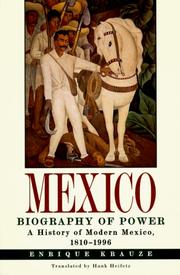
Mexican political history told through its rulers, and unsparing about how the revolutionary settlement hardened into seventy years of PRI government. Krauze writes from a liberal position that many revolutionary historians reject, which is a reason to read him rather than a reason not to.

The standard survey of the whole national story, from the pre-conquest period onward. Kept for last as reference rather than narrative: the revolution reads differently once you can see the four centuries it grew out of.
Discussion
Keep reading
Paths that share books, cover the same subject, or open a related topic.