Juan Rulfo Reading Order: Where to Start
Rulfo published two slim books and then effectively stopped writing for thirty years, so his reading order is short by definition and the real question is what to read around them. Start with the novel, follow it with the stories that show how the voice was built, then pick up the scraps and the photographs that are all the rest there is. The final stage is the honest answer to why the shelf ends so quickly: the books that Rulfo made possible.
Start Here: The Novel
IntermediateRead the book Rulfo's whole reputation rests on, and understand why a hundred-and-twenty-page novel became the hinge of Latin American fiction.
▸ Study plan for this stage
Pace: 2 weeks for 130 pages, which sounds absurd until you try it. Read Pedro Páramo straight through in two or three sittings, wait a few days, then read it again from the beginning. The reread is not optional here — it is how the book is designed to be finished.
- Unattributed voices: Rulfo almost never tags dialogue, so working out who is speaking is the reader's job and part of the plot
- The novel is told in roughly 70 fragments with no chapter numbers, and the breaks are the structure
- The moment the timeline stops being sequential — Juan Preciado's arrival in Comala and Pedro Páramo's youth are not before and after each other
- Everyone in Comala is dead, and the novel tells you this without announcing it; the murmurs are the point
- The cacique: Pedro Páramo as landowner, father of half the town, and the reason the town is empty
- Compression — a paragraph of Rulfo carries what another writer needs a chapter for, which is why it can be this short
- Comala as the source text for a generation of Latin American fiction, Macondo included
- At what page did you realise the state Comala is in, and what specific sentence gave it away?
- Juan Preciado stops narrating partway through. Who takes over, and why is that transition not marked?
- The Susana San Juan sections operate on different rules from the rest. What are they doing?
- Rulfo removes almost all connective tissue between fragments. What is your mind supplying, and is it what he intended?
- Why is Pedro Páramo the father of everyone, and how does that make the novel's politics inseparable from its ghosts?
- On the first read, do not try to reconstruct the chronology. On the second, number the fragments and map them onto a timeline
- Pick five unattributed exchanges and decide who is speaking; compare your answers after the reread and note where you changed your mind
- Read the first two pages aloud — the murmuring quality is audible and is most of what translation has to carry
- Write two sentences summarising the plot. If you can, you have probably missed something; try again after the reread
- Note where the novel tells you a fact and where it lets a rumour stand — the difference is the whole moral scheme
Next up: Having read the novel that removed almost everything, you can now see what Rulfo left in when he was writing conventional narrative — which is exactly what the stories show.
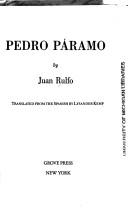
The one indispensable Rulfo: a son goes to Comala to find his father and discovers a town where everyone is dead. Start here rather than with the stories, because its fragmented, unattributed voices are the thing everyone comes to Rulfo for, and it is short enough to reread immediately — which you should.
The Stories
IntermediateSee the same rural Jalisco world in conventional narrative form, and hear how Rulfo taught himself the compression that Pedro Páramo runs on.
▸ Study plan for this stage
Pace: 3–4 weeks. The seventeen stories run about 140 pages; read two or three a sitting and stop there — they are dense and they blur if taken in bulk. If you are comparing the two translations, add another week and read only the overlapping stories in the second.
- The same rural Jalisco of Pedro Páramo, but told in ordinary sequence — the world came first, the technique second
- Voices under pressure: most of these stories are someone talking, often to someone who cannot help them
- Landscape as antagonist — the plain, the drought and the distance do more damage than any character
- The aftermath of the Mexican Revolution and the Cristero War as the unstated background of nearly every story
- Two English translations exist for the same seventeen stories: The Burning Plain and Other Stories, translated by George D. Schade, and the later The Plain in Flames. You need only one — the second is for comparison
- How much a translator decides: the same Rulfo sentence can come out plain or rough depending on the choice, and the difference is visible side by side
- Compression again, now measurable — see how much of a story Rulfo leaves outside the frame
- Which of these stories could have been an episode inside Pedro Páramo, and what would have had to be cut for it to fit?
- In the stories that are one long spoken address, who is being addressed, and does that person answer?
- What does the conventional sequential form give Rulfo that the novel's fragments do not?
- If you sampled both translations, where did they most obviously diverge, and which choice served the story better?
- Rulfo's countryside is almost never beautiful. What is it instead, and how does he achieve that in so few words?
- Read one story — 'Tell Them Not to Kill Me' is the standard test case — in both translations back to back and mark five sentences that differ meaningfully
- Pick the shortest story in the collection and write out what happens before it starts and after it ends; that offstage material is Rulfo's method
- Read one story immediately after rereading a fragment of Pedro Páramo and note which one you had to work harder on
- Keep a list of recurring place names across the stories and the novel — the geography is continuous
Next up: With both of the books Rulfo actually published behind you, the remaining material makes sense as an appendix rather than as a third act.
George Schade's long-standing translation of El Llano en llamas, the collection that preceded the novel by two years. Read after Pedro Páramo, not before: the stories are clearer, and their clarity shows you exactly what the novel chose to leave out.

The same seventeen stories in a newer, rougher-edged translation. You only need one of the two — reading a story like Tell Them Not to Kill Me in both is the quickest lesson available in how much a translator decides.
Everything Else He Left
IntermediateExhaust the primary work — the screenplay-novella and the photographs — and see the second career Rulfo had while he was not publishing fiction.
▸ Study plan for this stage
Pace: 3–4 weeks, and treat this as browsing rather than study. The Golden Cockerel and Other Writings is around 230 pages of screenplay-novella and fragments; two weeks. Juan Rulfo's Mexico is a photography book of about 220 pages — sit with the images rather than reading it front to back.
- The Golden Cockerel was written for the screen, which changes the prose — scene-led, external, far less interior than the fiction
- Why this is genuinely minor: it is a real Rulfo book, and it is not the reason anyone reads him
- Rulfo's decades of photography as a parallel career during the thirty years he was not publishing fiction
- The photographs show the same landscape as Comala without the ghosts, which is the strongest available answer to what the silence was about
- The myth of the writer's block versus the evidence that he was working the whole time in another medium
- The completist's dilemma: a body of work this small makes every fragment feel more important than it is
- Does The Golden Cockerel read like Rulfo, or like a writer working to someone else's specification?
- What do the photographs show you about Jalisco that the prose deliberately withholds?
- Having seen the images, does the thirty-year silence look like a failure, a choice, or a change of medium?
- Which of these two books would you keep, and which would you tell a new reader to skip entirely?
- Do the fragments in The Golden Cockerel volume suggest an unfinished direction, or a dead end?
- Put one photograph beside the opening description of Comala and note what each medium can and cannot do here
- Read The Golden Cockerel with the screenplay origin in mind and mark where a camera is clearly being addressed
- Write a short honest note to yourself about whether this stage was worth it for you — for many readers it is not, and that is a legitimate result
Next up: Now that you have exhausted the primary work in under 600 pages, the last stage answers the obvious question: how one thin shelf changed what came after it.

The short novel written for the screen plus assorted fragments; the closest thing to a third Rulfo book. Genuinely minor next to the first two, which is why it belongs here rather than earlier.

He was a serious photographer for decades, and these images of rural Mexico are the same landscape as Comala without the ghosts. It answers the silence better than any biography does.
Where Rulfo Leads
IntermediatePlace Rulfo in the line he interrupted and the one he started, so the smallness of the body of work reads as influence rather than failure.
▸ Study plan for this stage
Pace: 8–10 weeks. The Underdogs is about 140 pages and takes a week. One Hundred Years of Solitude is the long middle of this stage — a month, and expect the Buendía genealogy to slow you the way the Trueba names slow other readers. The Death of Artemio Cruz is roughly 300 pages and needs 2–3 weeks becaus
- The novel of the Mexican Revolution as a genre, and The Underdogs as its founding text — the conventional countryside Rulfo's stories refuse
- Azuela writes the Revolution as motion and futility; Rulfo writes what was left standing afterward
- García Márquez said Pedro Páramo unblocked him, and having read Comala first makes Macondo look inherited rather than invented
- The specific inheritance: a town outside ordinary time, the dead who go on speaking, a founding patriarch whose appetite explains the place
- Fuentes's The Death of Artemio Cruz as the other great Mexican novel of the same decade, doing to a city power broker what Rulfo did to a dead village
- Influence as a road not taken: Rulfo's smallness looks like a choice once you see how many other people took his method and expanded it
- Fragmented time is common to all three later books — Rulfo's version is the most extreme and the shortest
- What in The Underdogs would Rulfo have refused to write, and what did he keep?
- Name three specific things Macondo takes from Comala. Are any of them plot, or are they all method?
- Artemio Cruz and Pedro Páramo are both men whose power hollows out everyone around them. What does each novel do that the other cannot?
- Having read these three, does Rulfo's two-book shelf read as influence or as an unfinished career?
- If Pedro Páramo had never been written, which of these later novels would look most different?
- Read the opening page of Pedro Páramo and the opening page of One Hundred Years of Solitude side by side and mark the shared moves
- Keep the Buendía family tree written down; most editions print one and using it is not cheating
- Write a paragraph on what the Revolution looks like in Azuela, in Rulfo and in Fuentes — three versions of one event
- Return to Pedro Páramo one last time after finishing this stage; at 130 pages it costs an evening and it will read differently
Next up: This ends the path: the small body of work now reads as the hinge it was, and the shelf is short because Rulfo did the thing once and left the expansion to others.
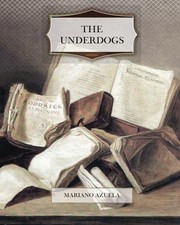
The classic novel of the Mexican Revolution, and the tradition Rulfo inherited and then dismantled. Read it to see the conventional version of the countryside his stories refuse.

García Márquez said he could recite Pedro Páramo from memory and that it unblocked him. Reading Comala first makes Macondo look like a direct descendant rather than a spontaneous invention.
The other great Mexican novel of the same decade, doing with an urban power broker what Rulfo did with a dead village. A good closing book because it shows the road Rulfo declined to take.
Discussion
Keep reading
Paths that share books, cover the same subject, or open a related topic.