Latin American history: conquest to today
This curriculum takes a beginner from zero background all the way to a sophisticated, critical understanding of Latin American history. It moves chronologically and thematically — first building a sweeping narrative foundation, then diving into the pre-Columbian and colonial worlds, then the age of independence and revolution, and finally the modern forces (imperialism, dictatorship, inequality, and resistance) that define the region today. Each stage deepens the analytical vocabulary built in the one before it.
The Big Picture: A Narrative Foundation
BeginnerGain a confident, readable overview of Latin American history from ancient civilizations to the present day, building the chronological backbone and key vocabulary needed for everything that follows.
▸ Study plan for this stage
Pace: 10–12 weeks total. Weeks 1–7: "A History of Latin America" by Benjamin Keen (~25–30 pages/day, reading chronologically through all parts). Weeks 8–12: "Open Veins of Latin America" by Eduardo Galeano (~15–20 pages/day, slower pace to absorb the dense, lyrical argumentation). Reserve the final 3–4 da
- Chronological arc of Latin American history: pre-Columbian civilizations (Maya, Aztec, Inca) → Conquest → Colonial order → Independence movements → 19th-century nation-building → 20th-century revolutions and dependency — as laid out sequentially in Keen's narrative
- The colonial economic system: encomienda, mita, hacienda, and the plantation complex, and how Keen traces their long-term social consequences
- Racial and social hierarchies (casta system): how Spanish and Portuguese colonialism constructed layered identities — peninsulares, criollos, mestizos, Indigenous peoples, and enslaved Africans — and how these hierarchies persisted after independence
- The role of the Catholic Church as a colonial institution and later as both a conservative force and (in the 20th century) a vehicle for liberation theology, threaded through Keen's political chapters
- Galeano's core thesis: Latin America's underdevelopment is not a natural condition but the direct product of centuries of resource extraction — silver, gold, sugar, rubber, oil — that enriched Europe and later the United States at the region's expense
- The concept of dependency and unequal exchange: how Galeano uses commodity histories (Potosí silver, Brazilian sugar, Bolivian tin) to argue that integration into the world economy deepened, rather than relieved, Latin American poverty
- Key political patterns identified across both books: caudillismo, oligarchic liberalism, U.S. interventionism, populism (Perón, Vargas), and revolutionary nationalism (Mexico 1910, Cuba 1959)
- The tension between two narrative modes — Keen's academic, balanced survey vs. Galeano's passionate, polemical essay — as an early lesson in how perspective and authorial purpose shape historical writing
- According to Keen, what were the major pre-Columbian civilizations, and what common features (agriculture, statecraft, religion) allowed them to sustain large populations before European contact?
- How did the encomienda and mita systems function, and what does Keen argue were their lasting demographic and economic effects on Indigenous and African populations throughout the colonial period?
- What is Galeano's central argument in 'Open Veins,' and which specific commodity or regional case study do you find most persuasive as evidence for his dependency thesis — and why?
- Both Keen and Galeano discuss the 19th-century independence movements. How do their interpretations differ: who led independence, who benefited, and what changed (or did not change) for the majority of the population?
- How does Galeano use the history of Potosí to connect 16th-century silver extraction to 20th-century Latin American poverty? What are the links in his causal chain?
- After reading both books, how would you describe the relationship between Latin America and external powers (Spain, Portugal, Britain, the United States) across five centuries, and what vocabulary — from both authors — would you use to explain it?
- Timeline wall chart: As you read Keen, build a running visual timeline (paper or digital) with four color-coded tracks — Political Events, Economic Shifts, Social/Cultural Milestones, and External Interventions. Add Galeano's commodity histories as annotations on the same chart. By the end of Stage 1 you will have a single, personalized chronological backbone to reference throughout the curriculum
- Vocabulary glossary: Maintain a dedicated notebook or document with at least 40 terms encountered across both books (e.g., encomienda, caudillo, latifundio, creole, mestizaje, dependency, mita, monoculture). Write each term's definition in your own words, the historical context in which Keen or Galeano uses it, and one concrete example from the text.
- Comparative author response journal: After finishing each major section of Keen, write a half-page reflection. Then, when you reach the corresponding topic in Galeano, write a second half-page noting where the two authors agree, where they diverge, and what each one's framing reveals about his purpose and audience. This builds critical reading habits from day one.
- Map exercises: Using a blank outline map of Latin America, locate and label — at minimum — the Aztec and Inca heartlands, the major colonial viceroyalties, the key commodity-producing regions Galeano discusses (Potosí, Bahia, the rubber territories), and the nations involved in the independence movements Keen covers. Redraw the map at three historical moments: 1500, 1825, and 1950.
- The 'Two Voices' synthesis essay: After completing both books, write a 600–900 word essay answering: 'Why is Latin America poor?' Use evidence and specific examples from both Keen and Galeano, explicitly noting where their explanations complement or contradict each other. This essay becomes a reference document for later stages.
- Discussion or self-quiz session: At the end of each book, read back through your notes and attempt to answer all six 'Questions' above from memory, then check your answers against the texts. For any question you cannot answer confidently, re-read the relevant chapter before moving on.
Next up: The chronological backbone, core vocabulary, and awareness of competing historical interpretations built in this stage give the reader the scaffolding needed to engage with more specialized, thematic, or primary-source-driven reading in the next stage without getting lost in unfamiliar context.
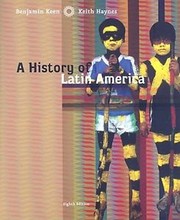
The classic single-volume survey used in university courses for decades. It covers every major era — pre-Columbian, colonial, independence, and modern — giving the reader a reliable chronological spine before diving into specialized works.
A passionate, literary account of how colonialism and foreign economic exploitation shaped the region over five centuries. Read second to layer a critical, structural argument onto the factual overview just acquired — it reframes the 'why' behind the events.
Before Columbus: The Pre-Columbian World
BeginnerUnderstand the sophistication, diversity, and internal logic of the civilizations — Maya, Aztec, Inca, and others — that existed before European contact, so that the conquest can be understood as a collision of worlds rather than a simple story of conquest.
▸ Study plan for this stage
Pace: 10–12 weeks total. Weeks 1–6: "1491" by Charles C. Mann (~25–30 pages/day, 5 days/week) — read broadly and comparatively across civilizations. Weeks 7–12: "The Ancient Maya" by Robert J. Sharer (~20–25 pages/day, 5 days/week) — slow down for technical depth on Maya archaeology, epigraphy, and cultur
- Population scale and urban sophistication: Mann's revised estimates challenge the 'empty wilderness' myth and establish that the Americas were densely populated, politically complex, and heavily managed landscapes before 1492.
- Ecological agency: Pre-Columbian peoples actively shaped their environments — through terra preta agriculture in Amazonia, raised-field farming, and forest management — rather than living passively within nature.
- The Columbian Exchange and demographic catastrophe: Disease, not military superiority alone, was the primary engine of European conquest; understanding the scale of population collapse (Mann's 'HemiSphere') reframes the entire colonial story.
- Civilizational diversity: '1491' insists on treating Mesoamerican, Andean, and Amazonian cultures as distinct, internally logical systems — not a monolithic 'pre-Columbian world' — setting up the deeper Maya focus in Sharer.
- Maya political organization: Sharer details the decentralized, competitive city-state model (the 'segmentary state') rather than a single unified empire, explaining both Maya resilience and vulnerability.
- Maya writing, calendrics, and cosmology: The hieroglyphic script, the Long Count calendar, and the interlocking ritual/solar calendars (Tzolk'in and Haab') reveal a civilization with sophisticated intellectual and theological systems.
- Maya economy and trade networks: Sharer's treatment of obsidian, jade, cacao, and long-distance exchange routes shows economic interdependence across the Maya lowlands and highlands.
- The concept of 'collapse' and continuity: Sharer complicates the idea of a single Maya 'collapse,' showing regional variation, resilience, and the survival of Maya culture into the Postclassic and beyond — directly into the moment of Spanish contact.
- According to Mann in '1491,' what were the principal reasons earlier historians dramatically underestimated pre-Columbian populations, and why does the revised estimate matter for understanding the conquest?
- How does Mann use the Amazon basin and Amazonian terra preta to challenge the idea that complex civilization requires large stone monuments or centralized states?
- What does Sharer mean by the Maya 'segmentary state,' and how did the competitive, decentralized nature of Maya politics shape both the Classic period's achievements and its eventual fragmentation?
- How do the Maya Long Count calendar and hieroglyphic writing system reflect the civilization's cosmological worldview, and what did the decipherment of Maya script reveal that earlier scholars had missed?
- In what ways do both Mann and Sharer argue that pre-Columbian peoples were active managers of their environments rather than passive inhabitants — and what evidence do they each use?
- How does Sharer's account of the Terminal Classic 'collapse' complicate a simple narrative of decline, and what does the survival of Postclassic Maya states tell us about the civilization the Spanish would eventually encounter?
- Annotated timeline: As you read '1491,' build a comparative timeline placing the major civilizations Mann discusses (Cahokia, Tenochtitlan, Tiwanaku, Amazonian cultures) alongside each other and alongside contemporaneous Old World events (e.g., the Black Death, the height of the Song Dynasty). This combats Eurocentrism by forcing chronological comparison.
- Mapping exercise: Using Sharer's site descriptions, hand-draw a rough map of the Maya world marking at least 10 major sites (Tikal, Palenque, Copán, Chichén Itzá, etc.), their approximate periods of dominance, and the trade goods that connected them. Annotate with one key fact per site from the text.
- Concept journal — 'Sophistication log': Each reading session, write one paragraph identifying a specific detail from that day's pages that surprised you or overturned a prior assumption about pre-Columbian life. By the end of the stage you will have a personal record of how your mental model shifted.
- Glyph decipherment primer: After finishing Sharer's chapters on Maya writing, spend one session with a freely available online Maya glyph guide (e.g., the FAMSI glyph catalog) and attempt to identify 5–10 glyphs Sharer discusses. This makes the abstract discussion of 'decipherment' concrete and memorable.
- Debate-prep exercise: Write a one-page argument from the perspective of a pre-Columbian Maya ruler explaining why their city-state system was a rational and effective form of political organization — drawing only on evidence from Sharer. Then write a one-paragraph rebuttal. This forces active engagement with political structure.
- Synthesis essay (end of stage): Write a 600–800 word response to the question: 'In what sense was the Spanish conquest a collision of worlds rather than a simple military victory?' Draw on specific evidence from both Mann and Sharer — population data, ecological management, political complexity, and intellectual achievement — to make the case.
Next up: By establishing the internal sophistication and sheer scale of pre-Columbian civilizations through Mann and Sharer, the reader is now equipped to understand the conquest not as an inevitable triumph of a superior culture but as a catastrophic and contingent collision — making the next stage's focus on the mechanisms, actors, and consequences of European contact both more urgent and more morally co

A landmark work of popular history that synthesizes modern archaeology and anthropology to reveal the scale and complexity of pre-Columbian America. Its accessible style makes it the perfect entry point for readers with no prior background in indigenous history.
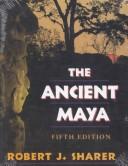
The authoritative scholarly introduction to Maya civilization — its writing, astronomy, politics, and collapse. Read after Mann to go deeper on one of the region's most iconic cultures with proper academic grounding.
Conquest and Colony: 1492–1820
IntermediateUnderstand the mechanics, violence, and long-term consequences of the Spanish and Portuguese conquests, the colonial social order (race, labor, Church, and crown), and the seeds of independence.
▸ Study plan for this stage
Pace: 10–12 weeks total, divided across three books: Weeks 1–3 — The Conquest of New Spain (~30–35 pages/day; the text is narrative and readable but long); Weeks 4–5 — The Broken Spears (~20–25 pages/day; shorter but demands slow, reflective reading of primary sources and poetry); Weeks 6–12 — Colonial La
- The mechanics and contingency of conquest: how alliances with Indigenous enemies of the Aztecs (Tlaxcalans, etc.) — not Spanish superiority alone — made Tenochtitlán's fall possible, as shown through Bernal Díaz's eyewitness account
- Narrative perspective and historical bias: Bernal Díaz writes to claim credit and justify conquest; The Broken Spears presents Nahua voices, poems, and annals to reveal what the same events looked like from the other side — together they model how ALL historical sources carry a point of view
- The 'Broken Spears' concept of trauma and memory: León Portilla's compilation shows how Indigenous peoples recorded catastrophe, grief, and cultural rupture — establishing that conquest was not just military but civilizational destruction
- The colonial social order — the casta system: Burkholder's Colonial Latin America maps how race (peninsulares, criollos, mestizos, indios, enslaved Africans) was legally codified into a hierarchy that structured access to land, labor, office, and salvation
- Labor extraction systems: the encomienda, repartimiento, and mita as the economic engines of the colony, and how they produced mass Indigenous mortality and the importation of enslaved Africans
- The role of the Catholic Church: simultaneously an instrument of colonial control (evangelization, Inquisition) and, in figures like Las Casas, a source of critique — Burkholder details this institutional duality
- Crown vs. creole tensions: Burkholder traces how Bourbon Reforms of the 18th century tightened metropolitan control, alienated creole elites, and inadvertently planted the seeds of independence movements
- Gender, family, and everyday life in the colony: Burkholder's attention to women, households, and social reproduction shows that colonial Latin America was lived experience, not just politics and economics
- According to Bernal Díaz, what role did Indigenous allies — particularly the Tlaxcalans — play in the conquest of Tenochtitlán, and what does this complicate about the standard 'Spanish conquest' narrative?
- How do the Nahua sources compiled by León Portilla in The Broken Spears describe the arrival of the Spaniards and the fall of Tenochtitlán differently from Bernal Díaz? What specific images or passages mark the emotional and cultural register of Indigenous memory?
- What was the casta system as described by Burkholder, and how did racial classification intersect with labor obligations, legal rights, and social mobility in colonial Latin America?
- How did the encomienda and mita systems function economically, and what were their human consequences for Indigenous and African populations according to Burkholder?
- In what ways did the Catholic Church both enforce and occasionally challenge colonial power, and what institutional mechanisms (missions, Inquisition, cofradías) did it use in each role?
- How did the Bourbon Reforms, as analyzed by Burkholder, destabilize the colonial compact between the Spanish Crown and creole elites, and why does this matter for understanding the independence movements that follow?
- DUAL NARRATIVE JOURNAL: After finishing both Bernal Díaz and León Portilla, choose one shared event (e.g., the first meeting of Cortés and Moctezuma, or the Noche Triste) and write two short paragraphs — one from each source's perspective. Then write a third paragraph reflecting on what each account omits and why.
- SOURCE INTERROGATION WORKSHEET: For any three primary-source excerpts in The Broken Spears, apply the HAPP method — identify the Historical context, Author/origin, Purpose, and Perspective — then write one sentence on how each shapes what the source can and cannot tell us.
- CASTA DIAGRAM: Using Burkholder's Colonial Latin America, draw and annotate a diagram of the colonial social hierarchy. For each tier, note: (1) typical occupations, (2) legal rights and restrictions, and (3) one concrete example from the text. Pin it somewhere visible while you finish the book.
- COMPARATIVE TIMELINE: Build a two-column timeline spanning 1492–1820. Left column: major political/military events (conquests, viceroyalty establishment, Bourbon Reforms, rebellions). Right column: social/economic developments (encomienda laws, African slave trade peaks, casta legislation). Use all three books as sources and color-code by book.
- ARGUMENT STRESS-TEST: Burkholder argues that the Bourbon Reforms were a key cause of independence. Write a one-page 'devil's advocate' response: what evidence from the book could someone use to argue that other factors (Enlightenment ideas, Atlantic revolutions, creole identity) were equally or more important?
- READING GROUP DEBATE (or solo written reflection): Stage a debate between 'Bernal Díaz' and a Nahua elder from The Broken Spears on the question: 'Was the conquest inevitable?' Use only evidence from the two books. If reading solo, write both sides and then a referee's verdict.
Next up: By ending with Burkholder's analysis of Bourbon Reforms and creole discontent, this stage leaves the reader standing at the threshold of the independence era — primed to ask how the colonial social order it has just mapped in detail either collapsed, survived, or mutated into the 19th-century republics that come next.
A firsthand account of the conquest of Mexico by one of Cortés's own soldiers — irreplaceable as a primary source. Reading it after the pre-Columbian stage lets the reader feel the collision of worlds from the inside.

The essential counterpoint to Díaz: an anthology of Aztec and indigenous accounts of the conquest. Placed immediately after Díaz, it teaches the reader to hold two radically different perspectives on the same events simultaneously.
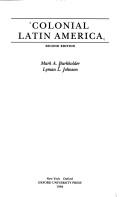
A rigorous but readable academic survey of the three centuries of colonial rule — covering encomienda, the caste system, the Church, trade, and the Bourbon reforms that set the stage for independence. Provides the structural context the primary sources alone cannot.
Independence, Nation-Building, and Revolution: 1810–1980
IntermediateTrace the turbulent arc from independence movements through caudillismo, the Mexican Revolution, Cold War proxy conflicts, and the rise and fall of revolutionary movements across the region.
▸ Study plan for this stage
Pace: 10–13 weeks total. Week 1–3: "The General in His Labyrinth" (~270 pages, ~15–18 pages/day) — read slowly and reflectively, as García Márquez's prose rewards re-reading. Week 4–8: "Zapata and the Mexican Revolution" (~450 pages, ~20–25 pages/day) — dense historical narrative; take notes chapter by ch
- Caudillismo and the cult of the strongman leader: García Márquez's portrait of Simón Bolívar in decline illuminates how personal charisma, military authority, and political fragility defined post-independence Latin America
- The gap between independence ideals and post-colonial reality: Bolívar's disillusionment in 'The General in His Labyrinth' dramatizes how liberation from Spain did not produce the unified, stable republics the liberators envisioned
- Agrarian grievances as the engine of revolution: Womack's meticulous account of Zapatismo shows how land dispossession under the Díaz regime (the hacienda system and the ley lerdo) made peasant revolt in Morelos structurally inevitable
- The Plan de Ayala and revolutionary program-making: understanding how Zapata's movement translated local agrarian rage into a formal political-ideological document that outlasted the man himself
- Revolutionary factionalism and the limits of coalition: Womack traces how alliances between Zapatistas, Villistas, Constitutionalists, and Maderistas repeatedly collapsed, showing that shared enemies do not guarantee shared goals
- Guerrilla warfare as political theory, not just military tactics: Guevara's manual insists that the guerrilla foco is simultaneously a military unit and a political vanguard — the armed struggle is inseparable from the goal of social transformation
- The foco theory and its assumptions: Guevara argues that objective revolutionary conditions can be created by a small, mobile guerrilla nucleus — a doctrine that shaped (and in many cases doomed) revolutionary movements from Cuba to Bolivia to Central America
- Cold War geopolitics as the frame for mid-20th-century revolution: Guevara's text is written in full awareness of U.S. counter-insurgency doctrine, making 'Guerrilla Warfare' as much a Cold War document as a military one
- In 'The General in His Labyrinth,' how does García Márquez use Bolívar's final river journey as a metaphor for the fate of the independence project itself — and what specific political failures does Bolívar reflect on that ground the novel in real history?
- According to Womack, what were the structural economic and land-tenure conditions in Morelos that made the Zapatista uprising not merely possible but, in his framing, nearly inevitable — and how did the Díaz-era modernization program directly produce those conditions?
- How does the Plan de Ayala function within Womack's narrative — as a political document, a moral claim, and a symbol — and why does Womack argue it gave the Zapatista movement a coherence that survived Zapata's assassination in 1919?
- Guevara identifies three fundamental lessons of the Cuban Revolution at the opening of 'Guerrilla Warfare.' What are they, and how do they challenge or contradict the orthodox Marxist-Leninist position on the preconditions for revolution?
- Taken together, how do these three books illustrate the recurring tension in Latin American revolutionary movements between charismatic individual leadership (Bolívar, Zapata, Guevara) and the collective, structural forces that make or break those movements?
- How does Guevara's treatment of the relationship between the guerrilla and the civilian peasant population compare with the role the Morelos peasantry plays in Womack's account of Zapatismo — what similarities and differences emerge across these two very different revolutionary contexts?
- Bolívar's Balance Sheet: After finishing 'The General in His Labyrinth,' write a 1–2 page memo 'from Bolívar to the next generation of Latin American leaders,' using only evidence from the novel. What warnings does he leave? What does he consider his greatest failures? This forces you to synthesize García Márquez's historical argument through the character's own voice.
- Morelos Land Map: While reading Womack, sketch a simple diagram or timeline showing how land ownership in Morelos changed from the Reform era through the Porfiriato to the Revolution. Use Womack's own data and anecdotes. Visualizing the hacienda expansion makes the agrarian grievance concrete and memorable.
- Plan de Ayala Close Reading: Locate the full text of the Plan de Ayala (freely available online) and annotate it alongside the relevant chapters in Womack. For each major demand in the Plan, find the passage in Womack that explains its historical origin. This bridges primary source work with Womack's narrative.
- Foco Theory Stress-Test: After reading 'Guerrilla Warfare,' write a one-page critique of Guevara's foco theory using Womack's account of Zapatismo as your evidence. Did the Zapatista movement confirm or contradict Guevara's assumptions about peasant consciousness, the role of the vanguard, and the relationship between military and political struggle?
- Revolutionary Leader Comparison Matrix: Create a three-column table — Bolívar (via García Márquez), Zapata (via Womack), Guevara — and fill in rows for: base of support, relationship to the state, ideological program, ultimate fate, and legacy. This exercise reveals the through-line of caudillo-style leadership across 170 years of Latin American history.
- Cold War Context Annotation: As you read 'Guerrilla Warfare,' keep a running list of every implicit or explicit reference Guevara makes to U.S. power, counter-insurgency, or international solidarity. Then write a short paragraph explaining how the Cold War context shapes the text's assumptions in ways Guevara himself may not fully acknowledge.
Next up: By tracing revolutionary movements from Bolívar's disillusionment through Zapata's agrarian uprising to Guevara's Cold War guerrilla doctrine, this stage equips the reader to grapple with the social, economic, and political structures that revolutions left unresolved — setting the stage for examining how contemporary Latin America has navigated democracy, inequality, and identity in the post-revol
A Nobel laureate's novelistic account of Simón Bolívar's final journey — a masterful way to internalize the tragedy and contradictions of Latin American independence. Fiction earns its place here because it builds emotional and political intuition that pure history cannot.
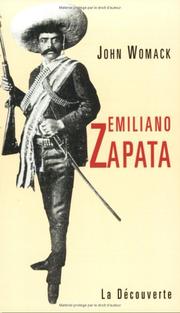
Widely considered one of the finest works of Latin American history ever written. Womack's account of Emiliano Zapata and the agrarian revolution in Morelos is the ideal deep-dive into how social revolution actually works — and why it so often fails to deliver.
A short, essential primary source that captures the revolutionary ideology sweeping Latin America in the mid-20th century. Reading it after Womack lets the reader see how the lessons (and myths) of earlier revolutions were consciously recycled by a new generation.
The Modern Era: Dictatorship, U.S. Power, and Unfinished Struggles
ExpertCritically analyze the forces shaping contemporary Latin America — U.S. intervention, military dictatorships, neoliberalism, indigenous movements, and the ongoing search for democracy and justice.
▸ Study plan for this stage
Pace: 6–8 weeks, ~25–35 pages/day (Killing Hope is dense, heavily documented, and covers 55+ country case studies — budget extra time for note-taking and cross-referencing)
- U.S. Cold War foreign policy and its ideological justifications (anti-communism as pretext for intervention)
- Covert vs. overt intervention: the CIA's toolkit — coups, assassinations, propaganda, economic sabotage, and proxy wars
- The pattern of U.S.-backed regime change: how democratically elected or reformist governments were systematically destabilized across Latin America (Guatemala 1954, Chile 1973, Nicaragua, etc.)
- The role of U.S. institutions — the CIA, State Department, Pentagon, and multinational corporations — as interlocking actors in imperial policy
- Neoliberalism as a post-coup economic order: how military dictatorships opened markets for U.S. capital after eliminating political opposition
- The human cost of intervention: disappearances, torture, death squads, and the destruction of civil society as documented outcomes of U.S. policy
- Blum's methodological approach: using declassified documents, congressional records, and journalistic sources to construct an evidence-based critique of empire
- The gap between stated U.S. values (democracy, freedom, human rights) and its actual foreign policy behavior — ideological contradiction as a recurring theme
- According to Blum, what is the single most consistent motivation behind U.S. interventions in Latin America, and how does he distinguish this from the official justifications given at the time?
- Select three country case studies from Killing Hope (e.g., Guatemala, Chile, Nicaragua) and compare the methods of intervention used — what patterns emerge across different decades and political contexts?
- How does Blum use primary sources (declassified documents, congressional testimony) to build his argument, and what are the strengths and limitations of this evidentiary approach?
- In what ways did U.S. intervention actively undermine democratic institutions and processes in Latin America, and how does this complicate the narrative that the U.S. 'spreads democracy'?
- How did economic interests — particularly those of U.S. corporations — intersect with Cold War security rationales to drive intervention policy?
- What does Blum's work reveal about the long-term consequences of U.S.-backed dictatorships for Latin American societies — politically, economically, and in terms of human rights?
- **The Case Study Matrix:** Create a structured table covering at least 8 country chapters from Killing Hope. Columns should include: country, date, type of intervention, key U.S. actors involved, stated justification, actual outcome, and estimated human/political cost. Look for patterns across rows.
- **Source Interrogation:** Choose one chapter where Blum cites a declassified document or congressional record. Attempt to locate the original source online (the National Security Archive at George Washington University is a good starting point). Compare Blum's use of the source to the original — does his interpretation hold up?
- **The Devil's Advocate Brief:** Write a 500-word rebuttal to Blum's thesis from the perspective of a Cold War-era U.S. policymaker. Then write a 500-word counter-rebuttal from Blum's position. This exercise forces engagement with the strongest counterarguments (e.g., genuine Soviet threat, domino theory) rather than dismissing them.
- **Timeline of Intervention:** Build a chronological timeline (1945–2000) mapping every Latin American intervention covered in Killing Hope. Annotate each entry with the sitting U.S. president and administration, then analyze: does the pattern of intervention change across administrations, or does it persist regardless of party?
- **Voices from the Other Side:** For one country case study in the book (e.g., Chile or Guatemala), seek out a memoir, testimony, or journalistic account from a Latin American perspective (survivor testimony, Truth Commission reports available online). Write a one-page reflection on what Blum's account includes and what it omits by focusing on the U.S. side of the story.
- **Thesis Stress-Test Essay:** Write a 750–1,000 word critical essay answering: 'Is Blum's Killing Hope a work of history, journalism, or advocacy — and does that distinction matter for how we evaluate its claims?' Draw on specific examples from the text to support your argument.
Next up: Killing Hope establishes the external architecture of power — U.S. intervention as a structural force — which sets the essential foundation for examining how Latin American societies, movements, and leaders have responded to, resisted, and been shaped by that force from within.
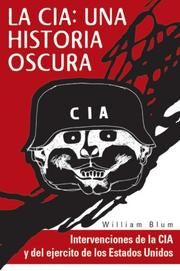
A meticulously documented account of U.S. military and CIA interventions across Latin America and the world. It provides the geopolitical framework — Cold War imperialism — needed to make sense of the dictatorships and dirty wars of the 20th century.

Placed last as a reflective coda: Guevara's youthful journey across a continent of poverty and inequality reads very differently after the full curriculum, revealing how the region's deep historical wounds — colonial extraction, racial hierarchy, U.S. interference — are all still visible in the modern landscape.
Discussion
Keep reading
Paths that share books, cover the same subject, or open a related topic.