The Mexican Revolution defeats casual readers for one specific reason: it was not a revolution but several, running simultaneously, mostly against each other. Madero's liberal rising, Zapata's agrarian war in Morelos, Villa's northern army and Carranza's constitutionalists shared an enemy at the start and very little else afterwards. Pick up a biography first and you will spend three hundred pages unable to place the person the subject is currently fighting.
So the first move is cheap and unglamorous: read a short survey until you can say what each faction actually wanted and in which year. Everything after that becomes tractable.
Sort out the factions
Stuart Easterling's The Mexican Revolution is a short history that states the political stakes plainly and assumes you know nobody. It is the fastest way to stop confusing Carranza with Obregón, which is the error that sinks most first attempts at this subject.
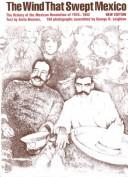
The wind that swept Mexico pairs a brief 1943 narrative with a famous photographic essay. Written close enough to the events to carry their atmosphere, it gives you faces and landscapes to attach to the names before the analysis begins.
The two great biographies
Zapata and the Mexican Revolution is still the finest book written on any part of this subject: the village-level agrarian war in Morelos, told with extraordinary patience. Read it before the Villa biography, because it establishes the land question that every other faction in the revolution had to answer somehow.
The Life and Times of Pancho Villa runs to a thousand pages and is built from archives in four countries. Katz resists both the bandit legend and the folk-hero legend, which means it will probably correct whatever you already believed. It is the definitive treatment of the northern revolution.
Written while it was happening
Insurgent Mexico is John Reed riding with Villa's forces in 1913 and 1914, openly on Villa's side. That partisanship is the value of it, but only once you have read Katz and can measure the distance between the reporting and the record.
The Underdogs is the classic novel of the revolution, written by a doctor who served with a rebel band and entirely without romance about what the fighting did to the people doing it. It is the shortest answer to why so many Mexicans remember the decade as a catastrophe rather than a triumph.
The full scholarly account
Alan Knight's The Mexican Revolution runs to two volumes and argues that this was a genuinely popular, largely agrarian rising — written explicitly against the revisionist school that read it as an elite reshuffle with peasant extras. That dispute is live, and Knight is candid about whom he is arguing with. Read him as one side, well argued.
The Secret War in Mexico then treats the revolution as an international event: American, German and British intervention, oil interests, and the diplomacy surrounding the 1917 constitution. It shows how much of the supposedly internal story was shaped from outside.
What the revolution made
Mexico: Biography of Power traces the line from 1917 to the one-party state, and is unsparing about how the revolutionary settlement hardened into seventy years of PRI rule. Krauze writes from a liberal position that many revolutionary historians reject; that is a reason to read him alongside Knight rather than a reason to skip him.
The course of Mexican history is the standard survey of the whole national story from the pre-conquest period onward. Keep it as reference rather than narrative — the revolution reads very differently once the four centuries behind it are visible.
Follow the full path and the decade stops being a blur of moustaches and becomes an argument about land, sovereignty and who the state is for.
Follow the full ordered path here: The Mexican Revolution: Where to Start and What to Read Next.