The Russian Revolution: a reading path from tsar to Bolsheviks
This curriculum takes a beginner from the crumbling foundations of Tsarist Russia all the way through the Bolshevik seizure of power and the forging of the Soviet state. Each stage builds on the last: first establishing narrative fluency and key figures, then deepening structural and ideological understanding, and finally engaging with specialist debates and primary sources that reveal the revolution's contested legacy.
Foundations: The Story Before You Analyze It
BeginnerGain a clear, chronological narrative of the Russian Revolution — who the key players were, what happened in 1917, and why the Tsarist order fell — before tackling deeper analysis.
▸ Study plan for this stage
Pace: 8–10 weeks, ~40–50 pages/day. Start with "A People's Tragedy" (4–5 weeks, covering the 19th-century context and 1917 events), then "Ten Days That Shook the World" (2–3 weeks, for a granular account of October). Allocate 1 week for review and synthesis.
- The structural weaknesses of Tsarism: autocracy, serfdom's legacy, and the rigid class system that made reform nearly impossible
- The role of industrialization and urbanization in creating a volatile working class and intellectual ferment in late 19th-century Russia
- The February Revolution (1917) as a spontaneous uprising driven by war exhaustion, bread shortages, and loss of faith in the Tsar—not a planned Bolshevik coup
- Lenin's return and the April Theses: how his radical platform ('Peace, Land, Bread') shifted Bolshevik strategy and mass sentiment
- The October Revolution as a disciplined seizure of power by the Bolsheviks, distinct from the chaotic February uprising
- Key personalities and their motivations: the Tsar, the Romanovs, Lenin, Trotsky, Kerensky, and the competing visions they represented
- The role of contingency and human agency: how individual decisions, accidents of timing, and miscalculations shaped outcomes
- The transition from Tsarist empire to Bolshevik state: what was destroyed and what replaced it in the first weeks of Soviet power
- What were the long-term structural problems of the Tsarist system, and why did they make the regime vulnerable to collapse by 1917?
- How did the February Revolution differ from the October Revolution in terms of spontaneity, organization, and outcome?
- What was the April Theses, and how did Lenin's return to Russia change the trajectory of 1917?
- Who were the major political actors (Bolsheviks, Mensheviks, Socialist Revolutionaries, Kadets, etc.), and what did each faction want?
- Why did the Provisional Government fail, and what specific decisions or events sealed its fate?
- What happened during the 'Ten Days' of October 1917, and why was the Bolshevik seizure of power successful where earlier uprisings had faltered?
- Create a timeline of major events from 1890–October 1917, marking key turning points (e.g., 1905 Revolution, WWI entry, February uprising, April Theses, October seizure). Annotate each with 2–3 sentences explaining its significance.
- Write character sketches (1 page each) of five major figures: Nicholas II, Lenin, Trotsky, Kerensky, and one other figure of your choice. Focus on their worldview, goals, and how they responded to crisis.
- Track the Bolsheviks' rise in power: map their support levels from March to October 1917 using evidence from both books. What events caused their popularity to surge or dip?
- Annotate key passages from 'Ten Days That Shook the World' that show the Bolsheviks' tactical decisions during October. What made their strategy effective?
- Compare two competing narratives: how does Figes's analysis of the revolution's causes differ from Reed's eyewitness account of its execution? Write a 2–3 page reflection.
- Create a 'decision tree' showing how different choices at critical moments (e.g., if the Tsar had abdicated earlier, if Kerensky had dissolved the Bolsheviks) might have altered outcomes.
Next up: This stage establishes the narrative skeleton and key actors, equipping you to move into analytical frameworks—examining ideological conflicts, economic forces, and competing interpretations of why the revolution happened and what it meant.
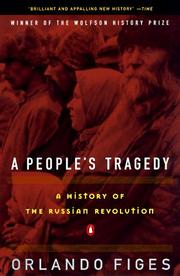
The single best narrative history of the Russian Revolution for a general reader — sweeping, vivid, and deeply human. Reading it first gives you the full story arc from the late Tsarist era through the Civil War, providing the backbone onto which everything else will attach.

An eyewitness account of the October Revolution by an American journalist on the ground in Petrograd. Reading it immediately after Figes lets you feel the atmosphere and pace of the actual seizure of power through a contemporary's eyes, grounding the narrative in lived experience.
Key Figures: Lenin, Trotsky, and the Last Tsar
BeginnerUnderstand the personalities who drove and were destroyed by the revolution — their ideologies, decisions, and fatal miscalculations — so that later structural analysis has human faces attached to it.
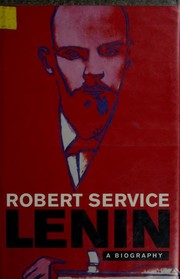
A rigorous yet accessible biography of the revolution's central architect. Reading Lenin's life in full reveals how Bolshevik ideology was shaped by one man's obsessions, and why the party moved as it did in 1917.
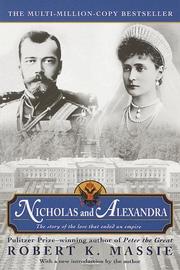
A classic, compulsively readable account of the last Romanovs that explains why the Tsarist system was so brittle. Placed here, it provides the 'other side' of the story and deepens your understanding of why collapse was almost inevitable.
Going Deeper: Causes, Classes, and Ideology
IntermediateMove beyond narrative to understand the structural forces — peasant unrest, worker radicalism, war, and Marxist ideology — that made revolution possible, and why the Bolsheviks specifically won out over their rivals.
▸ Study plan for this stage
Pace: 6–7 weeks, ~25–30 pages/day. Fitzpatrick's *The Russian Revolution* (~200 pages) over weeks 1–3; Lenin's *The State and Revolution* (~100 pages, denser) over weeks 4–6, with week 7 for review and synthesis.
- Structural preconditions: agrarian crisis, industrial unrest, and military strain as drivers of revolution, not merely individual leadership or chance
- Class analysis: the distinct roles and grievances of peasants, workers, soldiers, and the bourgeoisie in destabilizing the old regime
- Marxist ideology and Bolshevik strategy: how Lenin's interpretation of Marx shaped the party's tactics, organization, and claim to represent the proletariat
- Why Bolsheviks won: centralized party discipline, clear ideology, and exploitation of rival parties' weaknesses—not inevitable historical destiny
- The state as an instrument of class rule: Lenin's theory that the state cannot be reformed but must be smashed and replaced by a workers' state
- Dual power and the breakdown of authority: how the February Revolution created a power vacuum that the Bolsheviks filled in October
- War, bread, and land: the concrete grievances and slogans that mobilized masses and differentiated Bolshevik messaging from competitors
- What structural economic and social conditions made Russia ripe for revolution by 1917, and how did World War I intensify them?
- How did the grievances of peasants, industrial workers, and soldiers differ, and how did the Bolsheviks address each group's demands?
- What is Lenin's core argument in *The State and Revolution* about the nature of the state, and how does it justify Bolshevik seizure of power?
- Why did the Bolsheviks defeat other socialist and liberal rivals (Mensheviks, SRs, Kadets) in the struggle for power between February and October 1917?
- How did Marxist ideology shape Bolshevik organization, strategy, and claims to legitimacy?
- What does Fitzpatrick mean by 'dual power,' and how did this situation enable the Bolsheviks' October coup?
- Create a timeline mapping key structural crises (1905 Revolution, Stolypin reforms, WWI mobilization, February 1917) and annotate how each shifted class relations and radicalized different groups.
- Construct a comparison table of the major parties (Bolsheviks, Mensheviks, SRs, Kadets) showing their ideology, social base, and position on war, land, and state power—use Fitzpatrick's analysis to fill it in.
- Write a 500-word essay: 'Why did the Bolsheviks win?' using at least three structural factors from Fitzpatrick (not personality or luck) and one ideological factor from Lenin.
- Close-read Lenin's argument in *The State and Revolution* chapters 1–2 on the state as a tool of class oppression; write a one-page summary of his logic and identify where it differs from reformist socialism.
- Create a visual diagram showing how peasant land hunger, worker wage demands, soldier mutiny, and food shortages intersected in 1917—use specific examples from Fitzpatrick to populate it.
- Role-play debate: assign yourself and a study partner as a Bolshevik and a Menshevik in October 1917; use Fitzpatrick's account of their strategic differences and Lenin's *State and Revolution* to argue your position.
Next up: This stage equips you with the structural and ideological foundations of Bolshevik victory, preparing you to examine how the Bolsheviks actually implemented their revolutionary program—and the gap between theory and practice—in the next stage on consolidation and civil war.
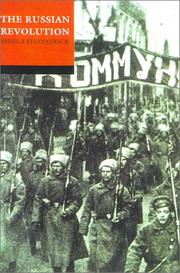
A concise, analytically sharp overview that reframes the revolution as a long social process (1917–1932) rather than a single dramatic event. Its focus on class and social history perfectly complements the narrative foundation already built.
Lenin's own pre-October 1917 pamphlet laying out his vision of the revolutionary state. Reading the primary source here — after you understand the context — reveals the ideological blueprint the Bolsheviks were working from and how far reality diverged from it.
The Civil War and the Birth of the Soviet State
IntermediateUnderstand how the Bolsheviks consolidated power through the brutal Civil War (1918–1921), how the Red Army and one-party state were built under pressure, and how revolution curdled into authoritarian rule.
▸ Study plan for this stage
Pace: 6–7 weeks, ~40–50 pages/day. Mawdsley's *The Russian Civil War* (weeks 1–4, ~350 pages); Trotsky's *My Life* (weeks 5–7, ~250 pages). Allocate 1–2 days per week for review and synthesis.
- The Red Army's organization, strategy, and evolution from revolutionary militia to disciplined military force under Trotsky's leadership
- The material and ideological causes of White Army fragmentation and Red Army victory in the Civil War
- War Communism as both economic necessity and ideological experiment, and its role in consolidating Bolshevik control
- The emergence of the one-party state and suppression of rival socialist parties (SRs, Mensheviks) during the Civil War
- Trotsky's personal role in militarization, centralization, and the tension between revolutionary ideals and authoritarian practice
- The geographic, social, and military complexity of the Civil War: multiple fronts, foreign intervention, peasant resistance
- How revolutionary fervor transformed into bureaucratic authoritarianism under conditions of total war
- The relationship between Bolshevik ideology and pragmatic state-building during existential crisis
- What were the key organizational and strategic innovations Trotsky introduced to transform the Red Army into an effective fighting force, and how did these reflect broader Bolshevik approaches to centralization?
- Why did the White Armies fail despite initial advantages, and what does Mawdsley argue about the structural weaknesses that doomed their cause?
- How did War Communism function as both an economic policy and a tool for political control, and what were its consequences for Soviet society?
- How did the Bolsheviks suppress rival socialist movements (Mensheviks, SRs) during the Civil War, and what does this reveal about the one-party state's origins?
- In Trotsky's autobiography, how does he justify the authoritarian measures taken during the Civil War, and where do tensions emerge between revolutionary ideals and practical necessity?
- What role did foreign intervention and geographic fragmentation play in shaping both Red and White strategies during the Civil War?
- Create a detailed timeline of the Civil War's major military campaigns (1918–1921) using Mawdsley, marking Red victories, White offensives, and turning points; annotate with the strategic innovations Trotsky introduced at each phase.
- Write a comparative analysis (1,500–2,000 words) of why the Red Army succeeded where the White Armies failed, drawing on Mawdsley's explanations of military, political, and social factors.
- Map the geographic extent of Bolshevik control at three key moments (early 1918, mid-1919, 1921) and explain how territorial consolidation enabled political centralization.
- Analyze Trotsky's justifications for militarization and one-party rule in *My Life*; identify where he acknowledges costs or tensions, and compare his framing to Mawdsley's more detached historical assessment.
- Debate exercise: Prepare arguments for both 'Civil War authoritarianism was necessary for survival' and 'Bolsheviks used crisis to impose ideology,' using specific evidence from both texts.
- Create a character study of Trotsky as military organizer vs. Trotsky as ideologue, using *My Life* and Mawdsley's portrait of his role; assess how personal ambition and principle intersected.
Next up: This stage establishes how the Bolsheviks won power militarily and built a centralized, authoritarian state under extreme pressure—setting the stage for the next phase, which will examine how that state was consolidated and transformed during the 1920s–1930s under Stalin's leadership and the ideological struggles that followed.
The definitive English-language military and political history of the Civil War. It explains how the Bolsheviks survived against enormous odds and what the war cost in human and institutional terms — essential for understanding the Soviet state that emerged.

Trotsky's autobiography covers his role as architect of the Red Army and his rivalry with Stalin. As a primary source by a brilliant insider, it offers an irreplaceable perspective on how power was contested within the revolution itself.
Advanced Perspectives: Historiography and Contested Memory
ExpertEngage with the major scholarly debates about the revolution — was it inevitable? a popular uprising or a coup? a betrayal of socialism? — and develop your own informed, critical interpretation.
▸ Study plan for this stage
Pace: 4–5 weeks, ~40–50 pages/day (approximately 250–300 pages total)
- Historiographical schools and their interpretations: the Bolshevik, revisionist, and post-Soviet perspectives on causation and inevitability
- The concept of 'inevitability' in historical analysis—how different scholars construct narratives of necessity versus contingency
- The role of agency versus structural forces: were key actors (Lenin, the masses, the Tsar) driving events or responding to conditions?
- Contested definitions of the revolution itself: was it one event (1917) or a process (1917–1922)? A political coup or a social upheaval?
- The problem of sources and evidence: how Soviet archives, émigré accounts, and Western scholarship shape competing interpretations
- The 'betrayal thesis' and its critics: did the Bolsheviks fulfill or distort revolutionary ideals?
- Memory, myth-making, and ideology in revolutionary historiography: how political agendas shape historical narratives
- What are the main historiographical schools that Acton identifies, and how do they differ in their explanations of why the revolution occurred?
- How does Acton challenge the notion that the Russian Revolution was historically inevitable? What alternative interpretations does he present?
- Was the revolution primarily a popular uprising driven by mass discontent, or was it a Bolshevik coup that exploited circumstances? What evidence does Acton examine?
- How do different historians define and periodize the revolution itself, and why does this matter for interpreting its causes and character?
- What role does Acton assign to individual agency (particularly Lenin's decisions) versus broader social and economic structures in explaining revolutionary outcomes?
- How have Soviet, Western, and post-Soviet historians constructed competing narratives about the revolution, and what does this reveal about the relationship between politics and historiography?
- Create a comparative chart mapping three major historiographical schools (e.g., Soviet Marxist, revisionist, post-Soviet) with their key claims about causation, inevitability, and the revolution's character—cite specific passages from Acton
- Write a 2–3 page historiographical essay: 'Was the Russian Revolution Inevitable?' using Acton's framework to present at least two competing scholarly positions and your own reasoned assessment
- Identify and analyze one specific historical debate Acton discusses (e.g., Lenin's role, the nature of mass participation, the Bolshevik seizure of power). Extract the key evidence each side uses and evaluate its strength
- Create a timeline of the revolution (1917–1922) that marks moments of contingency—points where outcomes were genuinely uncertain—and explain why Acton or other historians he cites might emphasize these
- Select one primary source excerpt that Acton discusses (e.g., a Bolshevik manifesto, a worker's testimony, a Menshevik critique). Write a brief analysis of how different historians might interpret it differently and why
- Conduct a 'historiography audit': choose one major claim about the revolution (e.g., 'the Bolsheviks betrayed socialism' or 'the revolution was a popular uprising'). Track how Acton traces this claim through Soviet, Western, and post-Soviet scholarship, noting how evidence and interpretation shift
Next up: This stage equips you with the critical tools to evaluate competing historical narratives and recognize how ideology shapes interpretation, preparing you to either specialize in a particular historiographical debate, engage with primary sources through a sophisticated analytical lens, or examine how revolutionary memory functions in contemporary Russian politics and culture.
A masterful guide to the competing schools of historiography — liberal, Soviet Marxist, social history, and revisionist. Reading it last lets you map every book you've read onto the broader scholarly debate and form your own synthesis.
Discussion
Keep reading
Paths that share books, cover the same subject, or open a related topic.