Between 1791 and 1804 the enslaved population of France's richest colony destroyed slavery there, defeated three European armies including Napoleon's, and founded a state. It is one of the decisive events of the revolutionary age, and for a century and a half it was treated in European and American historiography as a footnote or an aberration. That absence is itself part of the subject, which is why the reading order below places a book about historical silence near the end rather than the beginning — it lands harder once you know what was silenced.
The other reason for a careful sequence is that the events are genuinely complicated: multiple revolts with different aims, free people of colour with interests distinct from the enslaved, Spanish and British invasions, shifting French policy, and a war of independence that only began after emancipation was already won and then threatened. A short book first will save you from drowning.
Get the chronology
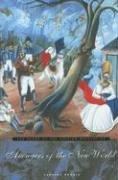
A concise history of the Haitian revolution does exactly what its title promises, and Jeremy Popkin is the right guide for a first pass. Avengers of the New World is the best full narrative in English — Laurent Dubois writes clearly, uses the scholarship of the last few decades, and keeps the enslaved majority at the centre.
The classic, and the correction
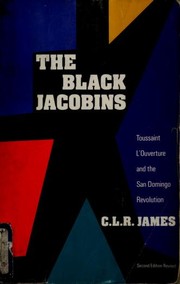
The Black Jacobins is the famous book, published in 1938 by C. L. R. James, and it is still worth reading as literature and as political argument. It is written from an explicitly Marxist position, it treats Toussaint Louverture as the tragic protagonist, and parts of its research have been superseded — none of which stops it from being the work that put the revolution back into the historical conversation.
Making of Haiti is the correction that matters. Carolyn Fick reconstructs the revolution from below, from the perspective of ordinary enslaved people and maroon communities rather than the leadership, and it substantially qualifies the great-leader reading. Whether the revolution is best explained through Toussaint or through the mass of people who forced his hand is an argument still running in the field; James and Fick are its two clearest statements.
The archival layer
A Colony of Citizens examines emancipation and citizenship in Guadeloupe, which is the comparison case that shows what was specific to Saint-Domingue. You are all free is Popkin's close study of the 1793 emancipation declaration at Le Cap, and it argues that the French commissioners did not grant freedom so much as ratify a fact already established by force. That reading is not universally accepted, and it is the sort of argument that makes archival history worth reading.
Toussaint Louverture and The slaves who defeated Napoleon are both by Philippe Girard, whose name our catalogue records in two forms; the first is the biography and the second the military history of the final war of independence. Take the biography first.
Aftermath and silence
Haiti is Dubois on the two centuries after independence — the indemnity France extracted for recognising the country, the occupations, the debt — and it explains more about Haiti's present than any account of the revolution alone. Silencing the past is Michel-Rolph Trouillot's argument about how historical facts are produced and suppressed, using the revolution as its central case, and it is the most intellectually important book on the path.
Slave revolution in the Caribbean, 1789-1804 closes with the documents themselves, so you finish reading the participants rather than about them. Our Mexican Revolution hub covers a comparable case in the same hemisphere.
Follow the path in order and the aberration turns back into an event with causes.
Follow the full ordered path here: Best Books on the Haitian Revolution, in Reading Order.
Ready to learn something deeply?
Build a reading path — free