The History of Mexico: The Best Books to Read, in Order
This curriculum takes a beginner from the ancient world of the Aztecs all the way through modern Mexico in four carefully sequenced stages. Each stage builds the political, cultural, and social vocabulary needed for the next, moving from accessible narrative histories to richer, more analytical works that reward the deeper context you'll have earned along the way.
Foundations: The Big Picture
BeginnerGain a confident, chronological overview of all of Mexican history — from pre-Columbian civilizations to the 20th century — so that every later book has a clear map to land on.
▸ Study plan for this stage
Pace: 8–10 weeks, ~40–50 pages/day (or 5–6 days/week for a more relaxed pace)
- The cyclical pattern of power and caudillismo in Mexican history, from colonial rule through the 20th century
- How pre-Columbian civilizations (Aztec, Maya) shaped Mexican identity and social structures that persisted through conquest and independence
- The role of key figures (Cortés, Hidalgo, Benito Juárez, Díaz, Villa, Zapata, Cárdenas) as embodiments of larger historical forces and contradictions
- The tension between centralization and regional autonomy, and between indigenous and European influences, as a defining feature of Mexican state-building
- The Mexican Revolution (1910–1920) as a watershed moment that fundamentally transformed power structures and national identity
- How geography, natural resources, and economic dependency shaped Mexico's relationship with Spain, France, and the United States
- The evolution of the Mexican presidency and executive power as a mechanism for managing competing factions and consolidating authority
- What were the major pre-Columbian civilizations in Mexico, and how did their political and social systems influence post-conquest Mexican society?
- How did the Spanish conquest and colonial period establish patterns of power, hierarchy, and economic extraction that persisted into independent Mexico?
- What role did caudillos (strongmen) play in Mexican politics from independence through the 19th century, and why was this system so persistent?
- Who were the key reformers and revolutionaries (Hidalgo, Juárez, Villa, Zapata, Cárdenas) and what did each represent in terms of competing visions for Mexico's future?
- What were the major causes and consequences of the Mexican Revolution, and how did it reshape Mexican politics and society?
- How did Mexico's relationship with foreign powers—particularly the United States—shape its territorial integrity, economic development, and political choices?
- Create a visual timeline of Mexican history from 1300 to 1940, marking major political transitions, wars, and key figures; annotate each with one sentence explaining its significance
- Write a one-page character sketch of three major figures from the book (e.g., Cortés, Benito Juárez, Porfirio Díaz, Emilio Zapata), focusing on how each embodied a particular vision or contradiction in Mexican politics
- Map Mexico's territorial changes from independence (1821) to 1940, showing losses to the United States and internal reorganizations; reflect on how these changes affected national identity
- Create a comparison chart of three different periods (Colonial, 19th-century caudillismo, and post-Revolutionary) showing the structure of power, the role of the military, economic systems, and indigenous participation
- Keep a reading journal with 2–3 entries per week noting: one surprising fact, one pattern you're noticing, and one question that arises—review these at the end to identify your own synthesis
- After finishing, write a 2–3 page synthesis essay answering: 'What are the three most important continuities in Mexican history from pre-Columbian times to 1940, and why do they matter?'
Next up: This stage equips you with a coherent chronological scaffold and understanding of the major forces, figures, and turning points in Mexican history, allowing subsequent stages to zoom in on specific themes (economic development, cultural identity, regional histories, or 20th-century politics) with confidence that you can place each new detail within the larger narrative.
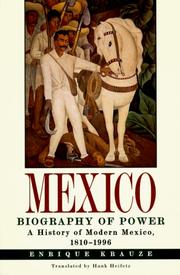
Written by Mexico's most celebrated public historian, this sweeping narrative from independence to the late 20th century introduces the key figures and forces of Mexican political life in vivid, story-driven prose — perfect for building intuition before diving into specialized books.
The Ancient World and the Conquest
BeginnerUnderstand the Aztec Empire on its own terms and then experience the Spanish Conquest as both sides lived it, building empathy and critical perspective on one of history's most consequential collisions.
▸ Study plan for this stage
Pace: 8–10 weeks, ~25–30 pages/day (approximately 600–700 pages total). Diaz's narrative is dense with proper names, place descriptions, and military details; slower pacing allows for absorption of the Aztec world and reflection on dual perspectives.
- The Aztec Empire as a sophisticated, functioning civilization with its own political structures, religious beliefs, and daily life—not a monolith awaiting conquest
- Bernal Díaz's eyewitness perspective as a Spanish soldier: his observations of Tenochtitlan's scale, Montezuma's court, and Aztec military organization reveal both awe and cultural incomprehension
- The role of indigenous allies (Tlaxcalans, Totonacs) in the conquest—Spanish victory depended on exploiting existing rivalries and resentments within the Aztec tributary system
- The collision of worldviews: Spanish Christianity, honor, and military technology versus Aztec cosmology, ritual warfare, and tributary networks
- Montezuma's strategic choices and constraints: his attempts at diplomacy, intelligence-gathering, and negotiation in the face of an unprecedented threat
- The logistics and contingency of conquest: disease, luck, leadership, and decisions that could have gone differently—avoiding determinism
- Díaz's narrative as a primary source with its own biases: written decades later, shaped by his desire for recognition and to justify Spanish actions
- What does Díaz's description of Tenochtitlan reveal about Aztec engineering, urban organization, and wealth? How does his tone shift between admiration and condescension?
- How did the Spanish exploit existing tensions within the Aztec Empire, and what role did indigenous allies play in the conquest?
- What were Montezuma's apparent strategic goals in his early encounters with Cortés, and what constraints or pressures might have shaped his decisions?
- How do Díaz's accounts of Aztec religious practices (especially human sacrifice) shape the reader's perception of the conquest, and what might an Aztec account emphasize differently?
- What does the conquest reveal about the fragility of empires, the role of contingency in history, and the limits of military technology without political strategy?
- How reliable is Díaz as a narrator? What are the signs of bias, memory distortion, or self-justification in his account?
- Create a detailed map of Tenochtitlan based on Díaz's descriptions, labeling key locations (the Great Temple, Montezuma's palace, the causeways, the marketplace). Note what these details reveal about Aztec priorities and engineering.
- Write two short accounts (300–400 words each) of a single event from the conquest—e.g., the Spanish arrival at Tenochtitlan or the siege—once from Díaz's perspective and once imagining an Aztec warrior's or noble's perspective, using only information available from Díaz's text.
- Create a character profile for Montezuma based on Díaz's observations: list his apparent goals, constraints, decisions, and the information available to him at key moments. Assess whether his choices were rational given what he knew.
- Track the role of indigenous allies throughout the conquest by listing the groups Díaz mentions, their grievances against the Aztecs, and how they contributed to Spanish success. Discuss how the conquest might have unfolded without them.
- Identify 5–7 moments in the text where Díaz expresses admiration for Aztec achievements and 5–7 where he emphasizes Spanish superiority or Aztec 'barbarism.' Analyze the pattern: what does he admire, and what does he condemn?
- Write a critical reflection (500 words) on how reading Díaz's account has shaped your understanding of the conquest. What questions remain unanswered? What perspectives are missing?
Next up: This stage establishes the Aztec world as complex and worthy of understanding on its own terms, and introduces the conquest as a contingent collision of empires rather than an inevitable triumph—preparing you to encounter Aztec perspectives, indigenous resistance narratives, and the long-term consequences of conquest in subsequent stages.
The eyewitness account written by one of Cortés's own soldiers; reading it after Smith means you can see exactly what the Spanish encountered and misunderstood, making the primary source come alive.
Colony, Independence, and Revolution
IntermediateTrace how three centuries of colonial rule shaped Mexican identity, how independence was won and nearly lost, and how the Revolution of 1910 remade the country — understanding the deep social tensions that run through all of modern Mexico.
▸ Study plan for this stage
Pace: 6–7 weeks, ~40–50 pages/day. Begin with Paz's essays (2–3 weeks), then transition to Guzmán's narrative (3–4 weeks). Allow buffer time for re-reading dense passages and reflection.
- Mexican identity as shaped by conquest, mestizaje, and the collision of indigenous and Spanish cultures — Paz's concept of the Mexican as fundamentally marked by solitude, masks, and historical trauma
- The psychology of colonialism: how three centuries of subjugation created a culture of distrust, resignation, and the 'fiesta' as escape — Paz's analysis of Mexican character and social rituals
- Independence as incomplete liberation: the struggle from 1810 onward and the persistence of colonial hierarchies in post-independence Mexico
- The Revolution of 1910 as a violent reckoning with inequality, land dispossession, and the failure of liberal reforms — Guzmán's firsthand account of revolutionary chaos and idealism
- The role of caudillismo (strongman rule) and personalism in Mexican politics: how individual leaders (not institutions) drive historical change
- Land, labor, and social justice as the core grievances fueling revolution — the indigenous and peasant masses versus the landed elite
- How the Revolution attempted to redefine Mexican identity and create a new social order, yet inherited many contradictions from the colonial and independence periods
- According to Paz, how does the Mexican experience of conquest and colonialism shape contemporary Mexican identity and psychology? What does he mean by solitude, masks, and the 'fiesta'?
- What are the key differences between how Paz analyzes Mexican character philosophically versus how Guzmán depicts revolutionary actors and events on the ground?
- Trace the continuities between colonial rule, the independence period, and the Revolution of 1910 — what problems remained unsolved from one era to the next?
- What were the main social and economic grievances that sparked the Revolution, and how does Guzmán's narrative illustrate the clash between revolutionary ideals and brutal reality?
- How does Guzmán portray the role of individual leaders (caudillos) in shaping the Revolution, and what does this suggest about Mexican political culture?
- In what ways did the Revolution attempt to break with the colonial past, and in what ways did it reproduce colonial patterns of power and hierarchy?
- Create a timeline mapping key events from conquest (1521) through the Revolution (1910–1920), annotating how Paz's psychological insights connect to specific historical turning points in Guzmán's narrative.
- Write a character study of one major revolutionary figure from Guzmán's text (e.g., Pancho Villa, Emilio Zapata, or a composite protagonist), analyzing how their motivations reflect the social tensions Paz identifies in Mexican culture.
- Compare and contrast Paz's essay on Mexican solitude and masks with a specific scene or episode from Guzmán's narrative — how does the lived experience in the Revolution confirm or complicate Paz's theory?
- Analyze the concept of mestizaje (racial and cultural mixing) as discussed by Paz, then trace how Guzmán's depiction of revolutionary soldiers and leaders reflects or challenges this idea of a unified Mexican identity.
- Create a visual map or diagram showing the relationship between colonial hierarchies (race, class, land ownership) and the grievances that fueled the Revolution — use evidence from both texts.
- Write a reflective essay: 'What did the Revolution solve, and what did it leave unresolved?' Ground your answer in specific passages from both Paz and Guzmán.
Next up: This stage establishes the historical and psychological foundations of modern Mexico — the deep wounds of colonialism, the incomplete liberation of independence, and the violent upheaval of revolution — preparing you to examine how twentieth-century Mexico attempted to consolidate revolutionary gains, build new institutions, and navigate the lasting tensions between tradition and modernity.
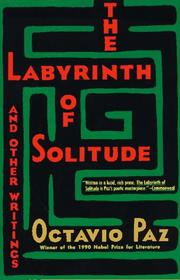
Nobel laureate Paz's philosophical essay on Mexican identity — rooted in the Conquest and colonial experience — is the single most important key to understanding how Mexicans think about themselves; read it here, after the colonial foundation is set.

A classic semi-autobiographical novel by a participant in the Revolution, it conveys the chaos, violence, and idealism of 1910–1920 with an immediacy no textbook can match — the ideal literary companion to the historical accounts.
Modern Mexico: Deep Dives
ExpertAnalyze the structures of 20th- and 21st-century Mexico — its authoritarian political system, its social inequalities, the drug war, and its complex relationship with the United States — with the full historical context now in place.
▸ Study plan for this stage
Pace: 8–10 weeks, ~40–50 pages/day (Distant Neighbors: 5–6 weeks, ~30 pages/day; El Narco: 3–4 weeks, ~40 pages/day)
- The PRI's monopoly on power and its mechanisms of control: corporatism, co-optation, and the 'revolutionary family' system that sustained authoritarian rule for 71 years
- Mexico's structural economic dependence on the United States and how this shapes domestic policy, migration, and national sovereignty
- The roots and evolution of Mexico's drug trafficking organizations: how geography, demand, and state corruption transformed cartels from regional smugglers into transnational empires
- The relationship between state capacity, institutional weakness, and violence: why Mexico's institutions cannot effectively monopolize violence or enforce the rule of law
- Social inequality and regional disparities as both a legacy of colonial and post-revolutionary structures and a driver of drug trafficking recruitment and migration
- The drug war as a policy failure: how militarization and enforcement-focused strategies have escalated violence without reducing supply or demand
- The intersection of Mexican and U.S. drug policy: how U.S. consumption, weapons trafficking, and intervention shape Mexico's internal conflict
- How did the PRI maintain authoritarian control for over seven decades without appearing as overtly repressive as other Latin American dictatorships, and what role did corporatism and co-optation play in this system?
- What structural factors—geographic, economic, and institutional—made Mexico vulnerable to the rise of large-scale drug trafficking organizations in the late 20th century?
- How has Mexico's economic and geopolitical relationship with the United States shaped both its domestic politics and its inability to control drug trafficking?
- What are the key differences between how Riding and Grillo characterize Mexican state capacity, and what do these differences reveal about Mexico's trajectory from the 1980s to the 2010s?
- Why have militarized drug war strategies failed to reduce drug trafficking or violence in Mexico, and what alternative explanations does Grillo offer?
- How do the social inequalities and regional disparities that Riding describes in the 1980s connect to the recruitment patterns and geographic spread of cartels that Grillo documents?
- Create a detailed timeline of PRI rule (1929–2000) using Riding's analysis, marking key moments of institutional innovation, crisis, and co-optation. Annotate with specific examples of how the 'revolutionary family' maintained control.
- Map Mexico's major drug trafficking routes and cartel territories as described in El Narco, then overlay Riding's regional economic data to identify correlations between poverty, marginalization, and cartel presence.
- Write a comparative policy brief (2–3 pages) analyzing U.S.–Mexico drug policy from both books' perspectives: what does Riding say about U.S. influence on Mexican politics, and how does Grillo show this playing out in the drug war?
- Select one major cartel (Sinaloa, Gulf, Juárez) from El Narco and trace its origins, evolution, and methods back to the institutional weaknesses and corruption patterns Riding identifies in the Mexican state.
- Conduct a close reading of Riding's chapters on corruption and create an annotated list of mechanisms (patronage networks, mordidas, institutional capture) that Grillo shows cartels exploiting in the drug war era.
- Debate exercise: Using evidence from both books, argue whether Mexico's drug violence is primarily a problem of supply (cartel organization), demand (U.S. consumption), or state capacity (institutional weakness). Support your position with specific citations.
Next up: This stage equips you with a granular understanding of modern Mexico's political economy and security crisis, providing the analytical framework needed to evaluate contemporary Mexican politics, migration, inequality, and U.S.–Mexico relations in the 21st century.
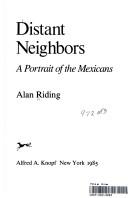
A former New York Times bureau chief's landmark portrait of Mexican society, culture, and politics in the late 20th century; its analytical depth rewards readers who now have the full historical background to evaluate its arguments.

The definitive journalistic account of the drug war that has defined 21st-century Mexico, best read last because Grillo's analysis of cartel power makes full sense only against the backdrop of weak institutions and inequality you've spent the whole curriculum understanding.
Discussion
Keep reading
Paths that share books, cover the same subject, or open a related topic.