Best Books on the Haitian Revolution, in Reading Order
The Haitian Revolution is the one slave revolt in history that ended in an independent state, and the literature on it splits between two questions: how it happened, and why the world spent two centuries pretending it had not. This path starts with a short modern narrative so the sequence of events is fixed in your head, then gives you the classic Marxist account, then the archival work that put the enslaved themselves at the centre rather than their commanders. It closes with the biographies of Toussaint Louverture and with the argument about historical silence that the revolution provoked.
Get the Story Straight
BeginnerFix the chronology — Saint-Domingue, 1791, Toussaint, Leclerc, 1804 — and understand why a sugar colony was the richest place in the Atlantic world.
▸ Study plan for this stage
Pace: 3 weeks. Popkin's Concise History is 202 pages and can be read in a weekend; Dubois's Avengers of the New World is 374 pages at ~30 pages a day. Do not skip Popkin because it is short — reading Dubois with the chronology already fixed is the difference between following the argument and reconstructi
- Saint-Domingue's economics: the single richest colony in the world in 1789, producing roughly 40% of Europe's sugar and 60% of its coffee on the labour of around half a million enslaved people
- The colony's four-way social structure — grands blancs, petits blancs, gens de couleur libres, and the enslaved majority — and why the free people of colour are the group most accounts get wrong
- The demographic fact that drives everything: the enslaved population was majority African-born, because mortality was so high that the colony imported continuously
- The Bois Caïman ceremony and the August 1791 northern insurrection as the opening of the revolution proper
- The chain of French metropolitan decisions — 1789, the 1792 grant of rights to free men of colour, the 1793 Cap Français emancipation, the 1794 abolition decree
- Toussaint Louverture's rise from the Spanish side to French general to governor, and the 1801 constitution
- The Leclerc expedition of 1802, the reimposition of slavery in Guadeloupe, and the war of independence that follows
- 1 January 1804: Dessalines, independence, and the name Haiti
- Why was Saint-Domingue worth more to France than Canada, and what specifically made sugar profitable enough to sustain those mortality rates?
- Who were the gens de couleur libres, what did they own, and why does their position make the revolution more than a two-sided conflict?
- Give the sequence of French decrees from 1791 to 1794. Which of them followed events in the colony rather than causing them?
- What did Toussaint's 1801 constitution actually establish, and why did it make conflict with Bonaparte inevitable?
- Dubois calls his book Avengers of the New World. What claim is embedded in that title, and does the narrative bear it out?
- Build a one-page timeline from Popkin covering 1789 to 1804, with three parallel rows: events in France, events in Saint-Domingue, and events elsewhere in the Atlantic. Keep it beside you for the rest of the path — every later book assumes it.
- Sketch the colony from Dubois's descriptions: North, West and South provinces, Le Cap, Port-au-Prince, the plain of the Cul-de-Sac, and the mountain regions where maroon communities held out. Mark where the 1791 rising began.
- Write 300 words explaining to someone who knows nothing about it why a sugar plantation was so lethal, using Dubois's account of the labour process rather than general statements about brutality.
- Make a card for each of the seven or eight principal figures — Toussaint, Dessalines, Christophe, Rigaud, Sonthonax, Leclerc, Rochambeau, Pétion — with dates, allegiances and how each ends. Their shifting alliances are the hardest thing to hold in your head.
Next up: With the events secure, you can read James's classic as the argument it is rather than as the source of the facts.

The shortest reliable narrative in English, written by a specialist for readers who have none of the background. Read it first purely so that every later book has a timeline to hang on.
The standard full-length modern history, and the best single volume on the subject. It gives you the plantation system, the free people of colour, and the war in enough detail that you can follow the specialist arguments later.
The Classic Account
IntermediateRead the book that made the revolution a subject of serious history, and learn to see its argument as an argument rather than as the facts.
▸ Study plan for this stage
Pace: 2–3 weeks for 398 pages. Read the 1963 edition, which carries James's later appendix on Castro and the Caribbean — the appendix tells you what he thought the book was for. Note that the internal dating is confusing: the text was written in the mid-1930s and first published in 1938.
- James's central move: reading the enslaved plantation workforce as a modern proletariat, disciplined by the labour process itself rather than despite it
- Toussaint as tragic hero in the strict sense — destroyed by the very qualities that made him, particularly his faith in the French Republic
- The book as an anticolonial intervention written for the 1930s: James wrote it while agitating for African independence, and Kenyatta and Nkrumah are the intended audience as much as historians are
- The French Revolution and the Haitian Revolution as one event, not two — James refuses the metropolitan-and-periphery framing entirely
- James's treatment of Dessalines: the ruthlessness he judges necessary and Toussaint's reluctance to use it
- Where the thesis strains — the proletariat analogy, the reliance on French printed sources, the near-absence of Vodou and of African-derived political forms
- Style as argument: James writes narrative history at speed, and the momentum is doing persuasive work
- The book's afterlife — it created the field, and every later historian on this path is positioning against it
- State James's thesis in two sentences. Then name the two pieces of evidence he relies on most heavily to support it.
- Where does Dubois's account of the same events differ from James's, and is the difference about facts, emphasis, or framework?
- James says Toussaint's failure was his inability to explain himself to the masses. What is the evidence for that, and what alternative explanations does Dubois offer?
- What role does African cultural and religious inheritance play in James's account, and why might a Marxist framework of the 1930s have underweighted it?
- James wrote in 1938 about a revolution of 1791. What was he arguing about in his own present, and where can you see it in the text?
- Take chapter 4, on the beginning of the insurrection, and mark in the margin every sentence that is a factual claim and every sentence that is an interpretive one. The ratio is the most instructive thing about the book.
- Write a 400-word summary of James's Toussaint, then a 400-word summary of Dubois's Toussaint from the previous stage, and list the three specific points on which they cannot both be right.
- Find three passages where James's prose is doing persuasive work — accelerating, using the present tense, or making a rhetorical repetition — and rewrite one of them in flat expository English. Note what is lost and what is exposed.
- Read the 1963 appendix first, then the last chapter of the main text, and write 250 words on what James believed the Haitian Revolution meant for decolonisation in his own lifetime.
Next up: James wrote the revolution from its leadership downward; the archival historians of the next stage reconstructed it from the fields upward, and the contrast is sharpest read immediately.
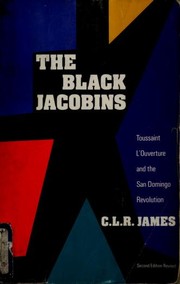
Written in 1938 by a Trinidadian Marxist who read the revolution as a colonial proletariat in motion and Toussaint as its tragic leader. Read it after Dubois, not before: it is a masterpiece and it is also a thesis, and you want to know the events well enough to see where the thesis is doing the work.
The Revolution from Below
IntermediateShift the centre of gravity from the leaders to the enslaved majority, and see how the archival historians rebuilt the story from parish records and trial papers.
▸ Study plan for this stage
Pace: 6–7 weeks. Fick is 355 pages, Dubois's A Colony of Citizens 464, and Popkin's You Are All Free 438 — this is the densest stage on the path and each book is monographic rather than narrative. Roughly 25 pages a day, and take notes on the archival sources each author uses, because that is where the me
- Fick's method: parish registers, trial testimony, plantation records and the reconstruction of the South province rising, where the enslaved acted with no famous commander at all
- Marronage as political practice rather than escape, and the continuity between pre-revolutionary maroon communities and the 1791 insurgents
- Vodou as an organising infrastructure, which Fick treats seriously and James largely does not
- What the enslaved actually demanded in 1791 — three free days a week, then abolition — and how the demands escalated with the fighting
- Dubois's argument that emancipation and republican citizenship were fought out across the whole French Caribbean, with Guadeloupe as the counter-case where slavery was successfully reimposed in 1802
- The legal vocabulary of citizenship: what it meant to become French citizens by decree, and how quickly the metropole tried to hedge it
- Popkin's close reconstruction of the June 1793 events at Cap Français — Sonthonax and Polverel improvising emancipation under military pressure rather than granting it on principle
- The general historiographical claim uniting the stage: emancipation was taken, not given, and the decrees ratified facts already established on the ground
- Fick describes the South province rising in detail. How does the absence of a Toussaint-figure there change what you think caused the revolution?
- What is the evidence for Vodou's organisational role, and how strong is it? Distinguish what the sources actually say from what has been built on them.
- Popkin's title is a quotation. Who says it, in what circumstances, and how much choice did the speaker have?
- Why does Dubois take Guadeloupe as his main case? What does the successful reimposition of slavery there prove about Saint-Domingue?
- Fick, Dubois and Popkin all disagree with James in different directions. Characterise each disagreement in a sentence.
- For each of the three books, write down the archival collections the author actually worked in and one example of a document type used. Then write 200 words on what kind of question each collection can and cannot answer.
- Reconstruct the June 1793 Cap Français emergency hour by hour from Popkin: Galbaud's arrival, the fighting, the offer to the insurgents, the proclamation. Then write a paragraph on whether you would call it a decision.
- Take one demand made by the insurgents in 1791 and trace how it is reported in Fick, in James and in the Dubois–Garrigus documents you will read in the final stage. Note which version each historian prefers.
- Draw a two-column table of Guadeloupe and Saint-Domingue from 1789 to 1804 with the same events on each side. The divergence after 1802 is the single most useful thing in Dubois's book.
Next up: Having seen the revolution from below, you can judge the biographies of its most argued-over commander without either mythologising or dismissing him.
The direct answer to James: the revolution reconstructed from the point of view of the field slaves and maroons rather than the commanders. Read it immediately after The Black Jacobins so the contrast is live.
Emancipation and citizenship in Guadeloupe and the wider French Caribbean, which shows that the revolutionary question was Atlantic rather than Haitian alone. It supplies the legal and political vocabulary the next book assumes.

A close study of the 1793 emancipation decree in Cap Français — how abolition actually got declared, by whom, and under what pressure. The most detailed look at the single most important moment in the revolution.
Toussaint, Napoleon, and Independence
IntermediateFollow the revolution's most argued-over figure and the war against Napoleon's expeditionary force that turned a colony into a nation.
▸ Study plan for this stage
Pace: 6 weeks. Girard's biography is 352 pages, his military history of the Leclerc expedition 450, and Dubois's Haiti: The Aftershocks of History 448. Read the biography and the campaign book back to back — they share an author and are designed to be complementary — then take Dubois's post-1804 volume mo
- What the archives added: Girard worked in French, Spanish and American collections and reconstructed Toussaint's early life, including that he was freed well before 1791 and had himself owned enslaved people
- Toussaint's labour regime after 1793 — plantation production maintained under military discipline, which is the hardest fact about him for any celebratory account
- The 1802 Leclerc expedition: roughly 20,000 troops initially, the largest force France had ever sent overseas, and Bonaparte's actual instructions about slavery
- Yellow fever as the campaign's decisive factor, and Girard's insistence that it does not by itself explain the French defeat
- Atrocity on both sides: Rochambeau's dogs and drownings, and the reprisals that followed, which Girard documents without balancing them into equivalence
- Toussaint's deportation and death at Fort de Joux in April 1803, and Dessalines's very different war after it
- Vertières, November 1803, and independence declared on 1 January 1804
- The 1825 indemnity — 150 million francs demanded by France as the price of recognition — and the debt that shaped the next century and a half
- Girard establishes that Toussaint had been free for years before 1791 and had owned slaves. How should that change the standard account of him, and how much does it actually change?
- Why did Toussaint enforce plantation labour after emancipation, and what were his alternatives? Judge him against what Dessalines and Christophe did afterwards.
- Were Bonaparte's instructions to Leclerc to restore slavery immediately, eventually, or conditionally? What does Girard say the documents show?
- How much of the French defeat is yellow fever? Give the strongest version of the disease explanation and then Girard's objections to it.
- The 1825 indemnity was paid, with interest, into the twentieth century. What does Dubois argue it did to Haiti, and what other explanations for Haiti's later poverty does he weigh?
- Write a 500-word biographical sketch of Toussaint using only facts Girard documents from archives, with no interpretive adjectives. Then write 200 words on how much of the legend survives that treatment.
- Map the Leclerc campaign: landing points, the Crête-à-Pierrot siege, the yellow fever season, and Vertières. Annotate with French troop strength at each stage from Girard's figures.
- Compare Girard's Toussaint with James's Toussaint from stage two on five specific points, in a table. Mark which differences come from new evidence and which from a different framework.
- Compute the 1825 indemnity in terms Dubois gives — as a share of Haitian government revenue, over how many years — and write 300 words on what a state can and cannot do while carrying that obligation.
Next up: The events are now fully in hand, which is the only position from which Trouillot's question — why the world did not record them — can be taken seriously.

The modern scholarly biography, built on archives in France, Spain and the United States, and franker than earlier lives about Toussaint's plantation labour regime and his own slaveholding past. Read it before the war book — it is the man, then the campaign.

The 1802-04 Leclerc expedition as a military campaign: yellow fever, atrocity on both sides, and the final victory at Vertières. The narrow end of the funnel, and the last chapter of the revolution proper.

Subtitled The Aftershocks of History, this carries the story past 1804 to the indemnity France extracted, the occupations, and the present. Read it to understand why the revolution's outcome is still contested.
The Argument About Silence
IntermediateConfront the historiographical question the revolution raises — why an event of this scale was written out of Western history — and read the participants in their own words.
▸ Study plan for this stage
Pace: 4 weeks. Silencing the Past is only 191 pages and should be read twice, the second time with the previous six books in mind. The Dubois–Garrigus documentary collection is 212 pages of primary sources and is best read in short sittings, cross-referencing each document against the narrative you alread
- Trouillot's four moments of silencing: fact creation (sources), fact assembly (archives), fact retrieval (narratives) and retrospective significance (history)
- The 'unthinkability' argument — that contemporaries lacked a category for a successful slave revolution and therefore could not record what they were seeing
- Sans Souci as Trouillot's demonstration case: a man and a palace with the same name, one of whom is written out of the record
- The Alamo and Columbus chapters, which show the method applied outside Haiti and are the reason the book is read by people with no interest in the Caribbean
- Power operating on the production of history rather than only on its interpretation — the claim that distinguishes Trouillot from ordinary complaints about bias
- Reading period documents critically: who wrote each one, for whom, and what the writer could not say or think
- The document types in the Dubois–Garrigus collection — decrees, colonial correspondence, petitions from free people of colour, testimony, and the 1801 and 1805 constitutions
- The gap between the documentary record and the experience of the enslaved majority, which is Trouillot's point made physical
- Name Trouillot's four moments of silencing and give an example of each drawn from a book earlier in this path.
- Is 'unthinkability' a claim about what contemporaries believed or about what their conceptual vocabulary permitted? Which version does the evidence support?
- Read the Sans Souci chapter and then explain, in your own words, what was lost and by what mechanism. Could it have been recovered without Trouillot's specific curiosity?
- Take three documents from the Dubois–Garrigus collection and ask of each: who is speaking, to whom, and what interest shapes what is included? What is systematically absent from all three?
- Having read the sources, how much of the interpretive weight in James, Fick and Popkin rests on inference rather than on documentary statement?
- Pick one event you know well from the earlier stages — the August 1791 rising or the June 1793 emancipation — find every document in the Dubois–Garrigus collection that touches it, and write 400 words on what the sources alone can establish without the historians.
- Apply Trouillot's four-moment framework to a historical episode from your own country, in two pages. The framework is portable and the exercise is the fastest way to test whether you have understood it.
- Read the 1801 Toussaint constitution and the 1805 Dessalines constitution side by side and write a one-page comparison of what each says about labour, land and colour.
- Return to your stage-one timeline and annotate it with the source for each entry, using the documentary collection where possible. Mark the entries for which the only evidence is later testimony or historians' inference.
Next up: This is the end of the path: from here the natural next moves are Atlantic slavery and abolition more broadly, Haitian history after 1804 in depth, or Trouillot's method applied to whatever archive you work in yourself.
The Haitian anthropologist's argument that the revolution was 'unthinkable' to contemporaries and therefore went unrecorded. It is a book about how history gets made, using Haiti as its case, and it recasts everything you have read so far.
A documentary collection — decrees, letters, petitions, testimony — so you can finally read the period sources the previous six books were arguing over. Best kept for last, when you know enough to judge them.
Discussion
Keep reading
Paths that share books, cover the same subject, or open a related topic.