The Scientific Revolution: Best Books to Read, in Order
This curriculum traces the Scientific Revolution from its Copernican spark to its Newtonian culmination, then zooms out to examine the deeper social, philosophical, and intellectual forces that made it possible. Starting at the intermediate level, the path moves from accessible narrative histories, through close engagement with the key figures and their ideas, to advanced historiographical and philosophical analysis—building both factual grounding and critical sophistication at each stage.
The Grand Narrative
IntermediateGain a confident, chronological command of the Scientific Revolution as a whole—its cast of characters, key discoveries, and historical arc—before diving into any single figure or debate.
▸ Study plan for this stage
Pace: 8–10 weeks, ~40–50 pages/day. Koestler (600 pages) takes 3–4 weeks; Shapin (200 pages) takes 2–3 weeks; review and synthesis takes 2–3 weeks.
- The heliocentric revolution: how Copernicus, Tycho, Kepler, and Galileo displaced Earth from the center of the cosmos and established the Sun-centered model
- The role of observation and instrumentation: telescopes, improved instruments, and empirical data as drivers of paradigm shifts
- Key figures and their contributions: Copernicus's theory, Tycho's data, Kepler's laws, Galileo's telescopic discoveries, and Newton's synthesis
- The transition from Aristotelian to mechanical philosophy: how the Scientific Revolution challenged ancient authorities and embraced mathematical description of nature
- Institutional and social contexts: the role of patronage, the Church, universities, and emerging scientific societies in enabling or constraining scientific work
- The concept of 'revolution' itself: Shapin's critique of the grand narrative and the messiness of historical change versus Koestler's dramatic arc
- Continuity and discontinuity: how the Scientific Revolution both broke with the past and built upon medieval and Renaissance foundations
- What were the major astronomical models before and after the Scientific Revolution, and what observational evidence forced the shift from geocentrism to heliocentrism?
- How did Tycho Brahe's data and Kepler's mathematical laws advance the heliocentric model beyond Copernicus's initial proposal?
- What role did the telescope and other instruments play in Galileo's discoveries, and how did his work challenge both Aristotelian physics and Church authority?
- How does Shapin's account of the Scientific Revolution differ from Koestler's narrative, and what does Shapin mean by questioning whether a 'revolution' actually occurred?
- What were the main institutional and social factors (patronage, the Church, universities) that shaped the development of early modern science?
- How did the shift from Aristotelian to mechanical philosophy change the way natural philosophers understood causation, motion, and the structure of matter?
- Create a detailed timeline (1450–1700) plotting Copernicus, Tycho, Kepler, Galileo, and Newton with their major works and discoveries; annotate how each figure's work depended on or reacted to predecessors.
- Draw and label the geocentric and heliocentric models; explain the observational problems each model faced and how evidence accumulated to favor heliocentrism.
- Write a 2–3 page narrative account of Galileo's telescopic discoveries and his conflict with the Church, drawing on Koestler's dramatic storytelling; then rewrite it in Shapin's more cautious, contextualized style.
- Map the patronage networks of one major figure (e.g., Galileo or Kepler): who funded them, what institutions supported them, and how did patronage shape their work and freedom?
- Compare Koestler's and Shapin's interpretations of a single episode (e.g., Copernicus's hesitation to publish, or Galileo's trial); identify where they agree and where Shapin complicates Koestler's narrative.
- Create a concept map showing how mechanical philosophy, mathematics, observation, and institutional support interconnected to enable the Scientific Revolution.
Next up: This stage establishes the big picture and cast of characters, allowing the next stage to zoom into specific debates, methodologies, or individual figures without losing sight of how they fit into the broader arc of early modern science.
A sweeping, beautifully written narrative from Copernicus through Kepler and Galileo that humanizes the scientists and shows how messy, intuitive, and non-linear the revolution actually was. Read first to get the full story with vivid color.
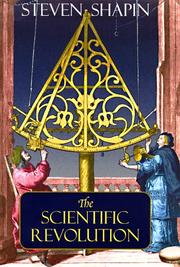
A compact, authoritative historiographical overview that immediately complicates the 'revolution' label and introduces the key debates scholars have about this period. Read second to sharpen the conceptual vocabulary you'll need for everything that follows.
The Central Figures Up Close
IntermediateDevelop a deep, nuanced understanding of Copernicus, Galileo, and Newton as individual thinkers—their methods, motivations, and the specific ideas that changed science forever.
▸ Study plan for this stage
Pace: 12–14 weeks, ~40–50 pages/day (with 2–3 days per week for reflection and exercises)
- Galileo's dual identity as scientist and believer: how he navigated the tension between empirical observation and religious authority
- The experimental method as Galileo practiced it: moving from thought experiments and mathematical reasoning to telescopic observation and mechanical demonstration
- The Church's institutional concerns about heliocentrism: distinguishing between theological objection and political/jurisdictional anxiety in the trial of Galileo
- Newton's methodological synthesis: how he unified Galileo's empirical approach with mathematical rigor to create the framework of classical mechanics
- The personal costs of scientific innovation: isolation, censorship, and intellectual compromise as experienced by Galileo across his lifetime
- Copernicus's heliocentric model as the conceptual foundation that Galileo defended and Newton mathematically vindicated
- The shift from natural philosophy to experimental science: how these three figures redefined what counts as legitimate knowledge about the natural world
- Patronage, publication, and power: how institutional relationships shaped what each thinker could say and publish
- How did Galileo's personal relationship with the Church evolve from his early career through his trial, and what role did his daughter Maria Celeste play in sustaining him during his house arrest?
- What specific evidence did Galileo gather with the telescope, and why did observations like the moons of Jupiter pose such a fundamental challenge to Aristotelian cosmology?
- Explain the distinction between Galileo's heliocentrism and Copernicus's model—what did Galileo add or change, and why was his version more threatening to Church authority?
- What were the actual charges against Galileo in his trial, and how did the politics of the papacy and the Inquisition shape the outcome beyond the purely theological issues?
- How did Newton's mathematical approach to motion and gravity build upon and transcend Galileo's experimental methods, and what made the Principia a watershed moment in science?
- What personal struggles, rivalries, and psychological pressures shaped Newton's intellectual development, and how did these affect his willingness to publish his work?
- Close-read Galileo's Letter to the Grand Duchess Christina (excerpted or referenced in Sobel and De Santillana): annotate his rhetorical strategy for reconciling Scripture with heliocentrism, then write a one-page analysis of whether his argument would have been more or less persuasive to a 17th-century Church official.
- Create a detailed timeline of Galileo's life overlaid with major Church events and publications: identify the moments when his public stance shifted and hypothesize why, using evidence from Sobel's biographical narrative.
- Reconstruct Galileo's telescopic discoveries in order (Jupiter's moons, Venus's phases, sunspots, Saturn's rings) and explain in writing why each observation was incompatible with geocentric models—use diagrams if helpful.
- Read De Santillana's account of the trial proceedings and write a mock legal brief from the perspective of either the prosecution (Inquisition) or defense (Galileo's advocates), citing the actual charges and evidence presented.
- Trace Newton's intellectual genealogy by mapping which of Galileo's specific ideas (inertia, the law of falling bodies, the principle of relativity) appear in Newton's Principia; write a short essay on how Newton formalized what Galileo intuited.
- Compare Westfall's portrayal of Newton's personality and working methods with Sobel's portrayal of Galileo: write a comparative character study examining how their temperaments influenced their scientific output and public reception.
Next up: This stage establishes the intellectual and personal foundations of the Scientific Revolution through three towering figures, preparing you to examine how their methods, conflicts, and discoveries rippled outward to reshape European thought, institutions, and the very concept of scientific authority in the centuries that followed.

Uses Galileo's correspondence with his daughter to ground his science in his personal and political world, making his conflict with the Church vivid and human. Start here because Sobel's accessible prose eases the transition to more demanding texts.
A rigorous scholarly account of the Galileo affair that digs into the politics, theology, and philosophy behind the trial. Follows Sobel perfectly by adding analytical depth to the story you've just absorbed emotionally.
The definitive scientific biography of Isaac Newton—exhaustive, authoritative, and revelatory about how Newton's alchemy, theology, and mathematics were all of a piece. The capstone of this stage because Newton is the revolution's culmination.
Ideas and Their Philosophical Roots
IntermediateUnderstand the philosophical and cosmological frameworks—Aristotelianism, mechanism, the new mathematics—that the revolutionaries were working within and against.
▸ Study plan for this stage
Pace: 6–7 weeks, ~25–30 pages/day (with 2–3 days per week for reflection and exercises)
- Aristotelian cosmology: the geocentric universe, the distinction between terrestrial and celestial realms, and the philosophical assumptions underlying medieval astronomy
- Kuhn's concept of paradigm shift: how Copernicus's heliocentric model represented not merely a technical correction but a fundamental reorganization of how we understand the cosmos and knowledge itself
- The role of mechanism and mathematical description: how the new philosophy rejected Aristotelian teleology in favor of mechanical causation and quantitative analysis
- Infinity and the infinite universe: Koyré's argument that the shift from a closed, finite cosmos to an infinite one was as revolutionary philosophically as it was astronomically
- The philosophical crisis of the transition: how thinkers grappled with abandoning centuries of Aristotelian authority and the conceptual vertigo of an unbounded universe
- Mathematical platonism and the new cosmology: how mathematics became the language of nature rather than merely a tool for calculation
- The continuity of medieval thought within the revolution: understanding what revolutionaries retained from scholasticism even as they overturned its conclusions
- What were the core features of Aristotelian cosmology, and why did it persist as the dominant framework for understanding the universe for nearly two millennia?
- How does Kuhn characterize the Copernican revolution as a paradigm shift, and what does he mean by saying it was not simply a matter of moving the Earth?
- What is the distinction between the terrestrial and celestial realms in Aristotelian thought, and how did heliocentrism challenge this distinction?
- According to Koyré, what was the philosophical significance of the transition from a closed, finite universe to an infinite one, and how did this shift reshape European thought?
- How did the adoption of mechanism and mathematical description represent a break from Aristotelian natural philosophy, and what were the implications for causation and explanation?
- What role did mathematical platonism play in the Scientific Revolution, and how did it differ from medieval uses of mathematics?
- Create a detailed diagram or concept map of Aristotelian cosmology (concentric spheres, the four elements, the distinction between terrestrial and celestial) and annotate it with the specific philosophical assumptions (teleology, natural places, immutability of the heavens) that underlay it.
- Write a 2–3 page comparative analysis: describe how a medieval astronomer using Ptolemaic models would explain planetary motion, then explain how a Copernican would explain the same phenomena. Reflect on what assumptions differ.
- Read Kuhn's discussion of the 'paradigm shift' carefully and write a short essay (3–4 pages) applying his framework to one specific moment in the texts—e.g., the shift from geocentrism to heliocentrism—and explain why this was more than a technical adjustment.
- Construct a timeline showing the evolution from Aristotelian closed-world cosmology through Copernicus to Koyré's infinite universe. For each major transition, note the key philosophical and mathematical innovations that made it possible.
- Debate exercise: argue both sides—why a medieval Aristotelian would have been justified in rejecting heliocentrism on philosophical grounds, and why a Copernican was justified in accepting it despite the apparent absurdity of a moving Earth.
- Close reading: select 2–3 key passages from each book that best capture the philosophical crisis of the transition (e.g., Kuhn on incommensurability, Koyré on infinity), annotate them carefully, and write a reflection on what each reveals about the conceptual stakes of the revolution.
Next up: This stage establishes the philosophical and conceptual foundations that the Scientific Revolution was built upon and against, preparing you to examine in the next stage how specific scientific figures and disciplines (astronomy, mechanics, natural philosophy) operationalized these new ideas and overcame the practical and observational obstacles to their acceptance.
Kuhn traces how the heliocentric idea grew from ancient astronomy through its full acceptance, introducing his concept of paradigm shifts in their original context. Read before his more abstract work so the ideas are anchored in concrete history.
A classic of intellectual history showing how the revolution was fundamentally a transformation in humanity's conception of space, infinity, and humanity's place in the cosmos. Koyré's philosophical depth rewards the conceptual groundwork Kuhn laid.
Science, Society, and Power
ExpertCritically examine how social institutions, religion, patronage, gender, and political power shaped what counted as scientific knowledge—moving beyond internalist history to a fully contextual view.
▸ Study plan for this stage
Pace: 8–10 weeks, ~40–50 pages/day (with 2–3 days per week for synthesis and reflection)
- Social construction of scientific knowledge: how credibility, trust, and witnessing practices shaped what counted as 'fact' in the 17th century
- The role of patronage networks and court culture in determining which natural philosophers gained authority and resources
- Boyle's air-pump experiments as a case study in how experimental apparatus, social performance, and literary technology created scientific consensus
- The relationship between mechanical philosophy and the decline of Aristotelian cosmology as a shift in worldviews enabled by institutional and political change
- Gender, exclusion, and the construction of the 'invisible college': who was allowed to witness, publish, and claim authority in early modern science
- Religion and natural philosophy as entangled rather than opposed: how theological commitments shaped mechanistic explanations
- The distinction between internalist and externalist history: why understanding power structures is essential to understanding scientific change
- What was Boyle's air-pump, and how did Shapin argue that its 'success' depended on social and literary practices rather than empirical proof alone?
- How did patronage systems and the Royal Society function to establish credibility and authority in 17th-century natural philosophy?
- What role did gender play in the exclusion of women from witnessing and participating in experimental science, and what does this reveal about the social construction of scientific knowledge?
- How did the mechanization of the world picture represent not just a shift in physics, but a transformation in how Europeans understood causation, matter, and divine action?
- What is the difference between an internalist and externalist account of the Scientific Revolution, and why does Shapin argue the latter is necessary?
- How did religious concerns (rather than conflict with religion) motivate and shape the development of mechanical philosophy in the 17th century?
- Close reading exercise: Select one key passage from Shapin's account of Boyle's air-pump experiments (e.g., the description of a specific trial). Annotate it to identify: (a) what counts as evidence, (b) who is allowed to witness, (c) how the narrative persuades. Reflect on what this reveals about the social construction of facts.
- Patronage network mapping: Create a visual diagram of the patronage relationships Shapin describes (Boyle, the Royal Society, aristocratic patrons, etc.). Annotate with how each relationship enabled or constrained what could be claimed as knowledge.
- Comparative analysis: Choose one natural philosopher discussed in Dijksterhuis (e.g., Descartes, Galileo, or Newton) and analyze how their mechanistic explanations were shaped by the institutional and religious contexts Shapin highlights. Write a 2–3 page memo.
- Experimental reconstruction: Read Shapin's detailed account of Boyle's air-pump trials. Then write a brief narrative from the perspective of a skeptical natural philosopher who was NOT present—what would make you doubt the claims? What would convince you? Reflect on the role of presence, testimony, and trust.
- Gender and exclusion analysis: Identify moments in both texts where gender, women's exclusion, or domestic/public boundaries are relevant. Write a short essay (3–4 pages) on how the 'invisible college' of natural philosophers was constructed as a masculine space and what this meant for what counted as knowledge.
- Mechanization timeline: Create an annotated timeline (using Dijksterhuis) showing how mechanical explanations gradually replaced Aristotelian ones across different domains (physics, astronomy, biology, etc.). For each shift, note what social or institutional factors Shapin's work suggests were at play.
Next up: This stage establishes that scientific knowledge is always embedded in social, institutional, and political contexts; the next stage will examine how these contextual forces played out differently across specific domains (astronomy, medicine, natural history) and geographies, deepening the analysis of how power shaped what we now call 'science.'
A landmark work of sociology of science that uses the Boyle–Hobbes debate over the air-pump to show that experimental facts are socially constructed and certified. This book permanently changes how you think about scientific authority.

A magisterial, technically detailed account of how mechanical philosophy displaced Aristotelian nature from antiquity through Newton. The ideal capstone: it synthesizes philosophy, mathematics, and history at the highest level of rigor.
Discussion
Keep reading
Paths that share books, cover the same subject, or open a related topic.