The Hundred Years' War: Best Books to Read, in Order
This curriculum takes an intermediate learner from a confident narrative overview of the Hundred Years' War through its key campaigns and personalities, then into the specialized scholarship on medieval warfare, Joan of Arc, and the war's political and cultural legacy. Each stage builds the factual and conceptual scaffolding needed to fully absorb the more demanding analytical works that follow.
The Grand Narrative
IntermediateGain a confident, chronological command of the entire conflict — its causes, turning points, key rulers, and conclusion — across both the English and French perspectives.
▸ Study plan for this stage
Pace: 8–10 weeks, ~40–50 pages/day (Tuchman first: 4–5 weeks; Seward second: 3–4 weeks)
- The feudal and dynastic roots of the conflict: how English claims to French territory and succession disputes triggered a 116-year war
- The evolution of medieval warfare: transition from feudal cavalry dominance to longbow tactics, gunpowder, and professional armies
- Key turning points and their causes: Crécy, Agincourt, Joan of Arc's intervention, and the final English collapse in Aquitaine
- The role of major rulers on both sides: Edward III, Henry V, Charles V, Charles VII, and how their personalities and decisions shaped the war's trajectory
- The social and economic toll: how the war devastated French peasantry, disrupted trade, and reshaped English society and identity
- The parallel perspectives: understanding how the same events (e.g., Agincourt) were experienced and interpreted differently by English and French contemporaries
- The war's conclusion and legacy: why English dominance crumbled, how French national identity crystallized, and the conflict's impact on late medieval Europe
- What were the primary dynastic and territorial claims that sparked the Hundred Years' War, and how did they evolve over the conflict's duration?
- How did military technology and tactics change from the war's beginning to its end, and what role did innovations like the longbow and gunpowder play in key battles?
- Identify three major turning points in the war (e.g., Crécy, Agincourt, Joan of Arc's campaigns) and explain what made each a decisive moment in the conflict's trajectory.
- Compare the perspectives of English and French rulers and chroniclers on the same events—how did their interpretations differ, and why?
- What were the human and economic costs of the Hundred Years' War for France and England, and how did these costs influence the war's eventual outcome?
- How did the Hundred Years' War contribute to the development of national identity and centralized monarchy in both England and France?
- Create a detailed chronological timeline of the war's major battles, treaties, and political events, noting which ruler was in power on each side and the military technology dominant at each stage.
- Read Tuchman's opening chapters on the 14th-century context, then write a 2–3 page essay explaining how feudalism, dynastic ambition, and territorial disputes made the war inevitable.
- Map the territorial changes across the war's duration: sketch or annotate maps showing English-held lands in France at three key moments (1340, 1420, 1453) and explain the strategic significance of each region.
- Select one major battle (Crécy, Poitiers, Agincourt, or Patay) and compare how Tuchman and Seward describe it—note differences in emphasis, detail, and interpretation, then write a synthesis explaining why the accounts differ.
- Create character profiles for 4–5 major rulers (Edward III, Henry V, Charles V, Charles VII, Joan of Arc) noting their key decisions, strengths, weaknesses, and how their choices affected the war's outcome.
- Write a comparative analysis: 'How did the Hundred Years' War transform English and French national identity differently?' Use specific examples from both books.
Next up: This stage equips you with a comprehensive chronological and political framework of the entire conflict, preparing you to move into deeper thematic analysis—such as the war's cultural, religious, and economic dimensions, or detailed examination of specific campaigns and personalities.
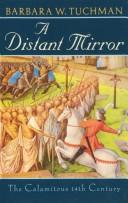
Tuchman's vivid narrative of 14th-century Europe, anchored in the early decades of the war, is the perfect entry point for an intermediate reader — it builds essential context on feudal society, the Black Death, and the war's origins without being a dry textbook.
Seward provides a compact, highly readable single-volume narrative of the full conflict from 1337 to 1453, covering both English and French sides in sequence — read this immediately after Tuchman to lock in the full chronological spine.
England, France, and the Kings Who Fought
IntermediateUnderstand the war through the ambitions, strategies, and failures of its central royal protagonists on both sides of the Channel.
▸ Study plan for this stage
Pace: 6–7 weeks, ~40–50 pages/day. Read Allmand's "Henry V" (approximately 200–250 pages) over 4–5 weeks, then Vale's "Charles VII" (approximately 250–300 pages) over 3–4 weeks, with 1 week for review and synthesis.
- Henry V's military genius and the English strategy of rapid conquest: how Allmand portrays his tactical innovations, use of the longbow, and the psychological impact of English victories like Agincourt
- The legitimacy crisis underlying the war: Henry V's claim to the French throne through his mother and the Lancastrian position versus Valois authority, as explored in Allmand's political analysis
- Charles VII's transformation from the 'King of Bourges' to effective monarch: Vale's account of how Charles rebuilt royal authority, military capability, and territorial control after decades of English dominance
- The role of Joan of Arc and French national consciousness: how Vale contextualizes Joan's intervention within Charles VII's broader strategy and the shift in French morale and military organization
- Economic and logistical dimensions of warfare: both Allmand and Vale examine how sustained military campaigns depended on taxation, supply lines, and the capacity of kingdoms to finance prolonged conflict
- The decline of English dominance: Allmand's Henry V represents English power at its zenith, while Vale's Charles VII shows the systematic erosion of English holdings and the restoration of French sovereignty
- Royal personality and political judgment: how individual decisions by Henry V and Charles VII—their choices of generals, diplomatic moves, and military priorities—shaped the course of the war
- The transition from medieval to early modern warfare and statecraft: both monarchs operated at the intersection of feudal obligation and centralized royal power, reflected in their military organization and governance
- What were Henry V's primary military innovations and strategic objectives, and how did Allmand argue they contributed to English dominance in the early 15th century?
- How did Henry V justify his claim to the French throne, and what was the political significance of this claim within the context of Lancastrian legitimacy?
- What challenges did Charles VII face when he inherited the throne, and how did Vale describe his early years as the 'King of Bourges'?
- How did Joan of Arc's intervention affect Charles VII's military and political position, and what role did Vale assign to her within the broader context of French recovery?
- What were the key differences in how Henry V and Charles VII approached the financing, organization, and logistics of warfare?
- How did the balance of power shift between England and France from Henry V's reign through Charles VII's reign, according to Allmand and Vale?
- Create a timeline comparing Henry V's major military campaigns (as detailed in Allmand) with Charles VII's military recovery (as detailed in Vale), marking key battles, treaties, and turning points on a single chart to visualize the shift in momentum.
- Write a 500-word character analysis of Henry V based on Allmand's portrayal, focusing on his decision-making style, military philosophy, and political judgment—then do the same for Charles VII using Vale—and compare the two.
- Map the territorial holdings of England and France at three points: the beginning of Henry V's reign, the height of English dominance (post-Agincourt), and the end of Charles VII's reign. Use the books' descriptions to annotate why each territory mattered strategically.
- Construct a debate outline: argue the English position for Henry V's claim to the French throne using Allmand's evidence, then argue the French counter-position using Vale's analysis of Valois legitimacy and French recovery.
- Analyze 2–3 specific military decisions by each king (e.g., Henry V's choice to invade Normandy, Charles VII's decision to employ Joan of Arc or reorganize the army) and write a 300-word explanation of the consequences, drawing directly from the texts.
- Create a comparison table of the economic and logistical systems each kingdom used to sustain warfare, based on what Allmand and Vale reveal about taxation, supply, recruitment, and the role of nobility in financing campaigns.
Next up: This stage establishes the personal ambitions and strategic visions of the two monarchs who defined the war's turning point; the next stage will likely examine how their successors, weaker heirs, and fractious nobility allowed the English advantage to crumble and the conflict to evolve into a struggle over dynastic survival and national identity.

Allmand's scholarly yet accessible biography of Henry V is the definitive English-language life of the war's most celebrated commander, grounding Agincourt and the Treaty of Troyes in careful political and military analysis.
Reading the French counterpart to Henry V, Vale's study of Charles VII illuminates how France ultimately recovered and expelled the English — essential for balancing the English-heavy perspective most readers bring to the subject.
Agincourt and the Art of Medieval War
IntermediateDevelop a deep, granular understanding of how medieval armies were raised, supplied, and fought, with Agincourt as the central case study.
▸ Study plan for this stage
Pace: 4–5 weeks, ~25–30 pages/day, with 2–3 days per week dedicated to exercises and synthesis
- The feudal levy system and how medieval armies were conscripted, organized, and mobilized across England and France
- The role of mercenaries, professional soldiers, and standing retinues in supplementing feudal forces
- Logistics and supply chains: how armies were fed, armed, and sustained during long campaigns like those leading to Agincourt
- Fortification design and siege warfare tactics as they evolved through the medieval period
- The transition from mounted knights to mixed-arms tactics combining archers, pikemen, and cavalry
- Armor, weapons technology, and their tactical implications for battlefield formations and strategy
- Command structure, discipline, and the practical challenges of controlling large medieval armies in the field
- Agincourt as a culmination: how English longbowmen and disciplined formations defeated larger French forces through superior tactics and preparation
- How did the feudal system translate into actual military recruitment and organization, and what were its limitations?
- What role did mercenaries and professional soldiers play in medieval armies, and how did they differ from feudal levies?
- How were medieval armies supplied and provisioned during extended campaigns, and what logistical constraints did commanders face?
- What were the key differences between siege warfare and open-field battle tactics in medieval warfare?
- How did the evolution of armor and weapons technology influence battlefield tactics and army composition?
- What made the English victory at Agincourt possible despite being outnumbered, and what does it reveal about medieval military strategy?
- How did medieval commanders maintain discipline and control over large, diverse forces in battle?
- Create a detailed organizational chart showing how a medieval English army (circa 1415) was structured from the king down to individual soldiers, including feudal levies, mercenaries, and household retainers
- Map out a supply chain for a 6-month campaign: calculate provisions needed for 10,000 soldiers, identify sources (local requisition, merchant contracts, royal stores), and identify bottlenecks
- Sketch and annotate three fortification designs from different periods (motte-and-bailey, concentric castle, artillery fort), explaining their defensive advantages and vulnerabilities
- Analyze the Agincourt battlefield: using Nicholson's account, diagram the troop positions, explain why the English chose their ground, and trace how the battle unfolded tactically
- Compare two medieval weapons systems (longbow vs. crossbow, or pike vs. lance) in a detailed table covering cost, training time, effectiveness, and tactical role
- Write a 500-word commander's brief for Henry V before Agincourt, addressing army morale, supply status, enemy intelligence, and tactical options based on Nicholson's evidence
Next up: This stage establishes the military and logistical foundations of the Hundred Years' War, equipping you to understand how individual campaigns and battles fit into the larger political and strategic narrative of the conflict.
This concise, authoritative survey of medieval military theory, technology, and practice gives the reader the broader conceptual vocabulary needed to place Agincourt within the full arc of Hundred Years' War campaigning.
Joan of Arc and the War's Turning
IntermediateUnderstand Joan of Arc as a historical figure — her military role, her trial, and her meaning to France — and grasp how her campaigns shifted the war's momentum decisively toward France.
▸ Study plan for this stage
Pace: 8–10 weeks, ~40–50 pages/day. Start with Castor's biography (approximately 400 pages, 2–3 weeks), then move to Pernoud's retrial analysis (approximately 250 pages, 1–2 weeks), with 2–3 weeks reserved for review, synthesis, and exercises.
- Joan of Arc's early life, religious conviction, and the social/political context that enabled her rise to prominence
- Joan's military campaigns (1429–1431): the relief of Orléans, the Reims coronation, and their strategic impact on French morale and military momentum
- The trial of Joan of Arc: the ecclesiastical court, charges of heresy, her interrogation, and the role of English and Burgundian interests in her conviction
- Joan's execution and immediate aftermath: how her death paradoxically strengthened French resolve and became a symbol of national resistance
- The retrial (1456) and its findings: how the Church reversed her conviction and what this reveals about the original trial's political nature
- Joan's evolving historical legacy: from saint to national symbol to contested historical figure, and her meaning to French identity
- The intersection of military strategy, religious authority, and political power in late medieval France during the war's critical turning point
- What were the key circumstances of Joan of Arc's early life, and how did her religious experiences lead her to seek out the French court?
- How did Joan's military campaigns, particularly the relief of Orléans and the Reims coronation, alter the strategic and psychological balance of the Hundred Years' War?
- What were the main charges against Joan at her 1431 trial, and what role did English and Burgundian political interests play in her prosecution?
- How did Joan's execution affect French military morale and the course of the war in the years immediately following her death?
- What did the 1456 retrial reveal about the original trial's procedures, and why did the Church reverse its verdict?
- How has Joan of Arc's historical reputation and meaning changed over time, and what does this reveal about how societies construct national heroes?
- Timeline exercise: Create a detailed chronology of Joan's life (1412–1431) alongside major military and political events of the Hundred Years' War, noting how her actions intersect with broader strategic shifts.
- Character analysis: Using Castor's biography, write a 2–3 page character study examining Joan's personality, conviction, and decision-making—distinguish between documented facts and later mythologizing.
- Trial document analysis: After reading Pernoud's retrial, annotate key passages from the original trial transcript (excerpts provided in Pernoud) to identify leading questions, procedural irregularities, and political bias.
- Comparative argument essay: Write a 4–5 page essay addressing the question: 'To what extent was Joan of Arc a military strategist versus a symbol of French national will?' Ground your argument in both texts.
- Map-based exercise: Plot Joan's military campaigns on a map of 1429–1431 France, marking Orléans, Reims, and other key locations; annotate with strategic significance and outcomes from Castor's narrative.
- Retrial versus original trial: Create a two-column comparison chart documenting how the 1456 retrial's findings contradicted or reframed the 1431 trial's conclusions, using specific evidence from Pernoud.
Next up: This stage establishes Joan as the pivotal figure who reversed French military fortunes and demonstrates how individual agency, religious authority, and political power intersected at a critical moment—preparing you to examine how France consolidated its advantage in the war's final decades and how the conflict ultimately reshaped both English and French national identity.
Castor's biography is the best modern, evidence-based account of Joan — rigorously grounded in the trial records and contemporary sources, it strips away myth and places her squarely in the military and political crisis of 1429–1431.

Pernoud, the great French Joan scholar, lets the primary sources speak directly through extensive quotation from the trial transcripts — reading her after Castor deepens the documentary texture and the French cultural stakes of Joan's story.
Legacy, Synthesis, and Deeper Scholarship
ExpertSynthesize the war's long-term consequences for English and French state formation, national identity, and the end of the medieval world — and engage with the best modern scholarly interpretation.
▸ Study plan for this stage
Pace: 8–10 weeks, ~40–50 pages/day (Sumption's four volumes total ~1,500–1,800 pages; adjust pace based on density of analysis sections)
- State formation and centralization: how the war accelerated bureaucratic, military, and fiscal institutions in both England and France
- National identity and dynastic legitimacy: the emergence of English and French national consciousness distinct from feudal loyalty
- The decline of chivalry and feudalism: how warfare, economics, and social change undermined medieval military and social structures
- Sumption's interpretive framework: his emphasis on contingency, individual agency, and the war as a series of political crises rather than a predetermined conflict
- Long-term economic and social consequences: depopulation, peasant revolts, the rise of merchant classes, and shifts in land ownership
- The role of Burgundy and other regional powers: how peripheral actors shaped the conflict and its resolution
- Continuity and change: what medieval institutions and practices persisted despite the war's transformative impact
- How did the Hundred Years' War contribute to the development of centralized nation-states in England and France, and what specific institutional changes did Sumption highlight?
- What evidence does Sumption present for the decline of feudalism and chivalry during this period, and how did warfare itself accelerate these changes?
- How did English and French national identities crystallize during the war, and what role did dynastic claims, language, and cultural factors play?
- What is Sumption's argument about contingency and inevitability in the war's course—did the outcome feel predetermined, or were there critical turning points where history could have gone differently?
- How did the war reshape social hierarchies, economic structures, and daily life for peasants, merchants, and the nobility across England and France?
- What was the significance of Burgundy and other regional powers in prolonging or shaping the conflict, according to Sumption?
- Create a comparative timeline of institutional development in England vs. France across the war's span, noting when key bureaucratic, military, and fiscal reforms occurred in each kingdom
- Write a 2,000-word synthesis essay on how Sumption's interpretation of the war's causes and contingencies differs from earlier historiographical traditions (e.g., inevitability narratives)
- Construct a detailed case study of one major turning point (e.g., Crécy, Agincourt, Joan of Arc's campaigns) using Sumption's evidence to argue why that moment was contingent rather than inevitable
- Map the territorial, economic, and demographic changes across the war's phases, using Sumption's data to show how the conflict reshaped the English and French realms
- Debate exercise: argue both sides of whether the war was primarily a dynastic/political conflict or a proto-nationalist struggle, grounding each position in Sumption's evidence
- Annotated reading journal: for each major section, record Sumption's key interpretive claims, the evidence he marshals, and your critical response or questions
Next up: This stage equips you with a sophisticated, evidence-based understanding of how medieval conflict shaped early modern state formation and national consciousness—preparing you to explore specialized scholarship on specific aspects (military technology, gender, economics, or regional studies) or to examine how the war's legacy influenced Renaissance and early modern European politics and culture.
Sumption's multi-volume magnum opus is the definitive modern scholarly history of the conflict; Volume I is the place to begin, and having completed the earlier stages you now have the full context to absorb its extraordinary depth and detail.
Discussion
Keep reading
Paths that share books, cover the same subject, or open a related topic.