Understanding Hegel: Best Books to Read, in Order
This curriculum is designed for expert-level readers who already have a strong philosophical background and want to achieve a deep, rigorous mastery of Hegel—his dialectical method, the Phenomenology of Spirit, his philosophy of history, and his place within German Idealism. The path moves from the sharpest modern interpretive frameworks, through Hegel's own major texts, and finally into the broader idealist tradition and its critical aftermath, ensuring each stage builds the conceptual scaffolding needed for the next.
Interpretive Foundations: Entering the Dialectic
ExpertAcquire the most rigorous contemporary interpretive lenses—logical structure, normative reading, and the 'determinate negation' mechanism—before confronting Hegel's own prose directly.
▸ Study plan for this stage
Pace: 8–10 weeks, ~25–30 pages/day (alternating between Pippin and Gadamer in 2-week blocks to allow conceptual consolidation)
- Hegel's idealism as a theory of rational self-determination and conceptual mediation, not subjective idealism
- The logical structure of the dialectic: thesis-antithesis-synthesis as a misleading schema; instead, determinate negation as the motor of conceptual development
- Normative reading: understanding Hegel's claims as arguments about rationality, normativity, and the conditions for self-conscious agency, not metaphysical speculation
- The role of negation and contradiction as productive forces that drive conceptual progression toward greater determinacy
- Gadamer's hermeneutical approach to Hegel: the dialectic as a method of understanding that dissolves false oppositions and achieves a 'fusion of horizons'
- The distinction between Hegel's Logic and his phenomenological/historical works: how logical categories ground concrete historical and social development
- Self-consciousness and recognition as central to Hegel's system: the intersubjective conditions for rational agency
- Determinate negation as the mechanism by which each conceptual position negates itself and generates its successor with greater specificity
- What does Pippin mean by 'normative reading' of Hegel, and how does it differ from metaphysical or speculative interpretations?
- Explain the concept of determinate negation and why it is more accurate than the traditional thesis-antithesis-synthesis formula.
- How does Hegel's idealism account for objectivity and rational constraint if it is not a form of subjective idealism?
- What role does intersubjective recognition play in Hegel's account of self-consciousness, and why is this central to his system?
- According to Gadamer, how does the dialectic function as a hermeneutical method, and what does it mean to achieve a 'fusion of horizons'?
- How do the categories of Hegel's Logic relate to concrete historical and social phenomena in his phenomenological and political writings?
- Close-read Pippin's introduction and Chapter 1 ('Hegel's Idealism'); annotate his key claims about normative reading and write a one-page summary distinguishing his approach from Hegelian metaphysics.
- Create a detailed diagram or flowchart of determinate negation using a concrete example from Pippin (e.g., from his discussion of consciousness or self-consciousness); show how each stage negates and supersedes the previous one.
- Write a 2–3 page response essay: 'Is Hegel a subjective idealist?' using Pippin's arguments to defend a negative answer, citing specific textual references.
- Read Gadamer's chapter on the dialectic and extract 5–7 key passages; for each, write a gloss explaining how it illustrates the hermeneutical function of negation and the fusion of horizons.
- Comparative exercise: take a single Hegelian concept (e.g., 'freedom,' 'spirit,' 'reason') and trace how Pippin's normative reading and Gadamer's hermeneutical reading each illuminate it differently; write a 2-page analysis.
- Practice dialectical reasoning: choose a contemporary philosophical or political problem, and attempt to work through it using determinate negation as Pippin describes it; document each stage and the necessity of the progression.
Next up: By mastering these interpretive lenses—especially normative reading, determinate negation, and hermeneutical method—you will be equipped to read Hegel's own texts (Phenomenology, Logic, Encyclopaedia) not as obscure metaphysics but as rigorous arguments about rationality, agency, and historical development, allowing you to engage directly with his prose and reconstruct his systematic claims.

Pippin's neo-Kantian reading reframes Hegel's idealism as a theory of conceptual self-determination rather than metaphysical extravagance; reading this first gives you a defensible interpretive anchor for everything that follows.
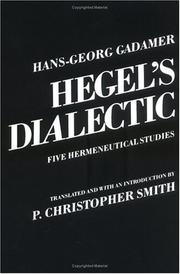
Gadamer's five hermeneutical essays illuminate the internal movement of dialectical negation and the role of language, providing a phenomenological complement to Pippin's logical approach before you tackle the primary texts.
The Phenomenology of Spirit: Core Text and Commentary
ExpertRead and deeply understand the Phenomenology of Spirit—its argument, its stages of consciousness, and its culminating notion of Absolute Knowing—supported by the single best scholarly guide.
▸ Study plan for this stage
Pace: 8–10 weeks, ~40–50 pages/day (Stern guidebook: 2–3 weeks; Hegel's Phenomenology: 4–5 weeks; Findlay's re-examination: 2 weeks)
- Consciousness, self-consciousness, and reason as progressive stages of spirit's self-realization
- The master-slave dialectic and its role in the development of self-consciousness
- Negation, mediation, and the dialectical method as the engine of phenomenological development
- The transition from subjective consciousness to objective spirit and absolute knowing
- Sense-certainty, perception, and understanding as foundational moments of consciousness
- The unhappy consciousness and the struggle toward reconciliation with the absolute
- Absolute knowing as the culmination where spirit comprehends itself fully in and through thought
- What is the phenomenological method, and how does Hegel use it to trace the development of consciousness from sense-certainty to absolute knowing?
- Explain the master-slave dialectic: what does it reveal about the nature of self-consciousness, and why is it a turning point in the Phenomenology?
- How does Hegel's notion of negation and mediation differ from simple logical negation, and what role does it play in the dialectical progression?
- What is the unhappy consciousness, and how does Hegel's treatment of it address the problem of reconciliation between finite and infinite?
- How does Hegel distinguish between subjective consciousness, objective spirit, and absolute knowing, and what is the significance of this progression?
- What does Hegel mean by absolute knowing, and how is it achieved through the phenomenological journey?
- After reading Stern's introduction, create a detailed outline of the major stages of consciousness (sense-certainty, perception, understanding, self-consciousness, reason, spirit, religion, absolute knowing) and note the key transition between each.
- Work through Hegel's analysis of sense-certainty (Phenomenology, Introduction and Chapter I) step-by-step: identify what sense-certainty claims to know, why it fails, and what this failure reveals about the nature of knowledge.
- Write a 2–3 page exegesis of the master-slave dialectic (Phenomenology, Chapter IV.A), explaining how the struggle for recognition generates the need for mediation and why this is crucial to self-consciousness.
- Compare Stern's interpretation of a key passage (e.g., the transition from consciousness to self-consciousness) with Hegel's original text; note where Stern clarifies, where he emphasizes, and where you find tensions.
- Trace the concept of negation through three consecutive stages in the Phenomenology (e.g., from perception to understanding to self-consciousness); document how negation operates differently at each level.
- After reading Findlay's re-examination, write a critical reflection: what does Findlay add to or challenge in Stern's reading, and how does this reshape your understanding of Hegel's project?
Next up: This stage equips you with a comprehensive grasp of Hegel's phenomenological architecture and the dialectical logic underlying it, preparing you to move forward into either the systematic philosophy of the Science of Logic or the applied realizations of spirit in history, politics, and aesthetics.
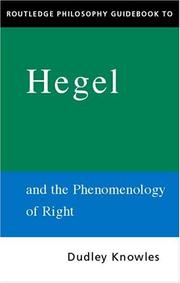
Stern's guide is concise yet philosophically precise; reading it first maps the terrain of the Phenomenology so that Hegel's notoriously dense prose becomes navigable rather than overwhelming.

The indispensable primary text itself—now read with Pippin's logical framework and Stern's map in hand, you can track the dialectical movement from Sense-Certainty to Absolute Knowing with genuine comprehension.
Findlay's classic chapter-by-chapter commentary, written by a philosopher deeply sympathetic to Hegel, is the ideal post-reading companion to consolidate and challenge your interpretation of the Phenomenology.
Logic, Nature, and Spirit: The Systematic Hegel
ExpertGrasp Hegel's mature logical system and his encyclopaedic philosophy of nature and spirit, understanding how the Science of Logic grounds the entire architectonic of his thought.
▸ Study plan for this stage
Pace: 12–14 weeks, ~40–50 pages/day (alternating between Hegel's Science of Logic and McTaggart's commentary in paired sections)
- Being, Nothingness, and Becoming: the opening triad and the movement from abstract indeterminacy to concrete determination
- The Doctrine of Essence: contradiction, ground, and the emergence of determinate reality from abstract being
- The Doctrine of the Concept: universality, particularity, and individuality as the self-determining structure of thought and reality
- Dialectical method: negation of negation, sublation (Aufhebung), and the self-mediation of categories
- The logical system as the self-exposition of absolute thought: how logic is not merely formal but constitutive of reality
- McTaggart's reconstruction: his interpretation of Hegel's triadic structure and his critique of Hegel's system
- The transition from Logic to Nature and Spirit: how the logical categories ground the philosophy of nature and the philosophy of spirit
- Concrete universality: the unity of concept and reality, overcoming the subject-object divide
- How does Hegel move from pure Being through Nothingness to Becoming, and why is this movement necessary rather than arbitrary?
- What is the Doctrine of Essence, and how does it deepen the analysis beyond the Doctrine of Being?
- Explain the structure of the Concept (Begriff): what are universality, particularity, and individuality, and how do they relate to each other?
- What is dialectical negation, and how does the negation of negation differ from simple contradiction?
- How does McTaggart interpret Hegel's triadic method, and where does he diverge from or critique Hegel's own formulations?
- Why does Hegel claim that his Logic is not merely formal but is the self-exposition of absolute thought? What does this mean?
- How does the logical system prepare the transition to the philosophy of Nature and Spirit in Hegel's encyclopaedic system?
- Work through the opening triad (Being-Nothingness-Becoming) step-by-step: write out the logical necessity of each transition, then compare your reconstruction with McTaggart's commentary on these sections.
- Create a detailed outline of the Doctrine of Essence (Reflection, Ground, Existence) showing how each moment emerges from and negates the previous one.
- Diagram the structure of the Concept using Hegel's three moments (universality, particularity, individuality): show how each moment is both distinct and internally related to the others.
- Select three key logical categories (e.g., Being, Essence, Concept) and write a 2–3 page analysis of how each one represents a stage in the self-mediation of thought.
- Compare Hegel's own exposition of a difficult passage (e.g., the transition from Quality to Quantity) with McTaggart's interpretation; identify points of agreement and disagreement, and argue which reading is more coherent.
- Write a philosophical essay (4–5 pages) on the question: 'Is Hegel's Logic a logic of reality or merely a logic of thought?' Use specific textual evidence from both Hegel and McTaggart.
Next up: By mastering the logical architecture of Hegel's system—understanding how categories self-determine and how the Concept achieves concrete universality—you will be prepared to see how these same logical structures manifest in the philosophy of Nature (as externality and mechanism) and the philosophy of Spirit (as subjectivity, objectivity, and absolute spirit), completing the encyclopaedic whole.

The logical backbone of all of Hegel's philosophy—categories of Being, Essence, and the Concept are worked out here; after the Phenomenology, this is the text that reveals why Hegel's dialectic is not merely rhetorical but ontologically necessary.
McTaggart's meticulous commentary on the Logic remains one of the most analytically rigorous engagements with Hegel's categorial derivations, helping you test and deepen your reading of the Science of Logic proposition by proposition.
History, Freedom, and Spirit in the World
ExpertMaster Hegel's philosophy of history and his account of how Geist actualizes freedom through historical institutions, connecting the abstract logic to concrete world-historical development.
▸ Study plan for this stage
Pace: 8–10 weeks, ~40–50 pages/day (alternating between the two texts; expect slower pace due to density and conceptual difficulty)
- Geist (Spirit) as the driving force of world history, progressively realizing itself through human institutions and consciousness
- The cunning of reason (List der Vernunft): how historical actors pursue particular interests while unknowingly advancing Spirit's universal purposes
- Freedom as the telos of history: the gradual actualization of human freedom through political, legal, and ethical institutions
- The state as the concrete embodiment of ethical life (Sittlichkeit) and the highest expression of Spirit in the world
- The dialectical structure of history: how contradictions in earlier stages are resolved in later, more rational forms of social organization
- Right (Recht) as both abstract right, morality, and ethical life—the three moments of Spirit's self-realization in the legal and political sphere
- World-historical peoples and their role in advancing Spirit: how certain nations carry forward the universal development of consciousness
- The rationality of the actual: understanding existing institutions (family, civil society, state) as rational expressions of Spirit, not arbitrary constructs
- How does Hegel explain the relationship between individual human agency and the universal development of Spirit in history? What is the cunning of reason, and how does it operate?
- According to Hegel, what is the ultimate goal or telos of world history, and what evidence does he provide from actual historical development?
- What are the three moments of Right in the Philosophy of Right (abstract right, morality, and ethical life), and how do they represent progressively more concrete realizations of freedom?
- How does Hegel understand the state, and why does he argue it represents the highest actualization of ethical life and Spirit in the world?
- What role do world-historical peoples play in Hegel's philosophy of history, and how does this concept avoid simple Eurocentrism or determinism?
- How does Hegel's account of the family and civil society in the Philosophy of Right prepare the ground for understanding the state as the synthesis of both?
- Create a detailed outline of Hegel's three-stage dialectical structure of history (Oriental, Greco-Roman, Germanic worlds) from the Lectures, mapping how each stage represents a different level of consciousness and freedom.
- Trace a single historical institution (e.g., property rights, marriage law, constitutional government) through Hegel's three moments of Right in the Philosophy of Right, showing how it embodies progressively more rational forms of freedom.
- Write a 2–3 page analytical essay explaining the cunning of reason with a concrete historical example (e.g., how Napoleon's ambitions inadvertently spread rational legal codes across Europe), using Hegel's own language and concepts.
- Construct a comparative table showing how abstract right, morality, and ethical life differ in their conception of freedom, obligation, and the relationship between individual and community, with examples from the Philosophy of Right.
- Analyze a passage from the Lectures on world-historical peoples: identify how Hegel explains why certain nations (rather than others) become vehicles for Spirit's development, and critically examine the implications of this view.
- Develop a dialogue or debate between a critic and a defender of Hegel's claim that 'the rational is actual and the actual is rational,' using specific examples from both texts to ground the discussion.
Next up: This stage grounds Hegel's abstract logical system in concrete historical and political reality, preparing you to engage with how later thinkers (Marx, existentialists, postmodernists) both inherit and critique Hegel's philosophy of history and his vision of Spirit's actualization through institutions.
Hegel's own account of history as the self-realization of freedom—reading this after the Logic shows precisely how the categorial structure of Spirit maps onto the succession of world-historical peoples and states.

The Philosophy of Right is where Hegel's logic of freedom becomes concrete in family, civil society, and the state; it is the essential bridge between the abstract dialectic and the historical-political world.
German Idealism: Context, Critique, and Legacy
ExpertSituate Hegel within the full arc of German Idealism—from Kant and Fichte through Schelling—and engage with the most important critical and post-Hegelian responses that define his lasting philosophical significance.
▸ Study plan for this stage
Pace: 8–10 weeks, ~40–50 pages/day. Beiser's "German Idealism" (~400 pages) over 5–6 weeks; Stewart's "The Hegel Myths and Legends" (~300 pages) over 3–4 weeks. Build in 1–2 weeks for synthesis and review.
- The critical arc from Kant's transcendental idealism through Fichte's ego-centered system to Schelling's philosophy of nature and identity—the intellectual lineage Hegel inherited and transformed
- Hegel's systematic response to the aporias of German Idealism: how his dialectical method and absolute idealism attempted to resolve tensions left by his predecessors
- The distinction between Hegel's actual philosophical positions and the mythologized interpretations that dominated 19th and 20th-century reception (Left Hegelians, Right Hegelians, Marx, Kierkegaard, Nietzsche, etc.)
- How Beiser's historical reconstruction of German Idealism clarifies what Hegel was reacting against and what he was trying to accomplish
- Stewart's deconstruction of major Hegel myths: the teleological reading, the totalizing system, the collapse of subject-object distinction, and the supposed irrationalism of the dialectic
- The legacy problem: how misreadings of Hegel shaped 20th-century philosophy, theology, and politics, and why getting Hegel right matters for contemporary thought
- The relationship between Hegel's logic, metaphysics, and phenomenology as an integrated system, and how critics have fractured or weaponized these components
- How German Idealism as a whole—and Hegel's place within it—represents a distinctive response to Enlightenment rationalism and Kantian dualism
- What were the central problems Kant identified in metaphysics, and how did Fichte and Schelling each attempt to solve them? How did Hegel's approach differ?
- Explain the progression from Kant's thing-in-itself to Fichte's absolute ego to Schelling's absolute identity. What was Hegel trying to accomplish by moving beyond this progression?
- What is the distinction between Hegel's actual system (as Beiser reconstructs it) and the mythologized versions that dominated later reception? Give at least three examples of major myths Stewart identifies.
- How did the Left Hegelians and Right Hegelians read Hegel differently, and what were the political and theological stakes of these competing interpretations?
- According to Stewart, what are the main distortions in the standard account of Hegel's dialectic, and what does a more accurate reading reveal about his method?
- Why does Beiser argue that understanding German Idealism as a whole is essential to understanding Hegel? What would be lost if we read Hegel in isolation?
- Create a timeline chart mapping the major works and philosophical positions of Kant, Fichte, Schelling, and Hegel. For each figure, note the central problem they addressed and their proposed solution. Use this to trace how each thinker built on or departed from predecessors.
- Write a 2–3 page comparative analysis of one key concept (e.g., the absolute, freedom, the subject-object relation) as it appears in Kant, Fichte, Schelling, and Hegel. Show how the concept evolved and what Hegel added or transformed.
- Select one major Hegel myth that Stewart discusses (e.g., 'Hegel is a totalitarian systematizer' or 'the dialectic is irrational'). Write a 2–3 page response that uses both Beiser and Stewart to explain what the myth gets wrong and what the more accurate reading should be.
- Construct a detailed outline of Hegel's systematic response to German Idealism, using Beiser's analysis. Identify at least 3–4 specific aporias or tensions in Fichte or Schelling that Hegel's system was designed to resolve.
- Read a secondary source critique of Hegel (e.g., Kierkegaard, Marx, Nietzsche, or a 20th-century critic). Using Stewart's framework, identify which myths or distortions the critic relies on, and explain how a more accurate Hegelian reading would respond.
- Write a reflective essay (3–4 pages) on why the history of Hegel reception matters philosophically. What is at stake in getting Hegel right? How have misreadings shaped modern thought, and what would change if we adopted Stewart's corrected reading?
Next up: This stage establishes Hegel as a systematic thinker responding to a specific historical problem (the aporias of German Idealism) and corrects the distortions that have obscured his actual positions, preparing you to engage directly with Hegel's own texts with clearer eyes and a richer sense of what he was trying to accomplish.
Beiser's comprehensive historical study traces the development from Kant to Hegel with unmatched scholarly precision, allowing you to see exactly what problems Hegel inherited and how his solutions compare to those of Fichte and Schelling.

This collection of critical essays systematically dismantles the most persistent misreadings of Hegel—from totalitarianism charges to the 'thesis-antithesis-synthesis' caricature—leaving you with a fully defensible, myth-free mastery of the philosopher.
Discussion
Keep reading
Paths that share books, cover the same subject, or open a related topic.