Understanding Albert Camus: Best Books, in Order
This curriculum guides a beginner from zero context about Camus and existentialism all the way to a deep understanding of his philosophy of the absurd and rebellion. Each stage builds essential vocabulary and emotional intuition before the next, ensuring that when you arrive at Camus's own dense philosophical prose, you are fully equipped to engage with it on its own terms.
Foundations: Who Was Camus and Why Does He Matter?
BeginnerGain biographical context, a feel for Camus's world, and a first encounter with his literary voice before tackling his philosophy directly.
▸ Study plan for this stage
Pace: 4–5 weeks, ~40–50 pages/day (Todd biography: 2–3 weeks; Coles Notes: 1–2 weeks)
- Camus's life as a lens for understanding his work: poverty in Algeria, the absurd as lived experience, not just theory
- The historical and cultural context of mid-20th century France and the Mediterranean world that shaped his thinking
- Camus's literary voice and style: sparse prose, emotional restraint, and the use of first-person narration to convey alienation
- The concept of the absurd as presented in *The Stranger*: the disconnect between human desire for meaning and an indifferent universe
- Plague as metaphor and realism: how *The Plague* explores collective suffering, solidarity, and the search for meaning in crisis
- Camus's humanism and ethical concerns: why he matters beyond literature—his stance on justice, rebellion, and human dignity
- The relationship between Camus's biography and his fictional characters: how personal experience informs Meursault and Rieux
- How did Camus's childhood and early life in Algeria shape his worldview and literary themes?
- What is the absurd, and how does Meursault's behavior in *The Stranger* embody Camus's understanding of it?
- How does *The Plague* differ from *The Stranger* in its approach to meaning-making and human connection?
- What role does Camus's humanism play in his work, and how does it distinguish him from other existentialist thinkers?
- How does Camus's sparse, detached narrative style serve his philosophical concerns about alienation and indifference?
- Why is Camus considered important to 20th-century thought, and what makes him relevant today?
- Create a timeline of Camus's life (using Todd's biography) alongside major historical events (WWII, Algerian War, Cold War) to see how his personal and political worlds intersected
- Write a 2–3 page character sketch of young Camus based on Todd's biography, focusing on formative moments that appear to influence his later philosophy
- Read a passage from *The Stranger* (e.g., Meursault's reaction to his mother's death or the trial scene) and annotate it for tone, emotional distance, and what it reveals about the absurd
- Compare two scenes from *The Stranger* and *The Plague* (e.g., a moment of crisis in each) and note how Camus's narrative approach differs and what that suggests about his evolving thought
- Write a short reflection (1–2 pages) connecting one biographical detail from Todd's account to a scene or character choice in either novel
- Create a visual map or concept diagram showing how Camus's lived experience of poverty, displacement, and moral questioning connects to the themes of alienation and absurdity in his fiction
Next up: This stage establishes who Camus was as a person and introduces his literary voice and the concept of the absurd through narrative, preparing you to engage directly with his philosophical essays and to understand the intellectual debates (especially with Sartre) that will define the next stage.
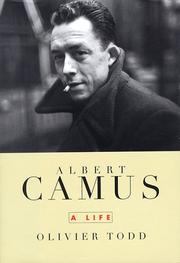
The definitive biography of Camus — reading it first grounds every subsequent text in the real man, his Algerian childhood, his politics, and his relationships, making his philosophy feel lived rather than abstract.
Camus's most famous novel is deceptively simple and the ideal first primary text: Meursault's detachment and the trial's absurdity introduce the absurd experientially, through story, before any philosophical vocabulary is needed.
The Absurd: Camus's Core Philosophy
BeginnerUnderstand what 'the absurd' actually means philosophically, and see how The Stranger was a deliberate literary illustration of it.
▸ Study plan for this stage
Pace: 4–5 weeks, ~25–30 pages/day. Start with "The Myth of Sisyphus" (Week 1–3, ~90 pages), then "At the Existentialist Café" (Week 4–5, ~80 pages focusing on Camus chapters).
- The absurd as the collision between human desire for meaning and a meaningless universe
- Why suicide is the central philosophical problem according to Camus
- The three responses to the absurd: suicide, philosophical escape, and Camus's 'revolt'
- How Camus distinguishes his philosophy from existentialism (freedom vs. essence)
- The role of the body and sensory experience in embracing the absurd
- Sisyphus as the archetypal absurd hero who finds meaning in the struggle itself
- How The Stranger embodies absurdist philosophy through Meursault's detachment and indifference
- The relationship between the absurd and freedom—why accepting meaninglessness is liberating
- What does Camus mean by 'the absurd,' and why does he consider it the fundamental human condition?
- Why does Camus argue that suicide is not the logical response to the absurd, and what does he propose instead?
- How does Camus's philosophy of the absurd differ from existentialism, particularly regarding human freedom and essence?
- What is the significance of the Sisyphus myth in Camus's philosophy, and what does he mean by 'one must imagine Sisyphus happy'?
- How does Meursault's character in The Stranger illustrate the absurdist worldview described in 'The Myth of Sisyphus'?
- What role does the physical world and sensory experience play in Camus's response to the absurd?
- Write a 1-page personal reflection: Identify a moment in your own life where you felt the collision between wanting life to have meaning and sensing it might not. How did you respond?
- Create a visual map or diagram showing the three responses to the absurd (suicide, philosophical escape, revolt) and annotate each with a quote from 'The Myth of Sisyphus.'
- Reread the final chapter of 'The Myth of Sisyphus' and write a 500-word essay on what Camus means by 'one must imagine Sisyphus happy'—what is he really asking us to do?
- Analyze a scene from The Stranger (e.g., Meursault at his mother's funeral or during his trial) and explain how it demonstrates absurdist philosophy. How does his indifference reflect Camus's ideas?
- Debate exercise: Argue both sides—Is Camus right that existentialists escape the absurd through false freedom? Use specific passages from 'At the Existentialist Café' to support your position.
- Create a character study: Compare Meursault's response to the absurd with how Camus describes the absurd hero in his essays. Where do they align, and where do they diverge?
Next up: This stage establishes the philosophical foundation and literary embodiment of the absurd, preparing you to explore how Camus applies these ideas to broader themes like rebellion, freedom, and morality in his later works and essays.
This is Camus's foundational philosophical essay and the direct companion to The Stranger — reading it immediately after the novel reveals the ideas that were embedded in Meursault's story and defines the absurd with full clarity.
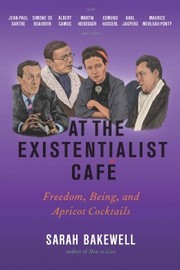
A brilliantly readable narrative history of existentialism and the absurd that places Camus alongside Sartre, de Beauvoir, and Heidegger, giving a beginner the intellectual map needed to understand what makes Camus's position distinctive.
Camus in Full: Fiction as Philosophy
IntermediateExperience how Camus deepened and complicated his ideas across his major literary works, moving from the absurd toward themes of guilt, solidarity, and moral ambiguity.
▸ Study plan for this stage
Pace: 8–10 weeks, ~40–50 pages/day (accounting for essay density and philosophical complexity)
- The Plague as collective absurdism: how individual absurd consciousness confronts shared suffering and the limits of rational response
- The Fall's unreliable narrator and moral complicity: Clamence's confession as a mirror for reader self-examination and the impossibility of innocence
- Guilt and responsibility: the shift from accepting the absurd to grappling with ethical obligation and collective accountability
- Solidarity and human connection: how Camus moves beyond isolation toward interdependence without abandoning absurdist insights
- Moral ambiguity and the absurd hero: the tension between individual freedom and social duty in Camus's mature philosophy
- Exile and estrangement: the recurring motif of displacement (literal and psychological) across the short stories in Exile and the Kingdom
- The essay as philosophical argument: how Camus uses essays to clarify, defend, and complicate his literary themes
- How does The Plague transform the absurd from an individual philosophical problem into a collective human condition, and what does Rieux's response suggest about Camus's evolving view of meaning?
- What is Clamence's purpose in The Fall, and how does his confession implicate the reader in his moral judgment? What does this reveal about Camus's view of guilt and innocence?
- Trace the theme of solidarity across The Plague and The Fall: where does it emerge, where does it fail, and what does this tension suggest about human connection?
- How do the short stories in Exile and the Kingdom explore different facets of estrangement, and what unifying philosophical question do they address?
- What is the relationship between Camus's essays and his fiction in this collection? How do the essays clarify, defend, or complicate the ideas presented in the novels?
- How does Camus's treatment of moral responsibility evolve across these works, and what does this evolution suggest about his mature philosophy of the absurd?
- Read The Plague in one continuous arc (2–3 weeks), then write a 2–3 page reflection on how Rieux's plague journal differs from a traditional philosophical essay—what does narrative form allow Camus to explore that argument alone cannot?
- Create a character map of The Plague tracking each character's response to absurdity (Rieux, Tarrou, Grand, Cottard, Paneloux). Identify which response resonates most with you and why, then defend it against one other character's approach in a 1-page dialogue.
- Read The Fall as a dramatic monologue: annotate moments where Clamence seems to be addressing you directly, and identify 3–4 instances where his confession makes you uncomfortable. Write a brief analysis of what makes these moments effective.
- Select 3 stories from Exile and the Kingdom and create a visual or written comparison chart showing how each story depicts a different form of exile or estrangement. What philosophical question unites them?
- Choose one essay from the Selected Essays section and one scene from The Plague or The Fall that address the same theme (e.g., guilt, solidarity, freedom). Write a 2–3 page comparative analysis showing how Camus's philosophical argument and narrative illustration reinforce or complicate each other.
- Write a 1-page 'confession' in the style of Clamence responding to one of the major events in The Plague. How does adopting his voice change your understanding of moral complicity?
Next up: This stage anchors Camus's mature philosophy in concrete narrative and ethical dilemmas, preparing you to examine his final works and the philosophical controversies (particularly with Sartre) that shaped his later thought on freedom, rebellion, and human solidarity.
Camus's richest novel expands beyond the lone individual of The Stranger to explore collective suffering and solidarity — essential for understanding how his thinking evolved toward rebellion and human community.
Rebellion: Camus's Political and Ethical Philosophy
IntermediateGrasp Camus's philosophy of rebellion — his answer to nihilism and totalitarianism — and understand why it made him one of the 20th century's most important moral thinkers.
▸ Study plan for this stage
Pace: 8–10 weeks, ~40–50 pages/day (accounting for philosophical density and re-reading passages)
- Rebellion as a metaphysical and moral stance: saying 'no' to absurdity while maintaining human dignity without appeal to transcendent values
- The distinction between revolt and revolution: why Camus rejects totalitarian ideologies that justify present suffering for future utopias
- The absurd hero and the limits of reason: how Camus moves beyond Sisyphus to propose active, conscious resistance
- Solidarity and limits: Camus's ethics of rebellion rooted in shared human condition rather than abstract ideology
- The Sartre-Camus rupture: how existentialism's radical freedom and Marxist commitment diverge from Camus's philosophy of measured rebellion
- Historical rebellion vs. philosophical rebellion: examining real revolts (French Revolution, Russian Revolution) through Camus's moral lens
- The rebel's paradox: maintaining moral clarity while acknowledging complicity and the impossibility of pure action
- Why Camus matters as a moral thinker: his challenge to both nihilism and totalitarianism in the 20th century
- What does Camus mean by 'rebellion' and how does it differ from both passive acceptance of the absurd and violent revolution?
- Why does Camus reject historical materialism and Marxist ideology, and what does he propose instead as a basis for ethical action?
- How does Camus's philosophy of rebellion address the problem of nihilism—the fear that nothing matters?
- What is the significance of the Sartre-Camus split, and why does Camus believe Sartre's existentialism leads to totalitarian justifications?
- How does Camus ground ethics and solidarity without appealing to God, reason, or historical progress?
- What role do limits play in Camus's vision of rebellion, and why does he insist that the rebel must refuse to become a tyrant?
- Close-read and annotate three key passages from 'The Rebel' (e.g., the opening on suicide, the section on metaphysical rebellion, the conclusion on solidarity) to identify Camus's argumentative moves
- Create a comparative chart mapping Camus's critique of specific historical revolts (French Revolution, Russian Revolution, etc.) from 'The Rebel'—note what he praises and what he condemns morally
- Write a 2–3 page dialogue between Camus and Sartre debating freedom, commitment, and historical responsibility, using specific arguments from both 'The Rebel' and 'Camus and Sartre'
- Analyze the Sartre-Camus rupture timeline in 'Camus and Sartre': identify the key philosophical disagreements and trace how personal and political tensions reinforced each other
- Apply Camus's philosophy of rebellion to a contemporary political or ethical crisis (e.g., civil disobedience, climate activism, authoritarianism)—write a 2–3 page essay showing how his framework illuminates the problem
- Create a visual concept map showing how rebellion, the absurd, solidarity, and limits interconnect in Camus's thought—use evidence from both texts to justify the connections
Next up: This stage establishes Camus as a major moral and political philosopher whose vision of rebellion without ideology prepares you to examine how his ideas evolved in his final works and how they speak to contemporary debates about freedom, justice, and resistance.

Camus's most ambitious philosophical work traces the history of revolt from metaphysical rebellion to political revolution — it is the natural culmination of everything built so far and must be read with the prior stages as scaffolding.

Chronicles the famous intellectual break between Camus and Sartre over The Rebel, clarifying exactly what was at stake in Camus's rejection of revolutionary violence and cementing your understanding of his unique moral position.
Deep Mastery: Camus Scholarship and Legacy
ExpertSynthesize everything through rigorous secondary scholarship, situate Camus in the full sweep of Western philosophy, and understand his enduring relevance.
▸ Study plan for this stage
Pace: 8–10 weeks, ~40–50 pages/day (with 2–3 days/week for reflection and synthesis work)
- Camus's philosophical method: how absurdism emerges from phenomenological observation and existential critique
- The relationship between Camus and existentialism: why he rejected Sartre's framework and what he offered instead
- Absurdism as a coherent philosophical system: the absurd, revolt, freedom, and passion as interconnected concepts
- Camus's engagement with Western philosophy: his dialogue with Nietzsche, Dostoevsky, Sisyphus, and the Greek tradition
- The evolution of Camus's thought across his works: how *The Stranger*, *The Plague*, *The Rebel*, and *The First Man* form a philosophical trajectory
- Camus's political philosophy: the ethics of revolt, limits on violence, and the critique of totalitarianism
- The concept of Mediterranean humanism: Camus's alternative to both nihilism and systematic ideology
- Camus's enduring relevance: how his philosophy addresses contemporary crises of meaning, justice, and human dignity
- How does Sprintzen argue that Camus's absurdism differs fundamentally from Sartrean existentialism, and what is at stake in this distinction?
- What does Striker mean by 'beyond the first man,' and how does this concept reframe our understanding of Camus's final, unfinished novel and his philosophical legacy?
- How does Camus's critique of ideology and totalitarianism in *The Rebel* connect to his earlier explorations of the absurd in *The Stranger* and *The Myth of Sisyphus*?
- What is the relationship between freedom and limits in Camus's philosophy, and how does this address the problem of nihilism?
- How does Camus's engagement with classical and Mediterranean thought (Sisyphus, Greek tragedy, the sun) constitute a philosophical alternative to modern European systems?
- What is the philosophical significance of Camus's concept of 'revolt' as distinct from both resignation and revolutionary violence?
- Create a detailed timeline mapping Camus's intellectual evolution across his major works, noting how each book deepens or revises his philosophical positions. Use Sprintzen's analysis to identify the turning points.
- Write a comparative essay (3,000–4,000 words) on Camus vs. Sartre: use Sprintzen's account of their philosophical disagreement to argue which thinker better addresses the problem of meaning in a godless world.
- Construct a philosophical diagram showing how the concepts of the absurd, revolt, freedom, passion, and limits interconnect in Camus's system. Annotate with specific passages from both Sprintzen and Striker.
- Read *The First Man* (or key excerpts) alongside Striker's analysis. Write a reflective essay on how the autobiographical/fragmentary nature of this work embodies or challenges Camus's philosophical claims about human dignity and meaning.
- Develop a 'Camus for today' project: identify 2–3 contemporary crises (political violence, climate despair, technological alienation) and write position papers showing how Camus's philosophy of limits and revolt offers a distinct response compared to other modern thinkers.
- Conduct a close reading seminar (written or recorded) on one major passage from Sprintzen and one from Striker, explaining how each scholar interprets Camus's core insight and where they might diverge in emphasis.
Next up: This stage completes the intellectual architecture of Camus's thought and positions him within the broader Western philosophical tradition, preparing you to either teach Camus to others, engage in original scholarship on his work, or apply his philosophy to contemporary problems with full historical and theoretical grounding.
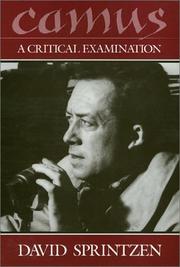
A systematic philosophical analysis of Camus's entire body of work that ties together the absurd, rebellion, and his ethics into a coherent whole — ideal for a reader who has now read the primary texts and wants rigorous synthesis.

Camus's unfinished autobiographical novel, found in the wreckage of his fatal car accident, is a deeply moving return to his Algerian roots — reading it last gives the entire curriculum a profoundly human and elegiac conclusion.
Discussion
Keep reading
Paths that share books, cover the same subject, or open a related topic.