The Habsburgs: Best Books to Read, in Order
This curriculum moves from a sweeping narrative overview of the entire dynasty through focused political and cultural deep-dives, and finally into specialist scholarship on the dynasty's ideology, decline, and legacy. Because the learner starts at an intermediate level, the path skips introductory European history primers and opens directly with the best single-volume narrative, then layers on thematic and period-specific works that reward the context already built.
The Grand Narrative
IntermediateGain a confident, chronological command of the entire Habsburg story — from the medieval rise through the dissolution of the empire in 1918 — and absorb the key dynasties, marriages, and turning points that all later reading assumes.
▸ Study plan for this stage
Pace: 8–10 weeks, ~40–50 pages/day (approximately 350 pages for Rady, then 400+ pages for Morton)
- The medieval origins of the Habsburgs and their rise to prominence through strategic marriage and territorial acquisition (1273–1500)
- The transformation of the Habsburgs into a multi-ethnic empire spanning Europe, the Mediterranean, and eventually the Americas (1500–1700)
- The shift from Spanish to Austrian dominance and the consolidation of the Austro-Hungarian dual monarchy (1700–1867)
- The role of key figures—Rudolf II, Maria Theresa, Joseph II, Franz Joseph—in shaping imperial policy and reform
- The 19th-century tensions between nationalist movements and imperial unity, culminating in the 1867 Compromise
- The Belle Époque stability and cultural flowering of Vienna in the 1880s–1890s as a prelude to imperial decline
- The structural weaknesses and ethnic rivalries that made the empire vulnerable to the crises of 1914–1918
- The personal and political dimensions of the last Habsburg court under Franz Joseph and the young Franz Ferdinand
- How did the Habsburgs rise from a minor Swiss dynasty to become rulers of a continental empire, and what role did marriage strategy play in this ascent?
- What were the major turning points in Habsburg territorial expansion and consolidation between 1500 and 1700, and how did they reshape European geopolitics?
- How did the 1867 Compromise between Austria and Hungary attempt to solve the empire's internal tensions, and why did it ultimately prove insufficient?
- What was the cultural and political character of Vienna in the 1880s–1890s, and how did it mask deeper structural problems in the empire?
- Who were the key reformers and reactionaries within the Habsburg court, and how did their conflicts shape imperial policy across three centuries?
- How did nationalist movements within the empire—among Czechs, Poles, Romanians, South Slavs, and others—challenge Habsburg unity in the decades before 1914?
- Create a timeline of major Habsburg rulers and their key achievements/failures from 1273 to 1918; mark turning points in territorial expansion, reform, and decline
- Draw a family tree of the main Habsburg lines (Spanish, Austrian, Tuscan) showing how marriages created and maintained the empire's territorial holdings
- Write a one-page summary of each major era: medieval rise, Spanish hegemony, Austrian consolidation, Austro-Hungarian compromise, Belle Époque, and pre-war decline
- Compare two Habsburg rulers (e.g., Maria Theresa vs. Joseph II, or Franz Joseph vs. his predecessors) in terms of their reform agendas and their success or failure
- Map the ethnic and linguistic composition of the empire at three key dates (1500, 1800, 1900), noting which regions were most restive and why
- Create a 'character sketch' of Vienna in the 1880s–1890s based on Morton's account: what made it brilliant, and what tensions lurked beneath the surface?
Next up: This stage equips you with the chronological backbone and dynastic context necessary to understand the empire's internal contradictions and the personal, political, and ideological forces that would drive it toward collapse—preparing you to examine the specific crises, personalities, and decisions of the final decades in deeper detail.

The single best modern one-volume history of the dynasty, written by a leading scholar yet accessible to a general reader. Read this first to build the chronological skeleton everything else will hang on.
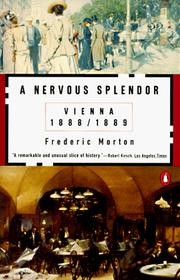
A vivid narrative reconstruction of the 39 hours surrounding Crown Prince Rudolf's suicide at Mayerling in 1889. Reading it second grounds the abstract dynastic story in human drama and introduces the twilight mood of the late empire.
The Spanish Branch & the Age of Empire
IntermediateUnderstand the Spanish Habsburgs — Charles V, Philip II, and their successors — who turned the dynasty into a global empire, and grasp how the two branches of the family diverged in culture and ambition.
▸ Study plan for this stage
Pace: 8–10 weeks, ~40–50 pages/day (accounting for Parker's dense analytical prose and the need to absorb complex political/military narratives)
- Charles V's dual inheritance and the creation of a truly global Habsburg empire spanning Europe, the Americas, and Asia
- The administrative and ideological challenges of governing a fragmented, multilingual empire without modern communication
- Philip II's consolidation of Spanish power and his vision of Catholic monarchy as a unifying force across the empire
- The divergence between the Spanish and Austrian branches: Spanish focus on Atlantic/Mediterranean expansion vs. Austrian focus on Central European defense
- The role of religious conflict (Reformation, Counter-Reformation) in shaping Habsburg foreign policy and dynastic ambition
- The economic foundations of Spanish Habsburg power: silver from the Americas, trade networks, and fiscal crisis
- Succession crises and the problem of inheritance in a composite monarchy
- How personal character and decision-making (Charles V's abdication, Philip II's micromanagement) shaped imperial outcomes
- What were the geographic and political components of Charles V's inheritance, and how did he attempt to govern such a fragmented realm?
- How did Philip II's approach to empire differ from his father Charles V's, particularly regarding religious policy and centralization?
- What role did the Spanish conquest of the Americas play in funding and sustaining Habsburg power in Europe?
- Why did the Spanish and Austrian branches of the Habsburgs develop different strategic priorities, and what were the consequences?
- How did religious conflict in the 16th century (Reformation, Counter-Reformation, wars of religion) intersect with Habsburg dynastic ambitions?
- What were the major administrative innovations or failures that characterized Habsburg rule under Charles V and Philip II?
- Create a detailed map or chart showing Charles V's territorial inheritance across Europe and the Americas, color-coded by region and noting the administrative challenges of each
- Write a comparative character sketch (2–3 pages) of Charles V vs. Philip II, analyzing how their personalities and values shaped their approach to governance and empire
- Trace the flow of American silver into Habsburg coffers: research and document (using Parker's analysis) how this wealth was spent on wars, administration, and cultural projects
- Construct a timeline of major religious conflicts during the Spanish Habsburg period (1516–1598), noting how each shaped Habsburg foreign policy decisions
- Analyze a primary source document (letter, decree, or report) from either Charles V or Philip II, identifying the writer's assumptions about power, legitimacy, and religious authority
- Debate or write a position paper: Was the divergence of the Spanish and Austrian branches inevitable given geography and inheritance, or was it the result of deliberate policy choices?
Next up: This stage establishes the Spanish Habsburgs as the architects of early modern global empire and reveals the structural tensions—religious, administrative, and financial—that would define the dynasty's trajectory, preparing you to examine how these tensions unraveled in the 17th century and how the Austrian branch eventually eclipsed Spanish power.

Parker's magisterial biography of Charles V is the definitive English-language account of the dynasty at its greatest reach. Start here to see the empire at its peak before studying its fractures.

A natural follow-on from Parker's Charles V, this reassesses Philip II with fresh archival evidence, showing how the Spanish branch consolidated and then began to overextend the inheritance.
The Austrian Core: Baroque Power & Survival
IntermediateExplore the Austrian Habsburgs from the Thirty Years' War through Maria Theresa and Joseph II — the dynasty's reinvention as a Central European Catholic power and Enlightenment reforming state.
▸ Study plan for this stage
Pace: 4–5 weeks, ~40–50 pages/day (Wedgwood's narrative is dense but gripping; allow time for reflection on religious/political implications)
- The Thirty Years' War as a turning point for Habsburg power: religious conflict masking dynastic and territorial competition
- The role of the Austrian Habsburgs within the broader Holy Roman Empire and their struggle to maintain authority
- The transformation of warfare, diplomacy, and statecraft during the war—how the Habsburgs adapted and survived
- The Peace of Westphalia (1648) as a watershed: territorial losses, the rise of France, and the Habsburgs' strategic reorientation toward Central Europe
- The intersection of religious identity (Catholicism) and political survival in shaping Habsburg policy and legitimacy
- Key Habsburg figures (Ferdinand II, Ferdinand III, Wallenstein) and their decision-making under existential pressure
- The economic and social devastation of the war and its long-term impact on Habsburg territories and recovery strategies
- Why did the Thirty Years' War begin as a religious conflict, and how did it become primarily a dynastic and territorial struggle?
- What were the main territorial losses the Habsburgs suffered by 1648, and how did the Peace of Westphalia reshape their strategic position?
- How did the Habsburgs' reliance on figures like Wallenstein reflect both the strengths and vulnerabilities of their military and political system?
- What role did Catholicism play in Habsburg legitimacy and policy during the war, and how did this shape their post-war recovery?
- How did the Thirty Years' War force the Austrian Habsburgs to reimagine themselves as a Central European power rather than a universal Catholic empire?
- What were the key diplomatic and military innovations the Habsburgs employed to survive the war, and which proved most effective?
- Create a timeline of major Habsburg military defeats and victories in Wedgwood's account; annotate each with the territorial or political consequence.
- Map the territorial changes for the Austrian Habsburgs between 1618 and 1648 using Wedgwood's descriptions; compare your map to a historical atlas to verify accuracy.
- Write a 2–3 page character study of either Ferdinand II or Ferdinand III based on Wedgwood's portrayal: what were their core strategic assumptions, and how did these change over the war?
- Analyze Wallenstein's role in the war: was he a stabilizing force or a destabilizing wildcard for Habsburg power? Support your argument with specific episodes from Wedgwood.
- Create a comparative chart of the major European powers' positions before (1618) and after (1648) the war; identify which powers gained and which lost, and why.
- Write a short essay (3–4 pages) on the Peace of Westphalia: what did the Habsburgs gain and lose, and how did this settlement force them to rethink their role in Europe?
Next up: By understanding how the Thirty Years' War shattered the Habsburgs' universal Catholic ambitions and forced them to consolidate power in Central Europe, you are prepared to examine how Maria Theresa and Joseph II rebuilt and modernized the dynasty as an Enlightenment reforming state within this new, more limited but more defensible territorial and ideological framework.

The classic narrative of the war that nearly destroyed the Austrian Habsburgs and reshaped Europe. Its vivid prose makes the religious and dynastic stakes viscerally clear before moving to the dynasty's recovery.
The Nineteenth-Century Empire: Nationalism & Twilight
ExpertUnderstand how the Habsburgs navigated liberalism, nationalism, and the rise of Germany and Italy in the 1800s, and why the multi-ethnic empire both endured and ultimately collapsed.
▸ Study plan for this stage
Pace: 8–10 weeks, ~40–50 pages/day (mix of fiction and academic analysis)
- The tension between imperial centralization and ethnic/nationalist fragmentation in the Habsburg realm
- How liberalism and nationalism challenged the traditional legitimacy of dynastic rule
- The role of the Austro-Hungarian Compromise (1867) in restructuring the empire and its limitations
- Germany's rise under Bismarck and its displacement of Habsburg influence in Central Europe
- The competing nationalisms of Poles, Czechs, Hungarians, South Slavs, and Romanians within a single state
- Military decline and the Austro-Hungarian army's role as a unifying but increasingly strained institution
- Why the empire survived the 1848 revolutions but could not survive World War I and its aftermath
- How does Roth's *Radetzky March* illustrate the personal and institutional decay of Habsburg authority through the Trotta family across three generations?
- What was the Austro-Hungarian Compromise of 1867, and how did it attempt to resolve the tension between centralism and nationalism?
- Why did the rise of German nationalism under Bismarck fundamentally alter the Habsburg Empire's position in European affairs?
- How did competing nationalisms (Hungarian, Czech, Polish, South Slav) within the empire create structural contradictions that the Compromise could not resolve?
- What role did the military, particularly the officer corps, play in holding the empire together, and why did this ultimately fail?
- According to Crankshaw, what were the key internal and external factors that made the empire's collapse inevitable after 1914?
- Read *Radetzky March* and track the decline of the Trotta family's authority and prestige across the three time periods; write a 2–3 page analysis of how Roth uses personal decline to mirror institutional decline
- Create a timeline of key nationalist movements and uprisings within the empire (1848, 1867, 1890s–1900s); annotate with which ethnic groups were involved and what they demanded
- Map the ethnic composition of the empire before and after 1867; identify which regions were most volatile and why (use Judson's demographic and political analysis)
- Compare Judson's academic analysis of the Compromise with Roth's fictional portrayal of its effects on military officers and bureaucrats; write a 3–4 page synthesis
- Create a comparative chart: Habsburg vs. Prussian/German strategies for managing diversity and centralization; explain why the German model ultimately prevailed
- Read Crankshaw's account of the final decades and identify 3–4 critical decision points (1900–1918) where different choices might have altered the outcome; argue for one counterfactual scenario
Next up: This stage establishes how internal contradictions and external pressures destroyed the old dynastic order, preparing you to examine the successor states, competing ideologies (fascism, communism, democracy), and the regional conflicts that defined Central Europe in the twentieth century.
This great novel — written by a subject of the empire — captures the melancholy of Habsburg decline better than any history book. Reading it here, after the factual grounding, lets its themes resonate fully.
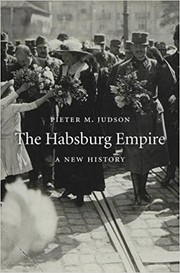
A revisionist scholarly masterwork arguing the empire was more cohesive and modern than its critics claimed. It challenges everything the earlier books implied about inevitable collapse and is best appreciated with that prior context.
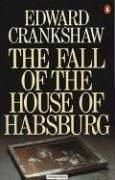
A sweeping, elegantly written account of the empire's final century, from 1848 to 1918. Pairs with Judson to give both the traditional tragic narrative and the revisionist corrective before the curriculum closes.
Legacy, Memory & Deep Synthesis
ExpertReflect on what the Habsburgs meant culturally and intellectually — their patronage of art and music, the world they created in Vienna, and how their memory has shaped Central Europe to the present day.
▸ Study plan for this stage
Pace: 4–5 weeks, ~40–50 pages/day (approximately 400–500 pages total). Allow time for reflection and note-taking on cultural/intellectual themes.
- Vienna as a cultural and intellectual capital: the city as a living embodiment of Habsburg patronage and cosmopolitan values
- Zweig's personal witness to the Habsburg world: how memoir functions as historical testimony and emotional archive
- The role of art, music, and literature in Habsburg identity: Zweig's encounters with artists, composers, and intellectuals
- The concept of 'the world of yesterday': nostalgia, loss, and the psychological impact of empire's collapse
- Habsburg cultural synthesis: the blending of German, Jewish, Slavic, and other traditions in Vienna's intellectual life
- Memory and forgetting: how Zweig constructs meaning from a vanished world and what gets preserved or lost
- The tension between individual creativity and imperial structures: how artists navigated Habsburg patronage and censorship
- How does Zweig portray Vienna as a cultural center, and what specific institutions, salons, or figures made it distinctive?
- What role did the Habsburgs play in fostering the artistic and intellectual life Zweig describes, and how did patronage shape cultural production?
- How does Zweig's memoir function as both personal testimony and cultural history? What does his perspective reveal and what might it obscure?
- What does Zweig mean by 'the world of yesterday,' and how does he use nostalgia to construct meaning about the Habsburg era?
- Which artists, composers, and intellectuals does Zweig encounter, and what do these encounters reveal about Habsburg cultural values?
- How did the collapse of the Austro-Hungarian Empire affect Zweig's sense of identity and belonging, and what does this suggest about the psychological role of the empire?
- Create a 'Vienna map' of cultural institutions and salons Zweig mentions (theaters, concert halls, coffeehouses, publishing houses). Annotate with the artists/intellectuals associated with each and their significance.
- Write a 500-word character portrait of one artist or intellectual Zweig encounters (e.g., Rilke, Hofmannsthal, Freud), using only Zweig's descriptions. Then research that figure independently and compare—what does Zweig emphasize or omit?
- Identify 3–4 passages where Zweig explicitly reflects on loss or nostalgia. Analyze the language and emotional tone—how does he construct 'the world of yesterday' rhetorically?
- Create a timeline of major cultural events, artistic movements, or intellectual developments Zweig describes, aligned with Habsburg political history. Where do culture and politics intersect or diverge?
- Write a dialogue between Zweig and a contemporary historian or critic, in which they debate whether his memoir is reliable cultural history or romanticized elegy.
- Compile a 'reading list' of artists and works Zweig mentions or alludes to (books, plays, musical compositions). Select one and engage with it directly—how does experiencing it change your understanding of Zweig's world?
Next up: This stage anchors the Habsburg legacy in lived experience and cultural memory, preparing you to examine how that legacy has been contested, reinterpreted, and instrumentalized in Central European politics and identity-formation in the modern era.
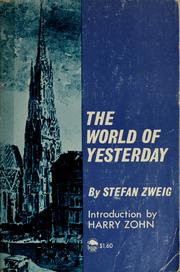
Zweig's memoir of growing up in Habsburg Vienna is one of the great books of the 20th century — a first-hand elegy for the civilization the dynasty built. It closes the curriculum by asking what was actually lost in 1918.
Discussion
Keep reading
Paths that share books, cover the same subject, or open a related topic.