The Scientific Revolution is usually reduced to a few famous names and a telescope, but its real subject is stranger and bigger: how Europeans changed their minds about what counts as knowledge. Reading it in order lets you feel that shift rather than memorize its highlights.
The path moves from the sweep of the story to close studies of its central figures and finally to the deep philosophical change underneath. That sequence keeps the human drama and the conceptual revolution in view at once.
The sweep and the debate
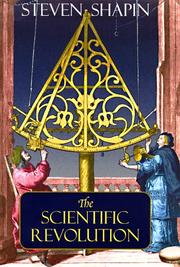
Begin with The Sleepwalkers, Arthur Koestler's vivid narrative of Copernicus, Kepler, and Galileo as fallible, groping human beings rather than serene geniuses. Then read The scientific revolution by Steven Shapin, whose famous opening line questions whether there even was such a thing; it is the sharpest short introduction to the historiography and reframes everything the older stories take for granted.
Galileo and Newton up close
The revolution is best understood through its people. Galileo's Daughter by Dava Sobel tells the story through his letters and his daughter's, humanizing the man behind the trial, while The crime of Galileo by Giorgio De Santillana remains the classic account of his collision with the Church. For the figure who completed the revolution, Never at rest by Richard Westfall is the monumental biography of Isaac Newton, thorough on both his physics and his obsessions.
The change in worldview
The final arc is the conceptual heart of it. The Copernican revolution by Thomas Kuhn shows how a change in astronomy rippled into a change in worldview, and From the closed world to the infinite universe by Alexandre Koyre traces how the cosmos went from bounded and hierarchical to infinite and uniform. Leviathan and the air-pump, Shapin's study of Boyle and Hobbes, examines how experiment itself became a way to settle disputes. Finally, The mechanization of the world picture by E. J. Dijksterhuis gives the grand synthesis of how nature came to be seen as a machine.
Read in this order and the Scientific Revolution stops being a list of discoveries and becomes the story of how the modern mind was made. Follow the full path to trace it from Copernicus to Newton.
Follow the full reading path →
Ready to learn something deeply?
Build a reading path — free