The Mughal Empire: best books on India's great Islamic dynasty
This curriculum takes the reader from a broad, accessible introduction to the Mughal Empire all the way through specialist studies of its art, religion, and structural decline. Each stage builds on the last — first establishing the narrative arc and key rulers, then deepening into culture and ideology, and finally engaging with scholarly debates about power, faith, and collapse.
Foundations: The Story of the Mughal Empire
BeginnerGain a confident, chronological grasp of the Mughal Empire from Babur's conquest to Aurangzeb's reign, including the major rulers, events, and the empire's eventual weakening.
▸ Study plan for this stage
Pace: 4–5 weeks, ~40–50 pages/day. Start with Richards' "The Mughal Empire" (weeks 1–3, ~350 pages), then Hall's "Empires of the Monsoon" (weeks 4–5, ~200 pages focusing on Mughal sections).
- Babur's invasion (1526) and the founding of the Mughal Empire as a Central Asian conquest that transformed into a syncretic Indian dynasty
- The reigns of Akbar, Jahangir, and Shah Jahan as the empire's peak: administrative consolidation, cultural flowering, and architectural achievements
- Aurangzeb's reign as a turning point: orthodox Islamic policies, territorial expansion, and the seeds of imperial decline through overextension and religious alienation
- The Mughal administrative system: the mansabdari hierarchy, revenue collection, and centralized governance under the emperor
- Mughal cultural synthesis: the blending of Persian, Central Asian, and Indian traditions in art, architecture, literature, and court life
- Economic foundations: trade networks, agricultural surplus, and the role of the monsoon-dependent Indian Ocean commerce in sustaining empire
- The weakening of Mughal authority: succession disputes, regional fragmentation, and the rise of competing powers (Marathas, Sikhs, European traders) by the 18th century
- Mughal legacy: institutional, architectural, and cultural imprints that shaped South Asian civilization
- What were the circumstances of Babur's invasion in 1526, and how did he establish the Mughal Empire despite being vastly outnumbered?
- How did Akbar's administrative reforms and religious tolerance differ from his predecessors, and why were these policies crucial to the empire's stability?
- Describe the architectural and cultural achievements during the reigns of Jahangir and Shah Jahan. What do these reveal about Mughal power and values?
- What were Aurangzeb's major policies, and how did his approach differ from earlier Mughal emperors? What were the long-term consequences?
- How did the monsoon trade networks and Indian Ocean commerce support the Mughal Empire's economy and political power?
- What factors contributed to the Mughal Empire's weakening in the 18th century, and which rival powers emerged to challenge Mughal authority?
- Create a timeline poster or digital chart mapping the major Mughal emperors (Babur through Aurangzeb) with key dates, achievements, and turning points. Include visual markers for cultural peaks and periods of decline.
- Write a 500-word comparative essay: 'Akbar vs. Aurangzeb—Two Visions of Empire.' Use specific examples from Richards to illustrate their contrasting policies on religion, administration, and territorial expansion.
- Map the Mughal Empire's territorial extent at three points: 1526 (Babur's conquest), 1605 (Akbar's death), and 1707 (Aurangzeb's death). Annotate with major cities, trade routes, and regions of resistance.
- Read the monsoon trade sections in Hall's 'Empires of the Monsoon' and create a diagram showing how Indian Ocean commerce connected the Mughal Empire to Persia, Arabia, Southeast Asia, and Europe. Explain how this trade sustained imperial wealth.
- Select one major Mughal architectural monument (Taj Mahal, Red Fort, Fatehpur Sikri) and research its historical context using Richards. Write a 300-word analysis of what it reveals about the emperor who commissioned it and the empire's values.
- Conduct a close reading of Richards' chapters on Aurangzeb's reign. Identify three specific policies that weakened the empire and three that expanded it. Debate: Was Aurangzeb a successful conqueror but failed administrator?
Next up: This stage establishes the chronological backbone and major personalities of Mughal history, preparing you to dive deeper into specialized topics—whether regional histories, cultural and intellectual life, or the empire's interaction with European powers—in subsequent stages.
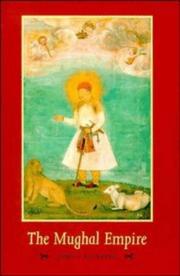
Part of the authoritative New Cambridge History of India series, this is the single best one-volume scholarly overview of the empire's political and administrative history — clear enough for beginners yet rigorous enough to anchor everything that follows.
Provides essential context for the Indian Ocean world and the broader Asian stage on which the Mughals operated, helping the reader understand why Central Asian and Persian influences shaped the empire so profoundly.
The Rulers in Their Own Words: Primary Voices
BeginnerHear the Mughal world directly through the memoirs of its founders and emperors, building an intimate feel for Mughal personality, values, and self-perception.
▸ Study plan for this stage
Pace: 8–10 weeks, ~25–30 pages/day (alternating between Baburnama and Tuzuk-I-Jahangiri, with reflection breaks)
- Babur's self-fashioning as a military genius and cultural patron: how he constructs his own legacy through memoir
- The role of personal observation and sensory detail in Babur's Baburnama as a window into Mughal aesthetics and values
- Jahangir's obsession with collecting, categorizing, and controlling the natural world as a reflection of imperial power
- The tension between piety and worldly ambition in both memoirs—how each emperor justifies his rule through religious and personal virtue
- Jahangir's relationship with his father Akbar and his own son Shah Jahan: dynastic succession and the burden of legacy
- The role of patronage, art, and architecture in both memoirs as expressions of Mughal identity and permanence
- How memory and narrative shape political legitimacy: what each emperor chooses to record and what he omits
- How does Babur use his memoir to justify his conquests and establish his authority as the founder of the Mughal dynasty?
- What does Babur's detailed attention to gardens, hunting, and natural beauty reveal about Mughal values and aesthetics?
- How does Jahangir's Tuzuk-I-Jahangiri differ from the Baburnama in tone, focus, and what it reveals about imperial personality?
- What role does Jahangir's relationship with Nur Jahan play in his self-perception and the governance described in his memoir?
- How do both emperors use their memoirs to address questions of legitimacy, succession, and their place in history?
- What does each memoir reveal about the Mughal court's relationship with art, nature, and cultural refinement as markers of civilization?
- Create a timeline of Babur's major conquests and personal milestones from the Baburnama, noting which events he emphasizes and which he downplays—what does this selectivity tell you about his priorities?
- Write a character sketch of Babur based on his own words: what are his virtues as he sees them, and what flaws does he inadvertently reveal?
- Collect 5–7 passages from the Baburnama where Babur describes gardens, hunting, or aesthetic experiences; analyze what these descriptions reveal about Mughal sensibilities
- Create a parallel character study comparing Babur and Jahangir: how do their self-presentations differ? What does each emphasize about himself?
- Track Jahangir's references to his father Akbar and his son Shah Jahan throughout the Tuzuk-I-Jahangiri; what does his treatment of these relationships reveal about his anxieties and ambitions?
- Write a 500-word reflection: if you were a court official reading these two memoirs in sequence, how would your understanding of Mughal imperial identity shift from Babur to Jahangir?
Next up: By hearing the Mughal emperors' own voices and understanding their self-perception, you are now ready to encounter how their contemporaries and later historians interpreted them—moving from the emperors' intimate self-fashioning to the broader political, cultural, and religious contexts that shaped their reigns.
Babur's own memoir is one of the great autobiographies of world literature — vivid, honest, and indispensable for understanding the dynasty's origins, Central Asian roots, and the founder's remarkable character.
Jahangir's memoirs reveal the empire at its cultural and artistic peak, and his obsessive attention to nature, painting, and court life makes this the perfect companion to later studies of Mughal art.
Court, Culture, and the Arts
IntermediateUnderstand Mughal architecture, painting, and courtly culture as expressions of imperial ideology, and appreciate the synthesis of Persian, Central Asian, and Indian artistic traditions.
▸ Study plan for this stage
Pace: 6–7 weeks, ~40–50 pages/day. Week 1–2: "The Mughal Throne" (focus on court structure and cultural patronage); Week 3–4: transition and early chapters of "Mughal Architecture"; Week 5–7: complete "Mughal Architecture" with review and synthesis exercises.
- The Mughal court as a center of cultural production and imperial ideology—how rulers used patronage to legitimize power
- The synthesis of Persian, Central Asian, and Indian artistic traditions in Mughal visual culture
- Mughal architecture as a physical manifestation of imperial authority, religious identity, and aesthetic vision
- The role of the emperor as patron and arbiter of taste, and the relationship between court hierarchy and artistic production
- Specific architectural innovations and stylistic elements that distinguish Mughal buildings (domes, arches, gardens, decorative programs)
- How courtly culture—including music, poetry, painting, and design—reflected and reinforced Mughal political power
- The evolution of Mughal artistic style across different reigns and its relationship to political circumstances
- How did Mughal emperors use artistic patronage and court culture as tools of political legitimacy and ideological control?
- What were the major artistic and architectural traditions (Persian, Central Asian, Indian) that the Mughals synthesized, and how did they blend these influences?
- What are the defining architectural features of Mughal buildings, and what purposes did they serve (religious, political, aesthetic)?
- How did the structure and hierarchy of the Mughal court influence the production and reception of art and architecture?
- How did Mughal artistic style evolve across different emperors' reigns, and what historical or political factors drove these changes?
- What role did gardens, painting, and decorative arts play in expressing Mughal imperial ideology alongside architecture?
- Create a visual timeline mapping major Mughal architectural projects mentioned in Koch's book to specific emperors and political events from Eraly's account; annotate each with the artistic innovations or ideological messages it conveyed.
- Select three major Mughal buildings (e.g., Taj Mahal, Red Fort, Fatehpur Sikri) and write a 2–3 page analysis of how each reflects the political circumstances and artistic vision of its patron emperor, using evidence from both texts.
- Sketch or annotate architectural floor plans and elevations from Koch's book, labeling key features (domes, arches, gardens, water features) and explaining their Persian, Central Asian, or Indian origins.
- Compile a visual essay (with images and captions) comparing Mughal architectural elements across three different buildings; identify recurring design principles and explain how they reinforce imperial ideology.
- Write character sketches of 3–4 major Mughal emperors (e.g., Akbar, Shah Jahan, Aurangzeb) based on Eraly's account, focusing on their artistic tastes, patronage priorities, and how these reflected their political goals.
- Create a concept map showing the relationships between court hierarchy, artistic production, and imperial ideology; use specific examples from both texts to illustrate how patronage flowed from the emperor through the court to artisans and architects.
Next up: This stage establishes how Mughal rulers weaponized art and architecture to project power and legitimacy; the next stage will likely examine how these cultural achievements were received, contested, or transformed by regional powers, later dynasties, or colonial perspectives.
Eraly's richly detailed narrative brings the court to life — its rituals, personalities, and splendor — making it the ideal bridge between political history and cultural study.
Koch is the leading authority on Mughal building; this focused study explains how monuments like the Taj Mahal and Fatehpur Sikri embodied Mughal cosmology and political power, building directly on the court context established by Eraly.
Religion, Ideology, and the Question of Tolerance
IntermediateCritically examine the role of Islam, Hinduism, and Sufi thought in Mughal governance, and understand the ideological gulf between Akbar's pluralism and Aurangzeb's orthodoxy.
▸ Study plan for this stage
Pace: 4–5 weeks, ~40–50 pages/day. Week 1–2: Malleson's "Akbar" (focus on religious policy, court structure, and Sufi influence). Week 3: Transition and comparative analysis. Week 4–5: Truschke's "Aurangzeb" (focus on orthodox ideology, policy reversals, and theological justification).
- Akbar's syncretic ideology: Din-i-Ilahi, religious eclecticism, and the role of Sufi advisors in shaping pluralist governance
- The institutional mechanisms of Mughal tolerance: court rituals, administrative inclusion of Hindu elites, and patronage of multiple faiths
- Aurangzeb's theological orthodoxy: Sunni Islamic revival, rejection of syncretism, and the ideological justification for religious policies
- The relationship between personal faith and statecraft: how individual emperors' religious convictions translated into empire-wide policy
- Sufi thought as a bridge between Islam and Hindu philosophy in Akbar's court versus its marginalization under Aurangzeb
- The economic and political consequences of religious policy shifts: taxation, elite recruitment, and social stability
- The historiographical problem of assessing 'tolerance' and 'intolerance' in pre-modern empires without anachronistic frameworks
- What was Din-i-Ilahi, and how did Akbar's creation of this syncretic faith reflect his broader approach to religious governance?
- How did Akbar use Sufi thought and advisors to justify religious pluralism within an Islamic empire, and what was the role of figures like Abul Fazl?
- What specific policies did Akbar implement to include Hindu elites in administration and patronage, and what were the ideological foundations for these decisions?
- How did Aurangzeb's theological understanding of Islam differ from Akbar's, and how did this difference manifest in concrete policy changes regarding non-Muslims?
- What were the consequences—political, economic, and social—of Aurangzeb's shift away from Akbar's pluralist model?
- How should historians evaluate the concepts of 'tolerance' and 'intolerance' when applied to Mughal religious policy, and what are the pitfalls of anachronism?
- Create a comparative table of Akbar's and Aurangzeb's religious policies (taxation, temple patronage, court composition, legal status of non-Muslims) based on Malleson and Truschke, noting the ideological reasoning behind each.
- Write a 500-word analysis of how Sufi philosophy enabled Akbar's pluralism according to Malleson, then explain why Aurangzeb rejected this approach based on Truschke's account.
- Map the composition of Akbar's court (religious affiliations, roles, influence) using evidence from Malleson; then do the same for Aurangzeb using Truschke, and write a brief explanation of the differences.
- Analyze a primary source excerpt (if provided in either text) from Akbar's reign and one from Aurangzeb's, identifying the theological language and assumptions each uses to justify their religious policies.
- Debate exercise: Argue both sides—was Akbar's pluralism a genuine ideological commitment or a pragmatic tool for empire-building? Use specific evidence from Malleson.
- Create a timeline of major religious policy shifts between Akbar and Aurangzeb, noting which were reversals of previous policies and which were new initiatives, based on both texts.
Next up: This stage establishes the ideological and religious foundations of Mughal governance, preparing you to examine how these competing visions of empire shaped military strategy, territorial expansion, and the eventual fragmentation of Mughal power in subsequent stages.
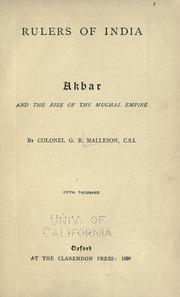
Focuses on Akbar's reign — the empire's ideological high-water mark — and his extraordinary experiment in religious synthesis (Din-i-Ilahi), providing the baseline for understanding later religious conflict.

A revisionist, rigorously sourced reassessment of Aurangzeb that challenges both hagiography and demonization, making it essential for understanding how religion and politics intertwined in the empire's final century.
Decline, Legacy, and Scholarly Debate
ExpertEngage with the structural, economic, and political explanations for Mughal decline, and assess the empire's long shadow over South Asian history and identity.
▸ Study plan for this stage
Pace: 4–5 weeks, ~40–50 pages/day (approximately 350–400 pages total)
- The 1857 Rebellion as a watershed moment in Mughal decline and British consolidation of power
- Bahadur Shah Zafar II's reign as a case study in institutional collapse and loss of political authority
- The role of economic fragmentation, regional autonomy, and military obsolescence in the empire's structural weakness
- How personal narratives and court politics reveal broader patterns of imperial decay
- The British East India Company's transformation from merchant enterprise to territorial power
- The construction of Mughal nostalgia and its use in post-colonial South Asian identity and historiography
- Dalrymple's archival methodology and how primary sources (letters, diaries, official records) reshape our understanding of decline
- What were the primary structural, economic, and military factors that left the Mughal Empire vulnerable to British expansion by the mid-19th century?
- How does Bahadur Shah Zafar II's personal story and political impotence illustrate the broader collapse of Mughal authority?
- What role did the 1857 Rebellion play in accelerating the formal end of Mughal rule, and how did the British respond?
- How does Dalrymple use primary sources (court records, personal correspondence, eyewitness accounts) to reconstruct the lived experience of decline?
- In what ways has the Mughal Empire been mythologized or romanticized in later South Asian historiography and popular memory, and what does this reveal about post-colonial identity?
- How did the transition from Mughal to British rule reshape South Asian political, economic, and cultural institutions?
- Create a detailed timeline of key events from 1800–1857 that map the empire's institutional collapse, noting economic, military, and political milestones
- Write character sketches of 3–4 key figures in the book (e.g., Bahadur Shah Zafar II, British officials, rebel leaders) based on Dalrymple's characterizations, noting how their individual choices reflect systemic decline
- Trace the economic decline of the Mughal court: map revenue sources, military expenditures, and territorial losses across the early 19th century using evidence from the text
- Analyze 2–3 primary source excerpts (letters, proclamations, or accounts) that Dalrymple includes, identifying what they reveal about the mindset of Mughal elites during the final decades
- Compare the British East India Company's military and administrative tactics in 1857 with Mughal military organization, explaining why the latter was outmatched
- Write a reflective essay (1,500–2,000 words) on how 'The Last Mughal' challenges or complicates popular narratives about Mughal decline, using specific textual evidence
Next up: This stage equips you with a granular, archival understanding of how empires collapse and how historical narratives are constructed from primary sources, preparing you to critically examine competing interpretations of Mughal legacy and to engage with how colonial and post-colonial historians have differently framed South Asian history.
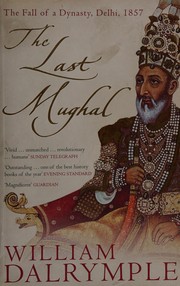
Dalrymple's deeply researched account of the 1857 uprising and the fall of the last Mughal emperor, Bahadur Shah Zafar, brings the entire arc of the empire to a dramatic and moving close.
Discussion
Keep reading
Paths that share books, cover the same subject, or open a related topic.