The Age of Exploration: the best books, in reading order
This curriculum takes the reader from vivid narrative introductions through rigorous historical analysis and finally into the darker, contested legacies of exploration — colonialism, the slave trade, and indigenous devastation. Each stage builds the geographical, political, and cultural vocabulary needed to tackle the more demanding works that follow, ensuring the reader arrives at the advanced texts with both the context and the critical lens to fully absorb them.
Foundations: The World Before & the Voyages Begin
BeginnerGrasp the motivations, key figures, and basic chronology of European exploration — who sailed where, why, and what they found — without yet diving into deep analysis.
▸ Study plan for this stage
Pace: 8–10 weeks, ~40–50 pages/day (accounting for note-taking and reflection)
- The economic, religious, and political motivations driving European exploration (trade routes, spice markets, Christian conversion, national prestige)
- Magellan's circumnavigation as a pivotal moment: his crew's journey, the challenges faced, and why it mattered to European understanding of the world
- Pre-Columbian Americas: sophisticated civilizations (Aztec, Inca, indigenous North American societies) that existed independently before European contact
- The myth of 'discovery' vs. the reality of encounter: indigenous peoples already inhabited and knew these lands
- Key explorers and their routes: Columbus, da Gama, Magellan, and how their voyages connected Europe to Asia and the Americas
- The role of technology, navigation instruments, and shipbuilding in enabling long-distance voyages
- How European exploration reshaped global trade, disease patterns, and power dynamics in ways both explorers and indigenous peoples did not fully anticipate
- What were the primary economic, religious, and political reasons European powers invested in exploration during the 15th and 16th centuries?
- Describe Magellan's voyage: who he was, where he sailed, what challenges his crew faced, and why his circumnavigation was historically significant.
- What does Bergreen reveal about the human cost and daily realities of long-distance voyages in 'Over the Edge of the World'?
- According to Mann's '1491,' what were the major civilizations and societies that existed in the Americas before European contact, and how sophisticated were they?
- How does Boorstin in 'The Discoverers' frame the concept of 'discovery'—what role does human curiosity and knowledge-seeking play in his narrative?
- What is the difference between the popular myth of exploration and the more complex reality presented across these three books?
- Create a timeline of major voyages (Columbus, da Gama, Magellan) with dates, routes, and stated goals; annotate with what each explorer actually found vs. what they expected.
- Map Magellan's circumnavigation route on a blank world map while reading 'Over the Edge of the World'; mark key ports, deaths, and turning points to visualize the journey's scale.
- Write a one-page 'explorer's journal entry' from the perspective of a crew member on one of these voyages, incorporating details from Bergreen about daily life, food, disease, and fear.
- Create a comparison chart of three pre-Columbian civilizations (e.g., Aztec, Inca, Mississippian) using Mann's '1491': population, government, agriculture, technology, and trade networks.
- Debate or write a reflection: Was the Age of Exploration 'discovery' or 'encounter'? Use specific examples from all three books to support your position.
- Identify 3–5 'turning points' in how Europeans understood the world by the end of the 16th century (based on Boorstin); explain how each voyage or encounter shifted European knowledge.
Next up: This stage establishes the *who, what, where, and why* of early exploration and introduces the reality of pre-Columbian civilizations, preparing you to analyze the *consequences* of contact—cultural, ecological, economic, and moral—in deeper detail in the next stage.
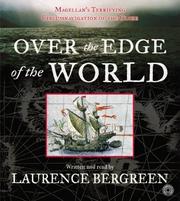
A gripping, accessible narrative of Magellan's circumnavigation that immediately immerses the reader in the stakes, dangers, and ambitions of the Age of Exploration — a perfect dramatic entry point.

Before exploring the 'discovery,' the reader must understand what existed before contact. Mann's vivid portrait of pre-Columbian Americas builds essential empathy and context for everything that follows.
A broad, readable survey of how humanity mapped and understood the world, giving the reader the intellectual and technological backdrop — navigation, cartography, astronomy — that made the voyages possible.
The Voyages in Detail: Routes, Empires & Encounters
IntermediateUnderstand the specific voyages, the empires they built, and the first collisions between European and non-European worlds — moving from narrative into structured historical argument.
▸ Study plan for this stage
Pace: 10–12 weeks, ~40–50 pages/day (with 2–3 days per week for synthesis and exercises)
- The Spanish conquest of the Americas as a systematic process driven by technological, organizational, and ideological advantages—not inevitable destiny
- The Atlantic slave trade as a structured commercial system with specific routes, actors, and technologies (ship design, logistics, mortality patterns) that made it economically viable
- The Indian Ocean trade networks and monsoon-dependent maritime empires that predated and coexisted with European expansion
- First contact encounters: how European and non-European societies perceived, negotiated, and resisted each other in real-time
- The role of disease, indigenous political fragmentation, and local alliances in shaping conquest outcomes—moving beyond simple narratives of European superiority
- Comparative empire-building: how Spanish, Portuguese, Dutch, and other European powers adapted their strategies to different geographic and social contexts
- The human cost of exploration: mortality, displacement, enslavement, and cultural destruction as documented through primary sources and material evidence
- What specific advantages (military technology, disease immunity, organizational structure, or diplomatic strategy) enabled Spanish conquest of the Aztec and Inca empires, and how did indigenous political divisions affect the outcome?
- How did the Atlantic slave trade function as a commercial system? What role did ship design, mortality rates, and port infrastructure play in its profitability and expansion?
- Compare the monsoon empires described in Hall's work with European Atlantic empires: what different strategies did they use to control trade, territory, and populations?
- What evidence do Rediker and Thomas provide about how indigenous peoples and enslaved Africans resisted, negotiated with, or adapted to European expansion?
- How did geography (climate, disease environment, existing trade networks) shape the different outcomes of European expansion in the Americas versus the Indian Ocean?
- What primary sources and material evidence (ship logs, artifacts, oral histories) do these authors use to reconstruct encounters, and what perspectives do they reveal or omit?
- Create a detailed timeline of the major voyages and conquests in each book, marking key dates, routes, and outcomes. Identify patterns in timing, technology, and imperial strategy across the three texts.
- Map the major trade routes described in all three books (Spanish American routes, Atlantic slave trade routes, Indian Ocean monsoon routes). Annotate with goods traded, ports, and the empires controlling each segment.
- Write a 2–3 page comparative analysis: How did Spanish conquest strategies in the Americas (from Thomas) differ from Portuguese or Dutch strategies in the Indian Ocean (from Hall)? What explains these differences?
- Analyze a primary source document from each book (e.g., a conquistador's letter, a ship's manifest, a trade record). For each, identify the author's perspective, what it reveals about encounters, and what it obscures.
- Create a 'mortality audit' using data from Rediker's work: calculate and visualize the death rates on slave ships across different routes and time periods. Write a 1-page reflection on what these numbers reveal about the system.
- Conduct a 'contact scenario' exercise: choose one first encounter described in Thomas or Hall. Write two 1-page accounts—one from the European perspective and one from the indigenous/African perspective—using evidence from the texts to ground both views.
Next up: This stage grounds you in the empirical details, human realities, and competing perspectives of specific voyages and empires, preparing you to move into the next stage's focus on the long-term consequences, global systems, and historiographical debates that shaped the modern world.
A deeply researched account of the Spanish conquest of Mexico that shows exactly how exploration translated into empire — essential for understanding the human machinery of colonization.
Exploration's economic engine was the Atlantic slave trade; Rediker's harrowing, scholarly account connects the sea routes opened by explorers directly to the forced movement of millions of Africans.
Shifts the lens to the Indian Ocean and East Africa, correcting the Eurocentric view by showing the rich, complex trading world that Portuguese and later explorers violently disrupted.
Systems & Consequences: The Columbian Exchange & Global Transformation
IntermediateUnderstand exploration not just as a series of voyages but as a world-altering ecological, economic, and demographic event whose consequences reshaped every continent.
▸ Study plan for this stage
Pace: 8–10 weeks, ~40–50 pages/day. Start with Crosby's focused analysis (2–3 weeks), then move to Diamond's broader synthesis (5–7 weeks). Allow 1 week for integration and review.
- The Columbian Exchange as a bidirectional transfer of organisms, diseases, crops, and animals between Old and New Worlds, fundamentally reshaping global ecology and human societies
- Disease as a primary driver of demographic collapse in the Americas—how Old World pathogens (smallpox, measles, influenza) devastated indigenous populations with no acquired immunity
- Agricultural and botanical consequences: the introduction of New World crops (maize, potatoes, tomatoes) to Eurasia and Africa, and Old World crops and livestock to the Americas, with cascading effects on population growth and economic systems
- Geographical determinism and environmental factors: how continental geography (axis orientation, biodiversity, domesticable animals) shaped the development of technology, agriculture, and civilizations across Eurasia, Africa, and the Americas
- The role of germs, guns, and steel in European expansion: how disease, military technology, and organizational capacity (rather than racial or cultural superiority) enabled European conquest and colonization
- Unintended consequences and feedback loops: how the Columbian Exchange created new economic systems (plantation agriculture, slavery), demographic patterns, and global inequalities that persist today
- The interconnectedness of ecological, economic, and social transformation: understanding exploration as a catalyst for world systems integration rather than isolated events
- What were the major organisms, crops, and animals exchanged across the Atlantic in the Columbian Exchange, and how did each category transform societies on both sides?
- Why were Old World diseases so catastrophic for indigenous American populations, and what role did this play in European colonization compared to military conquest?
- How did the introduction of New World crops (particularly maize and potatoes) reshape population dynamics, agriculture, and economic systems in Eurasia and Africa?
- According to Diamond, how did geographical factors like continental axis, climate zones, and the availability of domesticable animals influence the development of technology and state-level societies?
- What does Diamond mean by 'guns, germs, and steel,' and how do these three factors explain European expansion better than theories of racial or cultural superiority?
- What were some unintended long-term consequences of the Columbian Exchange, and how do they connect to modern global inequality and environmental challenges?
- Create a two-column Columbian Exchange inventory: list major crops, animals, and diseases transferred from the Old World to the Americas and vice versa. For each, note its ecological and economic impact on at least one society.
- Map the spread of a single disease (e.g., smallpox) or crop (e.g., maize) across continents and centuries using evidence from Crosby and Diamond. Annotate with dates, regions affected, and population or economic consequences.
- Analyze a specific indigenous American society (e.g., the Aztec or Inca) before and after the Columbian Exchange using Crosby's framework: How did disease, new crops, and new animals reshape their economy, demographics, and social structure?
- Construct a 'geography determines destiny' argument for one non-European continent (e.g., sub-Saharan Africa or East Asia) using Diamond's framework. Explain how its axis, climate, and animal domestication potential shaped its technological and political development independently of European influence.
- Debate exercise: Using evidence from both books, argue whether European conquest of the Americas was primarily due to (a) superior military technology, (b) disease, or (c) geographical advantages. Support your position with specific examples.
- Create a systems diagram showing how one New World crop (e.g., potatoes) created feedback loops: agricultural productivity → population growth → social change → economic transformation. Use historical data from the books to populate each stage.
Next up: This stage establishes the global, interconnected consequences of exploration—moving beyond individual voyages to systemic transformation—which prepares you to examine how specific colonial projects, trade networks, and imperial systems built upon and accelerated these ecological and economic changes in subsequent stages.
The foundational text on how plants, animals, and diseases moved between hemispheres after 1492 — Crosby coined the very concept and this book is indispensable for understanding the scale of change.
Builds directly on Crosby by asking why European civilizations had the biological and technological advantages they did — a sweeping, provocative argument that deepens the reader's structural understanding.
Critical & Contested Histories: Power, Resistance & Legacy
ExpertInterrogate the dominant narratives of exploration, center indigenous and African voices, and grapple with the long moral and political legacy of the age — arriving at a fully critical, multi-perspectival understanding.
▸ Study plan for this stage
Pace: 8–10 weeks, ~40–50 pages/day (accounting for dense historiography and critical reflection time)
- The Columbian Exchange as a system of ecological, biological, and economic transformation with asymmetrical consequences for different peoples
- How dominant exploration narratives erase indigenous agency, resistance, and sovereignty—and how to recognize and challenge these erasures
- The role of indigenous peoples as active historical agents shaping outcomes, not passive victims, across the three centuries of contact
- Settler colonialism as a structural logic distinct from other forms of colonialism, with particular relevance to North American dispossession
- Primary testimony and eyewitness accounts (like Las Casas) as both invaluable evidence and complicated sources requiring critical reading
- The long-term demographic, cultural, political, and spiritual devastation of indigenous societies as a direct consequence of European contact and colonization
- How the Age of Exploration created the conditions for the Atlantic slave trade and African diaspora—connecting indigenous dispossession to African enslavement
- The persistence of colonial structures and ideologies into the present, and how historical understanding enables contemporary resistance and decolonization
- How does Mann's analysis of the Columbian Exchange challenge the idea that exploration was simply 'discovery,' and what does this reveal about power imbalances?
- What specific examples from Dunbar-Ortiz demonstrate indigenous peoples' active resistance and agency rather than passive victimhood, and why is this distinction politically important?
- How does Las Casas's testimony function as both a primary source and a problematic document—what are its strengths and limitations as evidence of Spanish colonial violence?
- How are the three books connected? What is the relationship between the global Columbian Exchange, settler colonialism in North America, and Spanish colonial violence in the Indies?
- What does it mean to say that the Age of Exploration 'created' the Atlantic slave trade, and how do Mann, Dunbar-Ortiz, and Las Casas each illuminate this connection?
- How do these readings challenge or complicate your prior understanding of 'exploration,' and what alternative frameworks do they offer for understanding this historical period?
- Create a comparative timeline mapping key events from all three books (Columbian Exchange impacts, indigenous resistance movements, Spanish colonial policies) to visualize how these histories intersect and reinforce each other
- Select one passage from Las Casas's testimony and one from Mann or Dunbar-Ortiz that address the same event or phenomenon; write a 2–3 page analysis comparing their perspectives, reliability, and what each reveals that the other obscures
- Research and write a 3–4 page case study of a specific indigenous nation or group mentioned in Dunbar-Ortiz (e.g., the Haudenosaunee, Pueblo peoples, or others), using her framework to analyze their resistance strategies and long-term survival
- Construct a 'counter-narrative' essay (4–5 pages) that rewrites a single episode from the Age of Exploration (e.g., Columbus's arrival, early Spanish conquest, or a specific trade route) centering indigenous or African agency and decision-making rather than European actors
- Create an annotated visual map or infographic showing the Columbian Exchange's biological, cultural, and demographic flows in multiple directions—not just from Europe outward—to challenge one-directional narratives
- Conduct a critical reading exercise: identify 3–5 moments in each text where the author makes an interpretive choice (e.g., whose perspective is centered, what evidence is emphasized, what is left out) and reflect on how these choices shape the historical argument
Next up: This stage equips you with a sophisticated, multi-perspectival critique of exploration narratives and a grasp of how colonialism structured the modern world—preparing you to examine specific regional histories, indigenous intellectual traditions, or the global legacies of colonialism in subsequent stages with both critical rigor and ethical accountability.
The sequel to 1491 traces the long aftermath of contact into the modern world, tying together the threads of empire, ecology, and economics built up across the entire curriculum.
A powerful corrective that reframes the entire story of exploration and colonization from the perspective of those who were dispossessed — essential for a morally complete understanding of the era's legacy.
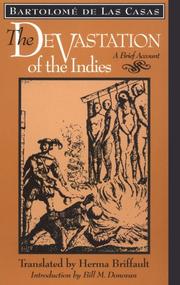
A primary source written by a Spanish priest who witnessed the conquest firsthand; reading this last gives the reader a raw, contemporary voice of conscience that makes the human cost viscerally undeniable.
Discussion
Keep reading
Paths that share books, cover the same subject, or open a related topic.