Canadian History: The Best Books to Read, in Order
This curriculum takes a beginner from a broad panoramic view of Canadian history all the way through deep, era-specific scholarship. Each stage builds on the last: first establishing a mental map of the whole story, then diving into the founding colonial period, then the nation-building and war years, and finally the complexities of modern Canada. By the end, the reader will have both narrative fluency and analytical depth across every major era.
The Big Picture: A Bird's-Eye View of Canada
BeginnerGain a confident, readable overview of the entire sweep of Canadian history — from Indigenous peoples and New France through to the present day — so that every later book has a clear context to slot into.
▸ Study plan for this stage
Pace: 4–5 weeks, ~40–50 pages/day (Morton first, then Brown). Morton's concise narrative (~300 pages) takes 1–2 weeks; Brown's illustrated history (~400+ pages) takes 2–3 weeks, allowing time to absorb visuals and cross-reference timelines.
- Indigenous peoples as the original inhabitants and their diverse nations, cultures, and governance systems before European contact
- New France and the French colonial period: fur trade, exploration, and settlement patterns that shaped early Canada
- British conquest and the transition from French to British rule, including the Quebec Act and accommodation of French culture
- Confederation (1867) and the creation of the Dominion of Canada: political structure, provincial expansion, and nation-building
- Westward expansion and the Indian Act: displacement of Indigenous peoples, the residential school system, and broken treaties
- Industrial revolution and urbanization: economic transformation, immigration waves, and the rise of labour movements
- Canada's role in World Wars I and II: conscription debates, national identity, and emergence as a middle power
- Post-war Canada: the welfare state, Quiet Revolution in Quebec, multiculturalism, and constitutional patriation (1982)
- What were the major Indigenous nations in pre-contact Canada, and what were their primary economic and social structures?
- How did the fur trade shape French colonial settlement and relationships with Indigenous peoples?
- What was the significance of the British conquest (1763) and the Quebec Act (1774) in shaping Canadian identity?
- How did Confederation in 1867 create the political structure of modern Canada, and which provinces joined at different times?
- What were the consequences of westward expansion for Indigenous peoples, and how did the Indian Act institutionalize their marginalization?
- How did Canada's participation in the World Wars transform its economy, society, and international standing?
- What major social and political changes occurred in Canada between 1945 and 1982, particularly regarding Quebec and constitutional reform?
- Create a visual timeline (poster or digital) marking major events from both books: Indigenous nations, New France, Confederation, wars, and constitutional moments. Use Brown's illustrations as reference points.
- Map Canada's territorial expansion: sketch or use a digital tool to show how the nation grew from 1867 to the present, noting which provinces/territories joined when and why.
- Compare two primary source excerpts (one from the French colonial period, one from the British period) to identify how colonial priorities and perspectives shifted—discuss findings in writing.
- Write a 500-word synthesis essay: 'How did the fur trade economy shape early Canadian society and Indigenous-settler relations?' Ground it in specific examples from Morton and Brown.
- Create a 'key figures' reference sheet with 8–10 major historical actors mentioned in both books (e.g., Champlain, Macdonald, Laurier, King). Note their role and impact.
- Trace one theme across both books (e.g., 'Indigenous displacement' or 'Quebec's place in Canada'). Write a 300-word reflection on how this theme evolved from pre-contact to the modern era.
Next up: With a confident grasp of Canada's major eras, turning points, and key actors, you are now ready to dive into thematic or regional deep-dives—exploring specific periods (e.g., the fur trade era, Confederation debates), regions (e.g., the West, Quebec), or topics (e.g., Indigenous history, labour movements) in scholarly depth.

The single best one-volume introduction to Canadian history, written in plain, engaging prose. It establishes the full chronological spine — New France, Confederation, the wars, and modern Canada — that all later reading will flesh out.
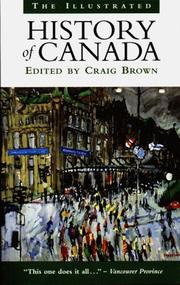
A richly illustrated, multi-author survey that reinforces the timeline with maps, images, and accessible essays. Reading it second cements the mental map built by Morton and introduces key themes like regionalism and identity.
Origins: New France and the Colonial Foundations
BeginnerUnderstand the Indigenous world before contact, the French colonial project, the fur trade, and the consequences of the British Conquest — the deep roots from which modern Canada grew.
▸ Study plan for this stage
Pace: 6–8 weeks, ~25–30 pages/day. Start with Trudel's foundational narrative (weeks 1–4, ~150 pages), then move to Innis's economic analysis (weeks 5–8, ~120 pages). Allocate 1 week for overlap and review.
- The Indigenous world before European contact: established societies, trade networks, and governance systems that shaped early colonial encounters
- French colonial motivations and the establishment of New France (1524–1663): exploration, settlement, and the role of the Crown and private enterprise
- The fur trade as the economic engine of New France: how it drove exploration, settlement patterns, and French-Indigenous relations
- Métissage and cultural adaptation: how French colonists and Indigenous peoples interacted, traded, and formed hybrid communities
- The structural dependency of New France on the fur trade: how this shaped colonial development and vulnerability
- The British Conquest and its consequences: the shift from French to British rule and its impact on Indigenous peoples and colonial society
- Geographic and environmental factors: how rivers, climate, and natural resources determined settlement and trade routes
- The role of institutions: the Church, trading companies, and the Crown in shaping colonial society and economic life
- What were the major Indigenous societies and trade networks in North America before European contact, and how did they influence early French colonial strategy?
- How did the fur trade become the dominant economic force in New France, and what role did it play in French expansion and settlement?
- What were the key differences between French colonial goals in the 1520s–1600s and the actual outcomes by 1663, and what factors account for these differences?
- How did French colonists adapt to the North American environment, and what role did Indigenous knowledge and partnership play in their survival and success?
- What were the immediate and long-term consequences of the British Conquest for New France, Indigenous peoples, and the trajectory of colonial development?
- How did the geographic and economic structure of the fur trade shape the territorial extent and internal organization of New France?
- Create a timeline of major events in New France (1524–1663) using Trudel, marking key explorations, settlements, and institutional developments. Annotate with the fur trade's role at each stage.
- Map the major fur trade routes and Indigenous trade networks described in both books. Identify how geography (rivers, portages, climate) constrained or enabled trade and settlement.
- Write a 500-word character sketch of a French fur trader or colonist (e.g., a voyageur, coureur de bois, or settler) based on details from both texts, explaining how the fur trade shaped their life and choices.
- Compare two Indigenous societies described in Trudel (e.g., Haudenosaunee vs. Algonquian) in terms of their pre-contact organization and their initial responses to French presence. Use specific examples from the text.
- Analyze a primary source excerpt (if provided in the books) or a key passage from Innis on the fur trade's economic logic. Explain how the fur trade's structure created dependency and shaped colonial priorities.
- Create a visual diagram showing the relationships between the Crown, trading companies, Indigenous nations, and French settlers in New France. Use evidence from both books to justify the connections and power dynamics.
Next up: This stage establishes the economic, social, and institutional foundations of colonial Canada—the fur trade's dominance, French-Indigenous relations, and the British Conquest—which set the conditions for the next stage's exploration of how British rule, Confederation, and nation-building unfolded from these contested colonial roots.

The authoritative scholarly account of the founding of New France, written accessibly enough for a motivated beginner. It establishes the French colonial logic and the role of the Catholic Church and fur trade before the British era begins.

A foundational Canadian text arguing that the fur trade shaped the country's geography, economy, and identity. Reading it here shows how the colonial economy created the east-west corridors that would later become Canada itself.
Building a Nation: Confederation to the Great War
IntermediateUnderstand how Canada was politically assembled after 1867, how the West was settled, how national identity was contested, and how the country was tested by the First World War.
▸ Study plan for this stage
Pace: 4–5 weeks, ~40–50 pages/day (approximately 300 pages total)
- The Battle of Vimy Ridge as a defining moment of Canadian national identity and military capability
- Canada's transition from colonial subordination to independent military and political agency during WWI
- The role of Canadian soldiers, commanders, and strategy in achieving victory at Vimy
- The social and economic mobilization of Canada for total war
- How Vimy became a symbol of Canadian unity and nationhood in the postwar period
- The human cost of industrialized warfare and trench combat
- Canada's evolving relationship with Britain and the British Empire during the war
- What were the key strategic and tactical factors that enabled the Canadian Corps to succeed at Vimy Ridge when previous attacks had failed?
- How did the Battle of Vimy Ridge change Canadian perceptions of themselves as a nation, and why did it become so central to Canadian identity?
- What role did Canadian commanders like Arthur Currie and Julian Byng play in the planning and execution of the Vimy offensive?
- How did Canada's industrial and social systems adapt to support the war effort, and what were the consequences for Canadian society?
- In what ways did the Vimy campaign demonstrate Canada's growing independence from British military direction?
- What was the human experience of soldiers in the trenches leading up to and during the Battle of Vimy Ridge?
- Create a detailed timeline of key events from Canada's entry into WWI through the Battle of Vimy Ridge, noting political, military, and social milestones
- Map the geography of the Western Front and Vimy Ridge, then write a 1–2 page analysis of how terrain influenced the battle's tactics
- Read primary source excerpts (letters, diaries, official reports) from Canadian soldiers at Vimy and annotate them for insights into morale, strategy, and the soldier's perspective
- Prepare a comparative analysis: research one failed Allied attack on Vimy before the Canadian assault, then explain what the Canadians did differently
- Write a short essay (500–750 words) on how Berton uses Vimy as a lens to explore Canadian national identity formation
- Create a visual presentation (poster, infographic, or digital slide) showing the social/economic mobilization of Canada during WWI based on Berton's account
Next up: This stage establishes how Canada emerged from WWI as a confident, self-aware nation with its own military achievements and political voice—setting the stage to explore how that newfound identity was tested and transformed by the economic, social, and political crises of the interwar period and beyond.

Berton's gripping account of the Battle of Vimy Ridge shows how the First World War forged a distinct Canadian national consciousness. It bridges the Confederation-era nation-building stage into the war years naturally and emotionally.
Crisis and Conflict: The World Wars and Their Aftermath
IntermediateDevelop a nuanced understanding of how both World Wars reshaped Canadian society, politics, and its relationship with Britain and the United States, including the conscription crises and the home front.
▸ Study plan for this stage
Pace: 4–5 weeks, ~40–50 pages/day (approximately 280–350 pages total for "Canada's War")
- Canada's gradual transition from British dominion to independent nation through both World Wars
- The conscription crises of 1917 and 1944 as pivotal moments revealing deep French-English and regional divisions
- The mobilization of Canadian society and economy for total war, including industrial production and civilian participation
- The home front experience: rationing, propaganda, women's roles, and social change during wartime
- Canada's shifting relationship with Britain and the United States, culminating in post-war continental integration
- Political leadership and decision-making under wartime pressure, particularly Mackenzie King's balancing act
- The social and demographic impacts of war: casualties, immigration policy, and class dynamics
- How did Canada's participation in the two World Wars contribute to its emergence as an independent nation separate from Britain?
- What were the causes and consequences of the conscription crises in 1917 and 1944, and how did they reflect deeper divisions within Canadian society?
- How did the Canadian home front—including industrial mobilization, rationing, and propaganda—support the war effort, and what social changes resulted?
- What role did women play in Canadian society during the World Wars, both on the home front and in military service?
- How did Canada's relationship with Britain and the United States evolve during and after the World Wars?
- How did Mackenzie King navigate the political challenges of wartime leadership, particularly regarding conscription and national unity?
- Create a timeline of major events in Canada's involvement in both World Wars, marking key political decisions, military campaigns, and home-front developments
- Analyze primary source documents (speeches, newspaper articles, propaganda posters) from Granatstein's work to understand how different groups—French-Canadians, English-Canadians, women, labour unions—experienced the wars differently
- Write a comparative essay on the two conscription crises: What were the similarities and differences? Why did the second crisis have different outcomes?
- Map Canada's economic transformation during wartime: research and chart the growth of war industries, changes in employment, and the role of government intervention
- Conduct a case study on one aspect of the home front (e.g., women's factory work, rationing, Indigenous participation, or Japanese-Canadian internment) using Granatstein's evidence and supplementary sources
- Create a visual representation (chart, diagram, or infographic) showing how Canada's political autonomy and international relationships shifted from 1914 to 1945
Next up: Understanding how the World Wars transformed Canada's political independence, social fabric, and international alignments provides the foundation for examining Canada's Cold War role, its relationship with the United States, and the emergence of a distinctly Canadian identity in the post-1945 era.

Granatstein is Canada's premier military and political historian. This book reveals the immense political pressures of the Second World War — conscription, Quebec, and King's balancing act — giving the wars a sharp political dimension.
Modern Canada: Identity, Multiculturalism, and Unfinished Business
ExpertGrapple with the defining tensions of contemporary Canada — Quebec separatism, Indigenous rights, multiculturalism, and the search for a coherent national identity — with the full historical context now in place.
▸ Study plan for this stage
Pace: 2–3 weeks, ~40–50 pages/day (the book is ~87 pages; allow time for philosophical reflection and note-taking)
- Grant's thesis that Canada has lost its national identity and purpose in the post-WWII era, particularly through continental integration with the United States
- The tension between Canadian conservatism (rooted in British tradition and organic community) and American liberalism (technological progress, individualism, and continental homogenization)
- The role of technology and mass culture in eroding distinctive national identities and local traditions
- Quebec nationalism as both a symptom of Canada's identity crisis and a potential source of renewal through its resistance to continental assimilation
- The concept of 'lament' as a philosophical stance: mourning what is lost while questioning whether recovery is possible in the modern age
- Grant's critique of progress and technological determinism as the dominant ideology of North American civilization
- The relationship between national sovereignty, cultural distinctiveness, and political independence in the modern world
- What does Grant mean by arguing that Canada has become merely a 'branch plant' of American civilization, and what historical forces does he identify as responsible for this?
- How does Grant distinguish between Canadian conservatism and American liberalism, and why does he believe this distinction has been lost?
- What is Grant's argument about technology and progress, and how does this relate to the erosion of national identity?
- Why does Grant view Quebec nationalism with a mixture of sympathy and pessimism, and what role does he see it playing in Canada's future?
- What does Grant mean by 'lament,' and is he arguing that Canada's decline is inevitable or that resistance is still possible?
- How does Grant's 1965 perspective on Canadian-American relations anticipate or reflect the tensions that define contemporary Canada?
- Create a two-column chart: list Grant's critiques of American liberalism on one side and his vision of Canadian conservatism on the other; identify which elements remain relevant to 21st-century Canada
- Write a 500-word response to Grant's thesis: do you agree that Canada has lost its distinctive identity? Use specific contemporary examples (media, politics, culture) to support or challenge his argument
- Annotate 3–4 key passages where Grant discusses technology and progress; write a brief reflection on how his 1965 concerns about technological determinism apply to digital culture and AI today
- Research and summarize one major event in Quebec nationalism (e.g., the Quiet Revolution, the 1980 or 1995 referendums) and evaluate it through Grant's framework—does his analysis help explain Quebec's motivations?
- Conduct a close reading of Grant's conclusion; identify the tone and philosophical stance he adopts. Write a dialogue between Grant and a contemporary Canadian politician or intellectual who would disagree with his pessimism
- Create a timeline of Canada-U.S. integration (trade, culture, military) from WWII to the present; annotate it with Grant's specific concerns and assess which have intensified or diminished
Next up: By grappling with Grant's diagnosis of Canada's identity crisis and his skepticism about technological progress, you will be prepared to examine how subsequent thinkers and political movements have responded to—or rejected—his pessimism, and how Indigenous sovereignty, multiculturalism, and Quebec's ongoing political status have reshaped the terrain of Canadian national identity.
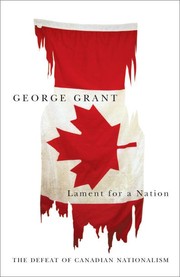
A landmark philosophical essay on Canadian nationalism and the threat of American absorption, written after the fall of the Diefenbaker government. It is essential for understanding the anxiety about Canadian identity that runs through all modern political debate.
Discussion
Keep reading
Paths that share books, cover the same subject, or open a related topic.