Australian History: The Best Books to Read, in Order
This curriculum traces Australian history from its deep Indigenous roots through colonization, nation-building, and into the modern era. Each stage builds on the last — beginning with accessible overviews, then drilling into specific periods and perspectives, and finally engaging with scholarly and critical works that challenge and deepen your understanding.
Foundations: The Big Picture
BeginnerGain a confident, chronological overview of Australian history — from the world's oldest continuous cultures through to the present day — and build the vocabulary needed for deeper reading.
▸ Study plan for this stage
Pace: 4–5 weeks, ~40–50 pages/day. Start with Molony's *Penguin Bicentennial History* (weeks 1–2.5, ~350 pages), then move to Clark's *A Short History of Australia* (weeks 2.5–5, ~300 pages). Allocate 2–3 days per major historical period for reflection and note-taking.
- Aboriginal and Torres Strait Islander cultures as the world's oldest continuous civilizations (65,000+ years), their deep connection to Country, and their sophisticated systems of law, trade, and knowledge
- European discovery and colonization (1788 onwards) as a pivotal rupture: the convict system, frontier violence, and dispossession of Indigenous lands
- The transition from penal colony to settler society: free settlers, land grants, pastoral expansion, and the emergence of colonial identity
- Gold rushes (1850s onwards) as transformative events that brought immigration, wealth, and social upheaval
- Federation (1901) and the creation of the Australian nation-state, including the White Australia Policy and early nation-building
- The 20th century: two world wars, economic depression, post-war immigration, and Australia's evolving relationship with Britain and the Asia-Pacific
- Chronological literacy: the ability to sequence major events and understand how each period shaped the next
- Vocabulary and naming conventions: terms like 'Aboriginal,' 'frontier,' 'convict,' 'federation,' 'Dreaming,' and regional/tribal identities
- What evidence suggests Aboriginal cultures were continuous and sophisticated before European arrival, and how does this challenge earlier historical narratives?
- How did the convict system shape early colonial society, and what were its long-term social and economic consequences?
- What triggered the frontier conflicts between European settlers and Indigenous peoples, and how did dispossession occur across different regions?
- How did the gold rushes transform Australia's economy, demographics, and social structure in the mid-19th century?
- What were the key drivers and consequences of Federation in 1901, and how did the White Australia Policy reflect the values of the new nation?
- How did Australia's involvement in the two world wars reshape its economy, society, and international relationships?
- Create a detailed timeline (poster or digital) spanning 65,000 years to present, marking major events from both Molony and Clark. Use different colors for Indigenous, colonial, and modern periods.
- Write a 500-word comparative essay: 'How do Molony and Clark differ in their treatment of Aboriginal history and frontier violence?' Cite specific passages.
- Build a 'vocabulary glossary' with 30–40 key terms (e.g., 'Dreaming,' 'dispossession,' 'convict,' 'federation,' 'squatter'). Include definitions and one historical example for each.
- Map major regions and trace the spread of European settlement and pastoral expansion across Australia (1788–1900). Annotate with dates and key conflicts.
- Read one primary source document from each major period (e.g., a convict letter, a frontier account, a federation speech). Write a 300-word reflection on what it reveals about attitudes and lived experience.
- Create a 'period summary' (1–2 pages each) for five key eras: pre-1788, 1788–1850, 1850–1901, 1901–1945, 1945–present. Synthesize insights from both books.
Next up: This stage equips you with a solid chronological scaffold and shared vocabulary, enabling you to move into deeper thematic or regional studies—such as focused histories of Indigenous resistance, colonial economics, or specific regions—with confidence in how they fit into the broader Australian narrative.

A concise, readable single-volume narrative of Australian history from First Nations peoples to the late 20th century — the ideal orientation text before anything else.

Manning Clark is the towering figure of Australian historiography; this accessible condensed version of his landmark work introduces the major themes — land, identity, and nationhood — that all later books assume you know.
First Nations: Country, Culture & Survival
BeginnerUnderstand the depth and diversity of Aboriginal and Torres Strait Islander cultures, the catastrophic impact of colonization on First Nations peoples, and the long tradition of Indigenous resistance and resilience.
▸ Study plan for this stage
Pace: 8–10 weeks, approximately 25–35 pages per day. Allocate 3–4 weeks to *Dark Emu*, 2–3 weeks to *Convincing Ground*, and 2–3 weeks to *My Place*, with buffer time for reflection and note-taking between books.
- Aboriginal land management and sophisticated agricultural systems predating European arrival, as documented in *Dark Emu*
- The deliberate suppression and erasure of Indigenous knowledge systems and economic practices by colonial narratives
- The frontier violence and dispossession detailed in *Convincing Ground*, including the massacre of Indigenous peoples and the theft of Country
- The intergenerational trauma and identity fragmentation experienced by Aboriginal families under assimilation policies, as explored in *My Place*
- Indigenous resistance, survival strategies, and cultural continuity across centuries of colonization
- The concept of 'Country' as a living, relational entity central to Aboriginal spirituality, law, and belonging
- The role of oral history, family narrative, and personal testimony in reclaiming suppressed Indigenous histories
- What evidence does Bruce Pascoe present in *Dark Emu* to challenge the myth that Aboriginal Australians were purely nomadic hunter-gatherers?
- How does *Convincing Ground* document the specific mechanisms of frontier violence and dispossession in the Gunditjmara region?
- What does Sally Morgan's *My Place* reveal about the psychological and social impacts of the Stolen Generations policies on Aboriginal families?
- How do the three books collectively demonstrate Indigenous resilience and resistance across different time periods and contexts?
- What is the relationship between Aboriginal land management practices (as described in *Dark Emu*) and Indigenous spiritual and legal systems?
- How do oral history and family narrative function as tools of decolonization in *My Place*?
- Create a detailed timeline mapping the key claims in *Dark Emu* about pre-contact Aboriginal agriculture, aquaculture, and settlement patterns; cross-reference with the frontier violence timeline in *Convincing Ground*.
- Annotate 3–5 key passages from each book that best illustrate the stage's core goal; write a 200-word reflection on how each passage contributes to understanding First Nations resilience.
- Research and write a 500-word case study on one specific massacre or dispossession event mentioned in *Convincing Ground*; supplement with archival sources or local historical records if available.
- Map Sally Morgan's family tree as revealed in *My Place*; trace the intergenerational impacts of assimilation policies on each family member's identity and sense of belonging.
- Conduct a comparative analysis: identify 3–4 examples of Indigenous knowledge or practices described in *Dark Emu* and trace how *Convincing Ground* documents their suppression or erasure during colonization.
- Create a visual or written 'resistance inventory' documenting the various forms of Indigenous resistance and survival strategies evident across all three books (e.g., cultural preservation, oral transmission, political activism).
Next up: This stage establishes the historical and cultural foundations of First Nations Australia—the sophistication of pre-contact societies, the violence of colonization, and the resilience of Indigenous peoples—preparing you to examine contemporary Indigenous activism, policy responses, and ongoing decolonization efforts in the next stage.

A landmark, widely-read reassessment of pre-colonial Aboriginal land management and agriculture; it reframes the starting point of Australian history and is essential reading before tackling colonization.

Focuses on the massacres and dispossession of Aboriginal peoples in south-eastern Australia, building directly on Dark Emu's reframing to confront the violence of the colonial frontier.
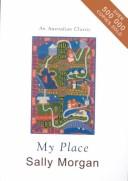
A memoir tracing one Aboriginal family's hidden history across generations; its personal, narrative voice makes the lived consequences of colonization and the Stolen Generations deeply human and accessible.
Colonization & the Making of a Nation
IntermediateExamine the mechanics and human cost of British colonization, the convict era, the gold rushes, and the political process that led to Federation in 1901 — understanding how a colony became a country.
▸ Study plan for this stage
Pace: 10–12 weeks, ~40–50 pages/day. Start with *The Fatal Shore* (4–5 weeks), move to *Australians* (3–4 weeks), then *The Rush That Never Ended* (2–3 weeks) to allow deeper engagement with Hughes's dense narrative and Keneally's thematic synthesis before the more specialized mining history.
- The convict system as both punishment and colonial labor force: how transportation shaped early Australian society, economy, and culture
- The human cost of colonization: Indigenous dispossession, frontier violence, and the lived experiences of convicts, soldiers, and settlers
- The role of exploration and geographical discovery in justifying and enabling British expansion into the Australian interior
- Gold rushes as transformative events: how mineral wealth accelerated population growth, immigration, and economic development while creating social tensions
- The political path to Federation: how separate colonies negotiated union, balancing local autonomy with national identity
- The emergence of Australian identity: how convict heritage, frontier mythology, and democratic ideals combined to forge a distinct national character
- Economic development from primary industries: the transition from convict labor to free settlement, pastoralism, and mining as drivers of growth
- What were the primary reasons Britain chose transportation to Australia, and how did the convict system function as both punishment and labor force?
- How did British colonization affect Indigenous Australians, and what evidence do Hughes and Keneally present about frontier violence and dispossession?
- What role did gold discoveries play in transforming Australian society, economy, and demographics in the 19th century?
- How did the separate Australian colonies develop distinct political cultures, and what were the key arguments for and against Federation in 1901?
- How did the convict past, frontier experience, and gold rush era contribute to the development of a distinctive Australian national identity?
- What were the major economic transitions in colonial Australia, and how did mining differ from earlier pastoral and agricultural development?
- Create a timeline mapping key events from *The Fatal Shore*: major convict arrivals, escapes, rebellions, and the gradual shift from penal to free settlement (1788–1850s). Annotate with Hughes's interpretation of their significance.
- Read selections from primary sources (letters, official reports, newspaper accounts) that Hughes and Keneally cite; compare their interpretations with the original documents to understand how historians construct narratives.
- Write a 1,500–2,000 word essay comparing the experiences of three different groups (e.g., convicts, Indigenous peoples, free settlers) as portrayed across the three books—focus on how each author emphasizes different perspectives.
- Map the gold rush regions discussed in *The Rush That Never Ended*; research one specific goldfield (e.g., Ballarat, Bendigo) using Blainey's framework and local historical sources to understand how mining shaped a particular region.
- Create a debate outline: prepare arguments for and against Federation using evidence from *Australians*. Identify which colonies had most to gain/lose and why the 1901 vote succeeded.
- Construct a visual or written comparison of how Hughes, Keneally, and Blainey each characterize the 'Australian character'—what values, myths, and experiences do they identify as foundational?
Next up: This stage establishes Australia's foundational narrative—how a penal colony became a nation through dispossession, labor, mineral wealth, and political negotiation—providing the historical bedrock necessary to understand the 20th-century challenges of identity, immigration, and governance that the next stage will explore.

The definitive, richly detailed account of the convict transportation system; it sets the brutal social and moral foundations of colonial Australia and is considered one of the greatest works of Australian history.
Keneally's sweeping narrative covers the colonial period through the Eureka Stockade, weaving together social, political, and Indigenous history in an engaging style that bridges the convict era and Federation.
A classic history of Australian mining from the gold rushes onward; Blainey shows how resource wealth shaped the economy, demographics, and national character in ways still visible today.
Federation, War & the 20th Century
IntermediateTrace Australia's evolution as a federated nation — through two World Wars, the ANZAC legend, postwar immigration, and the social upheavals of the 1960s–70s — and understand how these events forged modern Australian identity.
▸ Study plan for this stage
Pace: 8–10 weeks, ~40–50 pages/day. Read "Gallipoli" (weeks 1–4, ~350 pages), then "The Australians" (weeks 5–10, ~500 pages). Allocate 1–2 days per week for reflection and exercises.
- The Gallipoli campaign as a defining moment in Australian national consciousness and the origins of the ANZAC legend
- How the First World War shaped Australian identity, sacrifice, and military tradition
- Federation and the formation of the Australian nation-state as a political and social entity
- The role of immigration, class, and social reform in building modern Australia
- The impact of the Second World War and postwar reconstruction on Australian society
- Social upheaval in the 1960s–70s: generational conflict, feminism, Indigenous rights, and cultural change
- The relationship between Australian nationalism, British ties, and emerging independence
- How war, immigration, and social movements collectively forged a distinctly modern Australian identity
- What were the strategic objectives and human costs of the Gallipoli campaign, and why did it become so central to Australian national mythology?
- How did Carlyon's account of Gallipoli challenge or complicate the traditional ANZAC legend?
- What does Hirst identify as the key factors that shaped Australian national identity between Federation and the 1970s?
- How did immigration policy and social class divisions influence the development of Australian society in the 20th century?
- What were the major social upheavals of the 1960s–70s in Australia, and how did they reflect generational and cultural shifts?
- How did Australia's relationship with Britain evolve across the period covered by these two books, and what does this reveal about Australian independence?
- Create a detailed timeline of major events from Federation through the 1970s, marking military campaigns, political changes, immigration waves, and social movements. Annotate with how each shaped Australian identity.
- Write a 1,500–2,000 word essay comparing Carlyon's portrayal of Gallipoli with the popular ANZAC myth. What does he reveal that the legend obscures?
- Research and write short profiles (300–400 words each) of 3–4 key figures mentioned in the books (e.g., military leaders, politicians, social reformers) and explain their role in shaping modern Australia.
- Create a visual map or chart showing waves of immigration to Australia in the 20th century, their origins, and their cultural and social impact as discussed in Hirst.
- Conduct a close reading of one chapter from each book and write a comparative analysis (800–1,000 words) of how Carlyon and Hirst each approach the relationship between war, society, and national identity.
- Develop a podcast script (5–7 minutes) explaining the ANZAC legend to a general audience, drawing on Carlyon's evidence and analysis to show what is myth versus historical reality.
Next up: This stage establishes the historical foundations and social forces that created modern Australia; the next stage will likely explore contemporary Australian identity, cultural diversity, and the ongoing legacies of these 20th-century transformations in the 21st century.

The most authoritative and readable account of the Gallipoli campaign; since the ANZAC legend is central to Australian national identity, this book is essential for understanding 20th-century Australia.

A sharp, analytical look at what makes Australians distinctively Australian — covering egalitarianism, democracy, and national character — providing the cultural framework for understanding postwar and modern Australia.
Modern Australia: Politics, Identity & Reckoning
ExpertEngage critically with contested histories, reconciliation, multiculturalism, and Australia's place in the Asia-Pacific — developing a nuanced, evidence-based view of the country's present by understanding its unresolved past.
▸ Study plan for this stage
Pace: 8–10 weeks, ~40–50 pages/day (accounting for dense critical analysis and note-taking)
- Greer's critique of white Australian identity and the 'frontier myth' as a foundational narrative that obscures colonial violence and Indigenous dispossession
- The concept of 'jumping up' as a metaphor for white Australians' self-invention and claim to belonging, and its relationship to denial of Aboriginal sovereignty
- Lyons' periodization of Australian history and how political, economic, and social structures evolved from colonization through the 20th century
- Reconciliation as contested terrain: competing definitions, the Mabo decision, the Stolen Generations, and ongoing structural inequalities
- Multiculturalism as policy and ideology: its origins, implementation, limitations, and tensions with assimilationist and nationalist narratives
- Australia's geopolitical position in the Asia-Pacific: historical anxieties, immigration policy, and contemporary regional relationships
- The role of historiography itself: how historians construct narratives, whose voices are centered or marginalized, and the politics of historical interpretation
- What does Greer mean by 'whitefella jump up,' and how does this concept challenge conventional narratives of Australian settlement and national identity?
- How does Lyons trace the evolution of Australian political institutions and social structures from colonization to the modern era, and what are the key turning points he identifies?
- What are the main arguments for and against multiculturalism as a framework for managing diversity in Australia, and how do Greer and Lyons differ in their assessments?
- How have Indigenous land rights, reconciliation efforts (including Mabo and the Stolen Generations inquiry), and ongoing structural inequalities shaped modern Australian identity and politics?
- What historical factors explain Australia's anxieties about its place in the Asia-Pacific, and how have these anxieties influenced immigration and foreign policy?
- How do Greer and Lyons use historical evidence differently to construct their arguments, and what are the implications of their interpretive choices for understanding Australia's present?
- Create a detailed timeline mapping key events in Greer's critique (e.g., frontier violence, myths of settlement) against Lyons' periodization; annotate moments where their interpretations align or diverge
- Write a 1,500-word essay analyzing how the 'frontier myth' functions in one specific Australian historical narrative (e.g., the Eureka Stockade, the Gallipoli legend, or the gold rushes) using Greer's framework
- Construct a comparative chart of multiculturalism policies across three decades (e.g., 1970s, 1990s, 2010s) using evidence from Lyons; assess how well each iteration addressed the tensions Greer identifies
- Read primary source documents (e.g., excerpts from the Mabo judgment, the Bringing Them Home report, or parliamentary debates on reconciliation) and annotate them against arguments in both books
- Interview or survey 3–5 people with different backgrounds (Indigenous Australian, recent migrant, long-term settler) about their understanding of Australian identity; compare their responses to Greer's and Lyons' analyses
- Write a critical book review (800–1,000 words) of either Greer or Lyons that identifies their strengths, blind spots, and implications for how we understand modern Australia
Next up: By grappling with how Australia's contested past—its colonial violence, identity anxieties, and unresolved reconciliation—shapes its present politics and society, you are now equipped to examine how these tensions play out in specific contemporary policy domains, cultural debates, or regional relationships in the next stage.
A provocative, controversial essay arguing Australia must fundamentally reimagine its relationship with Aboriginal culture; it forces critical thinking about identity and reconciliation at an advanced stage of study.
An explicitly historiographical text that surveys the major scholarly debates — the History Wars, genocide, multiculturalism, gender — giving the advanced reader the tools to evaluate competing historical arguments independently.
Discussion
Keep reading
Paths that share books, cover the same subject, or open a related topic.