How the world is powered (and what's next)
This four-stage curriculum takes a beginner from intuitive "what is energy?" thinking all the way to the policy, economics, and engineering realities of the global energy transition. Each stage builds on the last: first establishing physical and historical intuition, then examining today's fossil-fuel system, then diving into the technologies replacing it, and finally grappling with the full complexity of getting from here to there.
Foundations: Energy, Power & How the Grid Works
BeginnerBuild a solid mental model of what energy and power actually are, how electricity is generated and delivered, and why the modern grid is an engineering marvel — without needing a science background.
▸ Study plan for this stage
Pace: 10–13 weeks total, reading ~25–35 pages/day on weekdays with lighter reading on weekends. Allocate roughly 3 weeks for "The Grid" (~250 pp), 3–4 weeks for "Energy" (~250 pp of core chapters), and 4–5 weeks for "The Quest" (~700 pp). Take 2–3 days between books to review notes and attempt the reflect
- Energy vs. Power distinction: energy is the total quantity of work done or stored; power is the rate at which energy is delivered or consumed — Smil hammers this distinction repeatedly and it underpins everything else in the stage
- The grid as a living system: Bakke's central argument is that the U.S. grid is not a static infrastructure but a fragile, constantly-balanced organism that must match supply and demand in real time, to the millisecond
- Baseload, peaking, and intermittency: understanding why some generators (coal, nuclear) run continuously while others (gas turbines, hydro) ramp up on demand, and why renewables introduce new balancing challenges — threaded across all three books
- Primary energy sources and their conversion chains: Smil traces how every useful energy service (heat, light, motion) is the end product of multiple lossy conversions from a primary source (sun, fossil fuels, uranium), and why efficiency losses compound
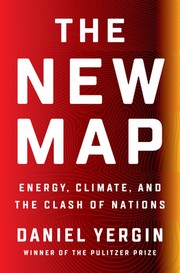
- The history and geopolitics of fossil fuels: Yergin's narrative in The Quest shows how oil, gas, and coal became the backbone of modern civilization and why switching away from them is a decades-long sociotechnical challenge, not merely a technical one
- Transmission and distribution infrastructure: Bakke explains the physical difference between high-voltage long-distance transmission lines and the lower-voltage local distribution network, and why the 'last mile' is where most outages occur
- The regulatory and market structure of electricity: Bakke and Yergin together reveal how deregulation, utility monopolies, and wholesale electricity markets shape what gets built, who pays, and how resilient the system is
- The energy transition as a systems problem: all three authors converge on the idea that decarbonizing the grid requires simultaneous changes in technology, policy, markets, behavior, and infrastructure — no single lever is sufficient
- After reading Bakke, can you explain in plain language why the grid cannot simply 'store' excess electricity the way a water tower stores water, and what consequences that has for grid operators every second of every day?
- Smil distinguishes sharply between energy and power — can you give two concrete numerical examples (e.g., a light bulb vs. a car engine) that illustrate the difference, and explain why conflating the two leads to bad policy thinking?
- Yergin traces the rise of natural gas as a 'bridge fuel' — what are the arguments he presents for and against this framing, and how does Bakke's portrait of the grid's fragility either support or complicate Yergin's optimism?
- Drawing on Smil's conversion-chain framework, trace the energy losses involved in going from coal in the ground to light in a room — at what stages is energy lost, and roughly what percentage of the original energy actually reaches the end use?
- Bakke argues the U.S. grid is 'aging and unprepared' for the 21st century — what are the three or four structural reasons she identifies, and which does Yergin's historical narrative help explain as path-dependent outcomes of past decisions?
- All three authors address renewable energy. How do their assessments of solar and wind differ in tone and emphasis, and what does each author identify as the single biggest obstacle to scaling renewables on the grid?
- Energy diary: For one full week, log every energy-consuming activity you do (driving, cooking, charging devices, heating/cooling). After finishing Smil, go back and annotate each entry with the primary energy source, the conversion steps involved, and a rough estimate of the power draw in watts — this makes Smil's abstract conversion chains viscerally concrete.
- Draw your grid: After finishing Bakke, sketch a diagram from power plant to wall outlet — include generation, step-up transformers, high-voltage transmission, step-down substations, and distribution lines. Label where AC/DC conversions happen and annotate where Bakke says the system is most vulnerable. No engineering background needed; the act of drawing forces you to identify gaps in your mental
- Utility bill deep-dive: Pull 12 months of your own electricity bills. Calculate your average daily kWh consumption, convert it to average power in watts, and compare it to Smil's figures for per-capita energy use in wealthy nations. Note how your usage varies seasonally and hypothesize why.
- Timeline of energy transitions: As you read Yergin, build a running timeline (a simple spreadsheet or index cards work well) marking each major energy transition he describes — wood to coal, coal to oil, oil to gas, the nuclear era, the shale revolution, the renewables surge. For each transition, note the trigger (technology, price shock, policy, war) and the lag time before the new source reached
- Debate prep — 'The grid is ready for 50% renewables by 2035': After finishing all three books, write a one-page argument FOR this claim drawing on Yergin's optimism about technology, then write a one-page argument AGAINST it drawing on Bakke's structural critique and Smil's efficiency math. Presenting both sides in writing forces integration of all three authors.
- Neighborhood grid walk: Take a 30-minute walk in your neighborhood specifically looking for grid infrastructure — distribution poles, transformer cans, underground vault covers, substations, any visible generation (rooftop solar, etc.). Photograph what you find and annotate each photo with the correct term and function from Bakke's vocabulary. This grounds the book's abstract infrastructure descri
Next up: By the end of this stage the reader has a firm grasp of how energy flows from source to socket and why the grid is both a technical and political system — the essential scaffolding for tackling the next stage, which zooms in on the economics, policy levers, and specific technologies (storage, smart grids, nuclear, offshore wind) that will determine whether the energy transition succeeds.
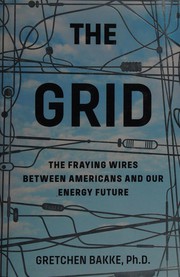
A beautifully written, non-technical introduction to the U.S. electrical grid — its history, fragility, and the human systems behind it. Read first to make the grid feel real and concrete.

Smil distills decades of energy expertise into an accessible primer covering the physics, history, and forms of energy. Establishes the vocabulary and quantitative intuition every later book assumes.
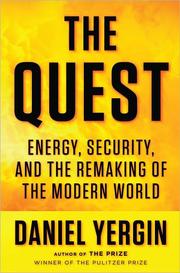
A sweeping narrative of how the modern energy system — oil, gas, electricity, and early renewables — was built. Read after Smil so the history lands on a foundation of solid concepts.
Fossil Fuels: Why They Dominated & Why They Persist
BeginnerUnderstand the extraordinary energy density and economic lock-in of fossil fuels, the infrastructure and geopolitics built around them, and the true scale of what must be replaced.
▸ Study plan for this stage
Pace: 6–8 weeks, ~25–30 pages/day (The Prize is ~900 pages); read in three natural arcs — Rise of Oil (Parts 1–2), The Age of Oil Geopolitics (Parts 3–4), and The Modern Era & Legacy (Parts 5–6) — spending roughly 2 weeks on each arc
- Energy density advantage: why oil and coal deliver more usable energy per unit of weight/volume than any 19th–20th century alternative, and how that physical fact shaped industrial civilization
- Infrastructure lock-in: how decades of investment in pipelines, refineries, tankers, power plants, and internal-combustion vehicles created switching costs that persist today
- The 'prize' as strategic asset: how control of oil became synonymous with national power, military capability, and economic dominance from WWI through the Gulf Wars
- Commodity price cycles and their consequences: how boom-bust oil prices drive investment, political instability, and energy policy decisions worldwide
- The 'Seven Sisters' and market concentration: how a handful of vertically integrated companies shaped supply, pricing, and geopolitics for most of the 20th century, and how OPEC later shifted that power
- The 1973 oil embargo and the 1979 shock as turning points: how supply disruptions revealed Western vulnerability and triggered the first serious wave of energy-efficiency thinking
- Resource nationalism vs. international capital: the recurring tension between oil-rich states seeking sovereignty over their resources and multinational companies seeking stable returns
- Scale of dependence: the sheer volume of oil consumed globally each day as a baseline for understanding what any energy transition must replace
- Why did oil displace coal and whale oil so rapidly in the late 19th and early 20th centuries — what physical and economic properties made it superior?
- How did WWI and WWII demonstrate that oil was not merely a commercial commodity but a decisive strategic weapon, and what policies did that realization produce?
- What structural features of the oil industry — from wellhead to consumer — make it so difficult to disrupt or replace quickly, even when the political will exists?
- How did the 1973 Arab oil embargo change the relationship between energy supply and national security in the United States and Western Europe?
- What is the difference between 'proven reserves,' 'probable reserves,' and 'possible reserves,' and why does that distinction matter for forecasting the future of fossil fuels?
- After reading The Prize, what is your best estimate of the daily global oil consumption baseline that any renewable transition must match, and what does that number feel like in concrete terms?
- Timeline wall chart: As you finish each section of The Prize, add 5–10 events to a hand-drawn or spreadsheet timeline spanning 1850–2000. Annotate each event with its effect on price, supply, or geopolitics — by the end you will have a visual map of oil's grip on history.
- Energy density comparison table: Research and build a simple table comparing the energy density (MJ/kg) of crude oil, coal, natural gas, wood, a lithium-ion battery, and hydrogen. Write two sentences explaining what the numbers mean for transportation and grid storage.
- Barrel-to-daily-life translation: Look up current global oil consumption in barrels per day (EIA or IEA public data). Convert that number into something tangible — Olympic swimming pools, supertankers, or gallons per person per day — and write a short paragraph on what 'replacing this' actually means.
- Geopolitical map exercise: After reading the OPEC and Middle East chapters, draw a simple world map marking the top 10 oil-producing nations in 1973 and today. Note which countries shifted position and hypothesize why.
- Lock-in cost estimate: Pick one sector (e.g., US freight trucking or residential heating). Do a back-of-envelope calculation of the replacement cost of existing fossil-fuel infrastructure in that sector using publicly available fleet/asset data. Compare your number to a recent government energy-transition budget.
- Reflection journal entry: After finishing The Prize, write 300–500 words answering: 'What surprised me most about how fossil fuels came to dominate, and what does that tell me about the barriers — and opportunities — in replacing them?'
Next up: Having internalized the physical advantages, economic entrenchment, and geopolitical weight of fossil fuels through The Prize, the reader is now equipped to appreciate exactly what renewable energy technologies must overcome — setting the stage for exploring how solar, wind, and storage are attempting to match, and ultimately surpass, that legacy.
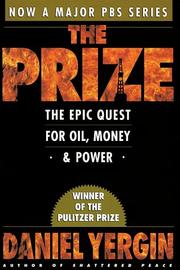
The definitive history of oil — its discovery, the empires it built, and the wars fought over it. Reading this explains why fossil fuels are so deeply embedded in civilization.
A contrarian, pro-fossil-fuel argument that forces the reader to engage seriously with why hydrocarbons persist and what the real human costs of rapid elimination would be — essential for understanding the full debate.
The Technologies: Solar, Wind, Nuclear & Batteries
IntermediateDevelop a working understanding of how each major clean-energy technology actually functions, its strengths and limitations, and the role storage plays in making intermittent sources reliable.
▸ Study plan for this stage
Pace: 6–8 weeks total: Weeks 1–4 cover "A Question of Power" by Robert Bryce (~25–30 pages/day, reading in thematic chunks by energy source/region); Weeks 5–8 cover "Why Nuclear Power Has Been a Flop" by Jack Devanney (~20–25 pages/day, slower pace to absorb the economic and engineering arguments carefull
- Energy density and power density: Bryce's central framework for comparing solar, wind, and fossil fuels — understanding why watts per square meter matter for land use, cost, and reliability
- The 'Four Imperatives' Bryce identifies (land, water, minerals, money) and how each technology scores against them, with real-world case studies from the developing world
- Intermittency and the 'reliability gap': why solar and wind output is variable by nature, and the grid-stability consequences Bryce documents through blackout and grid-stress examples
- The role of batteries and storage: Bryce's treatment of why current battery technology (scale, cost, materials) cannot yet bridge the reliability gap for grid-scale intermittent renewables
- Nuclear's theoretical advantages — high energy density, low land use, near-zero operational emissions — as the counterpoint Bryce implicitly sets up and Devanney explicitly argues for
- Devanney's core thesis: nuclear has failed economically not because of physics but because of regulatory ratcheting, litigation-driven cost escalation, and institutional risk-aversion in the West
- Overnight capital cost vs. levelized cost of electricity (LCOE): Devanney's detailed breakdown of why nuclear construction costs spiraled, and how to read energy cost comparisons critically
- The 'what could have been' counterfactual: Devanney's analysis of French and naval reactor programs as proof that low-cost, safe nuclear is achievable under different institutional conditions
- According to Bryce, what does power density reveal about solar and wind that headline capacity figures conceal, and what are the practical land-use consequences he documents?
- How does Bryce characterize the current state of grid-scale battery storage, and what specific material or economic constraints does he cite as barriers to scaling it up?
- What does Bryce's reporting from the developing world (e.g., India, Nigeria, sub-Saharan Africa) reveal about the human cost of energy poverty, and how does it complicate simple 'go renewable' prescriptions?
- What does Devanney mean by 'regulatory ratcheting,' and how does he argue it drove nuclear construction costs in the United States from the 1970s onward?
- How does Devanney use the French nuclear program and U.S. Navy reactor record as evidence that the problems plaguing civilian nuclear are institutional rather than inherent to the technology?
- After reading both books together, how would you characterize the tension between Bryce's skepticism of current renewables and Devanney's indictment of nuclear's track record — and what does that tension imply about the path to a reliable, clean grid?
- Power-density comparison table: Build a spreadsheet comparing solar, wind, and nuclear on at least five dimensions Bryce uses (power density W/m², capacity factor, land area required for 1 GW, key minerals needed, approximate LCOE). Populate it with figures from Bryce, then fact-check two or three numbers against a public source (e.g., EIA, IRENA) and note any discrepancies.
- Reliability gap thought experiment: Using Bryce's intermittency arguments, sketch (on paper or in a simple chart) how you would supply a hypothetical city of 500,000 people with solar + wind alone for 72 hours of low-sun/low-wind conditions. Estimate the battery storage required in MWh, then price it using a per-kWh battery cost Bryce cites. Reflect on what the exercise reveals.
- Regulatory timeline reconstruction: After reading Devanney, create a chronological timeline of the key U.S. regulatory and legal events he identifies (e.g., NEPA, AEC restructuring, intervenor litigation milestones) and annotate each with its estimated cost impact on nuclear construction. This makes his abstract argument concrete and testable.
- Cost-escalation case study: Devanney discusses specific reactor projects or cost data. Pick one example he analyzes and research its actual final cost and timeline using a public source. Write a one-page memo comparing Devanney's account to what you find — where does he align with the record, and where might he be selective?
- Synthesis debate prep: Write a structured one-page 'steel-man' for each author's position — the strongest possible case for Bryce's renewable-skepticism and for Devanney's nuclear-rehabilitation argument. Then write a single paragraph identifying the one factual or empirical question whose answer would most change your view.
- Energy-poverty case mapping: Bryce profiles specific communities or countries suffering from energy poverty. Choose two of his examples and locate them on a map; research their current electricity access rates (World Bank data) and note whether the situation has changed since Bryce wrote. This grounds the book's human stakes in current reality.
Next up: By exposing the real physics, economics, and institutional failures behind each major technology, this stage equips the reader to move from 'how do these technologies work?' to 'how do we build and pay for a grid that integrates them?' — the central question of any stage focused on grid architecture, policy, and the economics of the energy transition.

Focuses on electricity access and the real-world constraints of power density, making the trade-offs between solar, wind, and nuclear vivid and concrete before diving deeper into each.

A rigorous, data-driven look at nuclear energy's economics and regulatory history — essential for understanding why a low-carbon technology with enormous promise has struggled to scale.
Focuses on solar power and the falling cost of photovoltaics, explaining the technology and the economic tipping points that make the energy transition plausible. Pairs well with the nuclear book to show the contrast.
The Transition: Getting from Here to There
ExpertSynthesize everything into a clear-eyed view of the full energy transition — its pace, the role of policy and markets, what a decarbonized grid actually requires, and the most credible paths forward.
▸ Study plan for this stage
Pace: 10–13 weeks total: ~3 weeks for Gates ("How to Avoid a Climate Disaster," ~250 pp of core content — read at ~15 pp/day with reflection time); ~3 weeks for Griffith ("Electrify," ~250 pp — read at ~15 pp/day, pausing to sketch diagrams); ~4–5 weeks for Smil ("Energy and Civilization," ~550 pp — read
- The '5 questions' framework (Gates): steel, cement, meat, electricity, and transportation as the five hardest decarbonization problems, and why electricity alone is insufficient
- Green premiums: the cost gap between a clean solution and its fossil-fuel equivalent as the central policy and market design target
- Electrify-everything strategy (Griffith): the argument that mass electrification of transport, heating, and appliances — combined with a clean grid — is the single most leveraged transition pathway
- Demand-side transformation: Griffith's emphasis that consumer behavior, building retrofits, and appliance turnover rates are as decisive as supply-side generation build-out
- Historical energy transition timescales (Smil): why past transitions (wood→coal→oil→gas) took 50–70 years and what that implies for the pace of a renewables transition
- Energy return on investment (EROI) and the material/land intensity of renewable systems — Smil's corrective to techno-optimism
- The role of policy instruments: carbon pricing, mandates, subsidies, and public procurement in closing green premiums and accelerating deployment
- Grid architecture for a decarbonized system: the interplay of variable renewables, long-duration storage, transmission expansion, demand response, and firm low-carbon power (nuclear, geothermal, CCS)
- After reading Gates, can you list the five sectors he identifies as hardest to decarbonize and explain why electricity generation, though critical, is not sufficient on its own?
- What is a 'green premium,' how does Gates propose to measure it, and what combination of R&D, policy, and deployment is needed to drive it toward zero?
- How does Griffith's electrify-everything argument complement or challenge Gates's sector-by-sector analysis — where do they agree, and where does Griffith go further?
- What does Smil's historical record of energy transitions tell us about the realistic pace of the current one, and how should that temper or inform the timelines proposed by Gates and Griffith?
- What physical and material constraints does Smil raise (land use, mineral inputs, EROI) that a credible decarbonization plan must account for, and how well do Gates and Griffith address them?
- Synthesizing all three books: what does a fully decarbonized grid actually require in terms of generation mix, storage, transmission, and demand-side change — and what are the two or three most critical policy levers to get there?
- Green Premium Audit: Pick three products or services in your own life (e.g., your car, home heating, a flight). Research the current green premium for each clean alternative. Track how those premiums have changed over 5 years using public data (BNEF, LAZARD, IEA). Write a one-page memo on which premium is closest to zero and why.
- Electrification Household Plan (Griffith-inspired): Draw a complete energy-flow diagram of your home or a representative household. Identify every fossil-fuel touchpoint. Propose a phased electrification roadmap with rough costs, sequencing logic, and the grid upgrades it would require — mirroring Griffith's methodology.
- Transition Timeline Comparison: Build a simple table comparing the historical transition timescales Smil documents (coal rise, oil rise, natural gas rise) against the IPCC 1.5°C scenario and the timelines implied by Gates and Griffith. Write a 300-word reflection: what would have to be historically unprecedented for the fast scenarios to succeed?
- Policy Lever Matrix: Create a 3×4 matrix with the three hardest-to-decarbonize sectors from Gates on one axis and four policy instruments (carbon price, mandate/standard, public R&D subsidy, procurement) on the other. For each cell, find one real-world example and rate its effectiveness. Present your matrix to a study partner or post it for peer feedback.
- Smil vs. Griffith Debate Prep: Write a structured 500-word 'steel-man' of Smil's skepticism about rapid transition pace, then write a 500-word rebuttal using Griffith's data and Gates's policy toolkit. Identify the two empirical questions whose answers would most change your conclusion.
- Decarbonized Grid Design Exercise: Using publicly available data (e.g., EIA, NREL), sketch a generation and storage portfolio for a U.S. state or your country that achieves 90%+ clean electricity. Specify the role of firm power, storage duration needed, and transmission additions. Annotate where Gates's, Griffith's, and Smil's frameworks each inform your choices.
Next up: By synthesizing the pace, constraints, and policy levers of the energy transition across all three books, the reader is now equipped to move from understanding *what* must happen to evaluating *who* is making it happen — setting the stage for a stage focused on actors, institutions, and real-world implementation (finance, geopolitics, corporate strategy, and on-the-ground deployment).

Gates frames the transition as an engineering and innovation challenge, walking through each sector of the economy and what zero-carbon solutions exist or still need to be invented. Accessible but rigorous.

A detailed, optimistic blueprint for electrifying everything — buildings, transport, industry — and what the grid must become to support it. Builds directly on Gates by getting into the practical how.
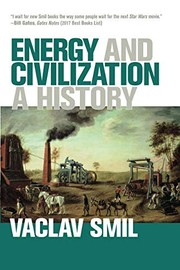
Smil's magnum opus places the entire energy transition in the longest possible historical context, tempering optimism with hard data on the pace of past energy transitions. The ideal capstone for a deep learner.
Discussion
Keep reading
Paths that share books, cover the same subject, or open a related topic.