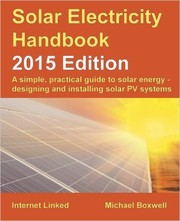
Climate change: understand it, then act
This four-stage curriculum takes a beginner from the core science of climate change through realistic technological and policy solutions, and finally to the question of personal and collective agency. Each stage builds the vocabulary and mental models needed for the next, so that by the end the reader can think critically and act meaningfully on one of the defining challenges of our time.
Foundations: The Science & the Story
BeginnerUnderstand what climate change is, why scientists are certain it is happening, and how it affects the planet — without needing a science background.
▸ Study plan for this stage
Pace: 6–8 weeks total. Book 1 — "The Discovery of Global Warming" (Weart): ~3–4 weeks at roughly 20–25 pages/day (the book is ~200 pages of text plus notes; read the main narrative chapters and skim the endnotes). Book 2 — "The Uninhabitable Earth" (Wallace-Wells): ~3–4 weeks at roughly 20–25 pages/day (~
- The greenhouse effect and the physical mechanism by which CO₂ and other gases trap heat in the atmosphere (Weart, Ch. 1–3)
- The history of climate science: how researchers from Fourier and Tyndall to Keeling and Hansen built the case for anthropogenic warming over 150+ years (Weart, throughout)
- Scientific consensus and uncertainty: how the IPCC process works, why uncertainty in models does not undermine confidence in the core findings (Weart, final chapters)
- The Keeling Curve and the significance of continuous atmospheric CO₂ measurement as the 'smoking gun' of human influence (Weart)
- The cascade of climate impacts — heat death, hunger, drowning, wildfire, unbreathable air, economic collapse — as interconnected, compounding risks rather than isolated events (Wallace-Wells, Part I)
- Feedback loops and tipping points: how warming triggers self-reinforcing cycles (permafrost methane, ice-albedo, etc.) that can accelerate change beyond human control (Wallace-Wells, Part II)
- The 'geography of suffering': how climate impacts are distributed unequally across regions and populations, with the poorest bearing the greatest burden (Wallace-Wells, throughout)
- Narrative vs. data: how Wallace-Wells uses storytelling and worst-case scenarios deliberately to motivate urgency, and how to read that rhetorical choice critically alongside Weart's historical rigor
- In your own words, explain the greenhouse effect: what gases are involved, where they come from, and why their increase causes warming — without using jargon.
- What were the two or three pivotal moments in the history of climate science (as told by Weart) that shifted the field from fringe curiosity to mainstream consensus, and why did each matter?
- Wallace-Wells organizes impacts into distinct 'elements of chaos.' Name at least four of these and explain how they interact or amplify one another.
- What is a climate feedback loop? Give one specific example from Wallace-Wells and explain why it makes the problem harder to solve than a simple cause-and-effect relationship.
- Both books were written for general audiences but use very different approaches. How does Weart's historical narrative differ from Wallace-Wells's journalistic alarm — and what does each approach help you understand that the other cannot?
- After reading both books, what is the single most important thing you believe the general public misunderstands about climate change, and what evidence from these books supports your view?
- **Timeline exercise (Weart):** As you read, build a hand-drawn or digital timeline of climate science milestones — one entry per chapter. Include the scientist, the discovery, and one sentence on why it mattered. Review it when you finish the book to see the full arc of evidence-building.
- **Concept map (both books):** After finishing both books, draw a concept map connecting at least 8 climate impacts from Wallace-Wells back to the core greenhouse mechanism explained by Weart. Use arrows to show cause-and-effect and feedback relationships.
- **'Explain it to a friend' journal:** After each major section of either book, write a 3–5 sentence plain-language summary as if texting it to a curious friend with no science background. This forces you to translate technical content into your own words.
- **Fact-check one claim:** Choose one alarming statistic or projection from 'The Uninhabitable Earth,' look up its primary source (Wallace-Wells provides extensive endnotes), and write a short paragraph on whether the source supports the claim and what caveats the original study includes. This builds critical reading habits.
- **Personal carbon audit:** Use a free online carbon footprint calculator (e.g., the EPA's or WWF's) to estimate your own annual emissions. Then re-read the relevant passages in Wallace-Wells on consumption and economic drivers. Write a half-page reflection on what surprised you.
- **Discussion or reflection questions:** Pick any two of the 'questions to answer' above and write a one-page response to each, citing specific passages from the books. If you have a reading partner or group, use these as discussion prompts instead.
Next up: Having established *why* scientists are certain climate change is happening and *what* its human costs look like, the reader is now primed to move from diagnosis to prescription — exploring the technological, political, and social solutions that form the next stage of the curriculum.
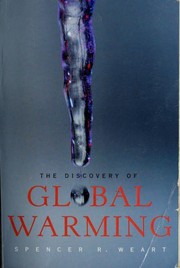
A concise, accessible history of the science that explains how we know what we know — perfect first read for building trust in the evidence before diving into impacts.
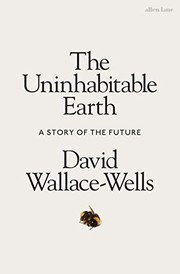
A vivid, chapter-by-chapter tour of climate impacts (heat, floods, famine, conflict) that makes the stakes viscerally real and motivates everything that follows.
The Energy System: How We Got Here
BeginnerGrasp how fossil fuels came to power the modern world, why the energy transition is hard, and what the scale of the problem actually looks like in numbers.
▸ Study plan for this stage
Pace: 10–12 weeks total. Weeks 1–7: "The New Map" by Daniel Yergin (~25–30 pages/day, 5 days/week). Weeks 8–12: "Sustainable Energy – Without the Hot Air" by David J.C. MacKay (~20–25 pages/day, 5 days/week — pause frequently to check MacKay's arithmetic yourself).
- The historical co-evolution of fossil fuels and modern civilization: how oil, gas, and coal each became structurally embedded in transportation, heating, electricity, and geopolitics (Yergin)
- Energy geopolitics and the concept of 'the new map': how shale/fracking, the rise of renewables, and great-power competition are redrawing energy relationships between the US, Russia, China, and the Middle East (Yergin)
- Why energy transitions are slow: the enormous scale of existing infrastructure, sunk capital, and the political economy of incumbents — Yergin's historical examples illustrate that past transitions took 50–70 years
- Units and orders of magnitude: MacKay's insistence on working in kWh per person per day as a common currency to compare energy sources and consumption without being misled by large-sounding but contextless numbers
- Supply-side accounting: MacKay's systematic audit of how much energy the UK (and by extension any country) could realistically harvest from wind, solar, tidal, wave, hydro, and nuclear — and the land/sea area each requires
- Demand-side accounting: MacKay's breakdown of personal and national energy consumption across driving, flying, heating, food, and manufactured goods — establishing what 'the problem' actually is in numbers
- The 'balance the books' constraint: MacKay's central argument that any credible plan must show that supply numbers add up to at least the demand numbers — rhetoric and wishful thinking fail this test
- Path dependency and lock-in: why the cheapest-to-build energy system today is not necessarily the cheapest overall once existing grids, pipelines, and habits are factored in (both authors, complementary angles)
- According to Yergin, what were the key geopolitical and economic forces that made the United States the world's largest oil and gas producer by the 2010s, and how did this 'shale revolution' redraw relationships with OPEC, Russia, and China?
- Yergin argues that energy transitions have always taken much longer than optimists predict. What historical evidence does he use, and what structural factors does he cite to explain this inertia?
- Using MacKay's framework, roughly how many kWh per person per day does a typical high-consumption country use, and which two or three end-uses dominate that total?
- MacKay evaluates each renewable source against the land or sea area it requires. Which sources does he find most promising at national scale, and which does he argue are too dilute to close the gap on their own?
- Both Yergin and MacKay address nuclear energy, but from different angles. How do their treatments differ, and what does each author conclude about nuclear's role in a future energy system?
- After reading both books, how would you explain to a friend why 'just switch to renewables' is simultaneously correct in direction and dangerously incomplete as a plan?
- Unit conversion drill (MacKay-style): Pick three everyday activities — a car trip, a hot shower, and one flight — look up their energy use, and convert each into kWh/person/day. Compare your numbers to MacKay's figures in Part I.
- Build your own 'balance the books' table: Using MacKay's supply and demand chapters as a template, fill in two columns (your country's realistic renewable supply vs. current demand) with real national statistics from Our World in Data or the IEA. Does supply meet demand? By how much does it fall short?
- Geopolitical map exercise (Yergin): Draw or annotate a world map marking the five major fossil-fuel chokepoints Yergin discusses (e.g., Strait of Hormuz, Bosphorus). For each, write one sentence on what disruption there would mean for energy prices.
- Transition timeline comparison: Make a simple chart of three historical energy transitions Yergin describes (e.g., coal→oil in shipping, wood→coal in industry). Record how long each took and what drove it. Then write a one-paragraph argument for whether the current transition will be faster or slower.
- Personal energy audit: Using MacKay's demand categories (transport, heating, food, stuff, flights), estimate your own annual energy consumption in kWh/day. Identify your single largest category and research one concrete action that would cut it by 20%.
- Credibility test for a news headline: Find a current news article claiming a country will be '100% renewable by [year].' Apply MacKay's 'balance the books' test — do the numbers in the article actually add up? Write a half-page critique using the supply/demand framework from both books.
Next up: Having established why fossil fuels dominate, how large the energy system is in real numbers, and why change is structurally hard, the reader is now ready to examine the specific technologies — solar, wind, storage, and the grid — that must do the replacing, and to evaluate their costs, timelines, and trade-offs with the quantitative literacy MacKay has built.
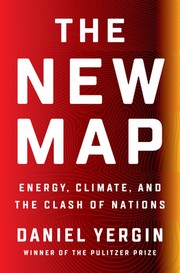
Yergin is the definitive chronicler of the global energy system; reading this first gives the learner a clear picture of the fossil-fuel world we need to move away from.
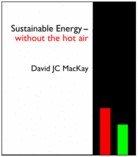
A legendary, numbers-first guide to energy that teaches the reader to think in consistent units — essential numeracy before evaluating any proposed solution.
Solutions: Technology, Policy & Markets
IntermediateEvaluate the most credible pathways to decarbonization — from solar and nuclear to carbon pricing and international agreements — and understand which levers matter most.
▸ Study plan for this stage
Pace: 6–8 weeks total: Weeks 1–3 on "Drawdown" (~30–35 pages/day, including time to explore the project's online solution rankings); Weeks 4–6 on "How to Avoid a Climate Disaster" (~25–30 pages/day, a more analytical read); Week 7–8 reserved for review, cross-book synthesis, and completing exercises.
- The 'Drawdown' framework: ranking ~100 solutions by gigatons of CO₂-equivalent reduced or sequestered, and what it reveals about which sectors and solutions matter most (e.g., reduced food waste, plant-rich diets, and onshore wind consistently ranking near the top)
- Sectoral thinking: Hawken's organization of solutions into sectors — Energy, Food/Agriculture/Land Use, Industry, Transport, Buildings, Materials, and Land Sinks — as a mental model for mapping the whole decarbonization challenge
- Gates's 'Five Questions' framework for evaluating any proposed climate solution: How much of the 51 billion tons of annual emissions does it address? What is the Green Premium? Can it scale? Is it fair? What are the political barriers?
- The Green Premium concept: the cost difference between a clean alternative and its fossil-fuel equivalent, and why driving premiums to zero (or below) through R&D, policy, and deployment is central to Gates's strategy
- The role of breakthrough innovation vs. deployment of existing technology: Gates emphasizes that some hard-to-abate sectors (steel, cement, aviation, agriculture) have no affordable zero-carbon solution yet, while Drawdown shows many solutions are already cost-competitive and deployable now
- Carbon pricing, policy, and market mechanisms: how cap-and-trade systems, carbon taxes, subsidies, and standards interact with the solutions catalogued in both books to accelerate or obstruct deployment
- International cooperation and equity: the tension between developed-nation responsibility for historical emissions and the right of developing nations to grow — explored through Drawdown's global solution framing and Gates's discussion of climate finance and international agreements
- Systems thinking and co-benefits: Drawdown's emphasis that most solutions deliver multiple benefits (health, biodiversity, economic development) beyond carbon, reframing climate action as broadly beneficial rather than purely sacrificial
- According to Drawdown, which three to five solution categories reduce the most emissions globally, and why do some 'unsexy' solutions (e.g., refrigerant management, food waste reduction) outrank high-profile technologies like electric vehicles?
- What is the Green Premium for a specific hard-to-abate sector (e.g., steel or aviation), and what combination of policy and innovation does Gates argue is needed to eliminate it?
- Both books address the role of electricity grids: how do Hawken's ranked solutions for the energy sector and Gates's discussion of the need for reliable zero-carbon electricity complement or tension with each other?
- How does each author treat the relationship between individual action and systemic/policy change — where do they agree, and where do their emphases diverge?
- What does Gates mean when he says we need to 'deploy what we have and invent what we don't,' and which specific solutions from Drawdown would fall into each of those two buckets?
- How do both books address climate justice — the disproportionate burden on low-income countries and communities — and what solutions or policies do they propose to address it?
- Build a personal 'Drawdown Dashboard': create a simple spreadsheet listing 15–20 solutions from Drawdown, recording each solution's sector, estimated gigaton impact, and current cost competitiveness. Then apply Gates's Green Premium lens to at least five of them — note which already have a zero or negative premium and which still require innovation.
- Conduct a 'Five Questions' audit: choose one climate solution not prominently featured in either book (e.g., green hydrogen, direct air capture, or agrivoltaics) and rigorously apply Gates's five evaluative questions to it, writing a one-page memo with your verdict.
- Sector deep-dive comparison: pick one sector covered by both books (e.g., food systems or electricity). Write a 400–600 word comparative analysis of how Hawken and Gates frame the problem, the solutions they prioritize, and the role of policy vs. technology vs. behavior change in that sector.
- Policy design exercise: design a hypothetical national carbon pricing policy. Specify the price level, coverage (which sectors), how revenue is recycled (dividends, green R&D, etc.), and identify which Drawdown solutions it would most accelerate. Defend your design choices in a one-page brief.
- Map the 'deploy now vs. invent later' divide: using Drawdown's solution list and Gates's framework, create a 2×2 matrix with axes of (1) deployment-ready today vs. needs R&D breakthroughs and (2) high gigaton impact vs. lower gigaton impact. Place at least 12 solutions on the matrix and write three takeaways about where investment and policy attention should go.
- Reflection journal — cross-book synthesis: after finishing both books, write a 500-word personal position paper answering: 'If you were advising a national government with a fixed budget, which three levers from these two books would you prioritize and why?' Cite specific data or arguments from both Hawken and Gates.
Next up: By mastering the solution landscape and evaluative frameworks from Drawdown and Gates, the reader is now equipped to move from 'what could work' to 'what is actually happening' — making them ready to critically examine the politics, economics, and social movements that determine whether these solutions get implemented at scale.
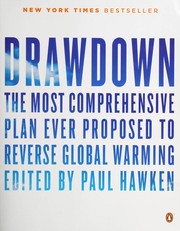
The landmark ranked compendium of 100 real solutions, from wind power to food waste reduction; gives the reader a structured map of the solution space before going deeper.

A clear, sector-by-sector breakdown of where emissions come from and what technologies must scale — a practical complement to Drawdown's breadth.
Agency: Politics, Justice & What You Can Do
ExpertUnderstand the political and social dimensions of climate action, the justice issues at stake, and how individuals and movements can drive meaningful change at scale.
▸ Study plan for this stage
Pace: 8–10 weeks total: ~2.5–3 weeks per book at roughly 20–25 pages/day. Suggested breakdown — Weeks 1–3: "Speed and Scale" (focus on OKR framework and sector-by-sector decarbonization); Weeks 4–6: "The New Climate War" (heavier analytical reading, ~15–20 pages/day to allow time for reflection on disinfo
- OKRs (Objectives & Key Results) applied to climate action — Doerr's framework for setting measurable, time-bound decarbonization targets across six sectors (electricity, transportation, food/land/oceans, nature, industry, and removing carbon)
- The 'speed and scale' imperative — why incremental progress is insufficient and what exponential change in clean technology and policy actually requires
- Manufactured doubt and the fossil fuel playbook — Mann's detailed account of how the fossil fuel industry shifted from outright denial to delay tactics, deflection, and 'doomism' to stall meaningful policy
- Inactivism vs. denial — Mann's argument that the new climate war is fought not just with lies but with fatalism, division, and the promotion of individual guilt over systemic change
- Climate justice and intersectionality — how climate change disproportionately harms frontline, Indigenous, and low-income communities, and why justice must be central (not peripheral) to solutions
- Eco-grief, climate anxiety, and psychological resilience — Ray's framework for processing climate emotions without being paralyzed by them
- Identity-based climate engagement — Ray's argument that who you are (race, class, gender, culture) shapes how you experience climate change and how you can most authentically act
- Collective vs. individual action — the tension and interplay between personal lifestyle choices and systemic/political change, addressed across all three books
- According to Doerr's OKR framework in 'Speed and Scale,' what are the six key sectors that must be decarbonized, and what does he identify as the most critical enablers (e.g., policy, capital, movements) that cut across all sectors?
- Mann argues in 'The New Climate War' that 'doomism' is just as dangerous as denial — what is his evidence for this claim, and how does the fossil fuel industry allegedly benefit from public despair or fatalism?
- How does Mann distinguish between legitimate individual action and the weaponization of 'personal carbon footprint' rhetoric by fossil fuel interests? Where does he draw the line between the two?
- What specific political and policy levers does Doerr prioritize in 'Speed and Scale,' and how do his recommendations align with or diverge from the systemic critique Mann offers in 'The New Climate War'?
- Ray argues in 'Field Guide to Climate Anxiety' that sustainability culture can reproduce harmful social norms — what does she mean, and how should climate movements reckon with issues of race, privilege, and inclusion?
- After reading all three books, how would you articulate a personal theory of change: what combination of individual action, political engagement, and community organizing do you believe is most effective, and why?
- OKR Audit (Speed and Scale): Choose one sector from Doerr's six (e.g., transportation in your city or region) and draft your own mini-OKR: one Objective and 3 measurable Key Results you could realistically track over 12 months. Identify which 'enablers' (policy, capital, movement) are the binding constraints.
- Disinformation Field Guide (The New Climate War): Spend one week logging climate-related content you encounter on social media, news, and conversation. Categorize each instance using Mann's taxonomy — outright denial, delay, deflection, doomism, or 'individualization of blame.' Write a 1-page analysis of what patterns you notice.
- Stakeholder Power Map (Speed and Scale + The New Climate War): Pick one climate policy (e.g., a local clean energy ordinance, a federal carbon price). Map the key stakeholders — who benefits, who resists, and what tactics Mann would predict opponents will use. Outline a counter-strategy.
- Climate Emotion Journal (Field Guide to Climate Anxiety): Over the final 2 weeks of reading Ray's book, keep a daily 10-minute journal. Use her prompts to name specific emotions (grief, rage, guilt, hope), trace their sources, and write one concrete action — however small — that channels each emotion productively.
- Justice Impact Assessment (Field Guide to Climate Anxiety + Speed and Scale): Take any two of Doerr's proposed solutions and apply Ray's justice lens: Who bears the costs of this transition? Who is left out of the narrative? Write a 2-page memo proposing how the solution could be redesigned to center frontline communities.
- Personal Theory of Change (Synthesis across all three books): Write a 500-word personal manifesto that answers: What is my sphere of influence? What systemic barriers does Mann say I must fight? What does Doerr say needs to happen by 2050? How does Ray say I should sustain myself for the long haul? Share it with one person and invite their critique.
Next up: By internalizing the political dynamics, justice frameworks, and personal agency strategies from Doerr, Mann, and Ray, the reader is now equipped to move from understanding *why* and *who* drives change to exploring the deeper scientific, economic, or technological frontiers of *what* specific solutions look like in practice — making any subsequent stage on innovation, policy design, or earth syst

Uses the OKR framework to lay out a concrete, measurable action plan across sectors and levels of society — bridges the gap between big solutions and real-world execution.

A leading climate scientist exposes the tactics used to delay action and explains how citizens and advocates can fight back — essential for understanding the political landscape.

Addresses the psychological and justice dimensions of climate action, helping the reader sustain engagement and situate their personal choices within a broader social movement.
Discussion
Keep reading
Paths that share books, cover the same subject, or open a related topic.