The history of English is one of those subjects where the entertaining books and the accurate books are not the same books, and nobody warns you. Popular accounts pass around the same anecdotes about Norman conquest vocabulary and the Great Vowel Shift, several of which are wrong or wildly simplified, and they are repeated so often that they feel established. The scholarly accounts correct them and are harder work.
The order that solves this is not to skip the popular books. It is to read them for the narrative shape, then read a linguist immediately afterward so the errors get caught while the story is still fresh. Do it in that sequence and you get the pleasure and the accuracy. Do only the first half and you will confidently repeat things that are not true.
One naming warning before you start: two books on this list are called almost the same thing. The story of English is Robert McCrum's television tie-in. The stories of English is David Crystal's scholarly counter-argument, and the plural is the whole point.
The popular narratives
The Mother Tongue is where most readers begin, and it deserves an honest label. Bill Bryson is extremely good company and the book contains a well-documented quantity of factual errors, catalogued at length by linguists since publication. Read it for momentum and enthusiasm. Do not cite it.
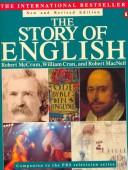
The Adventure of English is Melvyn Bragg's narrative history, more reliable and nearly as readable, structured as the story of the language surviving one threat after another. The story of English is the McCrum, Cran and MacNeil book behind the television series, strongest on the global spread and the varieties.
The correctives
Inventing English is Seth Lerer's literary history, organised as a sequence of moments — Caedmon, Chaucer, the printing press, Webster — rather than as a single arc. It is the point where the subject stops being anecdote and starts being evidence.
The stories of English is the pivot of this path. David Crystal's argument is that the history of English is usually told as the history of standard English, which is one dialect among hundreds that happened to win, and that the regional and non-standard varieties are not deviations from the story but most of it. After Bryson and Bragg this reads like a door opening.
Our Magnificent Bastard Tongue is John McWhorter arguing that English's oddities — the meaningless do in questions, the loss of inflection — come from contact with Celtic and Norse speakers rather than from internal drift. Worth knowing that these are minority positions among historical linguists, argued forcefully rather than settled. McWhorter says so himself; some reviewers say he does not say it loudly enough.
The Unfolding of Language widens the frame past English entirely. Guy Deutscher explains how languages in general erode, reanalyse and rebuild themselves, and it makes the specific English changes stop looking like accidents.
Spelling, dictionaries and the present
Spell It Out is Crystal on why English spelling is the way it is, which turns out to be a story about scribes, printers and successive waves of borrowing rather than about anyone's incompetence.
The meaning of everything is Simon Winchester on the making of the Oxford English Dictionary, and Word by word is Kory Stamper writing from inside Merriam-Webster on what lexicographers actually do all day. Read them together; the first is romance and the second is the job.
A history of the English language is the Baugh and Cable textbook, the standard university survey, and the right place to go when you want the periodised account with the evidence attached. Finish with English as a global language, Crystal on how one language ended up in this position and what that means for the varieties now outgrowing it.
More on the historical side sits under the history of Central Asia if you want a different kind of long view.
Follow the full ordered path here: The History of English: The Best Books to Read First.