The Best Books on the History of Saudi Arabia
This curriculum builds a rigorous, layered understanding of Saudi Arabia's history — from the 18th-century religious-political pact that founded the state, through the oil revolution, to the kingdom's modern contradictions and reforms. Starting at an intermediate level, each stage deepens analytical complexity: first establishing the dynastic and ideological foundations, then examining oil and geopolitics, and finally interrogating the kingdom's internal tensions and future trajectory.
Foundations: The House of Saud and Wahhabism
IntermediateUnderstand how the Al Saud dynasty and the Wahhabi religious movement forged a symbiotic alliance in the 18th century, and how that pact shaped the modern Saudi state.
▸ Study plan for this stage
Pace: 4–5 weeks, ~40–50 pages/day. Begin with Lacey's narrative overview (2–3 weeks), then move to Commins' analytical deep-dive (2 weeks). Allocate 2–3 days for review and synthesis at the end.
- The Al Saud-Wahhabi pact (1744): how Muhammad ibn Saud and Muhammad ibn Abd al-Wahhab formed a political-religious alliance that unified the Arabian Peninsula
- Wahhabi theology and reform: the core tenets of Wahhabism—strict monotheism (tawhid), rejection of saint veneration and folk Islam, and scriptural literalism—and why it appealed to tribal leaders
- The symbiotic relationship: how the Al Saud provided military and political power while Wahhabi clerics provided religious legitimacy and moral authority
- Expansion and consolidation (18th–19th centuries): the three Saudi states and how Wahhabi ideology was used to justify territorial conquest and enforce religious uniformity
- The role of the ulama (religious scholars): how Wahhabi clerics became embedded in governance and shaped law, education, and social policy
- Challenges and adaptations: how the alliance survived external threats (Ottoman pressure, Egyptian invasion) and internal tensions between religious purity and political pragmatism
- Foundation for the modern state: how the 18th-century pact established the institutional and ideological framework that persists in contemporary Saudi Arabia
- What were the historical circumstances and motivations that led Muhammad ibn Saud and Muhammad ibn Abd al-Wahhab to form their alliance in 1744, and what did each party gain from the partnership?
- How did Wahhabi theology differ from mainstream Islam practiced elsewhere in the Arabian Peninsula at the time, and what specific religious reforms did Wahhabis advocate?
- Explain the symbiotic nature of the Al Saud-Wahhabi relationship: how did political power and religious authority reinforce each other, and what would have happened if either partner had been absent?
- Trace the territorial expansion of the Saudi-Wahhabi state from the mid-18th century through the 19th century. What role did Wahhabi ideology play in justifying and sustaining this expansion?
- How did the Wahhabi ulama influence governance, law, and society in the early Saudi states, and what tensions arose between religious ideals and political necessities?
- What external and internal challenges threatened the Al Saud-Wahhabi alliance, and how did the partnership adapt to survive these crises?
- Create a timeline (1744–1850) marking key events in the Al Saud-Wahhabi alliance: the initial pact, major military campaigns, the three Saudi states, and external interventions. Annotate each with the religious or political significance.
- Write a two-page comparative analysis: contrast Wahhabi theology with the folk Islam and saint veneration practices it rejected. Use specific examples from Lacey and Commins to illustrate the differences.
- Construct a 'power map' showing how authority flowed between the Al Saud rulers and Wahhabi clerics. Identify specific decisions or institutions where religious and political power intersected.
- Read primary source excerpts (if available in the books or supplementary materials) from Muhammad ibn Abd al-Wahhab's writings or fatwas. Annotate 2–3 passages explaining how his theology justified political action.
- Write a short essay (3–4 pages) answering: 'Why did the Al Saud-Wahhabi alliance succeed where other Arabian tribal confederations failed?' Ground your answer in both books.
- Create a debate outline: argue both sides of the question, 'Was the Al Saud-Wahhabi pact primarily a political marriage of convenience or a genuine ideological fusion?' Use evidence from both Lacey and Commins.
Next up: This stage establishes the ideological and institutional DNA of the Saudi state, providing essential context for understanding how the Al Saud dynasty navigated modernization, oil discovery, and 20th-century geopolitics while maintaining the Wahhabi-religious legitimacy that underpins their rule.
A narrative-driven, deeply reported history of Saudi Arabia from its tribal origins to the late 20th century — the ideal entry point that builds essential vocabulary about the Al Saud family, Bedouin culture, and the Wahhabi compact.
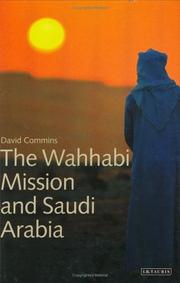
The clearest scholarly account of Wahhabism's origins, theology, and political role; reading it after Lacey means you already have the dynastic context to appreciate how the religious movement was institutionalized.
Oil, Empire, and the American Alliance
IntermediateGrasp how oil transformed Saudi Arabia from a poor desert kingdom into a global power, and how the U.S.–Saudi relationship was built, tested, and sustained.
▸ Study plan for this stage
Pace: 8–10 weeks, ~40–50 pages/day (accounting for dense historical and technical content)
- The global oil industry's emergence and Saudi Arabia's role as the world's largest proven oil reserve holder
- ARAMCO's founding, operations, and evolution from a private concession to a state-controlled enterprise
- The 1973 oil embargo as a turning point in Saudi geopolitical power and U.S.–Saudi relations
- The strategic partnership between the U.S. and Saudi Arabia: its origins, economic foundations, and Cold War context
- Saudi Arabia's internal modernization challenges and the tension between rapid development and Islamic tradition
- The role of Saudi leadership (Ibn Saud, Faisal, Fahd) in navigating oil wealth, regional conflicts, and Western alignment
- OPEC's formation and Saudi Arabia's position within global oil politics and price-setting mechanisms
- The geopolitical consequences of oil dependency: how petrodollars reshaped Middle Eastern politics and U.S. foreign policy
- How did the discovery and extraction of oil fundamentally transform Saudi Arabia's economy, military capacity, and international standing between the 1930s and 1970s?
- What were the key stages in ARAMCO's evolution, and how did Saudi Arabia gradually gain control over its own oil resources?
- Why was the 1973 oil embargo such a pivotal moment, and what did it reveal about Saudi Arabia's newfound power and its relationship with the United States?
- How did the U.S.–Saudi alliance form, and what mutual interests (security, economic, ideological) held it together during the Cold War?
- What internal tensions did rapid oil-driven modernization create in Saudi society, and how did the royal family manage them?
- How did Saudi Arabia's oil wealth influence its regional role in Arab–Israeli conflicts, the Iran–Iraq War, and broader Middle Eastern geopolitics?
- Create a timeline mapping ARAMCO's major milestones (founding, nationalization phases, production peaks) alongside key Saudi political events and U.S. foreign policy shifts; annotate how each influenced the others
- Construct a 'stakeholder map' showing the interests of the U.S., Saudi Arabia, ARAMCO, OPEC members, and Israel in oil politics from 1945–1980; identify where interests aligned and conflicted
- Write a 2–3 page analysis of the 1973 oil embargo from three perspectives: Saudi decision-makers, American policymakers, and global oil markets; explain why each actor made their choices
- Track the evolution of one major Saudi leader (Ibn Saud, Faisal, or Fahd) through all three books; note how their decisions on oil, modernization, and foreign policy shaped the nation
- Compile a 'price of oil' chart showing nominal and real prices from 1930–1980, then correlate major price movements with political events described in the books; write a paragraph explaining each correlation
- Debate or write a position paper: Was the U.S.–Saudi alliance inevitable given geopolitical realities, or were there alternative paths Saudi Arabia could have taken?
Next up: This stage establishes how oil wealth and American partnership became the structural foundation of modern Saudi Arabia, setting up the next stage to examine how that foundation was tested by internal religious movements, regional wars, and the contradictions between rapid modernization and Islamic conservatism.
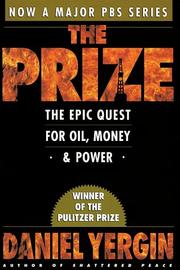
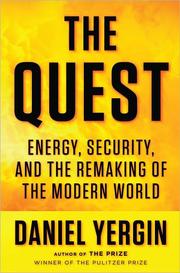
The definitive global history of oil; reading this before Saudi-specific oil histories gives you the indispensable geopolitical and economic framework within which Saudi Arabia's rise must be understood.
A richly illustrated, authoritative account of the Arabian American Oil Company — the institution that physically and financially built modern Saudi Arabia — best read after Yergin's global context.

A comprehensive single-volume history of Saudi Arabia that bridges the dynastic narrative from Stage 1 with the oil era, tying together religion, politics, and petrodollars in one readable arc.
Crisis, Radicalism, and the Siege of Mecca
IntermediateUnderstand the 1979 Grand Mosque seizure as a turning point that radicalized Saudi religious policy, and trace how Wahhabism was exported globally with petrodollar funding.
▸ Study plan for this stage
Pace: 6–7 weeks, ~40–50 pages/day. "The Siege of Mecca" (approximately 350 pages) over weeks 1–2; "Inside the Kingdom" (approximately 400 pages) over weeks 3–5; final week for review, synthesis, and reflection exercises.
- The 1979 Grand Mosque seizure as a watershed moment: its causes (Wahhabi puritanism, modernization backlash, geopolitical tensions) and immediate consequences for Saudi state legitimacy
- The relationship between Wahhabism and the Saudi state: how the siege forced the monarchy to reassert religious authority and deepen Wahhabi orthodoxy as a stabilizing force
- The mechanics of petrodollar-funded religious export: how Saudi oil wealth became a tool for spreading Wahhabi Islam globally through mosques, schools, and clerical networks
- The paradox of Saudi modernization: rapid economic and social change creating internal religious resistance that the 1979 crisis crystallized
- The role of key figures (Juhayman al-Otaibi, King Fahd, the ulema) in shaping the state's response and the radicalization of Saudi religious policy post-1979
- The global spread of Wahhabism: how Saudi Arabia weaponized its oil revenues to export a rigid, puritanical interpretation of Islam to counter Shia influence and Soviet expansion
- The unintended consequences of Saudi religious policy: how state-sponsored Wahhabism created ideological infrastructure that later enabled extremist movements
- The internal Saudi dynamics: tribal, regional, and sectarian tensions that the siege exposed and that shaped the monarchy's subsequent religious and security policies
- What were the primary grievances and ideological motivations of Juhayman al-Otaibi and the seizure movement, and how did they reflect broader tensions within Saudi society?
- How did the 1979 Grand Mosque seizure force the Saudi monarchy to recalibrate its relationship with the Wahhabi religious establishment, and what were the immediate policy consequences?
- Explain the connection between Saudi oil wealth and the global expansion of Wahhabism after 1979. What mechanisms did the Saudi state use to export its religious ideology?
- How did the siege and its aftermath represent a turning point in Saudi Arabia's approach to modernization versus religious conservatism?
- What role did geopolitical factors (Cold War, Iranian Revolution, regional rivalries) play in shaping Saudi Arabia's response to the crisis and its subsequent religious policies?
- How did the state-sponsored promotion of Wahhabism globally create unintended consequences, and what ideological seeds were sown for future extremism?
- Timeline construction: Create a detailed chronology of events from 1975–1985 using both books, marking the siege itself, key policy responses, and the beginning of Saudi religious export initiatives. Annotate with the geopolitical context (Iranian Revolution, Soviet invasion of Afghanistan).
- Character analysis: Write a 2–3 page profile of Juhayman al-Otaibi based on Trofimov's account. What were his ideological roots? How did he represent a broader critique of the Saudi state? Compare his vision to the official Wahhabi establishment.
- Petrodollar mapping: Identify and list specific examples from both books of how Saudi Arabia used oil revenues to spread Wahhabism globally (mosque construction, madrasa funding, clerical training, media). Create a visual map showing target regions and mechanisms.
- Policy analysis: Using Lacey's account of the Saudi state's internal dynamics, write a 2–3 page analysis of how the monarchy balanced modernization pressures with religious conservatism before and after 1979. What were the key decision points?
- Comparative reading: Select 3–4 key passages from Trofimov on the siege itself and 3–4 from Lacey on the state's response. Annotate them to show cause-and-effect relationships and trace how the crisis reshaped Saudi religious policy.
- Reflection essay: Write a 3–4 page essay addressing this question: 'To what extent did the 1979 siege represent a failure of the Saudi state's modernization project, and how did the state's response paradoxically deepen religious radicalization globally?' Use evidence from both books.
Next up: This stage establishes how a domestic religious crisis became the catalyst for Saudi Arabia's global ideological expansion, setting the stage for the next phase: examining how this exported Wahhabism intersected with geopolitical conflicts (Afghanistan, the Gulf, terrorism) and ultimately shaped modern Islamic movements worldwide.
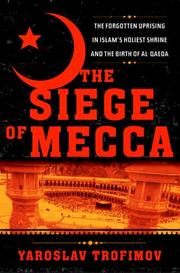
A gripping, meticulously researched account of the 1979 takeover of the Grand Mosque — the single event that most directly explains the kingdom's subsequent turn toward religious conservatism and global Wahhabi export.
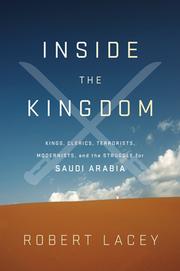
Lacey's sequel to 'The Kingdom' covers 1979 to the post-9/11 era, making it the perfect follow-up that shows the long-term political fallout of the Mecca crisis and the rise of Saudi jihadism.
Advanced Analysis: Power, Reform, and the Modern Kingdom
ExpertCritically analyze the Saudi state's internal contradictions — authoritarian modernization, gender, dissent, Vision 2030, and MBS — with the full historical foundation now in place.
▸ Study plan for this stage
Pace: 4–5 weeks, ~40–50 pages/day (approximately 600–700 pages total)
- The Bin Laden family's dual role as both business titans and symbols of Saudi Arabia's contradictions between modernization and religious conservatism
- How patronage networks, family loyalty, and state control intertwine in Saudi capitalism and governance
- The evolution of Osama bin Laden within the family context and how his radicalization reflects deeper tensions in Saudi society
- The relationship between the Saudi state, the Al Saud family, and private business elites in shaping national policy
- The role of oil wealth in enabling both modernization projects and the perpetuation of authoritarian control
- How international business connections (particularly to the West) create ideological and political friction within Saudi Arabia
- The distinction between the Bin Laden family's public legitimacy and the state's need to distance itself from Osama's actions
- How does the Bin Laden family's business empire exemplify the contradictions between Saudi modernization and religious conservatism?
- What role did patronage and family networks play in the Bin Laden family's rise to prominence, and how does this reflect broader Saudi governance structures?
- How did Osama bin Laden's radicalization emerge from within the context of his family's wealth, the Saudi state's policies, and regional geopolitics?
- What tensions arose between the Saudi government and the Bin Laden family following Osama's emergence as a terrorist threat, and how did the state manage these contradictions?
- How does Coll's narrative illustrate the relationship between oil-fueled capitalism, state power, and ideological conflict in modern Saudi Arabia?
- What does the Bin Laden family's international business dealings reveal about Saudi Arabia's integration into global capitalism and the resulting internal contradictions?
- Create a detailed family tree and business timeline of the Bin Laden family, mapping their major construction, investment, and real estate projects alongside key political events in Saudi Arabia (1930s–2000s). Annotate which ventures benefited from state patronage.
- Write a 2,000-word analytical essay comparing how the Saudi state used the Bin Laden family as a symbol of modernization while simultaneously distancing itself from Osama—examine the contradictions this reveals about Saudi governance.
- Construct a stakeholder analysis diagram showing the relationships between the Al Saud family, the Bin Laden family, Western governments, religious institutions, and Osama bin Laden. Identify points of conflict and alignment.
- Develop a detailed case study of one major Bin Laden business venture (e.g., construction projects, real estate holdings, or financial investments) and analyze how it depended on state connections and how it reflected Saudi modernization priorities.
- Write reflective notes comparing Osama bin Laden's ideology and actions to the broader Saudi state's approach to modernization, religion, and international relations—what does his radicalization suggest about systemic contradictions?
- Create a timeline of key moments when the Saudi state's relationship with the Bin Laden family shifted (especially post-1991 Gulf War and post-9/11), and write brief analyses of what these shifts reveal about state priorities and contradictions.
Next up: By deeply understanding how one elite family navigated—and embodied—Saudi Arabia's internal contradictions between modernization, religious ideology, and state control, you are now equipped to analyze how contemporary leaders like MBS are attempting to resolve these same tensions through Vision 2030 and authoritarian reform.
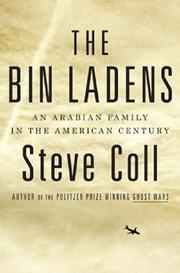
A Pulitzer Prize-winning family biography that doubles as a history of Saudi Arabia's 20th century, illuminating the intersection of money, religion, and radicalism that produced global jihadism.
Discussion
Keep reading
Paths that share books, cover the same subject, or open a related topic.