The History of Modern Greece: Best Books to Read in Order
This curriculum traces modern Greek history from the Ottoman era through independence, the catastrophic wars of the 20th century, the military dictatorship, and Greece's turbulent integration into Europe. It begins with accessible narrative histories to build context and vocabulary, then moves into focused, deeper works on each defining era, finishing with analytical texts that connect Greece's past to its present-day crises and identity.
Foundations: The Making of Modern Greece
BeginnerUnderstand the broad sweep of Greek history from the Ottoman period through independence and the formation of the modern Greek state, building the essential vocabulary and context for everything that follows.
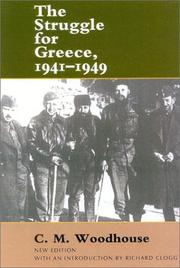
Woodhouse was a British officer who served in wartime Greece and became its foremost English-language historian. Starting here gives the beginner a gripping, authoritative narrative of the pivotal mid-20th century crisis that shaped everything modern Greece became.

A compact, clear overview running from the fall of Byzantium to the late 20th century — the ideal foundation text. Reading it after Woodhouse's war narrative deepens the chronological scaffolding with the full arc of the modern state.
Independence and the 19th-Century Nation
BeginnerGrasp the Greek War of Independence, the romantic philhellene movement, and the painful construction of a viable nation-state out of Ottoman ruins.
▸ Study plan for this stage
Pace: 4–5 weeks, ~40–50 pages/day (approximately 280–350 pages total across both books)
- The Greek War of Independence (1821–1829) as a nationalist uprising against Ottoman rule, shaped by both internal Greek factionalism and external European intervention
- The Philhellene movement: European romantic intellectuals and activists who championed Greek independence as a cause of civilization and Christian revival
- The role of Great Power politics (Britain, France, Russia) in determining Greece's independence and territorial boundaries through the Treaty of London (1832)
- The construction of a modern Greek nation-state from fragmented Ottoman territories, including the challenges of creating unified institutions, military, and administration
- Eleftherios Venizelos as a transformative statesman who navigated the tensions between national ambitions and the constraints of international diplomacy
- The painful process of state-building: territorial disputes, refugee crises, economic instability, and the need to forge a coherent national identity from diverse regional populations
- The legacy of Ottoman rule and how its sudden removal created institutional and social vacuums that the new nation had to fill
- What were the primary internal and external causes of the Greek War of Independence, and how did the Philhellene movement influence its outcome?
- How did European Great Powers (Britain, France, Russia) shape Greek independence, and what territorial and political compromises resulted?
- What were the major challenges Greece faced in constructing a viable nation-state in the decades following independence?
- Who was Eleftherios Venizelos, and what were his key contributions to Greek statesmanship and modernization?
- How did the sudden collapse of Ottoman authority create institutional and social crises that the new Greek state had to address?
- What role did romantic nationalism and the concept of 'Hellenism' play in both the independence struggle and the construction of national identity?
- Create a timeline of major events from 1821–1832 (War of Independence through Treaty of London), noting key military campaigns, diplomatic negotiations, and turning points
- Map the territorial evolution of Greece from 1821 to the early 20th century, marking Ottoman-controlled areas, areas liberated during the war, and territories acquired later under Venizelos
- Write a 500-word profile of a key Philhellene figure (e.g., Lord Byron, Philipp Jourdain) mentioned in Mazower, explaining their motivations and impact on the independence cause
- Compare and contrast the visions of Greek national identity held by different factions during the independence period (e.g., regional strongmen vs. educated elites vs. European supporters)
- Analyze Venizelos's approach to a specific diplomatic crisis or territorial dispute (e.g., Balkan Wars, Asia Minor campaign) using the Kitromilides biography, identifying his strategic choices and their consequences
- Create a chart listing the major institutional and administrative reforms Venizelos attempted, noting which succeeded, which failed, and why
Next up: This stage establishes the foundations of modern Greece—its independence, territorial shape, and early state institutions—which will enable the next stage to explore how Greece navigated the 20th century's wars, political upheavals, and integration into Europe.

A landmark 2021 work by the leading scholar of modern Greece, offering a richly researched and accessible account of the 1821 revolution. It reframes the independence struggle in its full Mediterranean and global context, perfect for a reader who now has basic chronological grounding.

Venizelos is the towering figure of early 20th-century Greek politics. This edited volume introduces his career and the National Schism, bridging the 19th-century nation-building stage to the catastrophic wars ahead.
War, Catastrophe, and Civil War (1912–1949)
IntermediateUnderstand the Balkan Wars, World War I, the Asia Minor Catastrophe, the Axis occupation, and the devastating Greek Civil War — the sequence of traumas that defined 20th-century Greek identity.
▸ Study plan for this stage
Pace: 8–10 weeks, ~40–50 pages/day. "Salonica, City of Ghosts" (approx. 350 pages) over 5–6 weeks, then "Inside Hitler's Greece" (approx. 300 pages) over 3–4 weeks, with 1–2 weeks for review and synthesis.
- Salonica as a cosmopolitan Mediterranean hub: its multiethnic, multireligious character before 1912 and how the Balkan Wars shattered this world
- The Balkan Wars (1912–1913) as the first major rupture: territorial redrawing, population displacement, and the beginning of ethnic homogenization
- World War I's impact on Greece: the National Schism (Ethniko Schisma) between royalists and Venizelists, and the Asia Minor Catastrophe (1922) as a civilizational trauma
- The Asia Minor Catastrophe: the defeat in Turkey, the refugee crisis, and the psychological/demographic transformation of Greece
- The Axis occupation (1941–1944): collaboration, resistance, famine, and the moral ambiguities of survival under Nazi rule
- The Greek Civil War (1946–1949): the ideological and social fracture that pitted Greeks against Greeks, rooted in occupation-era divisions
- The role of external powers: how Ottoman decline, Balkan geopolitics, Nazi Germany, and Cold War politics shaped Greek fate
- Collective trauma and national identity: how successive catastrophes created a 20th-century Greek consciousness defined by loss, displacement, and survival
- What made Salonica unique as a city before 1912, and how did the Balkan Wars fundamentally alter its character and population?
- How did the Asia Minor Catastrophe of 1922 reshape Greek territory, demography, and national psychology, and what role did it play in the subsequent civil war?
- What was the National Schism (Ethniko Schisma), and how did the conflict between royalists and Venizelists destabilize Greece during and after World War I?
- How did the Axis occupation (1941–1944) create the conditions for civil war, and what moral dilemmas did Greeks face under Nazi rule?
- What were the ideological and social roots of the Greek Civil War (1946–1949), and how did occupation-era divisions fuel the conflict?
- How did external powers—the Ottoman Empire, the Balkans, Nazi Germany, and Cold War superpowers—constrain Greek agency and shape the nation's trajectory?
- Create a timeline of Salonica's population changes from 1900–1950, tracking the arrival and departure of different ethnic and religious communities (Jews, Muslims, Greeks, Armenians) using evidence from Mazower's narrative.
- Map the territorial changes to Greece resulting from the Balkan Wars and the Asia Minor Catastrophe; annotate with refugee flows and demographic shifts to visualize the scale of displacement.
- Write a 500-word character sketch of a fictional Salonica resident (e.g., a Sephardic merchant, a Greek Orthodox merchant, a Muslim official) and trace how their life would have been disrupted across the 1912–1949 period based on Mazower's accounts.
- Construct a comparison table of the three major crises (Balkan Wars, Asia Minor Catastrophe, Axis occupation) listing causes, casualties, territorial/demographic consequences, and long-term psychological impacts.
- Read primary source excerpts (letters, diaries, newspaper accounts from the occupation and civil war era) and annotate them against Mazower's interpretation to identify how individual experiences align with or complicate the broader historical narrative.
- Debate the moral ambiguities of the occupation: prepare arguments for why collaboration occurred and why resistance was difficult, using specific examples from 'Inside Hitler's Greece,' then reflect on how these tensions exploded into civil war.
Next up: This stage establishes the traumatic foundation of modern Greek identity—the accumulated catastrophes and divisions of 1912–1949—which will enable the next stage to explore how Greece rebuilt, modernized, and navigated Cold War politics and contemporary challenges with this legacy of loss and fracture as its psychological and political bedrock.
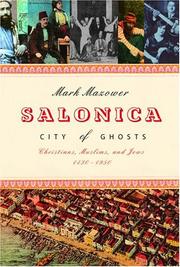
Through the lens of Thessaloniki — Greece's second city and a crossroads of empires — Mazower illuminates the violent ethnic and religious transformations of the Balkans from Ottoman rule through the 20th century. It makes the population exchanges and wartime occupations viscerally real.
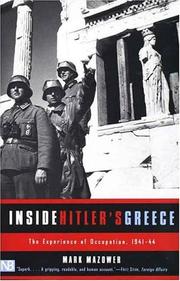
The definitive account of the Axis occupation of Greece (1941–44), covering famine, resistance, and the Holocaust of Greek Jews. It should be read before the Civil War books because the occupation directly ignited the civil conflict.
The Junta and the Transition to Democracy (1967–1980s)
IntermediateUnderstand the military dictatorship of 1967–1974, the Cyprus crisis, the fall of the junta, and Greece's rocky transition to stable democracy under Karamanlis and Papandreou.
▸ Study plan for this stage
Pace: 4–5 weeks, ~40–50 pages/day (approximately 250–300 pages total)
- The geopolitical context of Greece during the Cold War and NATO membership, and how superpower tensions shaped domestic politics
- The structural weaknesses of Greek democracy in the 1960s (political instability, polarization, constitutional crises) that enabled the 1967 coup
- The military junta's ideology, leadership under the colonels, and mechanisms of authoritarian control (censorship, secret police, repression)
- The Cyprus crisis of 1974 as a catalyst for the junta's collapse and its role in Greek-Turkish relations
- The transition from military rule to democracy under Karamanlis: constitutional reform, elections, and the consolidation of democratic institutions
- The role of Cold War alignment in shaping Greece's path to democracy and its relationship with NATO and the West
- The social and political divisions that persisted after 1974 and their impact on early democratic governance
- How did Greece's position in the Cold War and NATO membership influence the conditions that led to the 1967 military coup?
- What were the main structural weaknesses in Greek democracy during the 1960s that made it vulnerable to authoritarian takeover?
- Who were the key figures in the junta regime, and what were their primary methods of maintaining control?
- How did the Cyprus crisis of 1974 contribute to the fall of the junta and what were its consequences for Greek-Turkish relations?
- What was Karamanlis's role in the transition to democracy, and how did he stabilize democratic institutions after 1974?
- How did Greece's Cold War alignment affect the nature and pace of its democratization process?
- Create a timeline mapping key events from 1960–1980 (the constitutional crisis of 1965, the 1967 coup, the Cyprus invasion, the fall of the junta, and major democratic reforms), annotating how Cold War tensions intersected with each
- Write a 2–3 page analytical essay comparing the structural vulnerabilities of Greek democracy in the 1960s with one other Cold War-era democracy that faced authoritarian threats, using Hatzivassiliou's analysis
- Construct a diagram showing the junta's power structure, key institutions of control (military, secret police, media), and the mechanisms used to suppress opposition
- Research and present on the Cyprus crisis: create a brief summary of the military and political events of 1974, the role of the junta, and its impact on Greek-Turkish relations
- Analyze primary source excerpts (speeches, decrees, or constitutional texts from the junta period and the transition) to identify how Cold War rhetoric and democratic language were deployed by different actors
- Debate or discussion exercise: Examine the extent to which external Cold War pressures versus internal Greek political divisions were responsible for the junta's rise and fall
Next up: This stage establishes how Cold War geopolitics and internal democratic fragility converged to produce dictatorship and transition, providing the foundation for understanding Greece's subsequent democratic consolidation, its relationship with Europe and NATO, and the longer-term legacies of authoritarianism in Greek political culture.

Places the junta and the transition within the Cold War framework, showing how American and NATO interests shaped Greek domestic politics throughout this period — a crucial layer of context often missing from purely domestic accounts.
Greece in Europe: EU Membership, Crisis, and Identity
ExpertAnalyze Greece's entry into the European Community, the boom-and-bust of the euro era, the 2010 debt crisis, and what these events reveal about the unresolved tensions in modern Greek statehood and society.
▸ Study plan for this stage
Pace: 8–10 weeks, ~40–50 pages/day (Beaton: ~600 pages over 3–4 weeks; Varoufakis: ~500 pages over 3–4 weeks; final 1–2 weeks for synthesis and review)
- Greece's path to European Community membership (1981) as both aspiration and structural mismatch with Western European economies
- The euro adoption (2001) as a political and economic gamble: how currency union masked underlying fiscal and structural problems
- The mechanics of the 2010 debt crisis: the role of hidden deficits, bank exposure, and the sudden loss of market confidence
- Austerity and bailout conditionality as imposed solutions: the tension between technocratic governance and democratic sovereignty
- The persistence of clientelism, tax evasion, and weak state capacity as structural obstacles to integration
- Identity crisis in modern Greece: how EU membership and the euro challenged traditional notions of Greek independence and national autonomy
- The Eurozone's institutional design flaws: how the single currency created asymmetric vulnerabilities for peripheral economies
- The political and human cost of crisis: how technocratic solutions deepened social fracture and reshaped Greek political landscape
- Why did Greece's entry into the European Community in 1981 represent both a triumph and a structural challenge, according to Beaton?
- How did the adoption of the euro in 2001 create a false sense of economic convergence, and what underlying problems did it mask?
- What were the key factors that triggered the 2010 debt crisis, and how did Greece's fiscal position become unsustainable?
- How does Varoufakis characterize the role of technocratic institutions (ECB, IMF, European Commission) in shaping Greece's crisis response, and what alternatives does he propose?
- What does the crisis reveal about the persistence of clientelism and weak state institutions in modern Greece, as discussed in Beaton?
- How did the austerity programs imposed during the crisis reshape Greek society, politics, and national identity?
- Create a timeline mapping Greece's key EU milestones (1981 entry, 1992 Maastricht, 2001 euro adoption, 2010 crisis onset) and annotate each with the economic and political context from Beaton
- Construct a comparative table of Greece's economic indicators before and after euro adoption (inflation, growth, debt-to-GDP, current account) to visualize the false convergence Beaton and Varoufakis describe
- Write a 1,500-word analytical essay: 'How did structural weaknesses in Greek governance make euro membership unsustainable?' using evidence from both texts
- Map the key actors in the crisis (Greek government, ECB, IMF, Eurogroup) and trace their conflicting interests and power dynamics using Varoufakis's account as primary evidence
- Debate exercise: Argue both sides—'Was austerity necessary to stabilize Greece?' vs. 'Did austerity deepen the crisis?'—using specific policy examples from Varoufakis
- Create a visual infographic or concept map showing how clientelism, tax evasion, and weak state capacity (Beaton's themes) created vulnerabilities that the euro crisis exposed
Next up: This stage equips you to understand how Greece's modern identity and institutional capacity were tested by integration into supranational structures, setting the stage for examining how contemporary Greek society, politics, and culture have responded to and been reshaped by these pressures.

Beaton's 2019 synthesis is the best single-volume modern history for a reader who has now built real depth. It weaves together culture, politics, and economics to ask what 'Greece' actually means as a nation — the ideal capstone before tackling the crisis literature.

The former finance minister's insider account of the 2015 bailout negotiations is a gripping, polemical primary source that brings the EU-Greece relationship to its sharpest point of conflict, making abstract questions of sovereignty and austerity intensely concrete.
Discussion
Keep reading
Paths that share books, cover the same subject, or open a related topic.