Best Books on the History of Mathematics, in Reading Order
There are two ways to read the history of mathematics — as biography and as ideas — and this path deliberately alternates between them so that neither becomes empty. It opens with books that put real theorems in front of you rather than only anecdotes about the people who proved them, then hands you a proper survey of the whole record alongside a corrective to the usual Greece-to-Europe storyline. The later stages move to individual lives and eras and finally to the modern crisis in the foundations, where mathematics stopped being the one subject that could claim certainty.
The mathematics itself, not just the anecdotes
BeginnerSee what mathematicians actually proved and why it was hard, so that the survey histories later on describe something concrete rather than a parade of names.
▸ Study plan for this stage
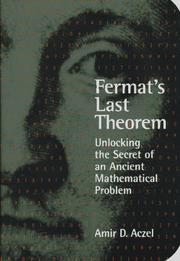
Pace: Eight to ten weeks, and the reading rate depends entirely on whether you work the proofs. Journey Through Genius is 320 pages containing twelve full proofs — budget a week per theorem if you follow each argument line by line, which is the point of the book. Fermat's Last Theorem is 338 pages of narr
- Dunham's central discipline, and the reason this stage exists: read the proof, not the story about the proof. A history of mathematics that never shows you an argument is a history of mathematicians
- Euclid's proof of the infinitude of primes, which Dunham opens with — the argument is four lines long, requires nothing beyond arithmetic, and is still the best demonstration of what a proof is
- Archimedes on the area of a circle and the quadrature of the parabola: exhaustion arguments that are calculus in everything but notation, eighteen centuries early. This is the single most important thing to carry into stage four
- Cardano and the cubic, and the sixteenth-century priority dispute with Tartaglia, which is both a great story and the moment complex numbers become unavoidable because the real solutions require passing through imaginary ones
- Cantor's diagonal argument, which Dunham closes with: the proof that the real numbers cannot be listed, and the discovery that there are different sizes of infinity. It is the gateway to stage four's foundations crisis
- Singh's structure around one problem across 350 years, which is the best available demonstration of how mathematical results accumulate — Fermat's margin note, Euler on the case n equals 3, Sophie Germain, Kummer, the Taniyama-Shimura conjecture and Wiles's proof via elliptic curves and modular form
- Why Wiles's proof does not settle whether Fermat had one: the machinery Wiles used did not exist, so either Fermat was mistaken or he had something nobody has since found. Singh is honest that the consensus is the former
- Seife's argument in Zero: that a concept can be resisted for cultural and philosophical reasons rather than mathematical ones. The Greek refusal of a void, the Indian and Islamic development, and the late European adoption are the case
- Reproduce Euclid's proof that there are infinitely many primes from memory. If you cannot, you have not read Dunham the way he intends
- How does Archimedes compute the area under a parabolic segment, and in what specific sense is it not calculus?
- Why did the cubic formula force mathematicians to take square roots of negative numbers seriously, when quadratics had not?
- State Cantor's diagonal argument. What exactly does it prove, and what does it not prove?
- Trace the chain from Fermat's marginal note to Wiles's proof, naming at least four intermediate contributions and what each established
- Seife argues zero was resisted for non-mathematical reasons. What were they, and does his case hold up or is it overstated?
- Work every proof in Journey Through Genius with a pen, filling in the steps Dunham compresses. Twelve theorems is a term's work and it is the foundation of the whole path.
- Take Archimedes's exhaustion argument and rewrite it in modern limit notation. The translation exercise shows you exactly what the seventeenth century added and what it did not.
- Solve a cubic using Cardano's method by hand, including a case where the real roots require imaginary intermediate steps. This single computation explains why complex numbers were accepted before they were understood.
- Write 200 words explaining Cantor's diagonal argument to someone who has never seen it. Keep it — you will need the idea again in stage four.
- Draw a timeline of zero's transmission from Babylon through India and the Islamic world to Europe, with dates. Keep it beside you when you start Boyer, and check whether his narrative reflects it.
Next up: With real theorems in hand, the survey histories in the next stage describe something concrete rather than a parade of names.
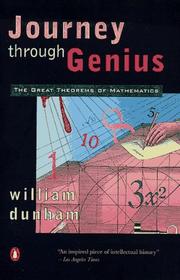
Twelve great theorems, in chronological order, each with its actual proof worked through and its historical setting sketched. This is the right first book because it establishes the habit of reading the mathematics rather than reading around it — and it needs no more than school algebra.
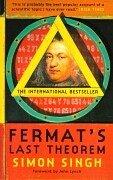
One problem, three and a half centuries, and a clean narrative through number theory from Pythagoras to Wiles. Read it second for momentum: it is the most purely enjoyable book here and it quietly teaches how mathematical results accumulate across generations. (Published in the US as Fermat's Enigma.)
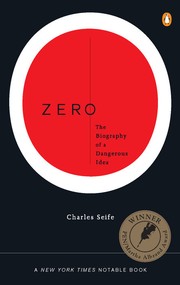
Follows a single concept across Babylon, Greece, India and Europe, which is the best short demonstration that mathematical ideas have cultural histories and are resisted before they are adopted. Placed here because it sets up the argument of the next stage.
The whole record, and who it leaves out
IntermediateAcquire a reliable chronological frame for the entire subject, and understand why the standard European frame is incomplete.
▸ Study plan for this stage
Pace: Five to seven months. Boyer and Merzbach's A History of Mathematics is 717 pages of reference-grade survey and is dry — 15 to 20 pages a session over three to four months is realistic, and skipping around by period is entirely legitimate. The Crest of the Peacock is 400 pages and should be read alon
- Boyer as the spine: a complete chronological frame from Babylonian and Egyptian mathematics through the twentieth century, with Merzbach's revisions. Use it as the reference against which everything else is commentary
- The classical narrative Boyer largely follows — Babylon and Egypt as prologue, Greece as the origin of proof, a medieval gap, then the European scientific revolution — and the fact that this is a narrative choice rather than a neutral chronology
- Joseph's documentation of what that narrative demotes: Egyptian and Babylonian computational mathematics of real sophistication, Chinese work on linear systems and the remainder theorem, Indian trigonometry and the decimal system, and the Islamic algebra and geometry that is far more than a preserva
- The Kerala school, which is Joseph's strongest single case: infinite series for sine, cosine and arctangent developed in south India from the fourteenth century, two to three hundred years before Newton and Leibniz. The transmission question — whether any of it reached Europe — is open and Joseph is
- The transmission-versus-independent-discovery problem generally, which is the historiographical heart of this stage: absence of a documented route is not proof of independence, and neither is similarity proof of contact
- What is and is not in dispute: that non-European mathematics was substantial and original is not seriously contested by current historians; the strength of specific transmission claims is
- Stillwell's alternative organisation, by topic rather than chronology, which shows how a single thread — say, the solution of equations, or the parallel postulate — develops across centuries and cultures. It is the format that makes the history mathematically rather than narratively coherent
- Stillwell's exercises, which is what distinguishes his book: you are asked to do the mathematics whose history you are reading, and that combination is rare and valuable
- What periods does Boyer treat as prologue, and what does he include in them? Is the classification defensible?
- Name three specific mathematical achievements Joseph documents outside the classical narrative and say what each one accomplished
- What did the Kerala school prove, when, and what is the current evidential state of the transmission question?
- How would you distinguish transmission from independent discovery in a specific case? What evidence would settle it?
- Compare Boyer's and Joseph's treatment of Islamic mathematics. Where do they differ in emphasis, and where in substance?
- Take one topic from Stillwell — the solution of equations is ideal — and trace its development across at least four centuries and two cultures
- Read Boyer's chapter on a period and Joseph's on the same period back to back, and write a one-page comparison of what each includes. Do this for two periods. It is the exercise that turns chronology into historiography.
- Compute a Babylonian problem from a clay tablet transcription — quadratic problems are widely reproduced — using their sexagesimal method. Working in base 60 for twenty minutes teaches more about their mathematics than any description.
- Derive the Kerala series for arctangent from Joseph's account and compare it to the Gregory series. Seeing them side by side is the most persuasive form of his argument.
- Write 500 words on how you would settle the transmission question if you could commission any research. Specifying the evidence you would need is the honest way to hold an open question.
- Work one section of Stillwell's exercises if you have the background. If you do not, write down which three mathematical topics you would need to learn to read him, and treat that as a separate project.
Next up: You have the record and its silences; the next stage looks at how individual mathematical lives are narrated and how much of that narration to believe.
The standard one-volume survey, revised by Uta Merzbach — comprehensive, reference-grade and dry enough that you want the first stage behind you before starting it. Read it as the spine of this path; everything else is commentary on some chapter of it.
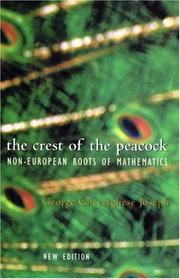
Deliberately paired against Boyer. Joseph documents the Egyptian, Babylonian, Chinese, Indian and Islamic mathematics that the classical narrative treats as prologue — including Kerala school work on infinite series centuries before Newton. Reading the two together is what turns a chronology into a historiography.
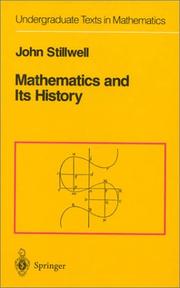
The bridge from history to mathematics: Stillwell organizes the past by topic and includes exercises, so you learn the subject and its development at once. Take it after Boyer if you have some undergraduate mathematics; skip to the next stage if you do not.
Lives, and the limits of the genius story
IntermediateUnderstand how mathematical work is actually produced and read the biographical tradition critically rather than romantically.
▸ Study plan for this stage
Pace: Three to four months. The Man Who Knew Infinity is 438 pages of biography and takes about a month. Euler is 192 pages but is Dunham working through theorems again, so it goes at stage-one pace — three to four weeks with a pen. Men of Mathematics is 590 pages and reads quickly, about three weeks, but
- Kanigel's account of Ramanujan's mathematics as it actually was: extraordinary results arrived at without proofs, in a notational and cultural tradition of his own, many later verified and a few wrong. The absence of proof is not a footnote — it is the central problem Hardy had to solve
- The Hardy collaboration as an institutional story: what Cambridge could give Ramanujan, what it demanded of him, and the colonial and racial context that shaped both his obscurity in Madras and his reception in England
- Ramanujan's death at 32 and the long afterlife of the notebooks, including the lost notebook found in 1976 and results still being proved. A career that produced work faster than the field could absorb it
- Euler as the opposite case study: sixty years of relentless output, an estimated third of all mathematical publication in his era, and productivity that continued after he went blind. There is no meteoric arrival and no tragedy, just work
- Euler's specific results that Dunham works through — the Basel problem, the identity connecting e, i and pi, the Königsberg bridges, the polyhedral formula — chosen to show range rather than depth in one area
- Bell's Men of Mathematics as a document of how the field narrates itself: it recruited generations, including several major mathematicians who said so, and it is unreliable in specific and identifiable ways
- The Galois chapter as the standard example of Bell's embellishment — the night before the duel spent writing out his theory in a frenzy is dramatically irresistible and does not match the record. Read the chapter, then read a modern account of Galois and compare
- The title itself as evidence of an exclusion the field has spent decades addressing, and the substantive point behind it: Bell's frame makes mathematics a sequence of individual geniuses, which both misdescribes how the work happens and makes invisible everyone the institutions excluded
- What form did Ramanujan's results take, and why was the absence of proofs a genuine mathematical problem rather than a stylistic one?
- What did Hardy provide that Ramanujan could not supply himself, and what did the collaboration cost Ramanujan?
- How did Euler work, and what does his career suggest about the role of correspondence and institutions in mathematical production?
- Take one Euler result Dunham works through and explain both the proof and why it was surprising at the time
- Identify three specific embellishments in Bell. What is the documentary record on each?
- Bell's frame is the solitary genius. What does that frame explain well, and what does it systematically make invisible?
- Take one Ramanujan result from Kanigel's account and find the modern proof. The gap between the result's simplicity and the proof's difficulty is the whole phenomenon.
- Work Euler's solution to the Basel problem as Dunham presents it. It is audacious, not rigorous by modern standards, and correct — which tells you something about how mathematics actually advances.
- Read Bell's Galois chapter, then a modern scholarly account of Galois, and write a two-column comparison. This is the most efficient inoculation against the genre available.
- Write 300 words on how Euler's career would be narrated in Bell's style, and what that narration would have to leave out. Sixty years of steady output does not fit the form.
- List every mathematician mentioned in stages one to three and mark which ones you know only through an anecdote. Then look one of them up properly.
Next up: With the biographical tradition read critically, the final stage takes on the two hardest modern threads and the crisis that ended mathematics' claim to certainty.
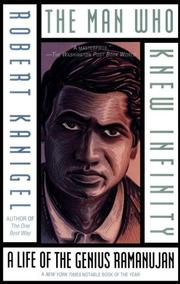
Ramanujan and Hardy — the best modern biography in the field, and the clearest case study of how mathematical intuition, institutions and prejudice interacted. Careful with its sources in a way the older tradition was not.

Dunham returns, this time on the most productive mathematician who ever lived, working through Euler's results theorem by theorem. Placed after Kanigel because it shows the opposite kind of career: relentless output over decades rather than a single meteoric arrival.
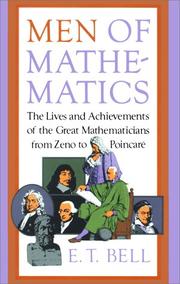
The book that recruited several generations into mathematics, and still enjoyable. Read it last in this stage and read it sceptically: Bell embellishes freely — the Galois chapter in particular is closer to legend than to record — and the title reflects an exclusion the field has spent decades correcting. Kept here because it shaped how the subject narrates itself.
The modern era and the loss of certainty
IntermediateFollow two hard modern threads — the calculus and the Riemann hypothesis — and understand why the foundations of mathematics became contested in the twentieth century.
▸ Study plan for this stage
Pace: Five to six months. Infinite Powers is 392 pages and is the most readable book in this stage — three to four weeks. Prime Obsession is 435 pages alternating historical and mathematical chapters, and the mathematical ones must be worked rather than read; eight to ten weeks, and this is the book that
- Strogatz's organising idea, the infinity principle: calculus works by cutting a hard problem into infinitely many easy pieces and adding them back. Every technique in the subject is an instance of it
- The thread from Archimedes to Newton that you can now see whole, having met the exhaustion arguments in stage one and Euler in stage three: the seventeenth century supplied notation, generality and the fundamental theorem, and did not supply rigour
- The rigour gap and its resolution: Newton and Leibniz used infinitesimals that they could not justify, Berkeley's objection about ghosts of departed quantities was correct, and the nineteenth-century epsilon-delta definitions of Cauchy and Weierstrass are what closed it a century and a half later
- The Riemann hypothesis as Derbyshire builds it: the prime counting function, Euler's product formula connecting primes to the zeta function, analytic continuation of zeta to the complex plane, the non-trivial zeros, and the conjecture that they all lie on the critical line
- Why the hypothesis matters rather than merely being unsolved: it is equivalent to a precise statement about how regularly the primes are distributed, and a large body of results is conditional on it
- Kline's crisis narrative: non-Euclidean geometry showed that Euclid's parallel postulate was a choice rather than a necessary truth, which destroyed the view of mathematics as a description of physical space
- The set-theoretic paradoxes — Russell's above all — the Hilbert programme's attempt to secure foundations by proving consistency, and Gödel's incompleteness theorems showing that a sufficiently strong consistent system cannot prove its own consistency
- Kline's overstatement, which the path should be honest about: he presents the foundations crisis as a loss of certainty that left mathematics in disarray, and working mathematics carried on almost entirely unaffected. Most mathematicians proved theorems throughout and still do. The philosophical sta
- State Strogatz's infinity principle and apply it to a specific calculation — an area, a volume and an instantaneous rate
- Explain analytic continuation well enough to say what it means to evaluate the zeta function outside its original domain of convergence
- State the Riemann hypothesis precisely and explain what it asserts about prime distribution
- What did non-Euclidean geometry show about the parallel postulate, and why was that discovery philosophically devastating rather than merely technical?
- State Gödel's first and second incompleteness theorems accurately. What do they say, and what are they commonly claimed to say that they do not?
- Kline argues certainty was lost. What exactly was lost, and what was not? Working mathematicians largely carried on — why?
- Work through Derbyshire's mathematical chapters with a pen, in order, without skipping. If you complete them you have genuinely learned the Riemann hypothesis rather than heard about it, which puts you ahead of most people who mention it.
- Compute the first few non-trivial zeros' locations from published values and plot them. Seeing them line up on the critical line is worth more than any description of the conjecture.
- Take one of Archimedes's results from stage one and redo it with modern calculus, then write a paragraph on precisely what the seventeenth century added. This closes the loop the path opened.
- Write out a proof sketch of Gödel's first incompleteness theorem at whatever level you can manage, using the diagonal argument you summarised in stage one. The connection between Cantor's diagonal and Gödel's construction is the most beautiful link in the whole path.
- Write 500 words evaluating Kline's crisis thesis, arguing that he is right about the philosophy and wrong about the practice. Both halves are defensible and holding them together is the mature reading.
- Write a final page: what you now think mathematics is, and whether the answer changed across five stages. This is the question the path exists to make answerable.
Next up: This is the end of the path — real theorems, the full record and its silences, the lives and their mythology, and the foundations crisis — and you can now read any popular mathematics book and tell within a chapter whether it is showing you the mathematics or only the story around it.

The most current book on this path and the best account of where the calculus came from and why it works. Read it here because by now you have met Archimedes, Newton and Euler separately and can see Strogatz threading them together.

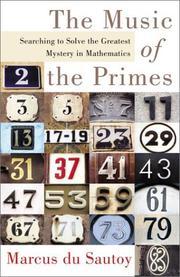
Alternates historical chapters with mathematical ones, so it genuinely teaches the Riemann hypothesis rather than gesturing at it. Demanding, and the right place to test whether the earlier stages stuck. (Marcus du Sautoy's The Music of the Primes covers the same ground with less mathematics if you want the gentler version.)

The closing argument: non-Euclidean geometry, the paradoxes of set theory and Gödel's results ended the belief that mathematics was a body of certain truth. Kline overstates the crisis in places — working mathematics carried on regardless — but no other book makes the intellectual stakes of the foundations debate this vivid.
Discussion
Keep reading
Paths that share books, cover the same subject, or open a related topic.