Computing history has a genre problem. Most of what sells is biography, arranged as a relay race of brilliant individuals handing off an idea, and it is enjoyable and it is misleading. Machines were built by large teams inside universities, telephone monopolies and defence agencies, and much of the labour was done by people whose names were not recorded — often deliberately, and often because they were women.
The order below uses the popular narratives as scaffolding, because they are the fastest way to learn the chronology and the vocabulary, and then brings in the books that correct them. Reading the correctives first tends not to work: they are arguing with a story you have not heard yet.
The sweep
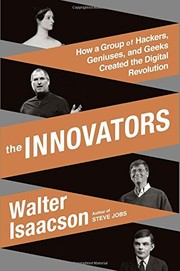
The Innovators is the standard entry point, Walter Isaacson's run from Ada Lovelace to the web. Its virtue is coverage and pace; its weakness is the great-individual framing that historians of technology have criticised at length, and it is worth carrying that criticism with you rather than discovering it later. Hackers is Steven Levy's cultural history of the MIT model railroad club, the homebrew scene and early game developers, and it defined how the industry talks about itself. Note that it stops in the mid-1980s.
The people
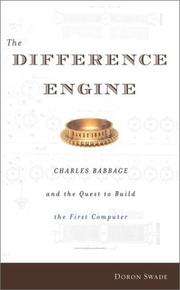
The Difference Engine is Doron Swade's account of Charles Babbage and of the modern project to build his machine — not the Gibson and Sterling novel of the same name, which is fiction and a different book entirely. Alan Turing is Andrew Hodges's biography, published as Alan Turing: The Enigma, and it remains the definitive one; it is long, it is mathematically serious, and it is the best thing on this path. A mind at play covers Claude Shannon and information theory, which is the piece most popular histories skip and the one that explains why any of this works.
The machines and the network
Turing's cathedral covers the Institute for Advanced Study machine and von Neumann's circle. It is vivid and it has been criticised for overstating that project's centrality relative to parallel work in Britain and at other American labs, so read it as one thread rather than the trunk. The Dream Machine is the underrated book on this list — M. Mitchell Waldrop on J. C. R. Licklider and the funding culture that produced interactive computing and, eventually, the network. Where wizards stay up late is the ARPANET origin story proper, and The Soul of a New Machine is Tracy Kidder's account of a single minicomputer project at Data General, still the best book anyone has written about what engineering work actually feels like.
The corrected record
Broad Band recovers the women who built substantial parts of the industry and the early web, from the ENIAC programmers onward. Programmed inequality is the sharper argument: Mar Hicks shows how Britain deskilled and discarded its largely female computing workforce and how that contributed to the collapse of its computer industry. It is a labour and policy history, and it is the strongest rebuttal on this path to the genius framing you started with.
Computer closes the path as the scholarly survey — Martin Campbell-Kelly's textbook history of the information machine, organised around business, government and institutional demand rather than invention. It is the least dramatic book here and the one that will most change how you read the others.
If you want the mathematical background that sits underneath all of this, our history of mathematics hub is the adjacent path.
Read the whole sequence in order and the relay race resolves into something more interesting: a story about who paid, who was counted, and who was not.
Follow the full ordered path here: How to Learn the History of Computing from Books, in Order.
Ready to learn something deeply?
Build a reading path — free