
Prime Obsession
John Derbyshire · 2003 · 435 pages
As an Amazon Associate we earn from qualifying purchases. Some book links are affiliate links; you pay the same price and we may earn a small commission.
About this book
In August 1859 Bernhard Riemann, a little-known 32-year old mathematician, presented a paper to the Berlin Academy titled: "On the Number of Prime Numbers Less Than a Given Quantity." In the middle of that paper, Riemann made an incidental remark â€" a guess, a hypothesis. What he tossed out to the assembled mathematicians that day has proven to be almost cruelly compelling to countless scholars in the ensuing years. Today, after 150 years of careful research and exhaustive study, the question remains. Is the hypothesis true or false? Riemann's basic inquiry, the primary topic of his paper, concerned a straightforward but nevertheless important matter of arithmetic â€" defining a precise formula to track and identify the occurrence of prime numbers. But it is that incidental remark â€" the Riemann Hypothesis â€" that is the truly astonishing legacy of his 1859 paper. Because Riemann was able to see beyond the pattern of the primes to discern traces of something mysterious and mathematically elegant shrouded in the shadows â€" subtle variations in the distribution of those prime numbers. Brilliant for its clarity, astounding for its potential consequences, the Hypothesis took on enormous importance in mathematics. Indeed, the successful solution to this puzzle would herald a revolution in prime number theory. Proving or disproving it became the greatest challenge of the age. It has become clear that the Riemann Hypothesis, whose resolution seems to hang tantalizingly just beyo
Appears in these reading paths
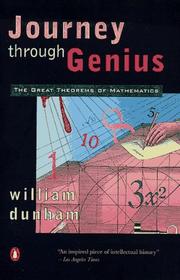
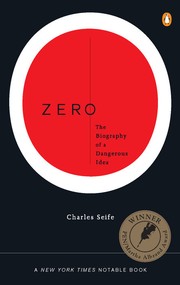
Best Books on the History of Mathematics, in Reading Order
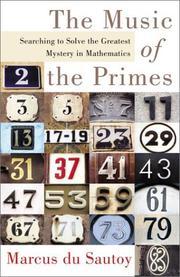
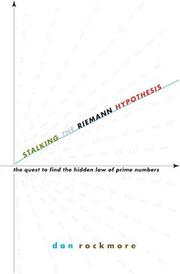
Best Books on the Riemann Hypothesis and the Prime Numbers
Related reading guides
Reader reviews
Ratings and notes from readers — tagged with how deep into the subject they were.
Loading reviews…