Best Books on the History of Computing, in Reading Order
This path starts with a single sweeping narrative so you have the whole arc — Babbage to the internet — before any of it is complicated, then slows down on the founding ideas: the mechanical engines, Turing's proof, Shannon's information, and the first stored-program machines. The third stage covers the two developments that made computers ordinary, networking and the personal machine, through reporting done at the time. The final stage is the corrective: popular computing history is unusually prone to the lone-genius story, so it ends with the women who were written out and with the scholarly survey that keeps the whole industry in view.
The whole arc, twice
BeginnerHold the full chronology of computing in your head, and understand the culture that produced most of it, before going deep on any single episode.
▸ Study plan for this stage
Pace: 8-9 weeks for about 1,040 pages, both of them easy reading. The Innovators is 583 pages of narrative and takes four to five weeks at 100 pages a week — its chapters are organised by development rather than strictly by date, so keep a timeline as you go. Hackers is 456 pages and reads faster; three t
- Isaacson's organising thesis: computing advanced through collaboration between people with complementary skills, not through lone inventors, and he structures the book to prove it
- The full arc in one pass — Lovelace and Babbage, the wartime machines, the transistor, the integrated circuit, the microprocessor, the personal computer, the internet, the web
- Ada Lovelace's actual contribution and the long argument about how much of Note G was hers, which Isaacson handles more carefully than most popular accounts
- That the book was published in 2014 and stops well before the machine-learning era, which is a boundary of scope rather than an error
- Levy's three generations of hackers — the MIT Tech Model Railroad Club and the PDP-1 in the late fifties and sixties, the Homebrew Computer Club hardware hackers of the mid-seventies around the Altair, and the game programmers of the early eighties — and the point at which hobbyist culture collides
- The hacker ethic as Levy formulated it — hands-on imperative, all information should be free, mistrust authority, judge by skill alone — which he was describing rather than inventing, and which has been quoted ever since
- That Hackers is a primary source: Levy was reporting in the early eighties on a subculture nobody then knew would matter, and its value now is that he wrote it before the outcome was known
- The gap between the two books as the first thing to notice: Isaacson's cast is largely institutional and Levy's is largely not, and both casts are almost entirely male, which stage four will address directly
- State Isaacson's collaboration thesis and name the two episodes where it is best supported and the one where it is most strained.
- What did Ada Lovelace actually write, and what is the substance of the dispute about her contribution?
- Levy's hacker ethic has four or five components depending on how you count. State them, then say which ones survived contact with a commercial software industry.
- Levy was writing about a culture in real time without knowing what it would become. What does that get him that a retrospective account could not, and what does it cost him?
- Compare the two casts. Who appears in Levy and not in Isaacson, and what does that omission suggest about how each author decided what counted as progress?
- Build a single timeline from 1830 to 2000 with the machines, the people and the ideas in separate rows. You will annotate this for the rest of the path and it is the stage's real deliverable.
- Write 200 words on the transistor as Isaacson tells it, naming who did what at Bell Labs.
- Write out Levy's hacker ethic in his own terms, then write half a page on how each clause reads in the era of proprietary platforms and licensing.
- List every name that appears in both books, and every name that appears in only one. The second list is longer and more interesting.
- Pick one episode covered by both — the Altair, or the early Apple work — and write a paragraph on how differently each author frames it.
Next up: You have the whole arc and the culture; the next stage slows down on the four ideas that everything in the arc is actually built from.
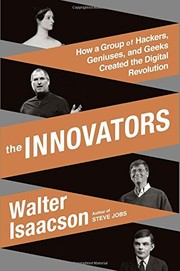
The best single narrative sweep, from Ada Lovelace to the web, and organized around Isaacson's argument that computing advances came from collaboration rather than lone inventors. Start here for the map. It was published in 2014, so it stops well before the machine-learning era — that gap is a later subject, not a flaw in this one.

Read straight after Isaacson because it supplies the texture he can only summarize: MIT's model railroad club, the Homebrew Computer Club, the early game companies. Written in 1984 as contemporary reporting, which is exactly why it is valuable — it is a primary source on a culture nobody then knew would matter.
The founding ideas and the first machines
IntermediateUnderstand where the concepts came from — programmability, computability, information, the stored program — and be able to say what each of the founding figures actually contributed.
▸ Study plan for this stage
Pace: 15-17 weeks for about 1,720 pages, and the difficulty is uneven. Swade's The Difference Engine is 352 pages and reads in three weeks. Hodges's biography of Turing is 592 pages and is the most demanding book on the path — five to six weeks, and the chapter on the 1936 computability paper deserves to
- The distinction between Babbage's two engines: the Difference Engine, a special-purpose calculator of polynomial tables, and the Analytical Engine, a general-purpose programmable machine with a mill, a store and punched-card input
- Swade's construction project at the Science Museum as the decisive evidence: the Difference Engine No. 2 was built to nineteenth-century tolerances and it works, which settles what was actually achievable then
- The genuine question of Babbage's influence: the Analytical Engine anticipated the architecture but had no traceable line to the twentieth-century machines, which is a discontinuity most popular accounts elide
- Turing's 1936 paper: the machine model, the diagonal argument, the undecidability of the halting problem, and above all the universal machine — one machine that can simulate any other given its description, which is the actual foundation of general-purpose computing and which Hodges explains properl
- Turing's prosecution, chemical castration and death, which Hodges treats as inseparable from the intellectual history rather than as an epilogue
- Shannon twice over: the master's thesis mapping Boolean algebra onto relay switching circuits, which made digital circuit design a mathematical discipline, and the 1948 paper that gave us the bit, entropy as a measure of information, the separation of information from meaning, and the channel capaci
- Von Neumann's IAS machine and the stored-program architecture — instructions and data in the same memory — which is still the model almost every computer uses
- The credit dispute Dyson underplays: the First Draft report bore only von Neumann's name, Eckert and Mauchly had a strong claim, and historians allocate this differently than Dyson does
- What is the difference between the Difference Engine and the Analytical Engine, and which one is the ancestor of modern computing?
- Swade actually built one. What does that establish that argument alone could not, and what does it fail to establish about the Analytical Engine?
- Explain the universal Turing machine and why it is the foundational idea. Then explain the halting problem in plain language.
- What did Shannon's master's thesis do, and why does the mapping of Boolean algebra onto switches matter so much for everything that follows?
- What is the stored-program concept, and why is holding instructions and data in the same memory such a consequential choice?
- Dyson credits von Neumann's group heavily. What is the case for Eckert and Mauchly, and how would you weigh it on the evidence Dyson himself presents?
- Draw the Analytical Engine's architecture — mill, store, input, output, control — and label each with its modern equivalent.
- Write out a Turing machine that recognises palindromes, with its full state table, and trace it on two inputs. Doing this once makes the model concrete in a way no summary does.
- Write 300 words explaining the halting problem's proof to someone with no mathematics. Being able to do this is the test of whether you read Hodges's chapter or skimmed it.
- Take a small logic function and design a relay circuit for it using Shannon's method, then simplify it with Boolean algebra.
- Compute the entropy of a simple source — a biased coin at several probabilities — and plot it. The shape of that curve is the point of the 1948 paper.
- Draw the von Neumann architecture and mark on it the bottleneck the design creates. Then write a paragraph on how modern machines work around it.
Next up: The ideas are in place; the next stage follows them out of the institutions and onto desks and networks.
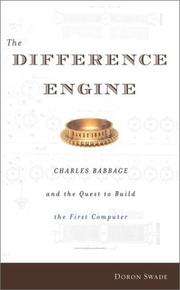
Begin at the beginning: Babbage's engines, and Swade's own account of building a working Difference Engine at the Science Museum. The construction story settles what was genuinely possible in the nineteenth century, which no amount of speculation about Babbage's genius can.
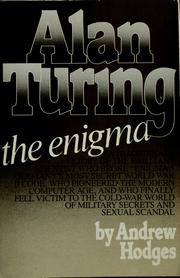
The definitive biography, written by a mathematician, and unusual in explaining the 1936 computability paper properly rather than skipping to Bletchley Park. Long and demanding — read it here, once the earlier books have given you a reason to care about the proof.

Claude Shannon is the most under-told figure in this history: his master's thesis mapped Boolean algebra onto switching circuits, and his 1948 paper created information theory. Placed after Turing because the two ideas — computability and information — are the pair everything downstream is built on.
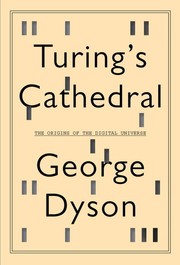
Moves from theory to hardware: von Neumann's machine at the Institute for Advanced Study, and the origins of the stored-program architecture almost every computer still uses. Dyson is diffuse in places and gives von Neumann's group more of the credit than some historians allow, but the archival detail is unmatched.
Networks and the machine on your desk
IntermediateTrace how computers went from institutional instruments to networked personal tools, and see what the engineering work actually felt like.
▸ Study plan for this stage
Pace: 10-11 weeks for about 1,125 pages. The Dream Machine is 528 pages and is the best book on this path; five weeks, read properly. Where Wizards Stay Up Late is 304 pages and takes two to three weeks, read immediately after Waldrop. The Soul of a New Machine is 293 pages and reads in two weeks — save i
- Licklider as the pivotal figure: a psychologist rather than an engineer, whose Man-Computer Symbiosis paper reframed the computer as a partner in thinking, whose Intergalactic Computer Network memo sketched the network, and who then ran ARPA's Information Processing Techniques Office and funded the
- Time-sharing as the essential enabling shift: many users interacting with one machine at once, which is what made interactive computing thinkable at a time when computers cost millions
- The ARPA funding model — long horizons, program managers with real authority, bets on people rather than proposals — and Waldrop's implicit argument that the institutional design mattered as much as the technology
- The line from Licklider through Engelbart's Augmentation Research Center and the 1968 demonstration to Xerox PARC and the Alto, and from there to the personal computer
- Packet switching, independently arrived at by Baran at RAND and Davies at the National Physical Laboratory, and the argument against the circuit-switched telephone model
- The IMPs as the actual engineering achievement in Hafner and Lyon: minicomputers acting as the network's routers, built by Bolt Beranek and Newman on a tight schedule
- The Network Working Group and the Request for Comments process as a governance innovation, which is arguably as important as any technical decision
- Kidder's Eagle project at Data General — a team building a 32-bit minicomputer on an impossible schedule in a company unsure it wanted the machine — and his real subject: signing up, mushroom management, microcode debugging, crushing hours, and what the people got out of it, which was mostly not mon
- What did Licklider actually contribute, given that he built no machine and wrote no famous algorithm? Waldrop's answer is the book's whole thesis.
- Why was time-sharing so consequential? Explain what changed for a user, and what it cost the institution.
- What is packet switching and why did the telephone engineers resist it? State their objection as they made it.
- Trace the line from Licklider's memo to the machine you are reading this on. Name the intermediate steps and the people at each.
- What does Kidder show about engineering work that the other books systematically omit? Be specific about the mechanisms, not just the exhaustion.
- The Eagle team worked ruinous hours for no financial upside. What did they think they were getting, and does Kidder endorse it?
- Draw the ARPANET as of December 1969 with its four nodes and the institutions at each, then draw it again as of 1975. The growth curve is worth seeing.
- Write 300 words explaining packet switching to someone who understands telephones, including why it is more robust.
- Read the first RFC and write a paragraph on its tone. The governance culture of the internet is visible in that document.
- Diagram the Eagle machine's development from Kidder — the teams, the microcode and hardware split, the schedule, the debugging phase.
- Write half a page on signing up as Kidder describes it, and on whether you think the practice was exploitation, motivation, or both.
- Add the network and personal computing developments to your master timeline, and mark which ones were funded by ARPA.
Next up: Everything so far has been the standard narrative told by journalists; the final stage asks who that narrative left out and what the historians say instead.
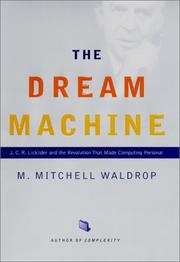
The single best book on this path. Through J. C. R. Licklider it tells the story of interactive computing, ARPA funding, time-sharing and the ideas that became the personal computer and the network. Read it before the ARPANET book — Waldrop explains why anyone wanted a network at all.
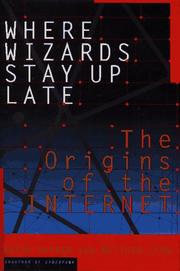
The construction history of the ARPANET itself: the IMPs, the packet-switching argument, the first four nodes. Narrower than Waldrop and best read immediately after him, as the engineering detail behind the vision.
A Pulitzer-winning account of one Data General team building one minicomputer in the late 1970s. Nothing else conveys as well what the work was — the schedules, the debugging, the exhaustion — and it is the corrective to reading this history as a sequence of clean breakthroughs.
Who got written out, and the scholarly account
IntermediateRead the standard narrative critically, understand how computing became a male profession, and know where to go for the historians' version rather than the journalists'.
▸ Study plan for this stage
Pace: 9-10 weeks for about 990 pages. Broad Band is 283 pages and reads in two weeks. Programmed Inequality is 352 pages of academic history and takes three to four weeks — it is the sharpest argument on this path and repays slow reading. Computer, whose full title is Computer: A History of the Informatio
- Evans's recovery of the ENIAC programmers — Jean Jennings Bartik, Betty Snyder Holberton and their colleagues — who programmed the machine by physically rewiring it and were long described as models rather than engineers
- Grace Hopper, the A-0 compiler and the argument for programming in something closer to English, which is the ancestry of every high-level language
- Evans's method as recovery: she is adding people to a story whose shape she largely accepts, which is worth distinguishing from what Hicks does
- Hicks's thesis, which is structural rather than biographical: Britain had a large, skilled, largely female computing workforce, classified machine work as low-status clerical labour and then reclassified it as high-status management work at the moment it became powerful — excluding the women at the
- Hicks's argument that the loss was economic as well as ethical: a country that discards its trained technical workforce for reasons unrelated to competence pays for it
- Campbell-Kelly and Aspray's institutional and business history — Hollerith and punched cards, the office machine industry, IBM's dominance, the unbundling of software and the emergence of software as a separate industry
- Their long view that computing continues an older information-processing tradition running back through tabulating machinery and office systems, which reframes 1945 as an acceleration rather than a beginning
- The methodological lesson of the whole stage: popular computing history is unusually prone to the lone-genius story, partly because journalists interview surviving named individuals, and the corrective is institutional and archival history
- Who programmed the ENIAC, and how were they described at the time? Then ask why that description persisted in later accounts.
- Evans is adding names to a narrative; Hicks is arguing the narrative's shape is wrong. Explain the difference and say which does more work.
- State Hicks's thesis precisely, including the causal claim about the British industry. What evidence supports the causal link, and how strong is it?
- Campbell-Kelly and Aspray put punched cards and office machinery at the centre. What does that continuity reveal that a story starting in 1945 cannot?
- Go back to Isaacson and Levy. Which of their omissions look like editorial judgement and which look structural?
- After the whole path: name the three individuals you now think are most over-credited in popular computing history, and the three most under-credited. Defend each.
- Take your master timeline and add every person from Evans and Hicks who is not already on it. Look at how much the sheet changes.
- Write 400 words summarising Hicks's argument as a historical thesis with its evidence, not as a list of injustices. Being able to do this is the test of whether you read her as history.
- Find one episode covered by both Evans and Isaacson and write a paragraph on the differences in framing, attribution and detail.
- Using Campbell-Kelly and Aspray, sketch the corporate history of the industry from Hollerith to the 1980s as a diagram of companies, mergers and market shifts.
- Write half a page on the unbundling of software from hardware and why it created a separate industry.
- Finish with a two-page essay on how the history of computing should be told, citing at least one book from each of the four stages and being explicit about which authors you now think got the shape wrong.
Next up: You end able to read any popular computing history critically — spotting the lone-genius framing, knowing which institutional history it is skipping, and knowing where to check.

Recovers the women central to this history — the ENIAC programmers, Grace Hopper, hypertext pioneers, the early online communities. Read it against Isaacson and Levy, whose casts it substantially revises.

The academic version of the same argument, and much sharper: Hicks shows how Britain deliberately deskilled and discarded its largely female computing workforce, and links that to the collapse of the British computer industry. This is a real historical thesis, not a list of overlooked names.
The standard scholarly survey, written with William Aspray, covering the business and institutional history — punched cards, IBM, mainframes, software as an industry — that the popular books skip. Ends the path as the reference you return to. (Its full title is Computer: A History of the Information Machine.)
Discussion
Keep reading
Paths that share books, cover the same subject, or open a related topic.