Best Books on Fermat's Last Theorem, in Reading Order
Fermat wrote in a margin around 1637 that no three positive integers satisfy the equation with exponent greater than two, and that he had a marvellous proof the margin was too narrow to contain. It took 358 years, and the proof Andrew Wiles finally produced in 1994 has nothing to do with anything Fermat could have known: it works by showing that a counterexample would produce an elliptic curve so strange that the Taniyama-Shimura conjecture forbids it. That is why this subject has a genuinely steep reading path. This one runs from the popular narratives, through the number theory you actually need, to the nineteenth-century classical attack that produced ideal numbers, and then to the modern machinery of elliptic curves and modular forms. Three different books on this list are catalogued under the identical title Fermat's Last Theorem — Singh's, Aczel's and Edwards's — so check the author, not the title, when buying.
The Story
BeginnerLearn what the problem is, why it resisted for three and a half centuries, and roughly what shape the eventual proof has — without any mathematics beyond the statement itself.
▸ Study plan for this stage
Pace: Two weeks, and no mathematics is required for either book. Simon Singh's Fermat's Last Theorem is 338 pages of popular narrative history written for a general reader and goes quickly, about a week. Amir Aczel's book, catalogued under the identical display title Fermat's Last Theorem and published as
- The statement itself. There are no positive integers a, b, c with a to the n plus b to the n equal to c to the n for any integer n greater than 2, and the marginal note claiming a proof dates from around 1637.
- Why n equal to 2 is different: Pythagorean triples are infinite and parametrised, and the whole difficulty is that adding one to the exponent destroys that.
- The reduction to prime exponents and to n equal to 4. Proving the theorem for n equal to 4 and for every odd prime exponent proves it in general, and Fermat did prove the case n equal to 4 himself.
- The nineteenth-century route through Sophie Germain, Kummer and regular primes, which is the subject of stage three, and which never got past a large but finite class of exponents.
- The Taniyama-Shimura conjecture, that every rational elliptic curve is modular, and the Frey curve: a counterexample to Fermat would produce an elliptic curve so strange that modularity forbids it.
- Ribet's theorem as the missing link that made Frey's idea into a proof strategy, and Wiles's seven years of work in near-secrecy.
- The gap. The 1993 Cambridge announcement contained an error in the Euler system argument, and the repair with Richard Taylor took another year; Singh covers this closely and it is the part of the story most often garbled.
- That the proof has nothing to do with anything Fermat could have known, which is why the reading path from here is steep rather than a matter of filling in details.
- Why does proving the theorem for n equal to 4 and for all odd prime exponents suffice for all n greater than 2?
- In one paragraph, without symbols, what does modularity of an elliptic curve claim, and how does a counterexample to Fermat contradict it?
- What did Ribet prove, and why was the Frey curve idea not a proof strategy before he proved it?
- What went wrong with the first version of Wiles's proof, and how was it repaired?
- Singh and Aczel are both writing for a general reader. Where do their accounts differ in emphasis, and which of them actually shows you the modularity connection rather than describing it?
- Write the statement of the theorem, the reduction to prime exponents, and the shape of the Frey argument on a single sheet of paper from memory after finishing Singh, then check it against Aczel and correct what you got wrong.
- Verify by hand that Pythagorean triples are parametrised as claimed: take the standard parametrisation, generate five triples, and confirm each satisfies the equation. This is the only case of the equation with solutions, and it is worth having the reason concretely in hand.
- Aczel goes further into the mathematics of the modularity connection than Singh does. Read his treatment of it and mark every place where a term is used that you cannot define. That list is the syllabus for the next three stages.
- Write down which parts of Singh's narrative are history you could check against a source and which are reconstruction of what mathematicians were thinking. A popular account has to do both, and separating them now is good practice for the technical books ahead.
Next up: You now know what the problem is and roughly what shape the proof has, which is the last point at which any of this can be understood without number theory, so the next stage supplies the toolkit every remaining book on the path assumes.
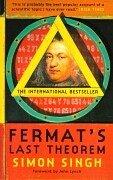
The best popular account and the correct starting point: Fermat, Sophie Germain, Kummer, Taniyama and Shimura, and Wiles's seven years of secret work including the gap found in the first proof. Ask for this exact title — the alternative American title Fermat's Enigma resolves here to the Spanish translation instead.
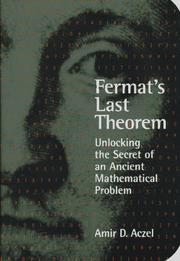
Aczel's shorter treatment, published as Fermat's Last Theorem: Unlocking the Secret of an Ancient Mathematical Problem, and a distinct book from Singh's despite the identical display title. It goes further into the actual mathematics of the modularity connection, which makes it the better second read rather than a substitute.
The Number Theory You Actually Need
IntermediateAcquire congruences, unique factorisation, quadratic reciprocity and algebraic number fields — the toolkit every later book on this path assumes and none of them teaches.
▸ Study plan for this stage
Pace: Four to six months if you are learning this material for the first time, and this is where the path stops being casual reading. These are textbooks with exercises, and the exercises are the content. Burton's Elementary Number Theory is 411 pages and a standard first course; work through it at a chap
- Divisibility, the Euclidean algorithm, and unique factorisation in the integers. The failure of unique factorisation elsewhere is the entire subject of stage three, so it has to be solid here.
- Congruences, the Chinese remainder theorem, Fermat's little theorem and Euler's theorem, and the structure of the multiplicative group modulo n.
- Quadratic residues and quadratic reciprocity, including at least one full proof of reciprocity rather than a statement of it.
- Continued fractions and Pell's equation, which is where Fermat's own methods and the method of infinite descent live in Burton.
- Algebraic number fields, rings of integers, and the first examples where factorisation into irreducibles is not unique.
- Ideals, ideal class groups and the class number as the measure of how badly unique factorisation fails, introduced in Ireland and Rosen and used constantly thereafter.
- Zeta and L-functions, and the first appearance of elliptic curves, both of which Ireland and Rosen introduce as the bridge to the modern material.
- The historical order of the questions. Weil shows why these problems were posed in the sequence they were, and gives Fermat's own methods a chapter of genuine mathematical attention rather than anecdote.
- Can you prove quadratic reciprocity, following one of the proofs in Burton, without looking at the book?
- Give a concrete ring of algebraic integers in which factorisation into irreducibles is not unique, and exhibit two genuinely different factorisations of the same element.
- What is the ideal class group, and in what sense does its triviality recover unique factorisation?
- State Fermat's method of infinite descent precisely, and use it to prove the case n equal to 4 of the theorem.
- Which chapters of Ireland and Rosen use Fermat's equation as a worked example, and what does each of them actually establish about it?
- According to Weil, what were Fermat's own methods, and what is the evidence about what he could and could not have proved?
- Prove the case n equal to 4 of Fermat's Last Theorem by infinite descent, working from the treatment in Burton, and write the proof out in full. This is the one case of the theorem you can prove yourself, and having done it changes how you read every later chapter.
- Do the exercise sets in Burton's chapters on congruences and quadratic reciprocity rather than reading them. Aim for most of the problems in at least three chapters; the later books assume this material as reflex, not as recall.
- Work through the standard example of failed unique factorisation in the ring of integers of Q adjoin the square root of minus five, by hand, showing that 6 factors two ways and that the factors are irreducible. Then verify that the corresponding ideals do factor uniquely.
- Take Ireland and Rosen's treatment of the equation with exponent 3 and reproduce the argument line by line, filling in every step the authors leave to the reader. Note exactly which facts about the ring of Eisenstein integers the argument needs.
- Read Weil's chapter on Fermat alongside Singh's account of the same material from stage one, and list every claim Singh makes about Fermat's methods that Weil either supports, qualifies or contradicts.
Next up: With unique factorisation, congruences and the first algebraic number fields secure, you can now follow the nineteenth century discovering that the obvious attack on the theorem fails, and inventing ideal numbers to repair it.
The standard first course, and readable without a lecturer: divisibility, congruences, quadratic reciprocity, and historical sections on Fermat throughout. Read it first — the classical attack in the next stage is incomprehensible without unique factorisation firmly in hand.
Ireland and Rosen, and the bridge book: it takes you from the elementary material to algebraic number fields, zeta functions and elliptic curves in one volume, with Fermat's equation as a recurring example. Read second — it is the single most efficient route from Burton to the modern stages.

Weil's history of number theory from Hammurapi to Legendre, written by one of the architects of the modern theory. Read it alongside the technical books rather than instead of them: it explains why the questions were asked in the order they were, and Fermat's own methods get a chapter of proper mathematical attention.
The Classical Attack
IntermediateFollow the nineteenth-century assault — Kummer's discovery that unique factorisation fails in cyclotomic fields, and the ideal numbers invented to repair it, which is the single most productive failure in the theorem's history.
▸ Study plan for this stage
Pace: Four to six months. Harold Edwards's Fermat's Last Theorem, subtitled A Genetic Introduction to Algebraic Number Theory, is 410 pages and is a graduate mathematics text, despite sharing its display title with the two trade paperbacks in stage one; it develops Kummer's theory by following the histori
- Cyclotomic fields, the ring generated by a p-th root of unity, and the naive factorisation of the Fermat equation into linear factors in that ring.
- Why the naive argument fails: unique factorisation does not hold in the cyclotomic integers for p equal to 23 and beyond, and Lame's 1847 announcement collapsed on exactly this point.
- Kummer's ideal numbers, and the modern reformulation as ideals. Edwards deliberately develops the historical version first, which is why his book reads differently from a standard algebraic number theory course.
- Regular primes: a prime is regular when it does not divide the class number of the corresponding cyclotomic field, and Kummer proved the theorem for all regular prime exponents.
- The irregular primes below 100, namely 37, 59 and 67, and the fact that irregularity is not rare, which is why the regular-prime result does not extend to a proof.
- The first case and the second case of the theorem, and Sophie Germain's theorem on the first case, both of which Ribenboim treats carefully.
- The Wieferich criterion and the computational verifications that pushed the theorem to very large exponents without ever proving it, which Ribenboim documents.
- That the classical attack is the most productive failure in the theorem's history: it did not prove the theorem and it created algebraic number theory.
- Write out the factorisation of the Fermat equation in the cyclotomic integers and state precisely which step of Lame's argument requires unique factorisation.
- Define a regular prime, and state Kummer's theorem for regular prime exponents exactly as Edwards gives it.
- Why is 37 irregular? Reproduce enough of the criterion, via Bernoulli numbers, to justify the answer.
- What is the difference between the first case and the second case, and what does Sophie Germain's theorem establish about the first case?
- Edwards develops ideal numbers historically and Stewart and Tall develop ideals in the modern way. Take one result proved in both and say what each presentation makes easy and what it hides.
- After reading Ribenboim, how much of the theorem was actually known before 1985, and by what methods?
- Exhibit the failure of unique factorisation in the ring of cyclotomic integers for p equal to 23, following Edwards, and write out the two factorisations explicitly. This is the single computation the whole nineteenth century turns on.
- Compute the relevant Bernoulli numbers and check the regularity or irregularity of every prime below 100 by the Kummer criterion. Confirm that you get 37, 59 and 67 as the irregular ones, and no others.
- Work Kummer's argument for one small regular prime exponent all the way through from Edwards, filling in the steps he leaves as exercises, and note precisely where regularity is used.
- Take Stewart and Tall's chapter on ideals and class groups and compute the class number of two or three small quadratic fields by hand using their method, then locate the corresponding statement in ideal-number language in Edwards.
- Use Ribenboim to build a timeline of every partial result on the theorem, with the exponents each covered and the method used. The purpose is to see how much effort produced how little progress, which is the fact that makes the next stage's change of strategy intelligible.
Next up: The classical route is now exhausted, and the next stage builds the two objects, elliptic curves and modular forms, whose connection is what finally closed the problem by abandoning the Fermat equation almost entirely.
Subtitled A Genetic Introduction to Algebraic Number Theory, and the definitive treatment of the classical route: Edwards develops Kummer's theory of ideal numbers by following the historical path that produced it. A distinct book from the two popular ones above sharing this display title. Read it as the technical centre of this path.
The best survey of everything known before Wiles — the special cases, the regular primes, the computational verifications, the density results. Read it after Edwards: it is the map of the whole classical landscape, and it shows precisely how much effort produced how little progress.

Stewart and David Tall's textbook, and the most teachable route into the algebraic number theory the classical attack requires — rings of integers, ideals, class groups — with the theorem as the organising target and the later editions covering the Wiles proof in outline. Catalogued without the apostrophe.
The Modern Route: Elliptic Curves and Modular Forms
IntermediateBuild the two objects the actual proof connects. This is the stage where the subject stops being about Fermat's equation and becomes about a correspondence between two apparently unrelated areas of mathematics.
▸ Study plan for this stage
Pace: Six to nine months for the three. Fearless Symmetry by Avner Ash and Robert Gross is 272 pages written for a reader without a mathematics degree and can be read in three or four weeks; it is the only book in this stage that is not a textbook. Silverman and Tate's Rational Points on Elliptic Curves i
- What Fearless Symmetry is for: Galois representations, reciprocity laws, and the idea that modularity is a reciprocity statement. It tells you what the machinery is for before you meet the machinery, and it proves almost nothing.
- The group law on an elliptic curve, defined geometrically by chords and tangents, and the fact that the rational points form a group.
- The Mordell-Weil theorem, that the group of rational points is finitely generated, and the rank as the interesting invariant.
- Torsion points and the Nagell-Lutz theorem, which gives an actual algorithm for finding them, and Mazur's theorem on which torsion groups occur.
- Heights, and the descent argument that proves Mordell-Weil. Silverman and Tate do this at undergraduate level and Silverman's graduate volume in the next stage does it properly.
- Reduction modulo p, good and bad reduction, the conductor, and the counting of points modulo p that produces the numbers a sub p.
- Modular forms: the upper half plane, congruence subgroups, modular curves, q-expansions, Hecke operators and eigenforms.
- The modularity statement itself: for every elliptic curve over the rationals there is a weight two eigenform whose Hecke eigenvalues match the point counts a sub p, which is why two apparently unrelated areas of mathematics are being connected at all.
- Compute the group law explicitly on a specific curve and verify associativity in at least one nontrivial case. Why is associativity the hard part?
- State the Mordell-Weil theorem and describe the descent argument for it in outline as Silverman and Tate give it.
- Use Nagell-Lutz to find the torsion subgroup of a curve of your choosing, and check your answer against Mazur's list of possibilities.
- What is a modular form of weight k for a congruence subgroup, and what does the q-expansion of an eigenform encode?
- State the modularity theorem in terms of a sub p and Hecke eigenvalues, precisely enough that someone could check it numerically for one curve.
- Fearless Symmetry explains the idea and Diamond and Shurman prove it. Take one statement that appears in both and say what the popular account had to leave out.
- Take a specific elliptic curve given in Silverman and Tate, count its points modulo the first fifteen primes of good reduction by hand or with a short script, and tabulate the values of a sub p. Keep the table; you will match it against a modular form.
- Compute the q-expansion coefficients of the corresponding weight two eigenform from Diamond and Shurman as far as you can, and compare them to your table of a sub p. Seeing the two lists agree term by term is the modularity theorem made concrete, and it is worth the effort of doing it once.
- Construct the Frey curve for a hypothetical solution to the Fermat equation, following any of these books, and compute its discriminant. Then say in one paragraph which property of that discriminant is the thing modularity is being used to forbid.
- Work the exercises in the descent chapter of Silverman and Tate rather than reading it, and determine the rank of at least two curves yourself.
- Read Fearless Symmetry before starting Diamond and Shurman, and afterwards write a one-page account of what a Galois representation is. Return to that page after finishing Diamond and Shurman and correct it; the difference between the two versions is what this stage taught you.
Next up: You now have both halves of the correspondence in hand at introductory level, so the final stage can take you to the graduate treatments and then as close to the actual argument as a book is able to bring anyone.
Ash and Robert Gross's genuinely remarkable attempt to explain Galois representations, reciprocity and the modularity idea to a reader without a mathematics degree. Read it first here as the conceptual bridge — it tells you what the machinery in the next two books is for before you meet the machinery.

Silverman and John Tate's undergraduate introduction: the group law, the Mordell-Weil theorem, and heights, with only modest prerequisites. This is the accessible entry to elliptic curves and the necessary predecessor to Silverman's graduate volume in the final stage.

Diamond and Jerry Shurman, written explicitly to take a reader to the modularity theorem: modular curves, Hecke operators, and the statement that every rational elliptic curve is modular. The other half of the proof, and the book to read directly after Silverman and Tate.
The Proof Itself
IntermediateReach the actual argument, or as close to it as a book can bring you — and understand why the proof of a statement about integers required deformation theory of Galois representations.
▸ Study plan for this stage
Pace: A year or more, and this stage is honestly graduate mathematics rather than reading. Joseph Silverman's The Arithmetic of Elliptic Curves is 513 pages and is the standard graduate reference every paper on the proof cites; it assumes algebraic geometry and algebraic number theory and is a prerequisit
- Elliptic curves over local fields, formal groups, reduction types and the Neron model, which is the technical content of Silverman that the proof actually uses.
- The theory of heights done properly, and the proof of Mordell-Weil in the general case rather than the special one.
- Galois representations attached to elliptic curves, the l-adic Tate module, and what it means for such a representation to be modular.
- The Frey curve in full: its discriminant, its conductor, and why a solution to the Fermat equation makes it semistable with extraordinary ramification behaviour.
- Ribet's level-lowering theorem, and the deduction that the Frey curve would give rise to a weight two form of level 2, of which there are none.
- Deformation theory of Galois representations, the deformation ring, and the Hecke algebra, which is where Wiles's actual argument lives.
- The R equals T strategy, the numerical criterion for a complete intersection, and the Euler system approach whose failure was the 1993 gap.
- The Taylor-Wiles patching argument that repaired it, and the fact that the theorem proved is semistable modularity, from which Fermat follows via Ribet.
- State the Frey curve, compute its discriminant and conductor for a hypothetical solution, and explain exactly which property makes it contradict modularity once Ribet's theorem is available.
- What does level lowering assert, and why does the level 2 case being empty finish the argument?
- Explain what R and T are in the R equals T formulation, and what is being claimed when they are said to be isomorphic.
- What was the Euler system argument supposed to establish, where did it fail, and what did the Taylor-Wiles patching argument substitute for it?
- Wiles proved modularity for semistable curves, not for all of them. Why is that enough for Fermat, and who completed the general case?
- Which chapters of the Cornell, Silverman and Stevens volume would you have to have read to follow the argument end to end, and what does each supply?
- Work the chapters of Silverman on formal groups and on elliptic curves over local fields, doing the exercises, before opening either of the other two books. Attempting the proof without this is the standard way to stall.
- Reconstruct the Frey curve argument in full from Hellegouarch, writing out every step from a hypothetical solution to the contradiction, and mark each step with the theorem that licenses it. Some steps will be black boxes; list them explicitly.
- Read the introductory chapters of the Cornell, Silverman and Stevens volume and build a dependency diagram of the whole proof, one node per major theorem, showing what each depends on. This is the single most useful thing to have on paper while reading the rest of it.
- Take one chapter of the conference volume, ideally the one on deformation theory or on Hecke algebras, and reproduce its main computation with all details filled in. One chapter done properly is worth more than the whole book skimmed.
- Return to the account of the proof in Singh from stage one and mark every sentence you can now attach a theorem to. The sentences left unattached are where the popular narrative was standing in for mathematics rather than describing it.
Next up: This is the end of the path, and it ends where the subject does, with a proof that a reader can now follow in outline and check in parts, rather than with an anecdote about a margin.
The graduate standard, and the reference every paper on the proof cites: formal groups, elliptic curves over local and global fields, and the theory of heights done properly. Read it after the undergraduate volume; it is a prerequisite for the two books below rather than an optional extra.
The best single-author route to the proof for someone who is not a specialist: Hellegouarch, who first constructed the curve later named after Frey, builds up elliptic curves and modular forms specifically to reach the Fermat argument. Read it before the Cornell volume.

The end of the road: the proceedings of the 1995 Boston University conference, edited by Cornell, Silverman and Glenn Stevens, in which the specialists set out the complete proof in a connected sequence of expository chapters. Genuinely hard graduate mathematics — but it is the closest a book comes to the argument itself.
Discussion
Keep reading
Paths that share books, cover the same subject, or open a related topic.