The History of the Philippines: Best Books to Read in Order
This curriculum takes you from a broad, accessible overview of Philippine history all the way through the colonial era, revolution, American occupation, the Marcos dictatorship, and the modern republic. Each stage builds on the last — first establishing the narrative arc, then deepening your understanding of key turning points, and finally engaging with scholarly and critical perspectives that reveal the forces still shaping the Philippines today.
Foundations: The Big Picture
BeginnerGrasp the full sweep of Philippine history — pre-colonial roots through the present — and build the vocabulary, cast of characters, and chronological backbone needed for everything that follows.
▸ Study plan for this stage
Pace: 4–5 weeks, ~40–50 pages/day. Week 1–2: "A History of the Philippines" (primary historical overview); Week 3–4: "Ilustrado" (literary reinforcement and thematic deepening); Week 5: review and synthesis exercises.
- Pre-colonial Philippine societies: diverse kingdoms, sultanates, and barangay systems before Spanish arrival
- Spanish colonization (1565–1898) and its institutional, religious, and cultural legacies
- The Philippine Revolution (1896–1898) and the transition from Spanish to American rule
- American colonial period (1898–1946) and its impact on education, governance, and national identity
- Post-independence Philippines: nation-building challenges, political instability, and the search for national identity
- The role of the ilustrado class: educated Filipino elites navigating colonialism and modernization
- Geography and regional diversity as shaping forces in Philippine history and culture
- How literature (through Ilustrado) captures historical consciousness and personal experience within larger historical currents
- What were the major characteristics of pre-colonial Philippine societies, and how did Spanish colonization fundamentally alter them?
- How did the ilustrado class emerge, and what role did they play in the Philippine Revolution and early nation-building?
- What were the key differences between Spanish and American colonial policies, and how did each shape modern Philippine institutions?
- How does 'Ilustrado' use its protagonist's personal journey to illuminate broader historical tensions between colonialism, modernization, and Filipino identity?
- What geographic and cultural factors have contributed to regional diversity in the Philippines, and how has this affected national unity?
- How did the transition from Spanish to American rule represent both continuity and rupture in Philippine colonial experience?
- Create a detailed timeline of major Philippine historical events (pre-colonial to present) with 20–30 key dates; annotate each with one sentence explaining its significance.
- Develop a character map of major historical figures mentioned in 'A History of the Philippines' (e.g., Rizal, Aguinaldo, Bonifacio), noting their roles, relationships, and impact on Philippine history.
- Write a 500-word comparative analysis of how 'A History of the Philippines' presents Spanish colonization versus how 'Ilustrado' portrays its lingering effects through the protagonist's experiences.
- Create a visual map of the Philippines showing major pre-colonial kingdoms and sultanates; research and annotate one region's history in detail.
- Read key excerpts from Rizal's 'Noli Me Tangere' (referenced in both books) and write a 300-word reflection on how the novel captures the ilustrado experience and colonial consciousness.
- Conduct a 'historical debate' exercise: argue both the Spanish and American colonial perspectives on their rule in the Philippines, then synthesize a balanced historical assessment.
Next up: This stage establishes the chronological backbone, key actors, and institutional structures of Philippine history, enabling the next stage to zoom into specific periods, themes, or regions with the confidence that you understand how they fit into the larger national narrative.
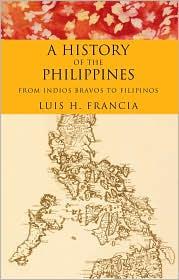
A highly readable, single-volume narrative by a respected Filipino writer that covers pre-colonial society through the early 21st century. It is the ideal first book because it gives you the complete story before you zoom in on any era.
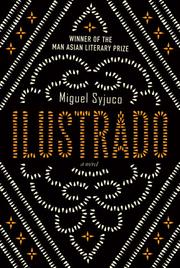
This Booker-shortlisted novel weaves Philippine history, politics, and identity into a gripping story, making the emotional and cultural texture of the country vivid and memorable — a perfect complement to the factual foundation just laid.
Spanish Rule and the Revolution
BeginnerUnderstand 333 years of Spanish colonialism, the birth of Filipino national identity, and the revolution of 1896 — including the ideas and martyrs that defined the nation.
▸ Study plan for this stage
Pace: 8–10 weeks, ~40–50 pages/day. Week 1–6: "Noli Me Tangere" (approximately 300–350 pages); Week 7–8: "Rizal without the overcoat" (approximately 200–250 pages); Week 9–10: review and synthesis.
- Spanish colonial society in the Philippines: the role of the Church, the friars, and the encomienda system as depicted in Noli Me Tangere
- Rizal's critique of Spanish colonialism through fiction: how the novel exposes corruption, abuse, and the suppression of Filipino identity
- The emergence of Filipino national consciousness and the concept of a unified Filipino nation during the 19th century
- Rizal's life, intellectual development, and evolution as a reformist and revolutionary thinker (covered in Rizal without the overcoat)
- The role of martyrdom and sacrifice in the 1896 Revolution: how Rizal's execution became a catalyst for nationalist sentiment
- The tension between reform and revolution: Rizal's ideological journey and its impact on Philippine independence movements
- The social, economic, and intellectual conditions that made the 1896 Revolution possible
- What are the major social injustices and abuses of Spanish colonial rule that Rizal exposes in Noli Me Tangere, and how do they reflect the actual conditions of the Philippines in the 19th century?
- How does Noli Me Tangere function as a political manifesto disguised as a novel, and what specific reforms or changes was Rizal advocating for?
- What was Rizal's personal journey from reformist to revolutionary, and how did his experiences abroad shape his thinking about Philippine independence?
- How did Rizal's execution in 1896 transform him from a controversial writer into a national martyr and symbol of the revolution?
- What is the relationship between the ideas expressed in Noli Me Tangere and the actual outbreak of the 1896 Philippine Revolution?
- How did Rizal's work contribute to the birth of Filipino national identity, and what made him a unifying figure despite his own ambivalence about armed rebellion?
- Create a character map of Noli Me Tangere identifying which characters represent specific colonial institutions (the Church, the Spanish government, the friars) and annotate the abuses each represents
- Write a 2–3 page analytical essay comparing one scene from Noli Me Tangere with a historical fact from Rizal without the overcoat to show how Rizal fictionalized real colonial grievances
- Trace Rizal's intellectual evolution by creating a timeline of his key life events, publications, and ideological shifts as documented in Rizal without the overcoat, then connect each to themes in Noli Me Tangere
- Identify 5–7 key passages from Noli Me Tangere that critique specific aspects of Spanish colonialism, then research the historical context of each using Rizal without the overcoat as a reference
- Write a dialogue between two characters from Noli Me Tangere debating reform versus revolution, grounding their arguments in Rizal's actual positions as described in Rizal without the overcoat
- Create a visual poster or infographic showing how Rizal's ideas in Noli Me Tangere influenced the 1896 Revolution, using evidence from both books to support the causal chain
Next up: This stage establishes the intellectual and emotional foundations of Filipino nationalism through Rizal's critique and martyrdom, preparing you to examine how his legacy shaped the subsequent phases of the independence struggle and the nation-building that followed the revolution.
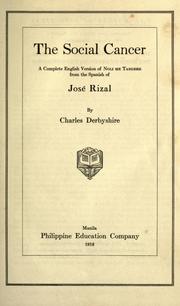
The foundational novel of Philippine nationalism, written by the national hero himself. Reading it here gives you direct access to the colonial grievances and reformist ideals that ignited the revolution — essential before studying the revolution itself.
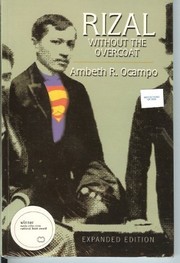
Ocampo's witty, accessible essays humanize Rizal and the revolutionary generation, correcting myths and filling in the social context that makes the 1896 revolution fully comprehensible.
American Rule, Commonwealth, and War
IntermediateExamine the American colonial project, the Philippine-American War, the Commonwealth period, and the brutal Japanese occupation and liberation of World War II.
▸ Study plan for this stage
Pace: 6–8 weeks, ~40–50 pages/day (Karnow's narrative history is engaging but dense with detail; allow time for reflection on complex colonial dynamics)
- The ideological justification for American imperialism in the Philippines (Manifest Destiny, the 'civilizing mission')
- The Philippine-American War (1899–1902): causes, major battles, strategies, and human costs on both sides
- American colonial administration: political structures, economic exploitation, education policy, and cultural assimilation efforts
- Filipino resistance and nationalism during the colonial period, including figures like Emilio Aguinaldo and the evolution of anti-colonial sentiment
- The transition from military rule to civil administration and the gradual development of Philippine self-governance
- The Commonwealth period (1935–1941): the promise and limitations of semi-autonomy under American oversight
- Japanese invasion and occupation during World War II: the collapse of American authority and the experience of war on Philippine soil
- Liberation and the path toward independence: how WWII accelerated the end of American colonial rule
- What were the main arguments Americans used to justify their colonial project in the Philippines, and how did these differ from earlier Spanish colonialism?
- How did the Philippine-American War begin, and what were the major phases and turning points of the conflict?
- What were the key features of American colonial administration, and how did American policies differ from Spanish colonial rule?
- Who were the major Filipino nationalist leaders and resistance figures during American rule, and what strategies did they employ?
- What was the Commonwealth period, and why did it represent both progress and continued American control?
- How did the Japanese occupation transform Filipino society, and what role did Filipinos play in the liberation struggle during WWII?
- Create a timeline of major events from 1898–1946, marking the Philippine-American War, key colonial policies, the Commonwealth declaration, Japanese invasion, and liberation—annotate with the human and political significance of each
- Write a comparative analysis (2–3 pages) of Spanish versus American colonial approaches in the Philippines, using specific examples from Karnow
- Map the major battles and campaigns of the Philippine-American War; research casualty figures and write a brief reflection on the human cost of the conflict
- Compile a biographical dossier on 3–4 Filipino nationalist leaders (e.g., Aguinaldo, Quezon, Osmena) based on Karnow's accounts; note their evolving positions on independence
- Analyze primary source excerpts (speeches, letters, or policy documents) from American colonial officials and Filipino leaders; identify the competing visions for the Philippines
- Create a visual or written comparison of life under Spanish rule, American rule, Japanese occupation, and the Commonwealth period—what changed for ordinary Filipinos in each era?
Next up: This stage establishes the colonial and wartime foundations that shaped modern Philippine politics, society, and national identity, preparing you to examine post-independence nation-building, Cold War alignments, and contemporary Philippine challenges in the next stage.

A Pulitzer Prize-winning account of the American colonial relationship — its wars, its benevolent assimilation ideology, and its lasting contradictions. This is the definitive English-language treatment of the American era and should be read before tackling the postwar republic.
Marcos, Martial Law, and People Power
IntermediateDeeply understand the rise and fall of Ferdinand Marcos, the machinery of authoritarian rule, the assassination of Benigno Aquino, and the 1986 People Power Revolution.
▸ Study plan for this stage
Pace: 6–7 weeks, ~40–50 pages/day. Week 1–3: Mijares' "The Conjugal Dictatorship" (~350 pages); Week 4–5: Steinberg's "The Philippines, a singular and a plural place" (~200 pages); Week 6–7: Review, synthesis, and exercises.
- The mechanisms of Marcos's authoritarian consolidation of power: how martial law was declared, justified, and institutionalized through the 1972 Constitution and the Batasan Pambansa
- The role of the Marcos-Aquino family rivalry and Benigno Aquino's assassination (August 1983) as a catalyst for mass political mobilization and the erosion of regime legitimacy
- Imelda Marcos's parallel power structure and the 'conjugal dictatorship' model: how the First Lady operated as a co-ruler with distinct networks, patronage systems, and economic interests
- The machinery of authoritarian control: military loyalty, crony capitalism, media censorship, and the suppression of dissent through detention, torture, and disappearances
- The social and economic contradictions that destabilized the regime: inequality, corruption, capital flight, and the growth of opposition movements across student, religious, and middle-class constituencies
- The 1986 People Power Revolution as a confluence of elite defection, mass mobilization, and military fracture—not an inevitable outcome but a contingent historical event
- The Philippines as a 'singular and plural place': how regional, class, ethnic, and religious divisions shaped responses to Marcos and the revolution differently across the archipelago
- The long-term institutional and psychological legacies of martial law: trauma, institutional weakness, and the unresolved question of accountability
- What were the specific triggers and justifications Marcos used to declare martial law in 1972, and how did he use the 1972 Constitution to institutionalize authoritarian rule?
- How did the assassination of Benigno Aquino in 1983 transform the political landscape, and why did it prove to be a turning point in the regime's legitimacy?
- What does Mijares mean by the 'conjugal dictatorship,' and how did Imelda Marcos exercise independent power alongside Ferdinand?
- How did Marcos maintain control through crony capitalism, and what were the economic consequences of this system for the broader Philippine economy?
- What were the major social movements and constituencies that opposed Marcos, and how did they eventually converge in the 1986 revolution?
- According to Steinberg, how did regional, class, and religious divisions in the Philippines shape different responses to Marcos's rule and the People Power Revolution?
- Create a detailed timeline of key events from 1965 (Marcos's first election) to 1986 (EDSA Revolution), marking turning points in regime stability, opposition mobilization, and elite defection based on Mijares's account.
- Map Imelda Marcos's power networks: identify the key institutions, cronies, and business interests she controlled independently, and analyze how her networks overlapped with and diverged from Ferdinand's.
- Write a 2–3 page analysis of the Benigno Aquino assassination: What does Mijares present as evidence of regime involvement? How did this event change the political calculus for different opposition groups?
- Compare two contrasting regions or social sectors (e.g., Manila middle class vs. provincial landlords, or student activists vs. business elites) and explain, using Steinberg's framework, why they responded differently to Marcos and the revolution.
- Create a 'machinery of control' diagram showing how the Marcos regime maintained power through military, media, economic, and security apparatus—then annotate where each system began to crack by 1985–1986.
- Conduct a close reading of Mijares's descriptions of specific acts of repression (detention, torture, disappearances) and write a 1–2 page reflection on how authoritarian violence functioned as a tool of political control and its psychological impact.
Next up: This stage establishes the authoritarian baseline and the revolutionary rupture of 1986, preparing readers to examine how the post-Marcos transition unfolded, how democratic institutions were rebuilt (or failed to be rebuilt), and how the legacies of martial law continue to shape contemporary Philippine politics.

Written by a former Marcos insider who defected, this is the most explosive insider account of the Marcos regime — its corruption, cruelty, and the role of Imelda. Reading it first in this stage establishes the raw reality of martial law.

A concise, analytically sharp overview that contextualizes the Marcos years within longer patterns of Philippine politics and society, helping you move from the emotional impact of Mijares to a structural understanding.
Discussion
Keep reading
Paths that share books, cover the same subject, or open a related topic.