Video game history and culture: the best books to understand the medium
This curriculum traces video game history and culture from its earliest arcade origins to its status as a defining modern medium, building knowledge stage by stage. Readers begin with accessible, narrative-driven histories to build a shared vocabulary, then move into deeper explorations of design philosophy, industry biography, and cultural criticism. By the final stage, they will be equipped to think critically about games as art, commerce, and culture.
Foundations: The Big Picture
BeginnerGain a broad, chronological understanding of how the video game industry was born and grew, from arcades and home consoles through the modern era, with enough context to discuss key eras, companies, and turning points.
▸ Study plan for this stage
Pace: 8–10 weeks, ~40–50 pages/day. Start with "The Ultimate History of Video Games" (4–5 weeks, covering the arcade era through early 2000s), then move to "Console Wars" (3–4 weeks, focusing on the Sega-Nintendo rivalry and its aftermath). Allocate 1 week for review and synthesis.
- The arcade boom of the late 1970s–1980s as the birthplace of the video game industry (Pong, Space Invaders, Pac-Man, Donkey Kong)
- The 1983 video game crash and how the Nintendo Entertainment System (NES) revived and restructured the home console market
- The evolution of home consoles across generations: Atari 2600, NES, SNES, Genesis, and the technological and design innovations that drove adoption
- The Sega-Nintendo console wars of the 1990s as a defining competitive moment that shaped industry strategy, marketing, and game design
- Key companies and their roles: Nintendo's dominance and risk-taking, Sega's aggressive innovation, Atari's early leadership and decline, and third-party developer ecosystems
- How business decisions (licensing, pricing, game libraries, regional markets) determined winners and losers in console generations
- The transition from 2D to 3D graphics and its impact on game design, development costs, and player expectations
- The cultural and demographic shift from arcade culture to home gaming and mainstream acceptance of video games
- What were the key factors that caused the 1983 video game crash, and how did Nintendo's NES reverse it?
- How did the Sega Genesis challenge Nintendo's SNES dominance in the 1990s, and what were the main strategic differences between the two companies?
- Trace the evolution of home console technology from the Atari 2600 through the 1990s—what innovations mattered most to consumers?
- Why did Atari fail to maintain its early leadership in home consoles, and what lessons did later companies learn from its mistakes?
- How did the shift from arcade gaming to home consoles change the video game industry's business model and target audience?
- What role did game libraries and third-party developers play in determining the success or failure of a console generation?
- Create a timeline poster or digital chart mapping major consoles, arcade games, and industry milestones from 1972 to 2000, noting technological leaps and market shifts.
- Play or watch gameplay footage of 3–4 landmark games from different eras (e.g., Pong, Pac-Man, Super Mario Bros., Sonic the Hedgehog, Super Mario 64) and write a 1-page reflection on how each changed gaming or reflected its era.
- Write a 2–3 page comparative business analysis: Why did Nintendo succeed where Atari failed? Use specific examples from both books.
- Create a visual comparison chart of the Sega Genesis vs. SNES, listing specs, key games, marketing strategies, and regional performance—then explain which company's approach was more effective and why.
- Interview a gamer from the 1980s–1990s (parent, older sibling, online community member) about their console memories, then write a 1-page narrative connecting their experience to the industry trends you've read about.
- Design a fictional console for the year 2000 based on the technological and market trends you've learned; justify your design choices with reference to what worked or failed in previous generations.
Next up: This stage provides the historical scaffolding and industry context needed to understand how modern gaming platforms, business models, and design philosophies emerged—preparing you to dive deeper into specific genres, game design theory, or contemporary industry dynamics in the next stage.

The single most comprehensive narrative history of the industry from Pong to the PlayStation era — an ideal first read that establishes the full timeline, key players, and industry vocabulary everything else builds on.
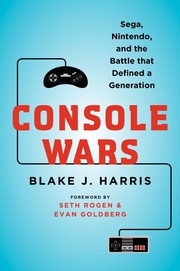
A fast-paced, narrative account of the Sega vs. Nintendo rivalry of the early 1990s; reading it second grounds the broad history in a thrilling, human-scale story that makes the stakes of the industry feel real.
The People Behind the Games
BeginnerUnderstand the visionaries, entrepreneurs, and creative teams who shaped gaming, and how personality, ambition, and conflict drove the industry's most important moments.
▸ Study plan for this stage
Pace: 6–8 weeks, ~40–50 pages/day. Start with "Game Over" (4–5 weeks), then "Masters of Doom" (2–3 weeks). This allows time for reflection between books and deeper engagement with the dense biographical and business narratives.
- Visionary leadership and risk-taking: How Nolan Bushnell, Steve Jobs, and the Carmack/Romero partnership identified market opportunities others missed and bet heavily on unproven ideas
- The role of personality and conflict in creative teams: How ego, ambition, and interpersonal dynamics between founders shaped product decisions and company trajectories (Bushnell vs. Atari's board; Carmack vs. Romero's creative tensions)
- Business strategy and survival: How companies navigated competition, technological shifts, and market crashes through different approaches (Atari's licensing model vs. id Software's shareware distribution)
- Innovation through constraint: How technical limitations and financial pressure forced creative problem-solving that defined entire genres and platforms
- The human cost of ambition: How the drive to innovate and succeed created personal sacrifices, burnout, and fractured relationships among industry pioneers
- From arcade to home console to PC: How the same visionaries and teams adapted to radical shifts in distribution, hardware, and audience expectations
- What were Nolan Bushnell's core insights about the video game market, and how did his personality shape Atari's early culture and decisions?
- How did the Atari 2600's business model (cartridge licensing) differ from competitors' approaches, and what role did this play in Atari's dominance and eventual decline?
- What was the relationship between Steve Jobs and Nolan Bushnell, and how did their partnership influence the early personal computer industry?
- Describe the creative partnership between John Carmack and John Romero: What were their complementary strengths, and how did their conflict ultimately lead to id Software's success and breakup?
- How did id Software's shareware distribution model for Doom differ from traditional publishing, and why was this revolutionary?
- What personal sacrifices and conflicts did the key figures in these books make in pursuit of their vision, and what does this reveal about the cost of innovation?
- Create a timeline of key decisions by Nolan Bushnell (Atari founding, Pong, 2600 launch, departure) and annotate each with the personality traits or business logic that drove them, based on evidence from 'Game Over'
- Write a character sketch (500 words) of either Nolan Bushnell or Steve Jobs using 'Game Over' as your primary source, focusing on how their ambition and vision shaped their decisions
- Map the creative and personal tensions between Carmack and Romero across 'Masters of Doom', noting how each conflict led to a specific innovation or product decision (e.g., engine improvements, game design choices)
- Compare Atari's and id Software's business strategies in a side-by-side chart: licensing model vs. shareware, centralized control vs. distributed teams, hardware focus vs. software focus. What does each approach reveal about the founders' personalities?
- Interview someone who plays or has played video games (or reflect on your own experience): Ask them which games or systems from these books they know, and explain to them the human story behind one product—practice translating the book's narratives into conversation
- Write a short scene (300–400 words) imagining a hypothetical conversation between Nolan Bushnell and John Carmack about innovation, risk, and the future of gaming—use their actual philosophies and personalities from the books as your guide
Next up: This stage establishes that games are made by flawed, ambitious humans whose personalities and conflicts drive innovation; the next stage will explore how those games and systems shaped broader culture, communities, and society.

A deeply reported account of Nintendo's rise to dominance, focusing on the people and business decisions behind it — a perfect bridge from broad history into the human stories that drove it.
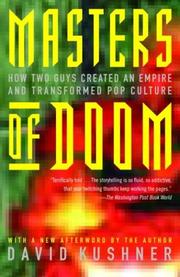
The legendary story of id Software and the creation of Doom; widely considered one of the best books ever written about game development and the cult of personality around game creators.
Design Thinking: How Games Work
IntermediateDevelop a working framework for understanding why games are designed the way they are, how mechanics create meaning, and what separates good game design from great game design.
▸ Study plan for this stage
Pace: 8–10 weeks, ~40–50 pages/day. Start with "The Art of Game Design" (4–5 weeks, ~35 pages/day for its ~400 pages), then move to "Blood, Sweat, and Pixels" (3–4 weeks, ~50 pages/day for its ~400 pages). Allow 1 week for review and synthesis.
- The Lens framework: viewing games through multiple perspectives (player experience, mechanics, aesthetics, story) to understand design decisions
- The MDA framework (Mechanics, Dynamics, Aesthetics): how low-level rules create emergent player behaviors and emotional responses
- Playtesting and iteration as essential design tools: why designers must observe actual players rather than rely on assumptions
- The relationship between constraints and creativity: how limitations in technology, budget, and scope force innovative design solutions
- Narrative vs. mechanics: understanding when story serves gameplay and when gameplay serves story, and the tension between them
- Player psychology and motivation: how games tap into intrinsic desires (mastery, autonomy, purpose) through careful mechanical design
- Production realities: how team dynamics, crunch culture, and business pressures shape the final game product
- Design iteration under real-world constraints: balancing artistic vision with technical feasibility, budget, and timeline pressures
- What is the Lens framework, and how would you use it to analyze the design decisions in a game you've played recently?
- Explain the MDA framework and give an example of how a specific game mechanic creates emergent dynamics that produce a particular aesthetic experience.
- Why is playtesting critical to game design, and what kinds of insights can designers only learn by watching players rather than imagining player behavior?
- How do technical constraints and budget limitations force designers to make creative choices? Provide an example from one of the books.
- Describe a conflict between narrative and mechanics in a game discussed in the books, and explain how the designers resolved (or failed to resolve) it.
- What psychological needs do games satisfy, and how do specific mechanics in games you know activate those needs?
- Lens Analysis: Choose a game you know well and analyze it through at least 4 different lenses from Schell's framework (e.g., the player's lens, the designer's lens, the technology lens). Write 1–2 pages explaining what each lens reveals about the game's design.
- MDA Breakdown: Select a core mechanic from a game (e.g., resource management, turn-based combat, permadeath). Map out how that mechanic creates dynamics (player behaviors) and what aesthetics (emotional responses) emerge. Create a diagram or written explanation.
- Playtesting Simulation: Design a simple game prototype (board game, card game, or digital prototype using free tools). Conduct playtesting with 2–3 people, observe their behavior without explaining the rules, and document what surprised you. Revise the design based on observations.
- Production Case Study: Choose one game discussed in 'Blood, Sweat, and Pixels' (e.g., Uncharted 4, Diablo III, Bloodborne). Write a 2–3 page analysis of how production constraints, team dynamics, and crunch shaped the final design.
- Constraint-Driven Design: Imagine you're designing a game with severe limitations (e.g., only 3 buttons, 48-hour development window, $0 budget). Write a 1-page design document explaining how these constraints force creative solutions.
- Narrative-Mechanics Integration: Analyze a game where story and mechanics are tightly integrated (e.g., The Last of Us, Spec Ops: The Line, or another game from the books). Explain how the mechanics reinforce the narrative themes and vice versa.
Next up: This stage equips you with both the theoretical frameworks and real-world production insights needed to critically evaluate how games are made; the next stage will likely deepen your analysis by exploring specific genres, player communities, or the cultural and historical contexts that shape what games get made and how they're received.
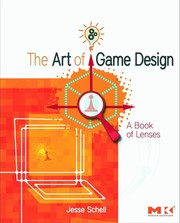
The definitive introduction to game design as a discipline; reading it at this stage transforms the reader from a passive consumer of game history into someone who can analyze and articulate design decisions.

A behind-the-scenes look at the grueling development of ten modern games; pairs perfectly with Schell's design theory by showing the messy, human reality of actually executing on design ideas.
Games as Culture & Art
IntermediateSituate video games within broader cultural, social, and artistic contexts — understanding how games reflect and shape society, identity, and meaning-making in the modern world.
▸ Study plan for this stage
Pace: 6–7 weeks, ~40–50 pages/day. Allocate 3–4 weeks to "Extra Lives" (approximately 300 pages), then 2–3 weeks to "Rise of the Videogame Zinesters" (approximately 100 pages), with overlap for reflection and exercises.
- Games as a legitimate artistic medium with narrative, aesthetic, and emotional depth—moving beyond the 'games vs. art' debate
- How personal identity, trauma, and lived experience shape both game design and player interpretation
- The relationship between game mechanics and meaning: how systems communicate themes and values
- Independent and DIY game development as a democratizing force that challenges industry gatekeeping
- Games as cultural mirrors: how they reflect social anxieties, historical moments, and collective consciousness
- The role of accessibility and inclusivity in expanding who gets to make and play games
- Authorship and voice in games: how individual creators embed their perspectives into interactive experiences
- How does Bissell argue that video games function as art, and what specific examples does he use to support this claim?
- What role does personal narrative and autobiography play in Anthropy's vision of game design, and how does this differ from mainstream industry approaches?
- How do game mechanics (rules, systems, constraints) communicate meaning and themes, according to the ideas presented in these books?
- What barriers to game creation does Anthropy identify, and how does she propose that indie/zinesters approaches overcome them?
- How do the games discussed in both books reflect or respond to broader cultural, social, or historical contexts?
- What is the relationship between a creator's identity and the games they make, based on examples from both texts?
- Play and analyze: Select 2–3 games mentioned in 'Extra Lives' (e.g., Braid, Shadow of the Colossus) and write a 500-word reflection on how Bissell's arguments about game-as-art manifest in your actual experience.
- Design a short game concept (1–2 pages) inspired by a personal memory or emotion, following Anthropy's philosophy of DIY creation. Document your design choices and how they reflect your identity or perspective.
- Mechanics-to-meaning mapping: Choose one game from either book and create a diagram or written analysis showing how its core mechanics (movement, resource management, choice systems, etc.) communicate its themes.
- Zinesters project: Create a simple visual zine (digital or physical, 4–8 pages) that explores your relationship to games as culture—could be a personal essay, comic, or collage. Embrace the DIY aesthetic Anthropy champions.
- Comparative close-reading: Select one essay/chapter from 'Extra Lives' and one section from 'Rise of the Videogame Zinesters' that address similar themes (e.g., authorship, identity, cultural meaning). Write a 750-word synthesis comparing their arguments.
- Curate and present: Choose 3–4 games (not necessarily mentioned in the books) that you believe exemplify the cultural/artistic ideas discussed. Write a brief curator's statement explaining why each belongs in a 'Games as Culture' exhibition.
Next up: This stage establishes games as a culturally and artistically significant medium worthy of serious analysis; the next stage will likely deepen this by exploring specific genres, historical periods, or design philosophies in greater technical and historical detail.

A critically acclaimed essay collection by a literary writer and lifelong gamer that asks what games mean and why they matter — an essential bridge between gaming enthusiasm and serious cultural criticism.

A passionate manifesto for games as personal, democratic expression that broadens the reader's sense of who makes games and why, challenging mainstream industry assumptions built up in earlier stages.
Advanced Perspectives: Industry, Power & the Future
ExpertCritically examine the economics, labor, and power structures of the modern game industry, and synthesize everything into a nuanced, sophisticated understanding of gaming as a defining medium of our time.
▸ Study plan for this stage
Pace: 8–10 weeks, ~40–50 pages/day. *Press Reset* (~400 pages) takes 2–3 weeks; *How to Talk about Videogames* (~200 pages) takes 1–2 weeks. Remaining time for synthesis, exercises, and reflection.
- Crunch culture and labor exploitation in game development: systemic causes, human costs, and industry normalization (Schreier's core argument)
- The economics of the modern game industry: consolidation, publisher power, monetization models, and their impact on creative autonomy
- How games function as a critical medium worthy of serious analysis and cultural discourse, beyond dismissal or uncritical celebration
- The relationship between game design, player experience, and underlying ideological or commercial intent
- Power structures in gaming: who controls narratives, resources, and creative decisions, and whose voices are marginalized
- Games as a defining cultural form: how gaming reflects, shapes, and critiques contemporary society
- Critical vocabulary and frameworks for discussing games with nuance, avoiding both hype and dismissal
- What systemic factors drive crunch culture in game development, and why has the industry normalized unsustainable working conditions?
- How do publisher consolidation and monetization strategies (live-service models, DLC, microtransactions) constrain creative vision and worker autonomy?
- What does it mean to 'talk about videogames' seriously, and how does Bogost's framework help us move beyond surface-level criticism?
- How can you identify and articulate the ideological assumptions embedded in game design, mechanics, and narrative?
- What role do games play in contemporary culture, and how do they compare to film, literature, or other media in terms of cultural significance?
- How would you construct a sophisticated argument about a game's cultural meaning, using both Schreier's industry insights and Bogost's critical vocabulary?
- Read *Press Reset* with annotated notes on each major case study (Telltale, Rockstar, Quantic Dream, etc.); identify the specific labor, economic, and power dynamics at play in each.
- Create a 'crunch map' for one game studio: trace the financial pressures, publisher demands, and management decisions that led to documented crunch periods.
- Write a 1,500–2,000 word critical essay on a contemporary game, using Bogost's vocabulary (unit operations, procedural rhetoric, etc.) to analyze its embedded assumptions.
- Analyze a game's monetization model (live-service, battle pass, cosmetics, etc.) through the lens of Schreier's industry analysis: who profits, who loses, what creative compromises result?
- Conduct a comparative case study: select two games from different eras or studios and discuss how industry economics and labor conditions shaped their design and reception.
- Engage in a structured debate or discussion: defend a position on whether a specific game's design reflects corporate interests or artistic vision, citing both books.
Next up: This stage equips you with both the critical vocabulary (Bogost) and the industry knowledge (Schreier) to engage with gaming as a complex cultural and economic system, preparing you to explore specialized topics—whether that's game design theory, specific genres, cultural movements within gaming, or the future of the medium—with sophisticated, grounded analysis.

Schreier's follow-up investigates studio closures, layoffs, and the human cost of the modern game industry — essential for understanding the structural forces that shape which games get made and who suffers when they don't.

A collection of sharp, provocative essays from one of game studies' leading scholars; the ideal capstone that equips readers with the critical language to argue seriously about games as a cultural and artistic medium.
Discussion
Keep reading
Paths that share books, cover the same subject, or open a related topic.