Best Books on the History of Kenya, in Order
This curriculum takes the reader from a broad, accessible introduction to Kenyan history all the way through specialist accounts of colonialism, resistance, independence, and modern politics. Each stage builds the chronological and conceptual vocabulary needed to tackle the more analytical and primary-source-driven works that follow, ensuring the reader arrives at the advanced stage with the context to engage critically with Kenya's most contested historical debates.
Foundations: The Big Picture
BeginnerGain a confident chronological overview of Kenyan history from precolonial times to the present, and build the basic vocabulary (ethnic groups, colonial structures, key events) needed for deeper reading.
▸ Study plan for this stage
Pace: 4–5 weeks, ~40–50 pages/day (Hornsby's "Kenya" is approximately 200–250 pages; adjust pace based on density of historical detail)
- Precolonial Kenya: diverse ethnic groups, trade networks, and settlement patterns before European arrival
- British colonial rule: the establishment of the protectorate, settler colonialism, and administrative structures
- The Mau Mau Uprising and anti-colonial resistance movements as turning points toward independence
- Kenya's path to independence (1963) and the early post-colonial state under Kenyatta
- The role of geography, natural resources, and regional variation in shaping Kenyan history
- Key ethnic and social divisions (Kikuyu, Maasai, Luo, Swahili coast, etc.) and their historical significance
- Major economic transitions: from subsistence and trade to colonial extraction to post-colonial development
- What were the major ethnic groups and settlement patterns in precolonial Kenya, and how did geography influence them?
- How did British colonial rule transform Kenya's political, economic, and social structures?
- What were the causes and significance of the Mau Mau Uprising, and how did it accelerate decolonization?
- What were the key events and figures in Kenya's transition to independence in 1963?
- How did Kenya's early post-colonial leadership under Kenyatta shape the nation's trajectory?
- What major regional, ethnic, and economic divisions does Hornsby identify as persistent challenges in Kenyan history?
- Create a detailed timeline of Kenya from precolonial times to 1963, marking major events, rulers, and turning points from Hornsby's account
- Map Kenya's major ethnic groups and regions as described in the book; annotate with notes on their historical roles and interactions
- Write a 500-word summary of the Mau Mau Uprising based on Hornsby's treatment, explaining its causes, course, and historical impact
- Compile a glossary of key terms and names from the book (e.g., colonial administrators, ethnic groups, political movements, institutions)
- Compare two contrasting periods (e.g., precolonial vs. colonial, or colonial vs. early post-colonial) using evidence from Hornsby to identify continuities and ruptures
- Create a visual chart showing Kenya's major economic activities and transitions across the periods covered in the book
Next up: This stage equips you with a solid chronological scaffold and essential vocabulary, allowing the next stage to zoom in on specific themes (politics, economy, culture, regional histories) with confidence that you understand the broader historical arc and key actors.

A comprehensive and readable narrative of post-independence Kenya up to the 2000s; reading it early gives the reader a clear sense of where the country's story ends up, making earlier history more meaningful.
Precolonial Worlds and the Coming of Empire
BeginnerUnderstand the diverse precolonial societies of the region — Bantu, Nilotic, Cushitic, and coastal Swahili — and how the British conquest dismantled and reorganised them.
▸ Study plan for this stage
Pace: 4–5 weeks, ~25–30 pages/day. Begin with Marsh's survey (2–3 weeks) to establish precolonial context and early contact, then move to Lugard's theoretical framework (2 weeks) to understand the mechanics of colonial reorganisation.
- Precolonial diversity: Bantu agricultural societies, Nilotic pastoralists, Cushitic traders, and Swahili coastal city-states operated with distinct political structures, economies, and social hierarchies before European arrival
- Swahili cosmopolitanism: The East African coast was an integrated Indian Ocean trading network with Arab, Persian, and Indian influences long before colonialism
- British conquest mechanisms: Military campaigns, treaties, and administrative consolidation systematically dismantled existing power structures and replaced them with colonial governance
- The 'Dual Mandate' ideology: Lugard's framework justified colonial rule as a civilising mission combining economic exploitation with supposed 'trusteeship' of African populations
- Reorganisation of land and labour: Colonial systems restructured property rights, introduced taxation, and coerced labour to serve European economic interests
- Disruption of existing trade networks: Precolonial long-distance trade (especially Swahili and interior routes) was redirected to serve colonial extraction
- Ethnic categorisation and division: Colonial administration imposed rigid ethnic categories and administrative boundaries that cut across precolonial political communities
- What were the major precolonial societies in East Africa (Bantu, Nilotic, Cushitic, Swahili), and what distinguished their political and economic systems from one another?
- How did the Swahili coast function as part of the Indian Ocean world before European colonisation, and what role did trade play in its development?
- What were the primary methods the British used to conquer and consolidate control over East African territories, and how did these differ by region?
- What is Lugard's 'Dual Mandate,' and how did it serve as ideological justification for colonial rule and reorganisation of African societies?
- How did colonial administration restructure land ownership, labour systems, and taxation in ways that dismantled precolonial economic and social arrangements?
- What were the long-term consequences of colonial reorganisation for precolonial political authority, trade networks, and ethnic identities?
- Create a comparative table mapping precolonial societies (Bantu, Nilotic, Cushitic, Swahili) across columns for political structure, economy, trade networks, and social organisation, using evidence from Marsh
- Trace one precolonial trade route (e.g., Swahili-interior or caravan routes) on a map and annotate how it was disrupted or redirected under colonial rule
- Write a 500-word analysis of how Lugard's 'Dual Mandate' rhetoric in his text masks the economic extraction and labour coercion actually described
- Select one East African ethnic group or region from Marsh and write a narrative explaining its precolonial autonomy and how British conquest and Lugard's administrative model dismantled it
- Create a timeline showing key moments of British conquest and administrative consolidation in East Africa (1880s–1920s), marking where Marsh and Lugard's accounts overlap or diverge
- Debate exercise: One student argues Lugard's 'trusteeship' framework from his text; another critiques it using evidence of labour exploitation and land seizure from both books
Next up: This stage establishes the precolonial baseline and the ideological and administrative mechanisms of conquest, preparing readers to examine how colonial rule was contested, resisted, and eventually challenged by African nationalist movements in the twentieth century.
Provides essential regional context for East African societies before and during colonisation, giving the reader a grounding in the wider world Kenya was part of.
Reading the ideological justification for British colonial rule in the colonisers' own words is essential for understanding the logic and language that shaped Kenya's colonial experience.
Colonial Kenya and the Mau Mau Rebellion
IntermediateDevelop a deep, critical understanding of settler colonialism, land dispossession, the Kikuyu experience, and the brutal suppression of the Mau Mau uprising — the defining trauma of modern Kenyan history.
▸ Study plan for this stage
Pace: 8–10 weeks, ~40–50 pages/day (accounting for dense historical analysis and primary source material)
- Kikuyu pre-colonial society, land tenure systems, and social structures as foundational to understanding colonial disruption (Facing Mount Kenya)
- Settler colonialism as a system of land expropriation, racial hierarchy, and labor extraction that fundamentally transformed Kenyan society
- The Mau Mau Rebellion as both a nationalist uprising and an intra-Kikuyu social conflict rooted in generational, class, and ideological divisions
- British counter-insurgency strategy: detention camps, forced resettlement, collective punishment, and the systematic use of violence and torture (Britain's Gulag)
- The role of African collaborators, Home Guards, and the complexity of African agency within colonial structures (Histories of the Hanged, Mau Mau from Within)
- The psychological, social, and political trauma inflicted by the Emergency period and its long-term consequences for Kenyan national identity
- How oral histories, testimonies, and archival evidence reveal suppressed narratives of colonial violence and resistance
- The transition from armed rebellion to negotiated independence and the political compromises that shaped post-colonial Kenya
- How did Kikuyu land tenure and social organization differ from European concepts of private property, and how did this difference enable colonial land dispossession?
- What were the primary grievances that motivated Kikuyu participation in the Mau Mau Rebellion, and how did these grievances vary across different social groups?
- What methods did the British employ to suppress the Mau Mau Rebellion, and what evidence exists of systematic torture, detention, and collective punishment in the camps?
- How did the Mau Mau Rebellion function as both a nationalist movement and an internal Kikuyu conflict, and what role did African collaborators play in the colonial counter-insurgency?
- What does the historiography of Mau Mau reveal about how colonial and post-colonial narratives have been constructed, contested, and revised?
- How did the Emergency period shape Kenya's path to independence, and what political compromises were made between African nationalists and British authorities?
- Create a detailed timeline of key events from pre-colonial Kikuyu society through the Emergency period (1952–1960), annotating how each phase shifted power, land ownership, and social relations
- Construct a comparative chart of Kenyatta's ethnographic account in Facing Mount Kenya versus the accounts of Mau Mau participants in Mau Mau from Within and Histories of the Hanged—note where narratives align, diverge, and what those gaps reveal
- Write a 1,500–2,000 word analytical essay examining one specific detention camp or resettlement scheme described in Britain's Gulag, analyzing its role in the broader counter-insurgency strategy
- Conduct a close reading of 2–3 testimonies from Histories of the Hanged, identifying how individual narratives illuminate the moral ambiguities and competing loyalties within Kikuyu communities during the Emergency
- Create a visual map showing the geography of land dispossession, settler farms, and detention camp locations, then write annotations explaining how spatial control was central to colonial and counter-insurgency strategy
- Develop a historiographical essay (2,000+ words) comparing how Elkins, Anderson, and Barnett each interpret the causes, conduct, and consequences of Mau Mau—what evidence does each prioritize, and what interpretive frameworks do they employ?
Next up: This stage establishes the historical trauma, political violence, and unresolved colonial legacies that directly shaped Kenya's independence negotiations, early post-colonial state formation, and enduring ethnic and class tensions—providing essential context for understanding how Kenya's leaders navigated nation-building, land reform, and national identity in the decades following 1963.
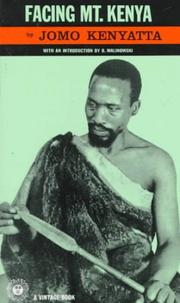
Written by Kenya's future first president, this ethnographic account of Kikuyu society is both a primary source and an act of political resistance — essential for understanding what colonialism threatened to destroy.

A firsthand memoir by a Mau Mau general that gives the rebellion a human face and an African voice, read best after Kenyatta establishes the cultural stakes.
A Pulitzer Prize-winning investigation into the British detention camps and systematic violence used to crush the Mau Mau; this landmark work fundamentally reframed how the world understands the rebellion.
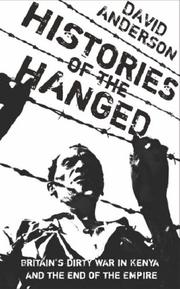
A rigorous scholarly complement to Elkins, focusing on the legal machinery of colonial repression; reading both together gives a full picture of the counter-insurgency from different archival angles.
Independence, Nationalism, and the Postcolonial State
IntermediateUnderstand how Kenya's nationalist movement was shaped and constrained, how independence was negotiated, and how the postcolonial state inherited and reproduced colonial structures of power.
▸ Study plan for this stage
Pace: 6–8 weeks, ~25–30 pages/day (approximately 180–200 pages total across both books)
- Decolonization of the mind: how colonial language, education, and culture shaped Kenyan consciousness and nationalist identity
- The role of intellectuals and cultural workers in articulating nationalist vision and challenging colonial epistemology
- The tension between pan-African unity and nation-state building in Kenya's independence movement
- How postcolonial elites inherited and reproduced colonial administrative structures, hierarchies, and economic systems
- The negotiated nature of independence: how Britain retained informal power through economic and institutional arrangements
- Language, literature, and oral tradition as sites of resistance and nation-building in postcolonial Kenya
- The limits of nationalism: how class interests, ethnic divisions, and Cold War pressures constrained radical transformation
- What does Ngũgĩ mean by 'decolonizing the mind' and why does he argue that language is central to this process?
- How did colonial education systems shape Kenyan nationalist leaders' worldviews, and what tensions did this create?
- According to Mboya, what were the key challenges Kenya faced in building a unified nation-state after independence?
- How did Kenya's postcolonial state reproduce colonial structures of power, and what alternatives did nationalist thinkers propose?
- What role did intellectuals, writers, and cultural figures play in Kenya's independence movement and early postcolonial period?
- How did Cold War pressures and economic dependency constrain Kenya's postcolonial development and nationalist aspirations?
- Close-read a passage from Ngũgĩ on language and colonialism; annotate it and write a 500-word reflection on how language shapes political consciousness
- Compare Ngũgĩ's critique of colonial education with Mboya's vision for postcolonial nation-building—create a two-column chart of their agreements and disagreements
- Research and write a 1000-word essay on one Kenyan writer or intellectual mentioned in these books (e.g., Jomo Kenyatta, Julius Nyerere's influence on Kenya) and their role in nationalism
- Create a timeline of Kenya's independence negotiations (1950–1964) using details from both books, marking key turning points and the roles of different actors
- Analyze a primary source document from Kenya's independence period (constitution, political speech, or manifesto) through the lens of Ngũgĩ's and Mboya's arguments about postcolonial power
- Write a comparative analysis (1500 words) of how Ngũgĩ and Mboya each diagnose the problem of postcolonial dependency and what solutions they propose
Next up: This stage establishes how nationalist ideology and postcolonial state structures were formed, providing the foundation to examine how these structures actually functioned, failed, or were contested in Kenya's subsequent political, economic, and social history.
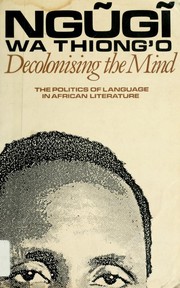
Kenya's greatest living writer delivers a searing intellectual argument about language, culture, and colonial power — essential theoretical grounding for understanding why political independence did not mean full liberation.

Written by one of Kenya's most important independence-era politicians, this book offers a primary-source window into the ideological debates and ambitions of the nationalist generation.
Modern Kenya: Power, Ethnicity, and Democracy
ExpertEngage critically with the structural forces — ethnic politics, land inequality, corruption, and contested elections — that have shaped Kenya from the Kenyatta and Moi eras to the present day.
▸ Study plan for this stage
Pace: 4–5 weeks, ~40–50 pages/day (approximately 300 pages total). Allocate 1 week for initial reading, 2–3 weeks for deeper engagement with chapters, and 1 week for synthesis and reflection.
- Corruption as a systemic feature of post-colonial governance: how patronage networks and 'eating' (personal enrichment at state expense) became normalized under Kenyatta and Moi
- Ethnic politics and the politics of belonging: how ethnic identity was weaponized to consolidate power and exclude rival groups from state resources
- Land as a contested resource: the historical roots of land inequality and how land disputes reflect deeper ethnic and class tensions
- The anatomy of a corruption scandal: how Goldenberg exposed the mechanics of high-level theft and the failure of accountability mechanisms
- Authoritarianism and the suppression of dissent: how the Moi regime used violence, detention, and institutional capture to maintain control
- The role of international actors: how foreign governments and institutions enabled or tacitly accepted corruption and human rights abuses
- Personal testimony as historical evidence: how Wrong's narrative method reveals individual agency within structural constraints
- What does Michela Wrong mean by 'it's our turn to eat,' and how does this phrase encapsulate the logic of post-colonial patronage politics in Kenya?
- How did ethnic politics under Kenyatta and Moi create a system where access to state resources depended on ethnic affiliation and proximity to power?
- What was the Goldenberg scandal, and what does it reveal about the relationship between corruption, ethnicity, and state power in Kenya?
- How did the Moi regime use violence, detention, and institutional mechanisms to suppress dissent and maintain authoritarian control?
- What role did international actors (foreign governments, donors, multinational corporations) play in enabling or overlooking corruption in Kenya?
- How does Wrong's use of personal narrative and testimony contribute to our understanding of structural corruption and its human costs?
- Create a timeline of key events in 'It's Our Turn to Eat' (Kenyatta era, Moi's rise, Goldenberg scandal, post-2007 election violence) and annotate each with the ethnic and political dynamics at play.
- Map the patronage networks described in the book: identify key figures, their ethnic backgrounds, their roles in the state, and the resources they controlled. Use this to visualize how 'eating' functioned as a system.
- Write a 2–3 page analytical essay: 'How did land inequality in Kenya become entangled with ethnic politics?' Use specific examples from Wrong's narrative.
- Conduct a close reading of Wrong's account of the Goldenberg scandal (key chapters). Create a detailed diagram showing: who benefited, what mechanisms were used, where oversight failed, and what this reveals about state capture.
- Compare two characters from the book (e.g., a perpetrator and a victim of corruption, or a regime insider and a dissident). Write a 1,500-word comparative character study exploring how structural forces shaped their choices and fates.
- Debate exercise: Divide into two groups. One argues that international actors bear responsibility for enabling Kenyan corruption; the other argues that responsibility lies primarily with Kenyan elites. Use evidence from Wrong's book to support your position.
Next up: This stage establishes the historical and structural foundations of Kenya's political crisis—corruption, ethnic division, and authoritarianism—which the next stage will examine through the lens of electoral politics, constitutional reform, and contemporary struggles for accountability and democratic transformation.

A gripping, deeply reported account of corruption and ethnic patronage in modern Kenya told through the story of whistleblower John Githongo — the best single book for understanding how power actually works in contemporary Kenya.
Discussion
Keep reading
Paths that share books, cover the same subject, or open a related topic.