Best Books on the History of Argentina, in Order
This curriculum takes a beginner from a broad narrative overview of Argentine history all the way through the specialized, deeply analytical literature on Peronism, state terrorism, and economic collapse. Each stage builds the political vocabulary, historical context, and emotional literacy needed to fully absorb the more demanding works that follow — so that by the final stage, the reader can engage with primary-source-driven scholarship and memoir at the highest level.
Foundations: The Big Picture
BeginnerGain a confident chronological and geographical grounding in Argentine history from colonialism through the 20th century, establishing the cast of characters and recurring tensions (caudillismo, Buenos Aires vs. the interior, military vs. civilian rule) that all later books assume.
▸ Study plan for this stage
Pace: 8–10 weeks, ~40–50 pages/day (Romero first: 4–5 weeks; Lewis second: 4–5 weeks)
- Caudillismo and personalist leadership: how regional strongmen (Rosas, Perón) shaped Argentine politics through charisma and patronage rather than institutions
- Buenos Aires vs. the interior: the structural tension between the capital's cosmopolitan, export-driven interests and the provinces' agrarian, protectionist concerns
- Military interventionism as a recurring pattern: how the armed forces repeatedly seized power to resolve elite conflicts, from the 1930 coup through the 1976 coup
- The Radical and Peronist movements: their origins, ideologies, and competing claims to represent 'the people,' and why Peronism proved more durable
- Economic cycles and dependency: Argentina's reliance on agricultural exports (especially beef and grain) and how external market shocks destabilized politics
- Immigration and social transformation: how European immigration reshaped Argentine society, labor, and class conflict in the late 19th and early 20th centuries
- The 'Argentine paradox': why a wealthy, educated nation with abundant resources experienced repeated political crises and economic decline relative to its potential
- What is caudillismo, and how did figures like Juan Manuel de Rosas and Juan Perón use it to consolidate power? What made this form of leadership persistent in Argentine politics?
- Explain the geographic and economic divide between Buenos Aires and the interior provinces. How did this tension shape Argentine political conflicts from independence through the 20th century?
- Why did the Argentine military intervene in politics repeatedly (1930, 1943, 1966, 1976)? What were the underlying causes and what did each coup attempt to resolve?
- Compare the Radical Party and Peronism: their origins, social bases, ideologies, and reasons for their different political fates. Why did Peronism survive military repression while the Radicals fragmented?
- How did Argentina's economic dependence on agricultural exports (beef, grain) make the country vulnerable to external shocks, and how did economic crises trigger political instability?
- What role did European immigration play in transforming Argentine society, labor relations, and class conflict? How did this differ from other Latin American countries?
- Create a timeline of Argentine coups and major political transitions (1810–2000), noting the economic conditions, key actors, and stated justifications for each intervention. Identify patterns in the triggers and outcomes.
- Map the regional interests of Buenos Aires vs. three interior provinces (e.g., Buenos Aires, Córdoba, Santa Fe). For each region, note the dominant economic activity, key political figures, and positions on tariffs/trade. Explain how these interests clashed.
- Write a one-page character sketch of three key figures (e.g., Rosas, Yrigoyen, Perón), focusing on how each used caudillismo or personalism to build power and what their followers expected from them.
- Track Argentina's major export commodities and prices across three periods (1880–1920, 1920–1945, 1945–1976). For each period, note the economic boom/bust cycle and the political crisis that followed. Identify the causal link.
- Create a comparative chart: Radical Party vs. Peronism. Include columns for founding date, social base, ideology, relationship to the military, and longevity. Write a short paragraph explaining why Peronism proved more resilient.
- Read one primary source document (e.g., a Perón speech, a military junta communiqué, or a Radical Party platform) and analyze it for evidence of caudillismo, appeals to 'the people,' or justifications for intervention. How does it reflect the tensions you've identified?
Next up: By mastering these foundational patterns—caudillismo, regional conflict, military intervention, and economic dependency—you will be equipped to understand how later periods (the Dirty War, democratization, neoliberalism) emerged from and reacted against these deep structural tensions.
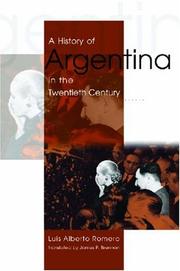
The single best one-volume survey of modern Argentina by a leading Argentine historian. Read this first to build the chronological skeleton — independence legacy, oligarchy, Peronism, dictatorship, and crisis — onto which every subsequent book hangs.
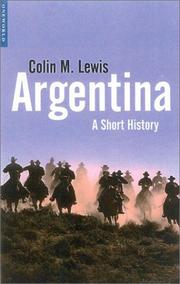
A compact, accessible companion that zooms out to cover economic and social structures from the colonial era onward. Reading it second reinforces Romero's narrative with an economic lens, preparing you for the crisis-focused books ahead.
Independence and Nation-Building
BeginnerUnderstand how Argentina was born as a nation, the civil wars between unitarians and federalists, and the foundational intellectual debates that shaped Argentine identity — essential context for understanding why Peronism resonated so powerfully a century later.
▸ Study plan for this stage
Pace: 4–5 weeks, ~40–50 pages/day (with reflection days built in)
- Civilization vs. Barbarism as a foundational Argentine ideological divide: Sarmiento's framework and its political implications
- Juan Manuel de Rosas as the embodiment of 'barbarism' and the caudillo system that dominated the interior
- The Unitarian vs. Federalist conflict: competing visions for Argentina's political organization and modernization
- Gaucho culture and rural society as a symbol of backwardness in need of European-style progress and education
- The role of geography and environment in shaping Argentine character and political possibilities
- Sarmiento's vision of national identity built on European immigration, education, and urban development
- How intellectual elites used the 'civilization/barbarism' binary to justify their political agenda and marginalize rural populations
- What does Sarmiento mean by 'civilization' and 'barbarism,' and how does he use these terms to interpret Argentine history and politics?
- Who was Juan Manuel de Rosas, and why does Sarmiento present him as the central problem in Argentine nation-building?
- What were the main differences between Unitarians and Federalists, and how did Sarmiento's work reflect Unitarian ideology?
- How does Sarmiento characterize gaucho culture, and what role does he believe it plays in Argentina's development?
- What is Sarmiento's proposed solution for transforming Argentina from 'barbarism' to 'civilization'?
- How does Sarmiento's intellectual framework reflect the anxieties and ambitions of Argentina's educated elite in the mid-19th century?
- Create a two-column chart: list specific examples from Facundo that Sarmiento labels as 'barbarism' on one side and his vision of 'civilization' on the other; reflect on what values and assumptions underlie these categories
- Write a character sketch of Rosas based on Sarmiento's portrayal, then research one primary source (speech, decree, or account by a contemporary) to compare Sarmiento's interpretation with alternative perspectives
- Map the geographic regions Sarmiento discusses (the pampas, the interior provinces, Buenos Aires) and annotate how he connects geography to political character and social organization
- Identify 3–4 key passages where Sarmiento discusses education, European immigration, or urban development as solutions; analyze what these reveal about his vision for Argentina's future
- Write a brief essay (500–750 words) from the perspective of a Federalist or rural caudillo responding to Sarmiento's critique—what would they say in their own defense?
- Create a timeline of the major events and figures Sarmiento discusses (Rosas's rise, key battles, intellectual movements) to understand the historical context he's interpreting
Next up: This stage establishes the ideological fault lines—civilization vs. barbarism, Unitarian vs. Federalist, European modernity vs. rural tradition—that will resurface in the 20th century when Perón and Peronism will redefine and invert these very categories, making 'the people' and 'barbarism' sources of national pride rather than shame.
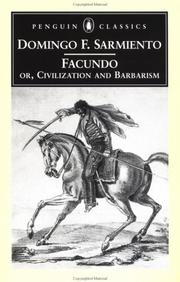
Written in 1845, this is the founding text of Argentine political thought — a biography of the caudillo Facundo Quiroga and a diagnosis of the country's soul. Reading it here shows you the ideological fault lines (city vs. countryside, order vs. chaos) that Perón would later exploit.
Perón and Peronism
IntermediateDevelop a nuanced, multi-perspective understanding of Juan Perón, Eva Perón, and the Peronist movement — its labor roots, its authoritarian tendencies, its mythologies, and its enduring grip on Argentine politics.
▸ Study plan for this stage
Pace: 8–10 weeks, ~40–50 pages/day (alternating between both books to build thematic depth)
- Perón's rise through the military and labor movement: how he consolidated power by aligning with descamisados and trade unions
- Eva Perón's transformation from actress to political icon and her role in legitimizing Peronism among the working class
- The cult of personality and mythmaking around both Peróns, particularly Eva's sanctification and the blurring of fact and legend
- Peronism as a political ideology: its blend of nationalism, populism, and authoritarianism; its rejection of traditional left-right categories
- The relationship between Perón's authoritarian governance and his popular support; the tension between democratic rhetoric and autocratic practice
- Eva's death and its aftermath: how her body and memory became contested political symbols and tools of state control
- The enduring legacy of Peronism in Argentine politics: how the movement survived Perón's exile and continued to shape the nation
- How did Perón use his position in the military and his alliance with labor unions to build a mass political movement, and what made this approach novel in Argentine politics?
- What was Eva Perón's political significance beyond her role as First Lady, and how did she reshape the relationship between the state and the working class?
- How do Page's biographical narrative and Martínez's fictional approach in Santa Evita differ in their treatment of Eva, and what does each reveal about the construction of Peronist mythology?
- What were the authoritarian elements of Perón's rule, and how did he maintain popular support despite suppressing opposition and controlling the media?
- Why did Eva's death become such a pivotal moment in Peronist history, and how did her body and memory function as political symbols after her death?
- How has Peronism persisted as a political force in Argentina after Perón's exile, and what does this suggest about the movement's ideological flexibility and popular appeal?
- Create a detailed timeline of Perón's political ascent (1943–1946) using Page's biography, marking key labor alliances, military decisions, and turning points that led to his presidency
- Construct a comparative character study of Eva Perón based on Page's factual account and Martínez's fictionalized version in Santa Evita—identify where they converge and diverge, and reflect on what those differences reveal about historical interpretation
- Write a 2–3 page analytical essay addressing: 'Was Peronism fascism, socialism, or something entirely new?' Use specific evidence from both books to support your argument
- Map the key institutions and constituencies that Perón mobilized (military, labor unions, the Catholic Church, the media, etc.) and explain how each contributed to his political consolidation
- Analyze the symbolic uses of Eva's body and image after her death by reading Martínez's treatment of her corpse and its political manipulation—write a reflection on how personal tragedy became state propaganda
- Research and present on one post-Perón Peronist leader or movement (e.g., the Montoneros, Cristina Fernández de Kirchner) and explain how they invoked Peronist ideology; connect this back to the foundations laid in Page and Martínez
Next up: This stage establishes Peronism as a foundational force in modern Argentine history—its contradictions, mythologies, and mass appeal—preparing you to examine how subsequent political movements, crises, and leaders either embraced or rejected Peronist legacies in the decades that followed.
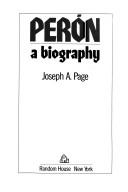
The definitive English-language biography of Juan Perón — thorough, balanced, and deeply researched. Read this first in the stage to get the full arc of the man before tackling the movement and its mythology.

A masterful literary nonfiction novel by Argentina's greatest journalist, tracing the bizarre postmortem odyssey of Eva Perón's embalmed body. It captures the quasi-religious power of Peronist myth better than any straightforward biography.
The Dirty War and the Disappeared
IntermediateConfront the full horror and mechanics of the 1976–1983 military dictatorship — how state terror was organized, who the victims were, how survivors bore witness, and how Argentina eventually reckoned with its past.
▸ Study plan for this stage
Pace: 5–6 weeks, ~40–50 pages/day. Week 1–2: "Kiss of the Spider Woman" (primary text); Week 3: remaining plays; Week 4–6: "A Lexicon of Terror" (slower pace for dense historical material and vocabulary building).
- State terror as a systematic tool: how the military junta organized disappearances, torture, and psychological control through institutions like ESMA
- The role of informants, collaboration, and betrayal in the regime's survival and the moral ambiguity of survival under dictatorship
- Testimony and witness as resistance: how survivors and artists documented horror through plays, oral histories, and lexical reconstruction
- Gender, sexuality, and vulnerability: how women, LGBTQ+ individuals, and the politically marginalized were disproportionately targeted
- Memory, language, and reckoning: how naming, defining, and publicly speaking about atrocities is essential to national healing and justice
- The psychology of imprisonment and torture: isolation, sensory deprivation, and the regime's deliberate destruction of identity and hope
- How does Puig use the relationship between Molina and Valentín to dramatize the moral and psychological dimensions of survival under state terror?
- What is the 'lexicon of terror' and why does Feitlowitz argue that understanding the regime's vocabulary is crucial to understanding its crimes?
- What were the main methods by which the Argentine military junta disappeared people, and what role did secret detention centers like ESMA play in the system?
- How do the plays in Puig's collection use theatrical form (dialogue, performance, ambiguity) to convey experiences that direct testimony alone cannot?
- What does Feitlowitz reveal about the perpetrators—who they were, how they justified their actions, and what happened to them after the dictatorship ended?
- How did survivors and artists like Puig and Feitlowitz use language, narrative, and public witness to resist the regime's attempt to erase its victims?
- Close-read a scene from 'Kiss of the Spider Woman' and annotate how Puig uses dialogue, metaphor, or film references to encode political meaning or emotional truth about captivity.
- Create a glossary of 10–15 key terms from 'A Lexicon of Terror' (e.g., 'desaparecido,' 'ESMA,' 'chupador,' 'picana') with definitions and historical context; reflect on how each word reveals the regime's logic.
- Write a 2–3 page character study of Molina or Valentín, analyzing how their choices and psychology reflect broader patterns of collaboration, resistance, or survival under dictatorship.
- Research one real victim or survivor mentioned in 'A Lexicon of Terror' and write a brief biographical sketch; compare their story to how Puig's characters embody similar dilemmas.
- Stage a dramatic reading of a key scene from one of Puig's plays with a partner; discuss afterward how performance choices (tone, pacing, physicality) shape the audience's understanding of power and vulnerability.
- Write a reflective essay: 'How does bearing witness through art (Puig's plays) differ from bearing witness through documentation (Feitlowitz's lexicon)? What does each form accomplish?'
Next up: This stage equips you with intimate, visceral understanding of the dictatorship's human cost and the power of testimony, preparing you to examine Argentina's post-1983 transition—trials, truth commissions, and ongoing debates about justice and forgetting.

A landmark novel set in an Argentine prison cell during the repression, exploring politics, sexuality, and complicity through intimate dialogue. Fiction here does what testimony cannot — it puts you inside the psychological world of the era.
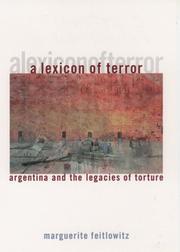
A rigorous, harrowing scholarly investigation into the language, torture centers, and bureaucratic machinery of the junta. It is the best analytical account of how the Dirty War actually functioned, and pairs perfectly with Nunca Más as evidence and Puig as literature.
Economic Crises and Modern Argentina
ExpertUnderstand the structural economic dysfunctions — hyperinflation, IMF dependency, the 2001 collapse, and default — that have defined Argentina's modern identity, and synthesize the entire curriculum into a coherent view of why Argentina repeatedly arrives at crisis.
▸ Study plan for this stage
Pace: 5–6 weeks, ~40–50 pages/day. Week 1–3: "And the Money Kept Rolling In (and Out)" (approximately 300 pages); Week 4–6: "The Argentina Reader" (approximately 400 pages, with time for synthesis and reflection).
- The structural roots of Argentina's debt cycle: how fiscal deficits, currency mismanagement, and external borrowing created a boom-bust pattern from the 1970s onward
- The role of the IMF and international creditors in enabling and constraining Argentine policy; the moral hazard of repeated bailouts
- Hyperinflation as both symptom and cause: how price instability eroded savings, wages, and institutional trust, particularly in the 1989–1991 and 2001–2002 periods
- The 2001 financial collapse and default: the mechanics of the corralito (bank freeze), the pesification of dollar debts, and the social devastation that followed
- The political economy of crisis: how successive governments (Alfonsín, Menem, De la Rúa) made contradictory policy choices that deferred rather than resolved structural imbalances
- Argentina's cultural and intellectual response to repeated crises: how Argentines understood, debated, and reimagined national identity through economic catastrophe
- Synthesis across the curriculum: connecting Argentina's 19th-century promise, mid-20th-century populism, and late-20th-century neoliberalism to understand why structural reform has repeatedly failed
- What were the primary mechanisms by which Argentina accumulated external debt from the 1970s through the 1990s, and why did successive governments fail to arrest this trend?
- How did the fixed exchange rate (convertibility plan) of 1991 initially stabilize Argentina's economy, and what structural vulnerabilities did it create that led to the 2001 collapse?
- What role did the IMF play in Argentina's crises—both in enabling unsustainable policies and in constraining policy options during emergencies?
- Describe the 2001 financial collapse in concrete terms: what happened to the banking system, to peso-dollar conversions, to employment and poverty, and to social order?
- How did hyperinflation (1989–1991 and 2001–2002) function as both a symptom of deeper fiscal and monetary dysfunction and as an independent force that destabilized society?
- What does 'The Argentina Reader' reveal about how Argentines themselves understood and responded to these crises intellectually and culturally?
- Synthesizing the entire curriculum: why has Argentina, despite its wealth and institutional capacity, repeatedly arrived at crisis, and what structural patterns recur across different eras?
- Create a detailed timeline (1976–2002) mapping key policy decisions (exchange rate regimes, debt issuance, IMF agreements) against economic outcomes (inflation, growth, unemployment). Annotate with turning points where policy choices foreclosed alternatives.
- Construct a flow chart showing the causal chain from fiscal deficit → external borrowing → currency appreciation → loss of competitiveness → capital flight → currency crisis → default, using specific examples from Blustein's narrative.
- Write a 2–3 page policy memo from the perspective of an Argentine finance minister in 1998, analyzing the unsustainability of the convertibility plan and proposing three alternative policy paths (with trade-offs). Then compare your analysis to what actually happened.
- Analyze 3–4 primary source excerpts from 'The Argentina Reader' (essays, testimonies, or cultural texts) that reflect how Argentines understood the 2001 crisis. What metaphors, emotions, and explanations do they use? How do these differ from Blustein's technocratic narrative?
- Create a comparative table: for each major crisis (1989–91 hyperinflation, 2001 collapse), document the fiscal imbalance, monetary policy response, social impact, and political outcome. What patterns repeat?
- Write a synthesis essay (4–5 pages) answering: 'Why did Argentina's 19th-century promise of prosperity give way to 20th-century crises?' Draw on the entire curriculum—colonial legacies, populism, neoliberalism, and the specific mechanisms detailed in these two books.
Next up: This stage completes the curriculum by revealing the structural dysfunctions that have repeatedly derailed Argentina's development, grounding abstract historical patterns in concrete economic mechanisms and lived experience—preparing the reader to either apply these lessons to comparative cases or to pursue deeper specialization in development economics, Latin American politics, or economic histor
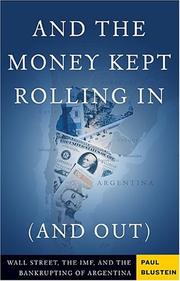
A gripping, journalist-driven account of the 2001 Argentine financial collapse and IMF involvement. Accessible and narrative-driven, it is the perfect entry point into Argentine economic history for readers who are not economists.
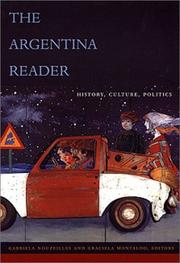
A sweeping anthology of primary sources — political speeches, journalism, literature, and testimony — spanning Argentine history from colonialism to the 21st century. Read last as a capstone: with the full curriculum behind you, you can now read Argentina's own voices in full depth and context.
Discussion
Keep reading
Paths that share books, cover the same subject, or open a related topic.