Ngugi wa Thiong'o Reading Order: Where to Start
Ngugi wa Thiong'o's career has a hinge in it: after a year in a Kenyan prison he stopped writing novels in English and began writing them in Gikuyu, and everything he published afterwards argues for that decision. The order below follows that arc — the early Kenyan novels written in English, the great political fiction that got him detained, the prison diary and the language essays that explain the break, and finally the late Gikuyu novels and the childhood memoirs, which are the most inviting books he ever wrote and the worst possible place to start.
Start Here
BeginnerMeet Ngugi in the two short early novels about colonial Kenya, land and mission Christianity, before the politics hardens.
▸ Study plan for this stage
Pace: 1–2 weeks for two short novels, 154 and 167 pages. Both are direct, linear and readable in three or four evenings each. Take Weep Not, Child first even though The River Between was written earlier — the reading is easier in that order and the land question it sets up organises everything that follow
- Land as the founding grievance — dispossession of Gikuyu land is the fact underneath every Ngũgĩ book, and it arrives here as a family's specific loss rather than as a slogan
- Education as promise and trap: Njoroge's schooling is presented as the family's whole hope, and the novel is about what happens when that hope is asked to carry too much
- The Mau Mau emergency seen from a child's vantage — the violence largely offstage, the fear entirely domestic
- The mission-Christianity rupture in The River Between: two ridges divided over church and custom, with female circumcision as the flashpoint the community cannot resolve
- Waiyaki as the reconciler who satisfies nobody — Ngũgĩ's early scepticism about anyone who tries to stand between two positions
- The chronology worth knowing: The River Between was written first and published second, which is why its treatment of the same colonial rupture is the deeper one
- A conventional realist novel in English, written by a young writer inside a British literary education — worth registering now, because he later rejects exactly this
- What does Njoroge's family expect his education to do for them, and at what point does the novel make that expectation look impossible?
- How does Weep Not, Child handle the violence of the emergency — what is shown, what is reported, and what is left out?
- In The River Between, why can Waiyaki not hold the two ridges together, and does the novel treat that as his failure or the situation's?
- How is Christianity presented in these two books — as an alien imposition, a genuine conviction, or both at once?
- What is already recognisably Ngũgĩ here, and what belongs to the English novel tradition he was trained in?
- Write one line per novel naming who owns the land at the start and who owns it at the end. It is the simplest possible summary of Ngũgĩ's subject and it holds for the whole path.
- Mark every mention of school fees in Weep Not, Child. The economics of an education are tracked precisely and are easy to read past.
- Sketch the geography of The River Between — two ridges, the river between them, the mission. The novel's argument is literally topographical.
- Note the form of both books: single protagonist, chronological, English prose. Keep the note; the later stages break every part of it.
Next up: You have the land question and the mission-school world in place, which is precisely what the major novels assume — and they are about to take the same history and hand it to several competing narrators at once.
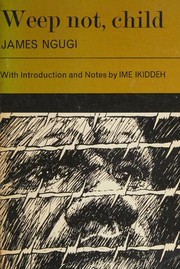
A boy's education set against the Mau Mau emergency and the loss of family land. His first published novel and the clearest entry point: short, direct, and it sets up the land question that never leaves his work.
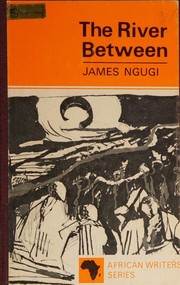
Two ridges divided by Christianity and circumcision, and a young man trying to reconcile them. Written before Weep Not, Child but published after; read it second, as the deeper treatment of the same colonial rupture.
The Major Novels
IntermediateRead the three books where Ngugi becomes a political novelist — independence betrayed, capital arriving, and the satire that made the state move against him.
▸ Study plan for this stage
Pace: 5–6 weeks for 280, 349 and 254 pages. A Grain of Wheat is the slowest of the three despite being the shortest — it moves between narrators and back and forth in time without signalling, so budget two weeks and expect the first sixty pages to be work. Petals of Blood is longer and has four suspects a
- Multiple competing narrators in A Grain of Wheat: a village's incompatible memories of who betrayed whom, with the truth withheld until very late
- Independence as a moment of exposure rather than triumph — the novel is set in the days before Uhuru and is about what the new order will be built on
- Betrayal as Ngũgĩ's central moral situation, and his refusal to make it simple: the informer is not who the village believes
- Petals of Blood's structure as a whodunnit that indicts a class rather than a person — three dead directors, four suspects, and a village swallowed by development
- The post-independence elite as the new subject: the argument that the beneficiaries of independence simply took over the positions the colonisers vacated
- Devil on the Cross as the hinge of the whole career — the first novel of his Gikuyu period, and the first written for an audience meant to hear it read aloud
- Satire and allegory replacing psychological realism: a competition to crown the cleverest thief and robber, staged as grotesque public theatre
- Orature entering the form — songs, proverbs, direct address and repetition are structural here, not decorative, because the book was written for listeners
- Who betrayed Kihika, and how does A Grain of Wheat control the moment you find out?
- Why does Ngũgĩ tell that story through a village's shared and unreliable memory rather than through one narrator?
- In Petals of Blood, what is the crime the novel is actually investigating, and who is guilty of it?
- What has replaced colonial rule in Petals of Blood, and how far does Ngũgĩ suggest anything changed?
- How does Devil on the Cross read differently from the two novels before it — in structure, in humour, in who it seems to be addressed to?
- What does the thieves' competition allow Ngũgĩ to say that a realist scene could not?
- Keep a memory chart for A Grain of Wheat: for each character, what they believe happened and what they are hiding. The novel is designed to be reconstructed this way.
- In Petals of Blood, track the physical transformation of Ilmorog from village to development. The plot is that transformation.
- Read a stretch of Devil on the Cross aloud. It was written to be performed to an audience and the repetitions stop looking like repetitions the moment you speak them.
- Write 300 words comparing the prose of A Grain of Wheat with the prose of Devil on the Cross. Something decisive happened between them, and naming it prepares the next stage.
- List the professions of the villains in Petals of Blood. The list is the argument.
Next up: The break you just heard in the prose is not a stylistic drift — it followed a year in detention and a decision about language, and the next stage is where Ngũgĩ sets out the reasoning himself.

The days before Kenyan independence, told through a village's competing memories of betrayal. Usually called his finest novel; its multiple narrators need the earlier books' groundwork, which is why it sits here.

Four suspects, three dead directors and a village swallowed by development. The most ambitious of the English novels and the fullest statement of his critique of the post-independence elite.

Written on prison toilet paper in Gikuyu, a satirical competition to crown the cleverest thief and robber. The first novel of the second half of his career, and it reads nothing like the ones before it.
Prison and Language
IntermediateUnderstand the break: why he was jailed without trial, and why he concluded that writing African literature in English was a continuation of colonialism.
▸ Study plan for this stage
Pace: 2 weeks. Decolonising the Mind is 128 pages of essays and can be read in three or four sittings, but it is the most argued-over book in this path and rewards note-taking rather than speed. Matigari is 175 pages and moves quickly. Read the essays first, then the novel, so you meet the position and th
- The central claim of Decolonising the Mind: that language is not a neutral tool but the carrier of a culture's memory, and that choosing a coloniser's language carries its assumptions along with it
- Ngũgĩ's distinction between African literature and what he calls Afro-European literature — writing by Africans in European languages, which on his account belongs to a different tradition
- His account of his own decision to stop writing fiction in English and write in Gikuyu instead, presented as a farewell rather than a preference
- The counter-position, which the book names and argues against: that English can be remade, Africanised, and used against the empire that brought it — a view held by major African writers of his generation. This path does not settle the dispute, and the essays are more useful read as one side of a li
- The Kamĩrĩĩthũ community theatre work and the detention without trial that followed it — the biographical events the essays treat as evidence for the argument, including his account of writing a novel on prison-issue paper
- Colonial schooling as the mechanism: punishment for speaking a mother tongue, and the resulting association of one's own language with shame
- Translation and self-translation as the practical consequence — the later books reach English readers only through a version, usually the author's own
- Matigari as the argument in practice: a fighter comes down from the mountains asking where truth and justice live, and the Kenyan authorities responded to a fictional character as though he were a real man
- What exactly is Ngũgĩ's argument that language carries culture — and what would have to be true for it to be wrong?
- How does he distinguish African literature from literature written by Africans in European languages, and is the line as clean as he needs it to be?
- What is the strongest case for the opposing position, that a colonial language can be captured and repurposed?
- If the argument holds, what is the status of the English-language novels you read in the previous stage — and what is the status of the translations you are reading now?
- How does Matigari's form — folk-tale rhythm, a hero who asks the same question everywhere — follow from the position in the essays?
- Why might a government treat a novel's protagonist as a security matter, and what does that tell you about the audience Ngũgĩ was writing for?
- Write the argument of Decolonising the Mind in five numbered steps. It is a polemic and its structure is easy to lose inside the anecdotes.
- Then write the best counter-argument in five steps, without editorialising. Holding both positions is the point of this stage.
- Note that you are reading Matigari in translation, and mark three passages where you suspect the English is doing something the original would not. You cannot check this without Gikuyu — the discomfort is the lesson.
- Compare the opening page of Matigari with the opening page of A Grain of Wheat. Two decades and one decision separate them.
- List which books in this path were written in English and which in Gikuyu. Keep the list beside you for the final stage.
Next up: With the language argument stated and seen in practice, the late work makes sense as its full realisation — a Gikuyu novel of nearly eight hundred pages, and three memoirs that walk the whole path back to the beginning.
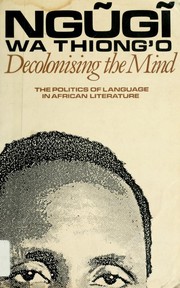
The essential context for this whole path, and the single most influential essay collection in African literary criticism: his farewell to writing in English, and the argument for language as the carrier of culture.
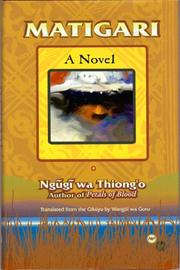
A fighter comes down from the mountains looking for justice, and the Kenyan government issued a warrant for a fictional character. The decision in Decolonising the Mind put into practice.
The Late Work and the Memoirs
IntermediateFinish with the enormous late Gikuyu satire and the three volumes of memoir, which retell the whole path from the inside.
▸ Study plan for this stage
Pace: 8–10 weeks. Wizard of the Crow alone is 784 pages — at 30 pages a day that is a month, and it is comic and episodic enough to sustain that pace. The three memoirs are 256 pages each and go far faster, about a week apiece. Read them strictly in the order given: they are consecutive volumes of one lif
- Wizard of the Crow as satire at maximum scale: the invented Free Republic of Aburĩria, a Ruler building a tower to heaven, and a bureaucracy that expands to fill the fiction
- A novel written in Gikuyu and translated into English by the author himself — the largest practical demonstration of the position in Decolonising the Mind
- Comedy and the grotesque as political method: bodies that swell, queues that never end, and flattery as a national industry
- The memoirs as a corrective in tone — after decades of satire and polemic, three volumes of unguarded, often funny recollection
- A polygamous rural childhood under the emergency in the first memoir, which re-lights the world of the earliest novels from the inside
- Alliance High School in the second memoir: an elite colonial education happening at the same time as the razing of his home village, the two facts side by side
- Makerere in the third memoir, where he wrote the first novels and the first play — the loop closing back onto the books this path opened with
- Memoir order is not optional: each volume begins where the last ended and none of them re-explains what came before
- What is Aburĩria a portrait of, and how does making it fictional and unnamed change what the satire can do?
- How does the Wizard of the Crow's magic work — is it real inside the novel, and does the book need an answer?
- What does it mean that this novel exists first in Gikuyu and reaches most readers through the author's own English?
- How does the first memoir's account of a childhood under the emergency change your reading of Weep Not, Child?
- What is the effect of the second memoir placing an elite boarding school and the destruction of a village in the same pages?
- Having reached the end, does the late work vindicate the argument in Decolonising the Mind, or does it leave the question open?
- Read Wizard of the Crow in fixed daily portions rather than waiting for long stretches of time. It is episodic and rewards steadiness; readers who treat it as a project usually stall around page 300.
- Keep a list of the Ruler's ministers and their afflictions. The satire is cumulative and the catalogue is the joke.
- Read the three memoirs back to back without other books in between. They are one narrative and the momentum is most of their pleasure.
- After the first memoir, reread the opening chapter of Weep Not, Child. The pairing is the strongest argument for reading Ngũgĩ chronologically.
- Write 400 words on whether this career reads as one continuous project or as two — a novelist in English and a different writer in Gikuyu. There is no settled answer and you now have the evidence for either.
Next up: This is the end of the path: the memoirs have returned you to the beginning, so the natural next move is a reread of the two early novels with the language argument and the childhood behind them.

A vast comic epic about the Free Republic of Aburiria and a ruler building a tower to heaven, written in Gikuyu and translated by the author. His longest book and best read once his politics are already familiar.

The first memoir: a polygamous rural childhood under the emergency, and the scholarship that got him to school. The most purely enjoyable book he wrote, and it re-lights Weep Not, Child.

The second memoir, at Alliance High School while his home village is razed. Read in sequence — the memoirs only work in order.

The third memoir, at Makerere, where he wrote his first novels and play. The right ending: it closes the loop back onto the books this path opened with.
Discussion
Keep reading
Paths that share books, cover the same subject, or open a related topic.