Best Books on the History of Brazil, in Order
This curriculum takes the reader from a broad, accessible overview of Brazilian history all the way through its most complex political and social transformations. Each stage builds on the last — first establishing the grand narrative arc, then diving into the defining themes of slavery and race, then the turbulent republic and dictatorship, and finally modern Brazil's contradictions and promise.
Foundations: The Grand Narrative
BeginnerGain a confident, chronological understanding of Brazilian history from pre-colonial times to the present, building the vocabulary and mental map needed for all deeper reading.
▸ Study plan for this stage
Pace: 4–5 weeks, ~40–50 pages/day. Start with Schwarcz's "Brazil" (approximately 400 pages) over 2 weeks, then move to Fausto's "A Concise History of Brazil" (approximately 300 pages) over 2–3 weeks, allowing time for review and integration.
- Brazil's pre-colonial indigenous societies and the diversity of Tupi, Guarani, and other groups before Portuguese arrival
- Portuguese colonization (1500–1822): the sugar cycle, slavery, and the plantation economy as foundational to Brazilian society
- The transition from colony to empire: the 1822 independence and the Brazilian Empire under the Braganza dynasty
- Slavery's centrality to Brazilian development and its abolition in 1888, and the resulting racial and social hierarchies
- The shift from empire to republic (1889) and the political instability of the First Republic (1889–1930)
- Getúlio Vargas and the Estado Novo (1930–1945): authoritarianism, industrialization, and the reshaping of Brazilian identity
- The democratic period, military dictatorship (1964–1985), and the transition to democracy and the 1988 Constitution
- Brazil's geographic, cultural, and demographic diversity as a defining feature shaping regional development and national identity
- What were the major indigenous societies in pre-colonial Brazil, and how did Portuguese colonization fundamentally alter indigenous populations and societies?
- How did the sugar plantation economy and slavery shape Brazilian colonial society, and what were the long-term social and racial consequences?
- What were the key differences between Brazilian independence (1822) and the independence movements in Spanish America, and why did Brazil retain a monarchy?
- How did Getúlio Vargas transform Brazil politically, economically, and culturally, and what was the Estado Novo?
- What were the main causes and consequences of the military dictatorship (1964–1985), and how did Brazil transition to democracy?
- How has Brazil's regional, racial, and cultural diversity shaped its historical development and contemporary challenges?
- Create a detailed chronological timeline from pre-colonial times to 1988, marking major political transitions, economic shifts, and social upheavals. Use Schwarcz and Fausto to identify at least 15–20 key dates and events.
- Map Brazil's regions and identify how geography, climate, and resources influenced settlement patterns, economic development, and regional inequality across the periods covered in both books.
- Write a 2–3 page comparative essay on two major political transitions (e.g., colony to empire, empire to republic, dictatorship to democracy) using specific evidence from both texts.
- Create character profiles of 4–5 major historical figures (e.g., Pedro I, Getúlio Vargas, military leaders) noting their impact on Brazilian history, drawing from both Schwarcz and Fausto.
- Track the evolution of slavery and race relations from colonization through abolition (1888) to the present, using both books to identify how these issues shaped Brazilian society at each stage.
- Construct a visual diagram showing the major economic cycles in Brazilian history (sugar, gold, coffee, industrialization) and their social and political consequences, as described in both texts.
Next up: This foundational chronological and conceptual framework—understanding Brazil's colonial origins, slavery's legacy, political transitions, and regional diversity—prepares you to engage with specialized, thematic readings that examine specific aspects (race, labor, culture, economics) in greater depth.

The single best one-volume history of Brazil for newcomers — sweeping, narrative-driven, and written by Brazil's leading historians. Read this first to get the full timeline and cast of characters.

A compact, authoritative academic overview by one of Brazil's most respected historians. Read it second to reinforce and deepen the chronology with sharper analytical framing.
Colony and Empire: Roots of a Nation
BeginnerUnderstand how Portuguese colonization, the sugar economy, and the unique Brazilian monarchy shaped the country's foundational structures of power, race, and inequality.
▸ Study plan for this stage
Pace: 8–10 weeks, ~40–50 pages/day. Start with Freyre's foundational analysis (4–5 weeks), then move to Schultz's institutional focus (3–4 weeks), with 1–2 weeks for review and synthesis.
- Luso-tropical exceptionalism: Freyre's thesis that Portuguese colonizers were uniquely adaptable and less racist than other European powers, and how this claim has been critiqued
- The sugar plantation (engenho) as the organizing institution of colonial Brazil: labor systems, social hierarchy, and the intertwining of economic and racial structures
- Miscegenation and racial democracy myth: the cultural and biological mixing Freyre emphasizes and its role in constructing a national identity that obscures structural inequality
- The Portuguese monarchy's unique role in Brazil: the transfer of the royal court to Rio de Janeiro (1808) and the elevation of Brazil from colony to kingdom as a turning point in power structures
- Slavery and enslaved labor as foundational to the Brazilian economy and social order: the scale, duration, and normalization of slavery in both Freyre and Schultz
- Gender, sexuality, and power: the role of enslaved and mixed-race women in colonial society and the patriarchal structures that emerge
- The transition from colony to empire: how the monarchy's presence in Brazil created a hybrid political system that preserved elite power while appearing to modernize
- What is Freyre's central argument about Portuguese colonization, and what evidence does he use? How have scholars critiqued his concept of 'Luso-tropical exceptionalism'?
- How did the sugar plantation economy structure colonial Brazilian society, and what role did slavery play in maintaining this hierarchy?
- What does Freyre mean by 'racial democracy,' and how does this concept relate to the reality of slavery and miscegenation he describes?
- Why was the transfer of the Portuguese royal court to Rio de Janeiro in 1808 significant, and how did it reshape Brazil's political and social structures according to Schultz?
- How did the Brazilian monarchy's presence in the colony create a unique path to independence compared to Spanish America, and what were the consequences for power and inequality?
- What role did enslaved and mixed-race women play in colonial Brazilian society, and how does this complicate narratives of 'racial mixing' as benign?
- Create a detailed diagram of the colonial engenho (sugar plantation) showing the hierarchy of roles (planter, overseer, enslaved workers, mixed-race dependents) and annotate with quotes from Freyre about how each group functioned and was perceived.
- Write a 2–3 page critical response to Freyre's racial democracy thesis: identify specific passages where he celebrates miscegenation, then research and incorporate one scholarly critique (e.g., from historians who challenge his framing) to argue what he obscures.
- Compare two primary source excerpts or descriptions: one from Freyre's account of colonial life and one from Schultz's discussion of the royal court's arrival. Analyze how each author's perspective shapes what aspects of power and society they emphasize.
- Create a timeline of key events (1500–1822) marking Portuguese arrival, sugar boom, the 1808 royal court transfer, and Brazilian independence. For each, write 2–3 sentences explaining how it shifted the structures of power and inequality that Freyre and Schultz describe.
- Conduct a close reading of Freyre's discussion of the Casa Grande (big house) and Senzala (slave quarters) as interconnected spaces. Write an analytical paragraph on how physical proximity and domestic intimacy in Freyre's account mask or reveal the violence of slavery.
- Research and write a 1–2 page reflection on the demographic reality of slavery in Brazil (scale, duration, percentage of population enslaved) and compare it to Freyre's tone and emphasis. What does his narrative choice to emphasize cultural mixing rather than the brutality of slavery suggest about his project?
Next up: This stage establishes how colonial and early imperial Brazil constructed a distinctive ideology of racial mixing and monarchical stability that would persist into the modern era, setting up the next stage's examination of how these foundational myths and power structures evolved, fractured, or were challenged in the nineteenth and twentieth centuries.
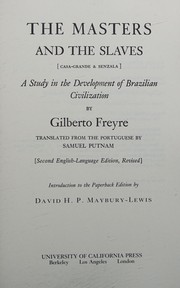
The most influential — and debated — book ever written about Brazilian society, exploring the intimate fusion of Portuguese, African, and Indigenous cultures on the plantation. Essential for understanding how Brazilians think about their own identity.
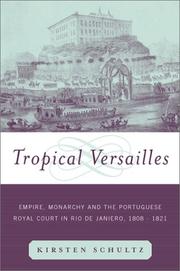
Focuses on the transfer of the Portuguese court to Rio de Janeiro in 1808 and the creation of the Brazilian Empire — a pivotal and often overlooked turning point that explains why Brazil's independence was so different from Spanish America's.
Slavery, Race, and Abolition
IntermediateReckon deeply with the central fact of Brazilian history — that it was the largest slave society in the Americas — and understand how slavery's legacy shapes race relations to this day.
▸ Study plan for this stage
Pace: 6–8 weeks, ~40–50 pages/day with 2–3 reflection days per week
- The scale and longevity of slavery in Brazil: why Brazil imported more enslaved Africans than any other nation in the Americas and maintained slavery until 1888
- The lived experience of enslaved people: daily conditions, family structures, resistance, and survival strategies across different regions and labor systems (plantation, urban, mining)
- The demographic and social composition of slavery: gender, age, ethnicity, and the role of creole (Brazilian-born) versus African-born enslaved populations
- Mechanisms of control and dehumanization: legal codes, punishment systems, and ideological justifications for slavery in Portuguese colonial and imperial contexts
- Paths to freedom and manumission: how enslaved people gained freedom, the role of self-purchase, and the emergence of a free Black population
- The abolitionist movement and its limitations: who pushed for abolition, why it took until 1888, and how gradual emancipation preserved planter power
- Slavery's structural legacy: how the institution shaped Brazilian racial hierarchies, economic inequality, and social structures that persist beyond 1888
- Why did Brazil become the largest slave society in the Americas, and what made its slavery system distinct from slavery in North America or the Caribbean?
- What were the material and social conditions of enslaved people in Brazil across different settings (plantations, cities, mines), and how did these conditions vary by gender, age, and origin?
- How did enslaved Brazilians resist, negotiate, and create spaces of autonomy within slavery—through flight, rebellion, community-building, or other means?
- What role did manumission and the growth of a free Black population play in Brazilian slavery, and how did this differ from other slave societies?
- Why did abolition come so late in Brazil (1888), and what does the gradual nature of emancipation reveal about the power of slaveholders and the limitations of the abolitionist movement?
- How did slavery's institutions and ideologies shape racial categories, social hierarchies, and economic structures that persisted after 1888?
- Create a timeline of slavery in Brazil (1550–1888) marking major demographic shifts, legal changes, and abolitionist milestones; annotate with quotes from Mattoso that illustrate each period
- Construct a detailed profile of an enslaved person's life based on Mattoso's evidence: choose a specific region, labor type, and time period, then write a 2–3 page narrative account grounded in the book's data on conditions, family, resistance, and possible paths to freedom
- Analyze Mattoso's primary source excerpts (laws, advertisements, letters, testimonies): identify what each reveals about slaveholder ideology, enslaved people's agency, or the mechanics of the system; create an annotated collection with your interpretations
- Compare slavery in Brazil to slavery in one other American region (e.g., the U.S. South or Caribbean colonies) using Mattoso's framework; write a 3–4 page comparative essay on scale, duration, legal structure, and racial outcomes
- Map the geographic and economic dimensions of Brazilian slavery: identify major slave-labor regions (sugar, coffee, mining, urban centers) and explain why slavery persisted longest in certain areas and how this shaped regional racial demographics
- Debate the abolitionist movement: prepare arguments for why abolition was delayed until 1888 using evidence from Mattoso; consider planter resistance, economic incentives, and the role of gradual emancipation policies
Next up: This stage establishes slavery as the foundational institution of Brazilian society and reveals how its legal, economic, and racial structures persisted after abolition, preparing you to examine how post-1888 Brazil navigated race relations, labor systems, and national identity in the context of this unresolved legacy.

A ground-level account of the experience of enslaved people in Brazil, drawing on documents and testimonies. Read this before the abolition narrative to understand what was at stake for real human lives.
Republic and Dictatorship: Order, Progress, and Repression
IntermediateTrace Brazil's turbulent political history from the proclamation of the republic in 1889 through Vargas, populism, the 1964 military coup, and the long dictatorship — understanding how authoritarianism became a recurring pattern.
▸ Study plan for this stage
Pace: 8–10 weeks, ~40–50 pages/day. Start with "Rebellion in the Backlands" (4–5 weeks, dense narrative history), then move to "Vargas of Brazil" (3–4 weeks, political biography). Allow 1 week for review and synthesis.
- The Canudos War as a flashpoint between modernizing elites and rural resistance: how da Cunha's account reveals the clash between the Old Republic's vision of 'order and progress' and the reality of social fragmentation
- The role of the backlands (sertão) as a distinct social and political space: its isolation, poverty, and cultural autonomy that made it a threat to centralized authority
- Getúlio Vargas as a transitional figure: how he navigated oligarchic politics, populism, and authoritarianism to consolidate power and reshape the Brazilian state
- The Estado Novo (1937–1945) as a prototype for authoritarian rule: centralized control, corporatism, and the use of nationalism and labor mobilization to build legitimacy
- Populism as a political strategy: how Vargas used direct appeals to workers and the masses to bypass traditional elites and consolidate personal power
- The institutional weakness of the Brazilian republic: how the absence of strong democratic institutions enabled recurring cycles of coup and authoritarian consolidation
- The relationship between economic modernization and political repression: how Brazil's elites pursued development while suppressing dissent and maintaining hierarchical social structures
- What does da Cunha's account of the Canudos War reveal about the tensions between the Old Republic's modernizing ideology and the social realities of the Brazilian interior?
- How did Getúlio Vargas use populism and corporatism to consolidate power, and what made his approach different from earlier oligarchic politics?
- What was the Estado Novo, and how did it establish a model of authoritarian governance that would influence Brazilian politics for decades?
- Why did the Brazilian republic prove so vulnerable to authoritarianism, and what institutional weaknesses made recurring cycles of coup and consolidation possible?
- How did Vargas balance appeals to workers and the masses with the interests of industrial elites and the military?
- What role did the backlands and regional inequality play in destabilizing the Old Republic and creating space for Vargas's rise?
- Create a timeline of key events from 1889–1945: the proclamation of the republic, the Canudos War, Vargas's rise to power, the 1937 coup, and the Estado Novo. Annotate each with its political significance.
- Write a comparative character sketch of da Cunha (as narrator/observer) and Vargas (as political actor): How did each man understand and respond to Brazil's modernization crisis?
- Map the sertão geographically and socially using da Cunha's descriptions: What made it a distinct region, and why did its autonomy threaten the Old Republic's vision of centralized order?
- Analyze Vargas's relationship with three key constituencies: oligarchs, workers, and the military. Use specific examples from Dulles to show how he balanced competing interests.
- Write a short essay: 'How did the Canudos War foreshadow the political instability of the Old Republic?' Use evidence from both texts.
- Create a concept map linking populism, corporatism, nationalism, and authoritarianism as they appear in Vargas's political strategy. Show how each reinforced the others.
Next up: This stage establishes authoritarianism as a recurring pattern in Brazilian politics and shows how Vargas's Estado Novo created institutional templates for control—setting up the next stage to examine how these patterns intensified, fractured, and ultimately led to the 1964 military coup and the long dictatorship that followed.
A masterpiece of Brazilian literature and reportage about the Canudos War (1896–97), this book captures the violent contradictions of the early republic and the gulf between coastal elites and the interior poor. A cultural landmark every serious reader of Brazil must encounter.

A clear biographical account of Vargas, the towering figure who dominated Brazilian politics from 1930 to 1954 and whose legacy — nationalist, populist, authoritarian — echoes in every subsequent decade.
Modern Brazil: Democracy, Inequality, and Identity
ExpertUnderstand redemocratization, the rise of the PT and Lula, the persistence of inequality and violence, and the cultural and racial debates that define Brazil in the 21st century.
▸ Study plan for this stage
Pace: 6–7 weeks, ~40–50 pages/day. "The Brazilians" (weeks 1–3, ~450 pages) covers foundational history and society; "Brazil on the Rise" (weeks 4–6, ~350 pages) examines contemporary politics and development. Week 7 reserved for review and synthesis.
- Redemocratization and the transition from military dictatorship (1964–1985) to democratic governance, including the role of civil society and the 1988 Constitution
- The Workers' Party (PT) emergence and Lula's political trajectory from labor activism to presidency, reshaping Brazilian politics
- Structural inequality rooted in Brazil's colonial and slavery legacy, including persistent racial disparities and favela/urban poverty
- The tension between economic growth and social inequality: how commodity booms and development policies have failed to reduce class divides
- Cultural identity and racial democracy myth: how Brazil's self-image as a racial paradise obscures systemic racism and Afro-Brazilian marginalization
- Violence, crime, and state capacity: drug trafficking, police brutality, and the failure of institutions to protect vulnerable populations
- Regional disparities and the Northeast's historical marginalization within Brazil's development model
- Brazil's international role: commodity dependence, foreign investment, and geopolitical positioning in the 21st century
- How did Brazil's transition from military dictatorship to democracy differ from other Latin American redemocratizations, and what role did the 1988 Constitution play?
- Trace Lula's political evolution from labor organizer to presidential candidate: what made the PT's rise possible, and what were its early policy priorities?
- What are the historical roots of inequality in Brazil, and why have economic growth and development policies failed to significantly reduce it?
- How does the myth of 'racial democracy' obscure the reality of systemic racism and Afro-Brazilian disadvantage in contemporary Brazil?
- What is the relationship between Brazil's commodity-dependent economy and its ability to fund social programs and reduce inequality?
- How do violence, drug trafficking, and weak state institutions in urban areas reflect and perpetuate broader patterns of inequality and exclusion?
- Create a timeline of Brazil's political transitions (1964–2010) using both books, marking key events (military coup, abertura, Constitution, Lula's election) and explaining their significance
- Analyze a chapter from 'The Brazilians' on Brazilian culture or society, then cross-reference it with Rohter's discussion of the same topic in 'Brazil on the Rise' to identify continuities and changes
- Write a 2–3 page comparative essay: 'How do Page and Rohter each explain the persistence of inequality in Brazil despite economic growth?'
- Map Brazil's regions using data from both books (Northeast, Southeast, South) and create a visual showing economic disparities, migration patterns, and inequality indicators discussed
- Conduct a close reading of the sections on race and identity in both books, then write a critical response: 'Is Brazil's racial democracy a myth or reality?' citing specific evidence
- Research one contemporary Brazilian social movement or political figure mentioned in the books (e.g., landless workers' movement, favela activism) and write a 1–2 page update on their current status
Next up: This stage establishes the political, social, and economic foundations of modern Brazil—its democratic institutions, inequality structures, and cultural identity debates—preparing you to examine how these forces have shaped Brazil's specific policy responses, international relations, and contemporary crises in the next stage.
A rich, journalistic portrait of Brazilian society, culture, and politics in the late 20th century that bridges the transition from dictatorship to democracy and explains the social texture behind the headlines.

Written by a longtime New York Times Brazil correspondent, this book examines the Lula years and Brazil's emergence as a global power — a clear-eyed, on-the-ground account of modern contradictions and ambitions.
Discussion
Keep reading
Paths that share books, cover the same subject, or open a related topic.