The History of Indonesia: Best Books to Read in Order
This curriculum takes you from Indonesia's earliest kingdoms and the spice trade all the way through colonial rule, revolutionary independence, the Suharto era, and the democratic present. Each stage builds the geographic, cultural, and political vocabulary needed to absorb the deeper, more analytical works that follow — so read them in order for the fullest understanding.
Foundations: The Land, the People, and the Spice Trade
BeginnerGain a vivid, accessible mental map of the archipelago — its diversity, its pre-colonial kingdoms, and why the spices of the Banda and Maluku islands made Indonesia the most coveted place on earth.
▸ Study plan for this stage
Pace: 4–5 weeks, ~40–50 pages/day. Start with "Nathaniel's Nutmeg" (weeks 1–3, ~350 pages), then "The Spice Route" (weeks 4–5, ~200 pages). Allow 2–3 days between books for reflection and note consolidation.
- The Indonesian archipelago as a fragmented geography of thousands of islands with distinct ecosystems, cultures, and political entities—not a unified nation until colonization
- The Banda and Maluku islands as the world's only source of nutmeg, mace, and cloves, making them the most economically valuable real estate on earth for 400+ years
- Pre-colonial Indonesian kingdoms (Majapahit, Srivijaya, Sultanates) as sophisticated trading powers with their own maritime networks and political structures before European arrival
- The spice trade as a global economic engine that attracted Portuguese, Dutch, English, and other European powers, fundamentally reshaping Indonesian history
- The mechanics of the spice trade: production, harvesting, preservation, transportation routes, and the enormous profit margins that drove European competition
- How geography (monsoon winds, ocean currents, island isolation) determined trade routes, settlement patterns, and which powers could dominate which regions
- The human cost of the spice trade: indigenous populations, slavery, violence, and the transformation of island societies through colonial extraction
- The transition from indigenous trade networks to European monopoly control, particularly the Dutch East India Company (VOC) and its methods of dominance
- Why were the Banda and Maluku islands so economically valuable, and what made them unique in global trade before 1600?
- Describe the major pre-colonial Indonesian kingdoms mentioned in these books. What were their trade networks and political structures?
- How did geography (monsoons, currents, island distribution) shape the spice trade routes and European colonial strategies in Indonesia?
- What were the main European powers competing for Indonesian spices, and what methods did they use to establish control (as detailed in Nathaniel's Nutmeg)?
- Trace the journey of a spice (nutmeg or clove) from production in the Banda/Maluku islands to European markets. What intermediaries and routes were involved?
- How did the spice trade transform Indonesian societies, and what was the human cost of European colonization efforts?
- Create a detailed map of the Indonesian archipelago, marking the Banda Islands, Maluku Islands, major pre-colonial kingdoms (Majapahit, Srivijaya), and key trading ports. Annotate with which spices were produced where and which European powers controlled each region by 1650.
- Build a timeline of key events from both books: major sultanate formations, Portuguese arrival, Dutch VOC establishment, key battles, and monopoly consolidation. Include dates and the names of important historical figures (e.g., Nathaniel Courthope, Portuguese explorers).
- Write a 500-word narrative following the journey of a single nutmeg from a Banda Island plantation to a European spice merchant's warehouse, incorporating details about harvesting, preservation, transport, intermediaries, and profit margins from both books.
- Create a comparison chart of at least three pre-colonial Indonesian kingdoms or sultanates: their geography, trade goods, political structure, and how they interacted with the spice trade. Use examples from Keay's 'The Spice Route.'
- Research and sketch the monsoon wind patterns and ocean currents that shaped spice trade routes. Explain in 300 words why these geographic features made certain routes viable and others impossible, using specific examples from the books.
- Debate or write a reflective essay (600 words): From the perspective of an indigenous Banda Islander in 1600, how would you view the arrival of European traders? Use specific incidents and details from 'Nathaniel's Nutmeg' to ground your response.
Next up: This stage establishes the geographic, economic, and human foundations of Indonesian history—the "why" behind colonization—preparing you to explore how European powers systematized control, built colonial institutions, and shaped Indonesia into a unified political entity through the 18th and 19th centuries.

A gripping narrative about the English quest for nutmeg in the Banda Islands — the perfect entry point that makes the stakes of the spice trade viscerally real before any heavier history begins.

Broadens the spice story to its full global context, showing how demand from Europe set the stage for the colonial scramble that would define Indonesia's next four centuries.
Colonial Indonesia: The Dutch Empire and the VOC
BeginnerUnderstand how the Dutch East India Company (VOC) conquered and administered the archipelago, the brutal plantation system, and the long shadow colonialism cast over Indonesian identity.
▸ Study plan for this stage
Pace: 6–8 weeks, ~25–30 pages/day. *The Embarrassment of Riches* (weeks 1–3, ~400 pages) provides historical context on Dutch wealth and mentality; *Max Havelaar* (weeks 4–6, ~100 pages) offers a searing fictional critique. Reserve weeks 7–8 for synthesis and reflection.
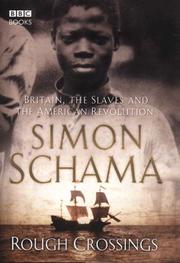
- The Dutch Golden Age wealth and its moral contradictions: how Schama reveals the psychological and cultural roots of Dutch mercantilism that enabled colonial expansion
- The VOC as a commercial and military apparatus: understanding how a private trading company became an imperial administrator with its own armies and territorial control
- The plantation economy and forced labor systems: how the Dutch extracted wealth through coffee, sugar, and spice cultivation using coerced Indonesian labor
- Multatuli's critique of colonial hypocrisy: recognizing how *Max Havelaar* exposes the gap between Dutch enlightenment ideals at home and brutal exploitation abroad
- The psychological and cultural impact on Indonesian identity: how colonialism fragmented indigenous societies and created lasting hierarchies of race and class
- The role of ideology in justifying colonialism: examining how Dutch merchants and administrators rationalized extraction as 'civilization' and 'development'
- The interconnection between European wealth and colonial violence: tracing how Dutch prosperity depended directly on the suffering of colonized peoples
- What does Schama argue about the relationship between Dutch wealth, Calvinist ethics, and the psychological need for moral justification in *The Embarrassment of Riches*?
- How did the VOC function as both a commercial enterprise and a territorial power, and what were the consequences of this dual role for Indonesian societies?
- What specific abuses of the plantation system does Multatuli expose in *Max Havelaar*, and how does he use the character of Max to critique colonial administrators?
- How does Multatuli's fictional narrative challenge the 'civilizing mission' narrative that Dutch colonizers used to justify their presence in Indonesia?
- What evidence do these two books provide that Dutch colonial wealth was built on systematic exploitation, and how did this shape Indonesian resistance and identity?
- How do Schama's historical analysis and Multatuli's literary critique work together to reveal the moral bankruptcy of colonialism?
- Create a timeline comparing Dutch Golden Age prosperity (from Schama) with the expansion of VOC control in Indonesia (1600–1750). Annotate moments where wealth and violence intersect.
- Write a character analysis of Max Havelaar: trace his moral awakening in Multatuli's novel and identify the specific colonial abuses he witnesses. Discuss whether his critique remains relevant.
- Compile a 'colonial vocabulary' list from both books—terms like 'Resident,' 'forced cultivation,' 'native,' 'civilization'—and analyze how language obscured or justified exploitation.
- Compare two passages: one from Schama on Dutch moral anxiety, one from Multatuli on colonial hypocrisy. Write a 500-word essay on how each author diagnoses the same problem differently.
- Map the geography of the VOC's territorial expansion using details from both texts. Identify which regions were most heavily exploited for plantation labor and why.
- Conduct a close reading of Multatuli's critique of the coffee auction system in *Max Havelaar*. Cross-reference it with Schama's analysis of Dutch commercial mentality to explain how the system persisted despite its cruelty.
Next up: This stage establishes how colonialism created structural inequalities and ideological justifications that would persist into the 20th century, preparing you to examine Indonesian nationalist resistance, the independence movement, and the postcolonial nation-building that follows.

Provides essential background on the Dutch Golden Age and the VOC mindset — understanding the coloniser's world makes the colonial project in Indonesia far more comprehensible.

The most famous novel ever written about Dutch colonialism in Indonesia, by a disillusioned colonial official; it humanises the suffering of Javanese peasants and sparked a reform movement — a landmark primary source disguised as fiction.
Revolution and Independence: 1900s–1949
IntermediateTrace the rise of Indonesian nationalism, the Japanese occupation, Sukarno's proclamation of independence in 1945, and the bloody struggle to make that independence stick against the returning Dutch.
▸ Study plan for this stage
Pace: 6–8 weeks, ~40–50 pages/day. Start with "Indonesia etc" (weeks 1–3, ~200 pages on this period), then move to "Sukarno, an autobiography" (weeks 4–8, ~400 pages covering his life through independence).
- The emergence of Indonesian nationalism in the early 1900s: from regional identities to a unified anti-colonial movement
- The role of organizations like Budi Utomo and the Indonesian National Party (PNI) in mobilizing nationalist sentiment
- Japanese occupation (1942–1945) as a catalyst for accelerating independence movements and military training
- Sukarno's ideological vision (Pancasila, guided democracy) and his charismatic leadership in unifying diverse groups
- The August 1945 Proclamation of Independence and Sukarno's political strategy during negotiations
- The Dutch military aggression and the armed struggle (1945–1949) to defend Indonesian sovereignty
- The role of key figures (Sukarno, Hatta, Sjahrir) and military leaders in sustaining the independence movement
- How colonial exploitation and wartime suffering transformed passive resentment into active revolutionary commitment
- How did Indonesian nationalism evolve from fragmented regional movements in the early 1900s into a unified independence struggle by 1945?
- What was Sukarno's ideological vision for Indonesia (Pancasila, guided democracy), and how did he use it to unite different social and religious groups?
- How did the Japanese occupation (1942–1945) change the trajectory of the independence movement, and what military and political advantages did it provide to Indonesian nationalists?
- What were the key events and turning points between the August 1945 Proclamation and the Dutch recognition of independence in 1949?
- How did Sukarno navigate the tension between armed struggle and diplomatic negotiation during the independence war?
- What role did ordinary Indonesians—peasants, workers, soldiers—play in sustaining the independence movement against Dutch military superiority?
- Create a timeline of major nationalist organizations and figures from 1900–1949 using both books; annotate each with their key contributions or ideological positions.
- Write a 2–3 page analysis comparing Sukarno's own account of his political evolution in his autobiography with Pisani's external perspective on nationalism in 'Indonesia etc.'
- Map the geographic spread of nationalist sentiment and armed resistance during 1945–1949; identify which regions were most active and why (using details from both books).
- Debate or write opposing arguments: Was the Japanese occupation ultimately beneficial or harmful to the independence cause? Support your position with evidence from the texts.
- Create a character profile for Sukarno, Hatta, and one other key figure, noting their ideological differences, leadership styles, and roles in the independence struggle.
- Analyze Pancasila as presented in Sukarno's autobiography: What problems was it designed to solve, and how effective was it as a unifying ideology for a diverse archipelago?
Next up: This stage establishes the founding myths, key personalities, and ideological foundations (Pancasila, guided democracy) that will shape Indonesia's post-independence trajectory, setting up the next stage's exploration of how Sukarno's vision played out in practice during the early republic and Cold War era.

A modern, journalistic tour of the entire archipelago that weaves history into the present — ideal as a bridge book that refreshes your geographic and cultural intuition before tackling denser political history.
Told in Sukarno's own voice (as narrated to journalist Cindy Adams), this gives an irreplaceable insider perspective on the founding father's vision, charisma, and the birth of the republic.
The Suharto Era: Order, Violence, and the New Order
IntermediateReckon with the 1965 mass killings, Suharto's three-decade authoritarian 'New Order' regime, its economic miracle, its corruption, and its eventual collapse in 1998.
▸ Study plan for this stage
Pace: 6–8 weeks, ~25–30 pages/day (approximately 180–200 pages/week across both books)
- The 1965 coup attempt, anti-communist purge, and the mass killings as the foundational trauma that enabled Suharto's rise to power
- The institutional structure of the military (ABRI) and its political dominance under Suharto's 'New Order' regime
- The doctrine of 'dwifungsi' (dual function) that justified military control over political and civilian institutions
- Indonesia's 'economic miracle' under Suharto: oil wealth, foreign investment, and rapid industrialization alongside structural corruption
- Crony capitalism, rent-seeking, and the Suharto family's monopolistic control over key economic sectors
- The mechanisms of authoritarian control: Golkar, controlled elections, media censorship, and the suppression of dissent
- Regional inequality, environmental degradation, and the human costs of development policies
- The internal contradictions and fragility of the New Order that led to its collapse during the 1997–1998 Asian financial crisis
- How did the 1965 coup attempt and subsequent mass killings shape the political landscape that allowed Suharto to consolidate power?
- What was the 'dwifungsi' doctrine, and how did it legitimize military intervention in Indonesian politics and governance?
- How did Suharto's regime achieve rapid economic growth, and what were the structural weaknesses and corruption mechanisms embedded in this 'economic miracle'?
- What role did Golkar, controlled elections, and media censorship play in maintaining authoritarian control under the New Order?
- How did crony capitalism and the Suharto family's business interests distort Indonesia's economy and create resentment among the population?
- What internal and external factors contributed to the collapse of the New Order regime in 1998?
- Create a timeline of key events from 1965–1998, marking the 1965 coup/killings, major economic policies, corruption scandals, and the 1997–1998 crisis; annotate how each shaped regime stability
- Map the institutional structure of military power under Suharto: trace ABRI's role in government, Golkar's function, and the relationship between military and civilian bureaucracy using evidence from Crouch
- Analyze a case study of one Suharto family business monopoly (e.g., Pertamina, toll roads, or telecommunications) using Schwarz's accounts; document how political connections enabled rent-seeking
- Compare two contrasting regions' development outcomes under the New Order (e.g., Java vs. Sumatra, or urban vs. rural areas); assess how inequality fueled discontent
- Write a 2–3 page analytical essay: 'How did the New Order's economic success mask its political and institutional fragility?' using evidence from both books
- Create a debate brief on both sides: 'Was Suharto's authoritarian stability necessary for Indonesia's economic development, or did it ultimately hinder long-term growth?' Ground arguments in the texts
Next up: This stage establishes the deep structural and historical roots of Indonesia's political and economic institutions, preparing you to examine how the 1998 transition unfolded and what post-Suharto Indonesia inherited—including unresolved questions of justice, institutional reform, and regional autonomy.

The definitive scholarly account of how the military became the backbone of Indonesian political power — essential reading for understanding how Suharto built and maintained his regime.
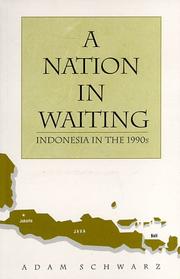
Written by a journalist who covered Indonesia through the 1990s, this is the most readable and comprehensive portrait of the New Order's final years — its crony capitalism, repression, and the pressures building toward reformasi.
Modern Indonesia: Democracy, Identity, and the 21st Century
ExpertSynthesise everything into a sophisticated understanding of post-Suharto Indonesia — its democratic transition, religious pluralism, regional tensions, and its place as the world's fourth most populous nation.
▸ Study plan for this stage
Pace: 8–10 weeks, ~40–50 pages/day. Lieberman's *Strange Parallels Vol. 2* (~500 pages of dense comparative history) requires 2–3 weeks; Taylor's *Indonesia* (~400 pages, more narrative-driven) requires 2–3 weeks. Reserve 3–4 weeks for synthesis, rereading key sections, and integration exercises.
- Long-term structural continuities in Southeast Asian state formation: how Lieberman's 800–1830 framework reveals patterns (administrative consolidation, religious integration, military organization) that persist into modern Indonesia
- The archipelago's fragmented geography and its role in shaping political decentralization, regional identity, and the perpetual tension between unity and diversity that defines post-Suharto Indonesia
- Religious pluralism as a historical constant: how Taylor's narrative shows Islam's integration with local beliefs and practices across centuries, underpinning contemporary debates over secularism vs. Islamic law
- The colonial rupture and its aftermath: how Dutch rule disrupted indigenous state systems but also created the territorial and administrative framework for the modern nation-state
- Nationalism and identity construction: how the independence movement synthesized diverse ethnic, religious, and regional identities into a singular 'Indonesia,' and how this synthesis remains contested in the 21st century
- Democratic transition as historical contingency: understanding Suharto's authoritarianism not as inevitable but as a departure from earlier pluralistic traditions (visible in Lieberman's pre-colonial analysis and Taylor's early republican period)
- Regional tensions and separatism: how historical grievances (Aceh, Papua, East Timor) reflect deeper patterns of center-periphery relations rooted in pre-colonial and colonial structures
- How do the administrative and military consolidation patterns Lieberman identifies in Southeast Asia (800–1830) help explain Indonesia's post-1998 struggle to balance centralization with regional autonomy?
- What role did the integration of Islam with local animistic and Hindu-Buddhist practices (as Taylor describes) play in creating a distinctive form of religious pluralism that persists today?
- How did the Dutch colonial state's territorial boundaries and bureaucratic structure shape the boundaries and governance challenges of the modern Indonesian nation-state?
- Why did Indonesia's early republican period (1945–1967) fail to sustain democratic pluralism, and how do Lieberman's long-term patterns help contextualize the Suharto era as a historical aberration rather than inevitability?
- How do historical patterns of regional fragmentation and center-periphery tension (evident in both Lieberman and Taylor) manifest in contemporary separatist movements and decentralization debates?
- What is the relationship between Indonesia's religious pluralism (rooted in centuries of syncretism) and the rise of Islamic political movements in the post-Suharto era?
- Create a comparative timeline: overlay Lieberman's Southeast Asian state-formation patterns (800–1830) with Taylor's narrative of Indonesian history (1600–present). Identify which patterns persist, which break, and which re-emerge after 1998.
- Map the archipelago's major regions (Java, Sumatra, Kalimantan, Sulawesi, Papua, Nusa Tenggara) and annotate each with: (a) pre-colonial political structures Lieberman discusses, (b) colonial administrative divisions Taylor describes, (c) contemporary separatist or autonomy movements. Write a 500-word analysis of how geography shapes persistent tensions.
- Write a 1,000-word essay: 'Religious Pluralism in Indonesia: From Syncretism to Political Contestation.' Use Taylor's account of Islam's integration with local beliefs as your foundation, then argue how this historical pluralism complicates contemporary debates over Islamic law and secular governance.
- Create a 'structural continuities' chart identifying 5–7 key features of pre-colonial Southeast Asian states (from Lieberman) and trace how each appears, disappears, or transforms through the colonial period (Taylor) into the post-1998 democratic era. Include: bureaucratic hierarchy, military organization, religious authority, regional autonomy, and center-periphery relations.
- Conduct a close reading exercise: select 2–3 passages from Lieberman on state consolidation and 2–3 from Taylor on the colonial period. Annotate them to identify how each author explains the relationship between geography, administration, and political stability. Write a 400-word synthesis.
- Debate preparation: prepare arguments for both sides of 'Indonesia's democratic transition (1998–present) represents a return to historical pluralism or a fundamentally new experiment.' Ground your arguments in specific evidence from both Lieberman and Taylor.
Next up: This stage establishes the deep historical roots of modern Indonesia's democratic, religious, and regional complexities, preparing you to engage critically with contemporary policy debates, political movements, and Indonesia's evolving role in global geopolitics in the final stage.

A magisterial comparative history that places Indonesia within the long arc of Southeast Asian state formation — for readers ready to think analytically about why Indonesia turned out the way it did.
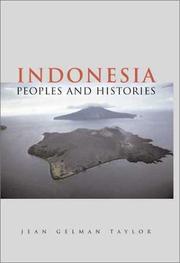
The best single-volume scholarly history of Indonesia from prehistory to the modern era — now that you have the full narrative in your head, this book rewards re-reading as a capstone that ties every thread together.
Discussion
Keep reading
Paths that share books, cover the same subject, or open a related topic.