Dutch History: The Best Books to Read, in Order
This curriculum takes an intermediate reader from a confident narrative overview of Dutch history through the dramatic Revolt and Golden Age, into the mechanics of empire and trade, and finally into the turbulent modern Netherlands. Each stage builds conceptual and chronological fluency so that later, more analytical works can be read with full context and appreciation.
The Grand Narrative
IntermediateGain a confident, chronological command of the full sweep of Dutch history — from medieval origins to the present — so every subsequent book has a clear framework to hang on.
▸ Study plan for this stage
Pace: 8–10 weeks, ~40–50 pages/day. Arblaster (450 pp) takes 2–3 weeks; Schama (600 pp) takes 4–5 weeks; final 1–2 weeks for synthesis and review.
- Medieval foundations and the Burgundian inheritance: how the Low Countries emerged as a distinct political and economic region under Burgundian rule before the Dutch Revolt
- The Dutch Revolt (1568–1648) as a pivotal rupture: religious, political, and economic causes that fractured the Spanish Netherlands and created the Dutch Republic
- The Golden Age (17th century) as the apex of Dutch commercial and cultural power: the mechanics of merchant capitalism, the role of the VOC and WIC, and global trade networks
- Calvinist identity and the Dutch national character: how Protestantism shaped Dutch values, governance, and self-perception during the Republic's rise
- The paradox of Dutch wealth and anxiety: Schama's thesis that material abundance generated moral unease and obsessive regulation of public behavior
- Decline and adaptation (18th–19th centuries): how the Dutch navigated loss of hegemony, Napoleonic occupation, and the creation of the modern nation-state
- The relationship between economic structure and cultural expression: how trade, art, domestic life, and intellectual production were interconnected in Dutch society
- What were the major political and religious triggers of the Dutch Revolt, and how did the conflict reshape the map of the Low Countries?
- How did the Dutch Republic's commercial networks—particularly the VOC and WIC—generate wealth, and what role did they play in creating the Golden Age?
- What does Schama mean by 'the embarrassment of riches,' and how did Dutch Calvinist culture respond to material abundance?
- Trace the decline of Dutch hegemony from the 17th to 19th centuries: what were the key economic, political, and military factors?
- How did the medieval and Burgundian periods set the stage for the Dutch Revolt and the subsequent rise of the Republic?
- What were the distinctive features of Dutch governance, society, and culture during the Golden Age, and how did they differ from other European powers?
- Create a detailed timeline spanning 1400–1800 marking key events from both books: Burgundian rule, the Revolt, the Eighty Years' War, major treaties, and cultural peaks. Annotate each entry with 1–2 sentences explaining its significance.
- Map the territorial changes of the Low Countries across three periods: pre-1568 (Burgundian/Spanish), 1568–1648 (Revolt and partition), and post-1648 (Republic and Spanish Netherlands). Use this to visualize the political fragmentation Arblaster and Schama describe.
- Select three artworks or domestic objects Schama discusses (e.g., paintings, furniture, ceramics) and write a 300-word analysis of how each reflects the 'embarrassment of riches' thesis and Dutch Calvinist values.
- Compile a 'Golden Age merchant's portfolio': research and describe 3–4 actual VOC or WIC ventures mentioned in Arblaster or Schama, detailing their routes, goods, profits, and cultural impact.
- Write three comparative character sketches (300 words each) of key figures from different periods—e.g., a Burgundian duke, a Revolt-era stadtholder, and a Golden Age merchant—showing how Dutch identity evolved.
- Create a 'tensions inventory': list 5–6 major contradictions or paradoxes in Dutch history that both books highlight (e.g., republican ideals vs. oligarchic practice, Calvinist austerity vs. material display), and explain how each shaped Dutch society.
Next up: This stage establishes the chronological backbone and major themes—political rupture, commercial dominance, cultural anxiety, and decline—that specialized books on Dutch art, intellectual history, empire, or social structure will build upon and deepen.
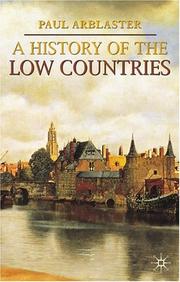
A concise, authoritative single-volume survey covering the entire arc from Roman times to the modern era. Reading this first gives you the chronological skeleton and key turning points that all later books assume you know.
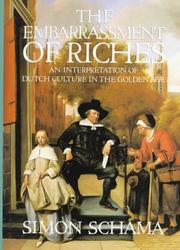
Schama's landmark cultural history of the Dutch Golden Age uses art, material culture, and social life to show what it felt like to live inside the world's first bourgeois society. It belongs early because it sets the cultural tone and vocabulary for everything that follows.
The Revolt and the Birth of a Nation
IntermediateUnderstand the Dutch Revolt against Habsburg Spain in depth — its causes, its religious and political dimensions, and how it forged a new kind of republic unlike anything Europe had seen.
▸ Study plan for this stage
Pace: 8–10 weeks, ~40–50 pages/day (Parker first: 3–4 weeks; Wedgwood second: 4–5 weeks). Allocate 2–3 days per week for review, note-taking, and exercises.
- The structural causes of the Revolt: Habsburg fiscal demands, religious conflict (Calvinism vs. Catholicism), and loss of local autonomy in the Netherlands under Philip II
- The role of William of Orange (William the Silent) as the political and military architect of Dutch resistance and his strategic evolution from negotiator to revolutionary leader
- The transformation from a regional uprising (1568) into a sustained war of independence that redefined European statecraft and religious toleration
- The emergence of the Dutch Republic as a novel political entity: decentralized, merchant-driven, and religiously pluralistic, fundamentally different from contemporary monarchies
- The military innovations and naval power that enabled the Dutch to survive and eventually prevail against Spanish Habsburg dominance
- The relationship between economic grievance, religious conviction, and political ideology in fueling and sustaining the Revolt across multiple generations
- The role of the Eighty Years' War in establishing the principle of religious coexistence and the separation of church and state in early modern Europe
- What were the primary grievances of the Dutch against Habsburg rule, and how did Philip II's policies inadvertently accelerate the Revolt?
- How did William of Orange's leadership style and strategic vision differ from that of other contemporary European rulers, and what made him effective in a prolonged conflict?
- Explain the religious dimension of the Revolt: How did Calvinism become intertwined with political resistance, and why did the Dutch eventually develop a more tolerant approach to religious diversity than their Spanish adversaries?
- What made the Dutch Republic structurally and ideologically different from the monarchical states of 16th–17th century Europe?
- How did naval power and control of the seas shift the balance of the conflict in favor of the Dutch, and what role did merchant capitalism play in sustaining their independence?
- Why did the Revolt take 80 years to resolve, and what does this protracted conflict reveal about the limits of Habsburg military and economic power?
- Create a timeline of key events (1555–1648) marking major turning points: Philip II's accession, the Iconoclasm (1566), the Revolt's outbreak (1568), the Eighty Years' War, and the Peace of Westphalia. Annotate each with its political or military significance.
- Construct a comparative profile of William of Orange at three stages: his early role as a loyal Habsburg courtier, his transformation into a rebel leader, and his legacy as founder of the Republic. Use evidence from Wedgwood to support each phase.
- Map the territorial and naval dimensions of the conflict: identify which regions remained under Spanish control, which became independent, and how Dutch naval dominance in the North Sea and Atlantic shaped the outcome. Use Parker's military analysis.
- Write a 2–3 page analytical essay: 'Why did the Dutch Revolt succeed when other 16th-century rebellions failed?' Draw on both Parker's structural analysis and Wedgwood's portrait of leadership.
- Debate exercise (solo or with a partner): Argue both sides—'The Revolt was fundamentally religious' vs. 'The Revolt was fundamentally political and economic.' Use specific evidence from both books to support each position.
- Create a visual chart comparing the governance structures, religious policies, and economic systems of Habsburg Spain vs. the emergent Dutch Republic. Identify how these differences shaped the Revolt's outcome and the new nation's character.
Next up: This stage establishes the Dutch Republic as a unique political and cultural entity born from conflict; the next stage will explore how this new nation consolidated its identity, expanded its global influence through trade and empire, and became a cultural and intellectual powerhouse in the 17th century.
Parker's classic military and political history of the Revolt is the essential starting point for this period, grounding you in the strategic and dynastic forces at play before you move to more interpretive accounts.
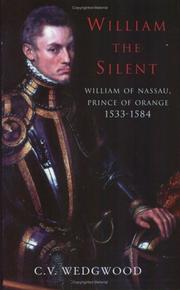
This beautifully written biography of William of Orange humanises the Revolt through its central figure, adding narrative drive and moral complexity to Parker's structural account.
The Golden Age: Commerce, Power, and Ideas
IntermediateUnderstand how the Dutch Republic became the world's dominant commercial and intellectual power in the 17th century, and what the internal tensions of that dominance looked like.
▸ Study plan for this stage
Pace: 4–5 weeks, ~40–50 pages/day (approximately 300 pages total)
- Global trade networks and the Dutch merchant economy in the 17th century
- The role of material objects (textiles, spices, beaver pelts) in connecting distant regions and enabling Dutch wealth
- How Dutch painters like Vermeer documented and reflected the prosperity and cosmopolitanism of the Golden Age
- The interconnection between domestic luxury, artistic production, and international commerce
- The Dutch East India Company (VOC) as the engine of global expansion and wealth accumulation
- How everyday objects in Dutch paintings reveal the hidden geographies of global trade
- The tension between domestic stability and overseas imperial ambitions
- How did the Dutch merchant economy of the 17th century depend on global trade networks, and what specific goods were most crucial to Dutch wealth?
- What is Brook's argument about the relationship between Vermeer's paintings and the material culture of Dutch commerce?
- How do the objects depicted in Dutch Golden Age paintings—such as textiles, ceramics, and exotic materials—reveal the global reach of Dutch trade?
- What role did the VOC play in establishing Dutch dominance, and how is this reflected in the material world that Vermeer painted?
- How did the geography of global trade (Asia, the Americas, Africa) directly shape what was available and valued in Dutch domestic life?
- What tensions or contradictions existed between the Dutch Republic's image of itself and the reality of its commercial and imperial activities?
- Create a trade-route map: Plot the origins of 5–10 specific objects mentioned in Vermeer's Hat (spices, textiles, dyes, etc.) and trace how they reached the Dutch Republic
- Object analysis: Select 3 paintings by Vermeer or other Dutch Golden Age painters and identify all foreign or exotic materials visible in them; research the trade routes that brought each item
- Timeline exercise: Create a chronology of key VOC voyages and trade monopolies alongside major Vermeer paintings to see how commerce and art developed in parallel
- Primary source reading: Read excerpts from VOC trading records or merchant letters (if available in your edition) and connect specific transactions to objects in paintings
- Comparative shopping: Research the price and availability of a luxury good (e.g., Chinese porcelain, Indian cotton) in 17th-century Amsterdam vs. today; write a short reflection on what this reveals about Dutch wealth
- Discussion or written reflection: Identify one object in a Vermeer painting that interests you, research its full trade history using Brook's framework, and write 2–3 pages explaining how that single item connects the Dutch Republic to three distant regions
Next up: This stage establishes how material prosperity and global trade networks created the economic foundation of Dutch dominance, preparing you to examine the political, cultural, and social structures that sustained (and eventually strained) that power in subsequent stages.

Using objects in Vermeer's paintings as windows onto global trade networks, this book bridges the Golden Age and the empire stage, showing how deeply the wider world was already embedded in Dutch daily life.
Empire, Slavery, and the VOC
ExpertReckon with the darker and more complex dimensions of Dutch global power — the VOC, the WIC, colonial violence, and the slave trade — and understand how empire shaped and was shaped by the Republic.
▸ Study plan for this stage
Pace: 4–5 weeks, ~40–50 pages/day. "The Honourable Company" is approximately 500–550 pages; allocate 3 weeks for the main narrative, then 1–2 weeks for review, synthesis, and exercises.
- The VOC as a joint-stock company: how commercial structure enabled and justified imperial expansion and monopoly control
- The mechanics of the spice trade monopoly: how the VOC used violence, cartels, and territorial conquest to dominate global commerce
- The relationship between merchant capital and state power: how the Dutch Republic's decentralized structure shaped the VOC's autonomy and methods
- Slavery and forced labor systems within the VOC's empire: the human cost of commercial expansion in Asia and the Indian Ocean
- The VOC's decline and legacy: how overextension, competition, and internal corruption undermined the company and shaped colonial legacies
- Comparative imperialism: how the VOC's methods differed from and influenced other European colonial powers (Portuguese, Spanish, English)
- The ideological justification of empire: how the Dutch rationalized violence and monopoly as 'commerce' and 'civilization'
- What structural features of the VOC as a joint-stock company made it uniquely effective (and uniquely brutal) as an instrument of empire?
- How did the VOC establish and maintain its monopoly on the spice trade, and what forms of violence were central to this strategy?
- What was the relationship between the Dutch Republic's political structure and the VOC's relative independence from direct state control?
- How did the VOC's labor systems—including slavery, indentured servitude, and coerced labor—sustain its commercial empire?
- What internal and external factors contributed to the VOC's decline, and how did this decline shape the transition to formal colonial rule?
- How did the VOC's imperial practices compare to those of the Portuguese, Spanish, and English companies, and what made the Dutch approach distinctive?
- Create a timeline of the VOC's major territorial acquisitions and monopoly consolidations (1602–1750), marking key moments of violent conquest alongside commercial milestones.
- Map the VOC's trade routes and territorial holdings at three key moments: 1620, 1680, and 1750. Annotate with notes on labor systems and resistance movements.
- Write a 1,000-word analysis of a specific VOC monopoly (e.g., cloves in the Banda Islands, nutmeg, or pepper) using Keay's account: how was it established, what violence was required, and what were the human costs?
- Construct a comparative table: VOC vs. Portuguese Estado da Índia vs. English East India Company. Compare structure, methods, labor systems, and justifications based on Keay's narrative.
- Identify and analyze 3–4 moments in Keay's account where the VOC's commercial logic explicitly justified or rationalized violence. Write a short reflection on how this language obscured the realities of empire.
- Research and write a brief biographical sketch of one VOC governor-general mentioned in Keay (e.g., Jan Pieterszoon Coen, Anthonie van Diemen). How did their individual decisions shape VOC policy and violence?
Next up: This stage establishes the commercial and violent foundations of Dutch empire in Asia; the next stage will examine how these imperial structures evolved into formal colonial rule, how they were resisted and challenged, and how they shaped both the Netherlands and the colonized world into the modern era.
A highly readable history of the East India Company that puts the VOC in comparative global context, making it the ideal entry point before tackling more focused Dutch colonial scholarship.
The Modern Netherlands
ExpertTrace the Netherlands from Napoleonic collapse through industrialisation, occupation, decolonisation, and into its role as a modern liberal democracy — understanding how the past lives in the present.
▸ Study plan for this stage
Pace: 4–5 weeks, ~40–50 pages/day (approximately 280 pages total; allows time for reflection and historical contextualization)
- The Nazi occupation of the Netherlands (1940–1945) and its impact on Dutch society, including the persecution of Jews and the experience of hiding
- Anne Frank's perspective as a Jewish teenager navigating identity, family, and humanity during systematic persecution
- The role of ordinary Dutch citizens in resistance, collaboration, and complicity during wartime
- How personal testimony and diary writing serve as historical evidence and moral witness to atrocity
- The psychological and emotional dimensions of living under totalitarian rule and in confinement
- The post-war reckoning with the Holocaust and how the Netherlands came to terms with its occupation legacy
- The tension between hope, idealism, and the brutal realities of genocide in the modern era
- What does Anne Frank's diary reveal about daily life for Jews in hiding during the Nazi occupation of the Netherlands?
- How does Anne Frank's voice and perspective change throughout the diary, and what does this tell us about adolescence under extreme duress?
- What role did the Dutch resistance and ordinary citizens play in helping or hindering Jews during the occupation?
- Why is Anne Frank's diary considered crucial historical evidence for understanding the Holocaust, and what are its limitations as a historical source?
- How did the Nazi occupation fundamentally alter Dutch society, and what traces of this period remain visible in modern Netherlands?
- What does the diary suggest about the relationship between personal hope and historical tragedy?
- Create a timeline of key events in the Nazi occupation of the Netherlands (1940–1945) alongside entries from Anne Frank's diary to see how personal and historical timelines intersect
- Write a comparative character analysis of the people in the Secret Annex (the Frank family, the Van Daans, Albert Dussel) based on Anne's observations—what does this reveal about human behavior under stress?
- Research and map the geography of Amsterdam during the occupation: locate the Secret Annex, identify safe houses and resistance networks, and understand how physical space constrained Jewish life
- Read selections from the diary aloud and reflect on how Anne's voice—her humor, anger, vulnerability—functions as a form of resistance and survival
- Investigate the fate of the people in the Secret Annex after the diary ends (using historical records); write a brief account of what happened to each person and reflect on how the diary's hopeful tone contrasts with historical outcomes
- Examine primary source documents from the Dutch occupation (Nazi decrees, resistance pamphlets, survivor testimonies) and compare how different voices narrate the same period
Next up: This stage grounds students in the human cost of the Netherlands' darkest modern chapter, establishing the moral and historical foundation necessary to understand how post-war Dutch society rebuilt itself, confronted its complicity, and eventually emerged as a liberal democracy committed to pluralism and human rights.
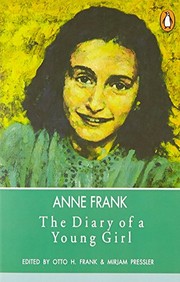
Before reading analytical accounts of the occupation, this primary source restores the human stakes of the Nazi period in the Netherlands with unmatched immediacy and moral force.
Discussion
Keep reading
Paths that share books, cover the same subject, or open a related topic.